publication: The Wire

  • Cricket in Troubled Times

    Cricket in Troubled Times

    The Wire, 20 September 2025

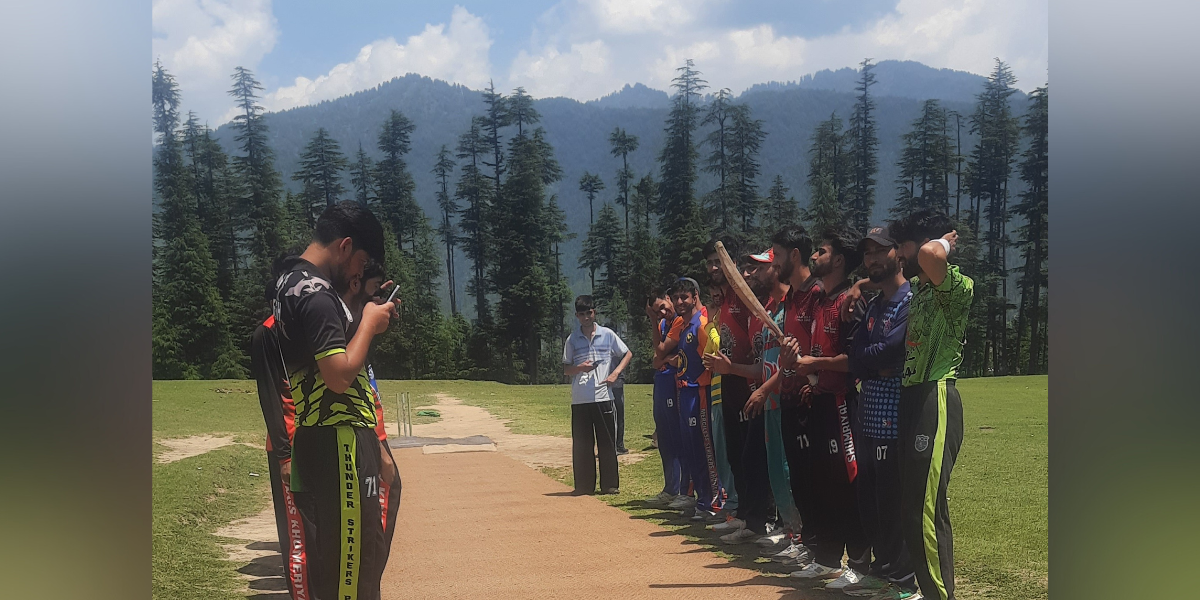
    Sixteen young men gathered across the picturesque Lolab valley in Kashmir’s Kupwara district a week after the May 10 ceasefire brought a halt to the military conflict between India and Pakistan. The day was both sunny and cloudy, casting shadows over the sprawling valley ringed by deodar trees.

    Carefree and effervescent, the young men were jovial as they warmed up for the cricket match they were about to play, testing the microphone in between quips and conversation.

    When asked about their favourite players, one mentioned popular Indian batsman Virat Kohli while another named Babar Azam, a Pakistani cricketer. They laugh at the mention of Azam, shush and nudge each other.

    The match stakes are attractive – Rs 30,000 to be awarded to the winning team at the end of a two-month-long series. Such matches are common in Kashmir, but rising beyond the local level can be difficult with hundreds aspiring to play at the level of the IPL or for a much coveted spot in the national team.

    Anhad, an NGO, is the organiser for the match. Abdul Raouf Sheikh of Anhad explains the reasons for organising the match immediately after the ceasefire. “The youth were affected by the grimness of the war. We cannot let them dwell on it. There is also a culture of rampant drug use which we need to watch out for. Therefore, we pull the youth towards sport to distract and occupy them as much as possible.”

    Anhad also organises football matches for girls.
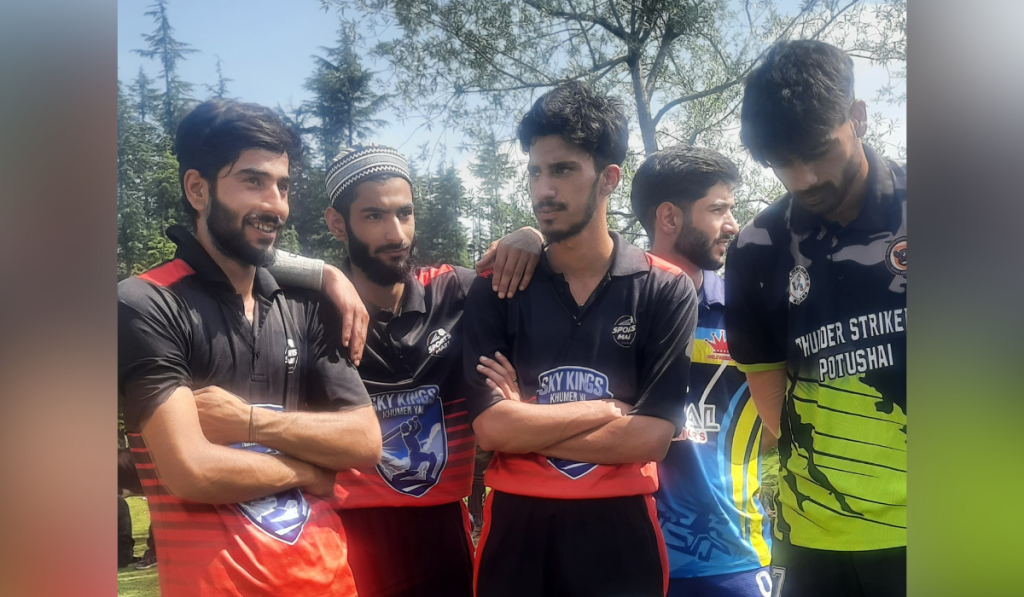
    Photo: Urvashi Sarkar

    In the last five or six years, Kashmir has experienced tumult in the form of the reading down of Article 370, the COVID-19 pandemic and the recent terror attack in Pahalgam. Shops, offices and establishments have been repeatedly shut with people being forced to stay home.

    Jammu and Kashmir has among the highest unemployment figures in the country with the Periodic Labour Force Survey for October-December 2024 pegging unemployment in the 15-29 years age group at 35.3%.

    People are turning to cricket in the hope of income. “Many young men in Kashmir have turned to cricket with the hope of earning some money through cricket or associated livelihoods in sports medicine and physiotherapy,” says sports journalist Sharda Ugra.

    Kashmir-based observers also say that young men are pushed towards the sport to prevent them from participating in political agitations and unrest.

    Cricket in Kashmir received a fillip when Parvez Rasool became the first Kashmiri Muslim selected to play in the Indian national cricket team versus an international team in 2013. Rasool, who hails from Anantnag district, has inspired many young people to play the sport professionally. He also was the first cricketer from the region to bag an IPL contract when he was selected for the Pune Warriors India.

    Rasool’s selection and subsequently that of others like Manzoor Dar and Rasikh Salam in the IPL have sparked the rise of a number of local clubs and cricketing leagues. “Clubs like Royal Goodwill or Sultan Baramulla have an immense following and sometimes their players have a greater following than even state-level players,” says Rasool, who is also an organiser of the popular Bijbehara Cricket League.

    Photo: Urvashi Sarkar

    Playing at this level also brings in cash incentives. “In big local tournaments and leagues, a player can earn Rs 3,000 as match fees in addition to their food and stay being taken care of. Attractive cash prizes, man of the match and man of the series awards are a big draw,” says Fawzul Kabir of Gr8 Sports, a company in Kashmir that manufactures cricket bats.

    But it’s not all rosy. For every match they want to play in, players must first pay the match organisers. Twenty-seven-year-old Mehraj of Kupwara district, who plays in local matches says: “Just to play, I first have to pay Rs 5,000 to the match organiser. I also have to purchase batting pads and gloves.” The organiser collects Rs 80,000 from a team of 16 players and sets aside Rs 15,000 or Rs 20,000 for the winning team and Rs 10,000 for the losing team.

    Mehraj doesn’t have a job and helps at his father’s bakery. His parents, he says, don’t mind his expenditures on playing cricket. “My family is aware of the larger troubled surroundings in Kashmir. They are aware that I am on the right path and not doing anything wrong or objectionable, and will not bring disrepute to the family,” he says.

    “Instead, I’m focusing on my mental and physical health and manage to stay away from drugs and addiction,” he adds.

    But Mehraj is also aware of the limits of local cricket and how far it can take him. Cricket infrastructure in Kashmir is extremely limited, with local cricket matches played on mats rather than cricket turf, for instance.

    The Legends League Cricket tournament held last year in Kashmir brought in eminent cricketers Chris Gayle, Ian Bell and Irfan Pathan. The matches were held in Srinagar’s Bakshi stadium that usually hosts football matches, and not at the Sher-i-Kashmir cricket stadium owing to its poor infrastructure.

    “The unsatisfactory state of the Sher-i-Kashmir stadium is an embarrassment for the Jammu and Kashmir Cricket Association (JKCA),” says Kabir.

    Fawzul Kabir at his store. Photo: Urvashi Sarkar

    The JKCA that is tasked with promoting cricket in Kashmir has not stood up to the task, critics say, accusing it of a lack of transparency and accountability in its selections.

    It has also been involved in corruption allegations, with former Jammu and Kashmir chief minister and JKCA president Farooq Abdullah along with other office-bearers being chargesheeted by the Enforcement Directorate in 2022 for allegedly siphoning off funds from the cricketing association. But the Jammu and Kashmir high court quashed the case last year. Since June 2021, JKCA has been under the management of a BCCI-appointed committee.

    However, the performance of the Jammu & Kashmir team in the 2024-2025 Ranji trophy tournament was one of their best, making it the third time ever that they entered the quarter-finals.

    Still, cricket commentator Kifayat Aftab points to what he says is an underrepresentation of Kashmiri people in the team: “Most of the players in the team were from Jammu and not Kashmir. Why is it that despite the abundance of local cricket talent in Kashmir, only few players were selected for the Ranji trophy? The same goes for the Duleep trophy team where very few players from Kashmir were selected.”

    According to Aftab, cricket has become a business in the valley where local tournaments benefit the organisers and some players. “Big organisers can earn anywhere between Rs 60,000 to Rs 3 lakh while sought-after players can get Rs 1,500-3,000 per match. Some players play two matches in a day and are happy with their earnings. But they aren’t playing to excel in the sport but merely to earn” he says.

    The Kashmir valley’s poor cricket infrastructure also loads the odds against its budding players. For instance, when players participate in JKCA-conducted trials, they find themselves floundering since they are used to playing on mats on smaller grounds instead of cricketing turfs.

    For Ugra, the main obstacle to the growth of cricket in the valley lies not in its players’ performance but elsewhere. “The performance of the players is not in doubt. Governance of cricket in Kashmir which is the problem. Athletes are in a bind because of the lack of governance and larger political situation in Kashmir. Because of the IPL, talent is coming through, but the players just about manage. When they play, they are also under pressure from nationalist sentiments. This is not easy.”

    Link to original article: https://thewire.in/sport/cricket-in-troubled-times-kashmir
  • UN’s green award for Modi comes despite criticism of environmental record

    UN’s green award for Modi comes despite criticism of environmental record

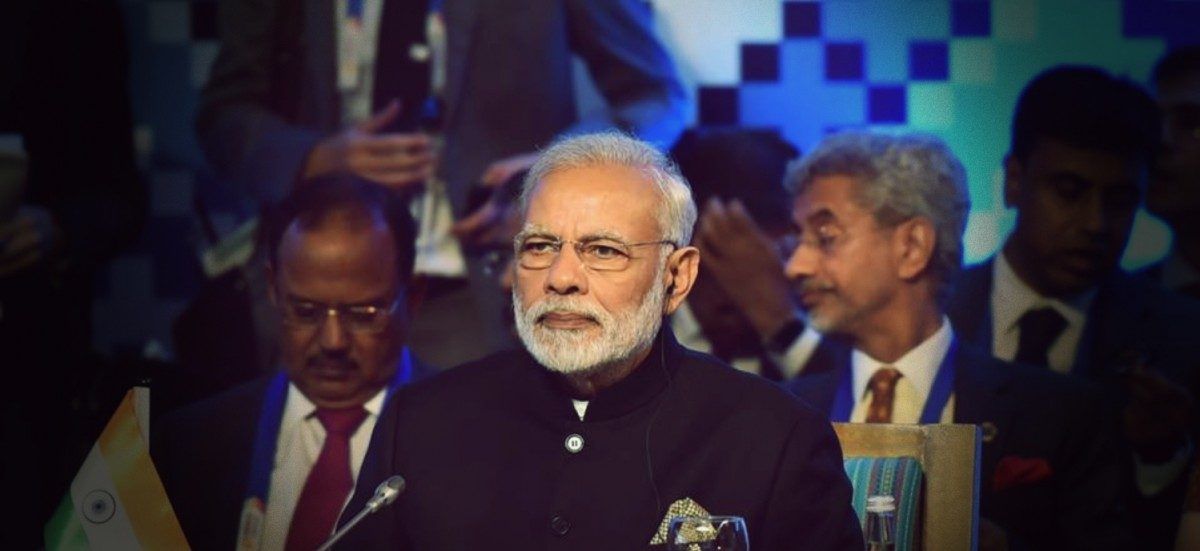
    Photo:Credit: facebook.com/narendramodi

    Published in The Wire. 3 October 2018

    New York: Narendra Modi this week became the fourth South Asian leader to be given the UN’s highest environmental award when the United Nations Environment Programme (UNEP) named the Indian prime minister and French President Emmanuel Macron as joint ‘Champions of the Earth’ in the policy leadership category. The other Indian awardee was Kochi International Airport, in the entrepreneurial vision category.

    Previous winners since the awards were instituted in 2005 include King Jigme Singye Wangchuk of Bhutan (2005), President Mohammed Nasheed of the Maldives (2010) and Prime Minister Sheikh Hasina of Bangladesh (2015).

    Modi and Macron were awarded for “championing the International Solar Alliance and promoting new areas of levels of cooperation on environmental action, including Macron’s work on the Global Pact for the Environment and Modi’s unprecedented pledge to eliminate all single-use plastic in India by 2022.”

    Controversial record

    While the PMO has been quick to celebrate the award, environmentalists in India said there was a gap between the international perception of the Modi’s commitment to the environment and the policies of his government on the ground.

    This week, for example, the country’s only Turtle Wildlife Sanctuary on the Ganges at Varanasi has been denotified on questionable grounds – the first dismantling of a wildlife reserve since India’s landmark wildlife law was passed in 1972. As the noted environmental writer Bahar Dutt has argued, the denotification is believed to be prompted by the desire to dredge the banks of the river so as to allow it to be used as an inland waterway for the transport of coal to serve new thermal powerplants.

    The Centre for Science and Environment has drawn up a catalogue of Modi’s policies which does not make for flattering reading, even on the issue of plastic – the specific subject for which Modi is now being called a ‘champion of the earth’.

    According to CSE, the attack on the environment began from day one:

    “In its first year of governance between August 2014 and April 2015, the Prime Minister’s Office under Modi considered and implemented “a list of 60 urgent action points submitted by the Confederation of Indian Industry, meant to remove hurdles of environment clearances for industry.”

    Since then, what the CSE calls the “Modi government’s ‘dilution spree’ of laws pertaining to India’s forests, coasts, wildlife, air and waste” has continued. This includes:

    India also ranks 177 of 180 countries in the Environmental Performance Index 2018 rankings, down from 141 in 2016.

    Modi and the UN

    The UNEP award to Modi comes weeks after a UN report on 39 countries highlighted the fact that environmental activists are among those who have been subject to reprisals by the Indian government. The report names countries who intimidate activists who cooperate with and assist the UN in its human rights work.

    The report mentions intimidation of the Centre for Social Development, which works on the land and resource rights of indigenous people, for using foreign contributions to highlight uranium mining in Meghalaya at global platforms.

    The special rapporteurs of the Human Rights Council have in recent reports  to the OHCHR noted the protests against the Sterlite copper smelting plant, the displacement of people caused by the Sardar Sarovar dam and the arrest of environmental activists.

    When asked about the process of nomination for Modi and Macron, UNEP head Eric Solheim told this reporter: “We have a process that we go through to judge who we believe are the right nominees. In the past we have awarded individuals like the former Chilean President Michelle Bachelet and Rwandan President Paul Kagame who showed political leadership in environment issues. The UNEP is awarding Modi and Macron for taking the lead on the International Solar Alliance. France has also initiated a global pact for environment, which is a process within the UN to negotiate an instrument for protection of the climate. Macron has a strong environmental record and so does Modi.”

    Prime Minister Narendra Modi with French president Emmanuel Macron. Credit: Reuters

    According to Solheim, Modi could also count the electrification of villages and the Swachh Bharat campaign as a success. Ironically, the UN special rapporteur on drinking water and sanitation, Leo Heller, who visited India last year, said after his visit: “Eliminating open defecation is not only about building latrines, but requires adequate methods for behaviour change, and sufficient water supply is a pre-requisite for the sustainable and safe use of adequate, low-cost latrines.” He added that the programme “should not involuntarily contribute to violating fundamental rights of others, such as those specific caste-affected groups engaged in manual scavenging, or those who are marginalised such as ethnic minorities and people living in remote rural areas… “.

    With regard to the contradictory actions of United Nations agencies, UN staff who did not want to be quoted, said that UN agencies are spread across the world and may not necessarily coordinate and in some cases even be aware of each other’s work.

    Environmentalists react

    Reacting to the award to Modi, environmental researcher Kanchi Kohli said, “There is a deep irony in India being considered a Champion of the Earth, with the prime minister as the awardee. This comes at a time when the country is dealing with an acute crisis of water and air quality, severe groundwater stress and land use conflicts, all of which impact lives and livelihoods of people. Several environmental laws have already been diluted or are in the process of being amended citing ease of doing business as official reasons. The decisions related to the ban of single use plastic or expansion of renewables should not be viewed in isolation of several other decisions that are marred with environment justice concerns.”

    Ashish Kothari, researcher and activist with Kalpavriksh Pune added: “While the Congress regime was bad enough with regard to environment, the BJP’s stint is worse, in terms of dilution of environmental laws and procedures, the pace of clearance to ‘development’ projects and the push for major infrastructure in ecologically fragile areas, home to tribal communities.”

    According to Kothari, an ambitious solar programme is welcome, but will make no difference, without the reduction of fossil fuels and nuclear power. “Large scale solar production implies issues of land grabbing, where the access of the poor may be as problematic as for other sources. The ban on single use plastic is welcome, but is a small part of a much bigger problem, which is the mass production of solid waste. India is reeling under a massive waste crisis and piecemeal solutions will not help much. There needs to be a move away from a development model that is only fixated on consumption-driven economic growth.”

    Selection process

    In a written response, UNEP said that the policy leadership award category is about inspiring future action for our planet, not a wholesale endorsement of the recipient’s agenda. “In jointly recognising Prime Minister Modi and President Macron, we are spotlighting the spirit of cooperative leadership and bold environmental initiative which we hope to see taken up by other world leaders.”

    On the selection process, it said: “Champions are selected from hundreds of global nominees submitted during an annual public nominating process. Once submitted, a team of independently dedicated Champions of the Earth staff located in UN Environment headquarters in Nairobi, Kenya, research and prepare detailed profiles of each candidate, their achievements and qualifications. Those profiles are then reviewed by UN Environment’s senior management team located in regional offices around the world. After an open comment period and further vetting, by a selection of senior UN staff the three-month process concludes with final selections made by UN Environment’s Executive Director.”

    Read the original article: https://thewire.in/environment/un-green-award-narendra-modi-controversial-environmental-record

Urvashi Sarkar – 2026 – All rights reserved.

web things by Studio Goncharov