Tag: elections

  • Voting in a Sundarbans village

    Published in People’s Archive of Rural India. 19 May 2016

    “The government sees the Sundarbans jungles, but not the human beings who reside in them,” says Gita Mridha, whose husband, a fisherman, was killed by a tiger in February 2012. Despite being eligible for compensation, Gita says she received nothing; several other women in her village too did not receive compensation after tigers killed their fishermen husbands.

    “They do not forget to ask for your vote,” she adds. Gita did cast her vote. “I did my duty as a citizen,” she says. Gita is a resident of Rajat Jubilee village in the Sundarbans.
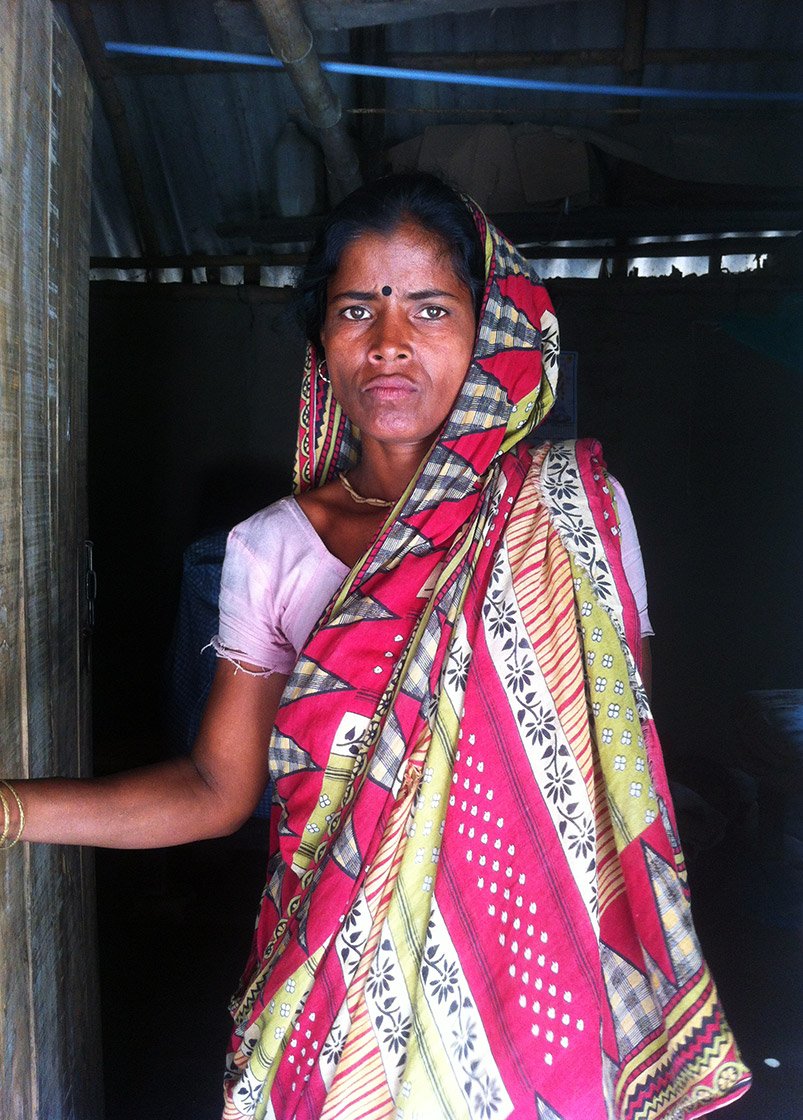
    ‘I did my duty as a citizen,’ says Gita Mridha of Rajat Jubilee village

    Rajat Jubilee is among 22 villages of the Lahiripur gram panchayat, in the Gosaba block of the South 24 Parganas district. Its population is mainly from the Scheduled Castes (SC).

    On April 30, people from Gosaba’s villages voted in the elections for the West Bengal Assembly. Many of them live in areas adjacent to Rajat Jubilee, about 1.5-2 kilometres from the polling booth, which they covered on foot. Some traversed long distances, arriving from Kolkata and other parts of the state by train, boat and van.
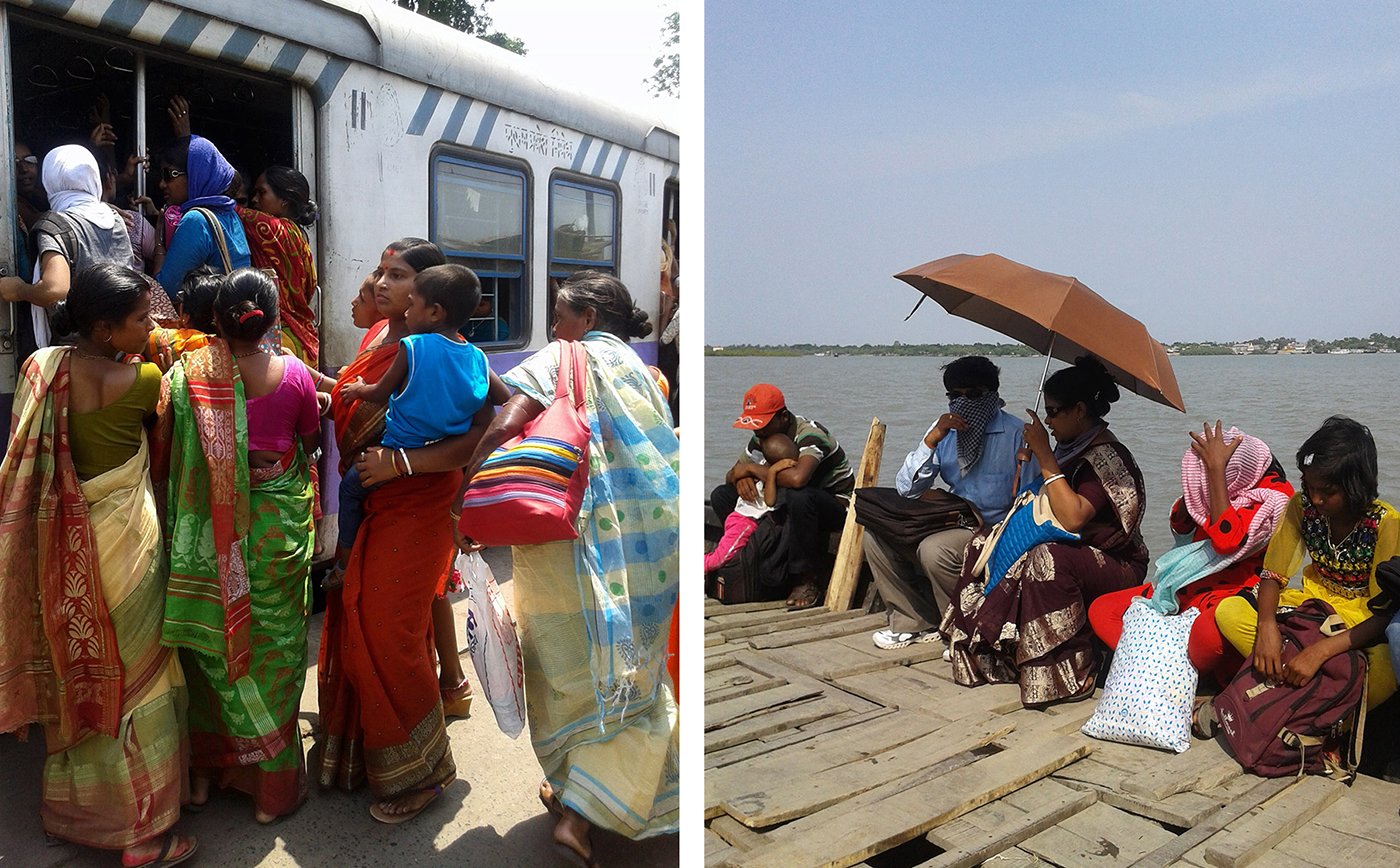
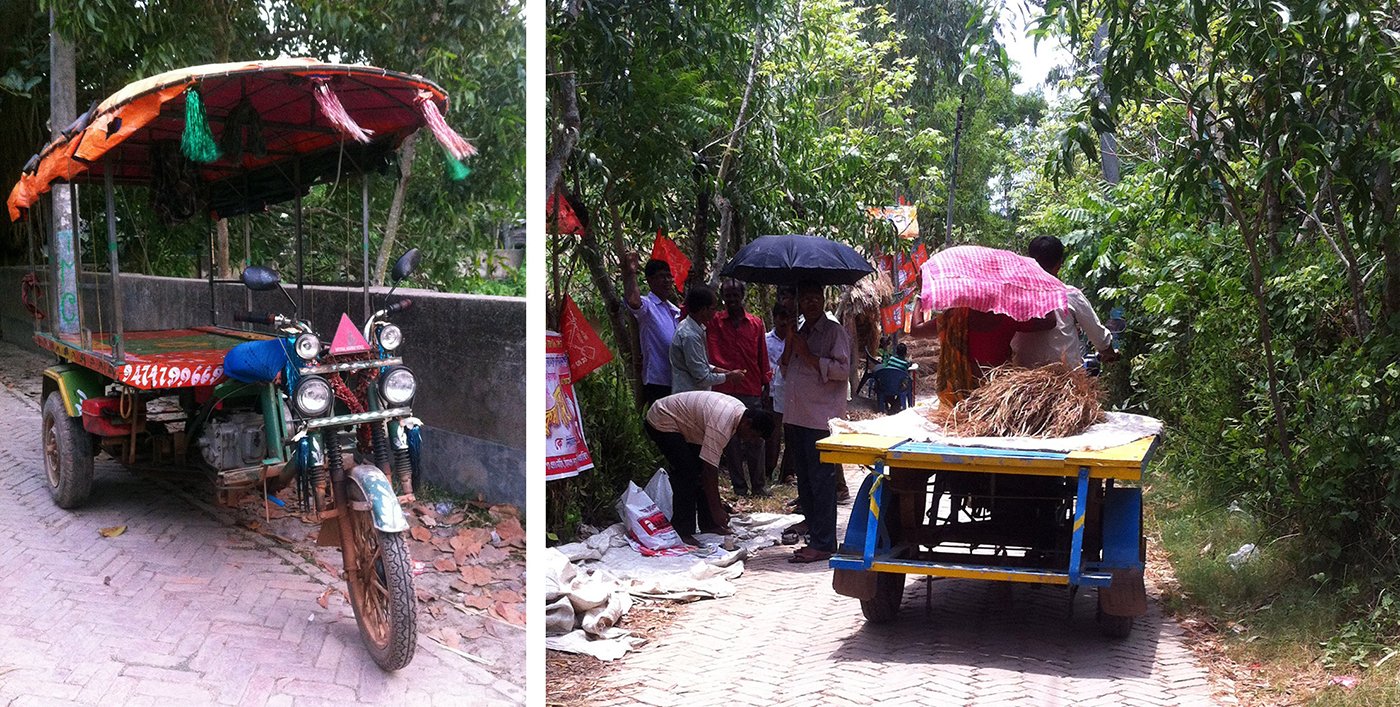
    People from Lahiripur gram panchayat’s 22 villages took trains, boats and tractors to reach the voting venue

    Voting started at 7 a.m. and continued till 6 p.m. Some, including 95-year-old Phool Bashi and her daughter-in-law Kalpana Mondol, voted in the early hours to avoid the afternoon heat.
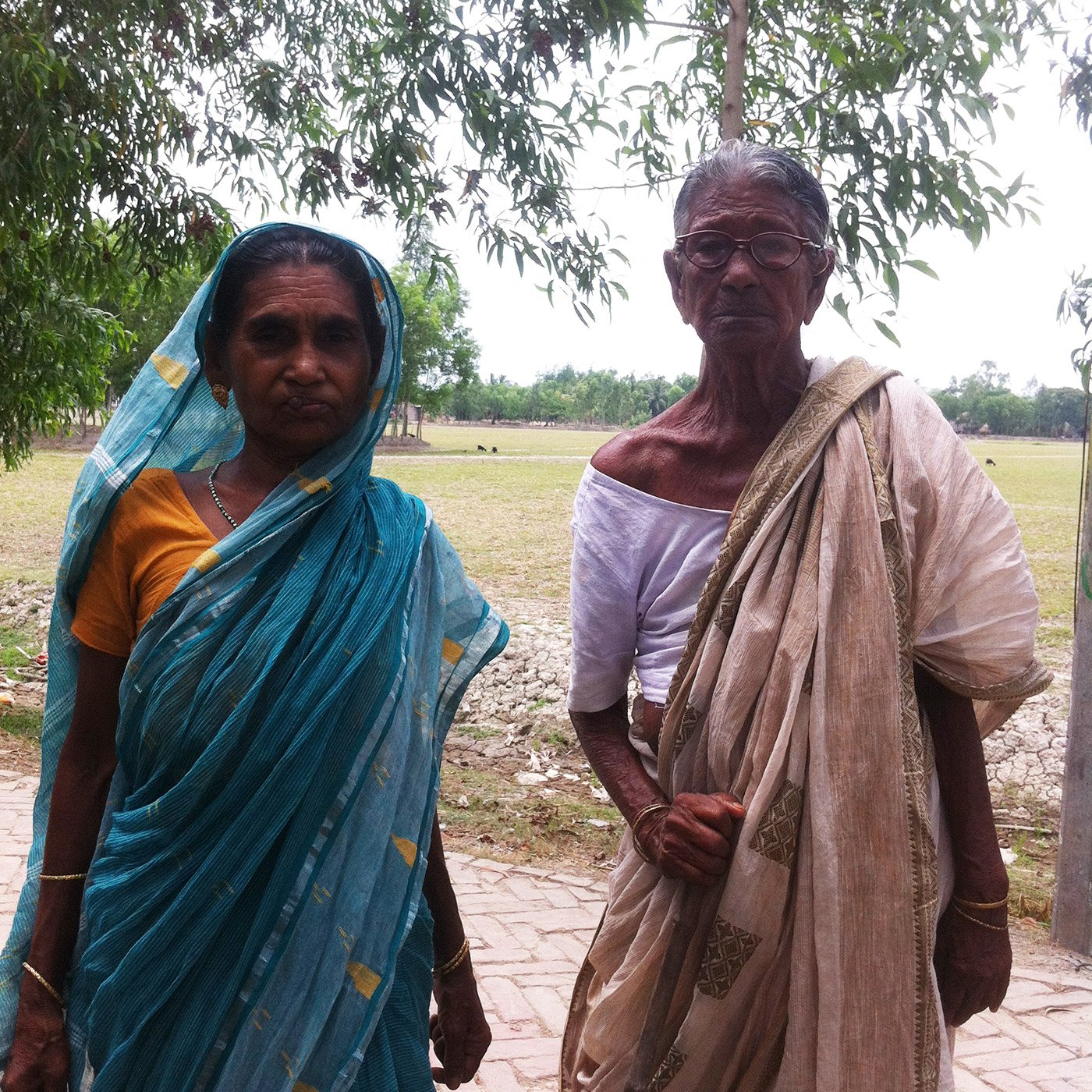
    Phool Bashi (right) and her daughter-in-law Kalpana Mondol voted early to avoid the afternoon heat

    Beena Mridha, a resident of Rajat Jubilee, summarised the problems of her village: “There is no hospital here, only a big one in Gosaba. To reach, you need to change two boats and vans. There is the problem of tigers and crocodiles, which kill our people and cattle regularly. We are also not getting good value for our rice, just about Rs. 650 per quintal, whereas the market rate is Rs. 800 per quintal. The government was supposed to buy grain from us, but that has stopped. The food security cards are full of errors, so many of us do not even get our food entitlements. Our roads need broadening and elevating above the river level.”

    Beena also laments the lack of institutions for higher education near the village. “My daughter studies in Kolkata, where we have enrolled her at great expense. There are no jobs here, other than fishing or collecting honey. ”
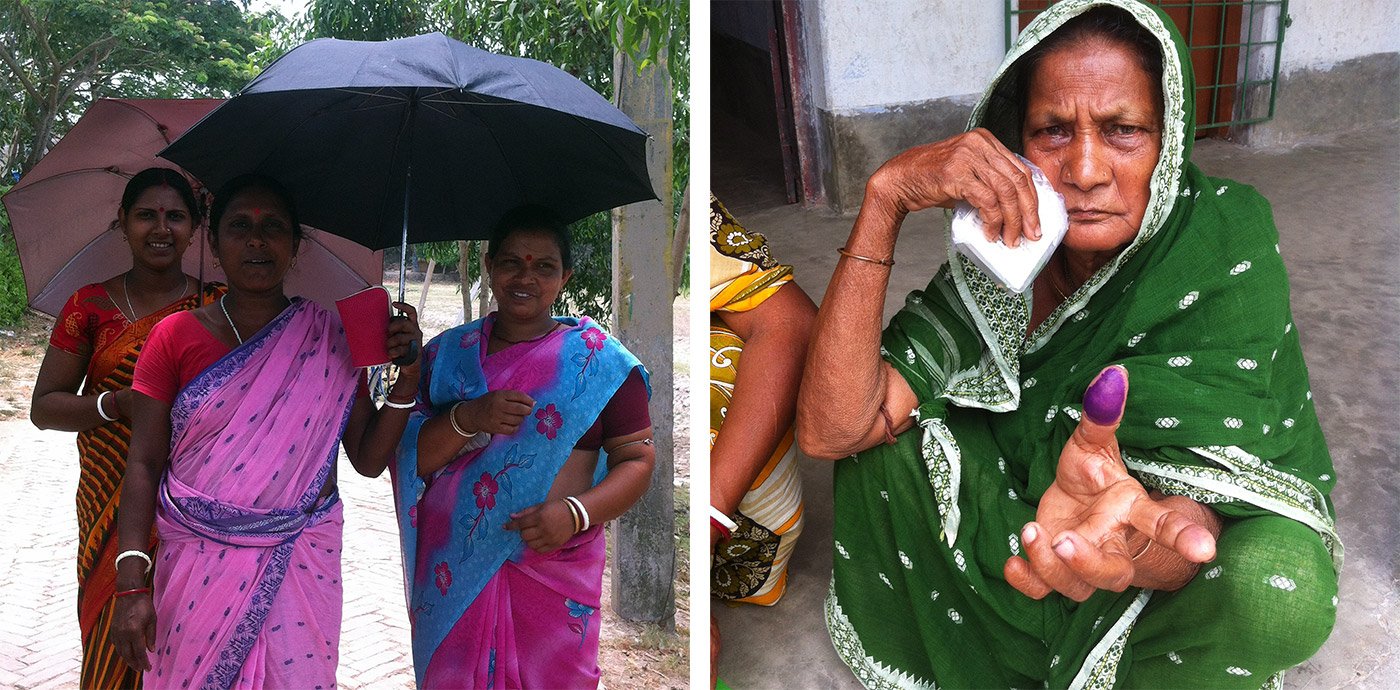
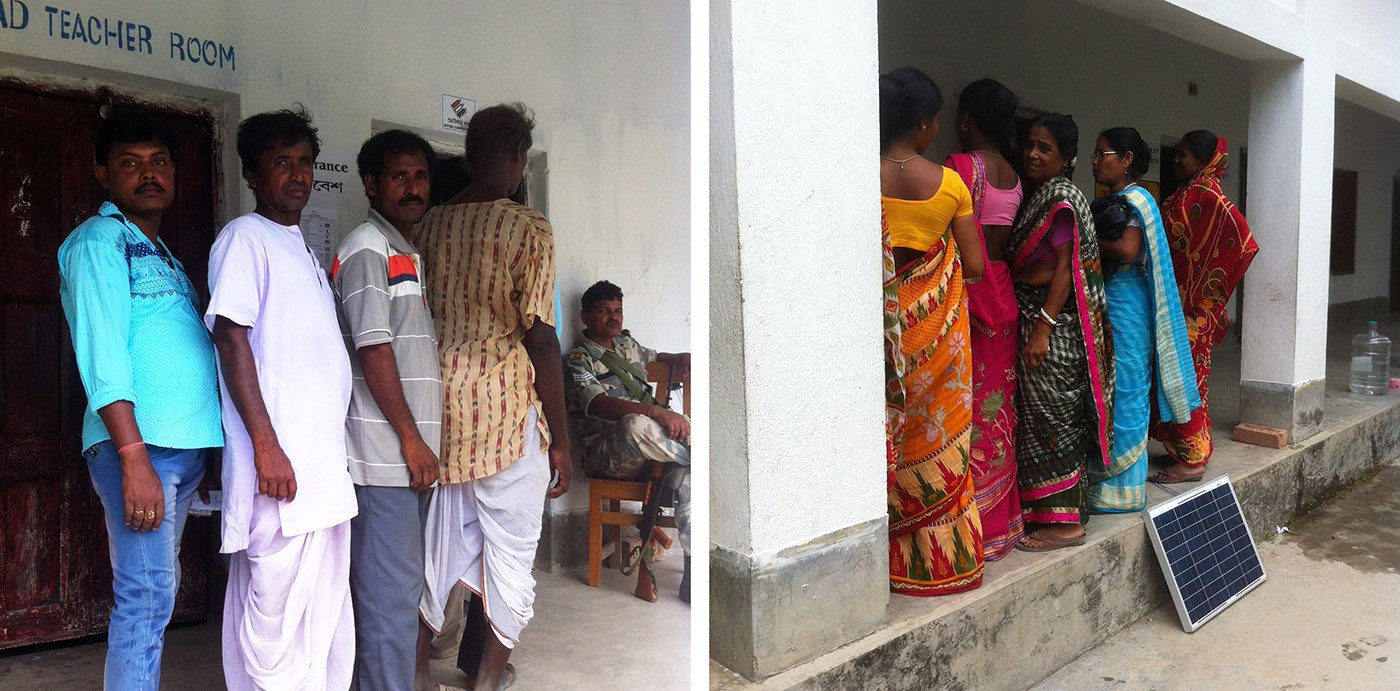
    Polling in process at the village high school; some are done, others await their turn

    The polling was held at Rajat Jubilee High School. Inside the school, health workers Lokhi Howly Mondol and Ila Sarkar Mondol from Gosaba hospital were on election duty as a medical team. Lokhi said, “We give ORS [oral rehydration salts] to all voters and medicines to those who feel unwell. Some people also take medicines for the sick in their homes.”

    Both women were at the venue from 7 a.m. to 6 p.m. Were they getting paid for this work? Lokhi said, “We do not know yet [how much we will get]. We will know once our duty is over.”
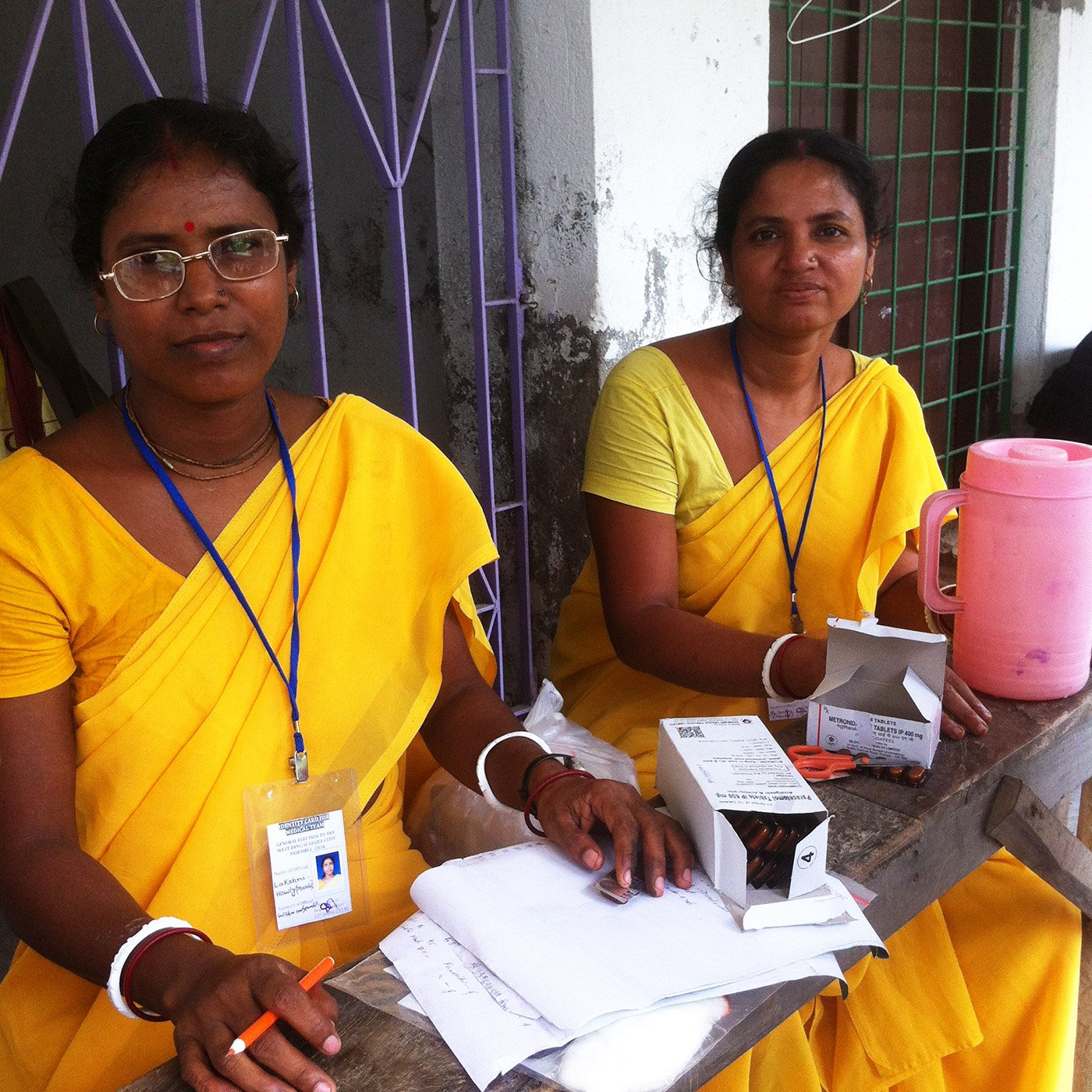
    On election duty from 7 a.m. to 6 p.m. as a medical team, Lokhi Mondol and Ila Mondol from Gosaba hospital don’t know how much they will get paid for this work

    Vinod and Sabita Sardar, a couple, were also on election duty. Their task was to take care of the needs of polling officers. Vinod said, “The officers need food and refreshments. We bring them tea, coffee and cigarettes. The Sardars belong to the Scheduled Tribes (ST) community and do not own any land. Their election duty designation was, strangely, ‘contingent menial’.
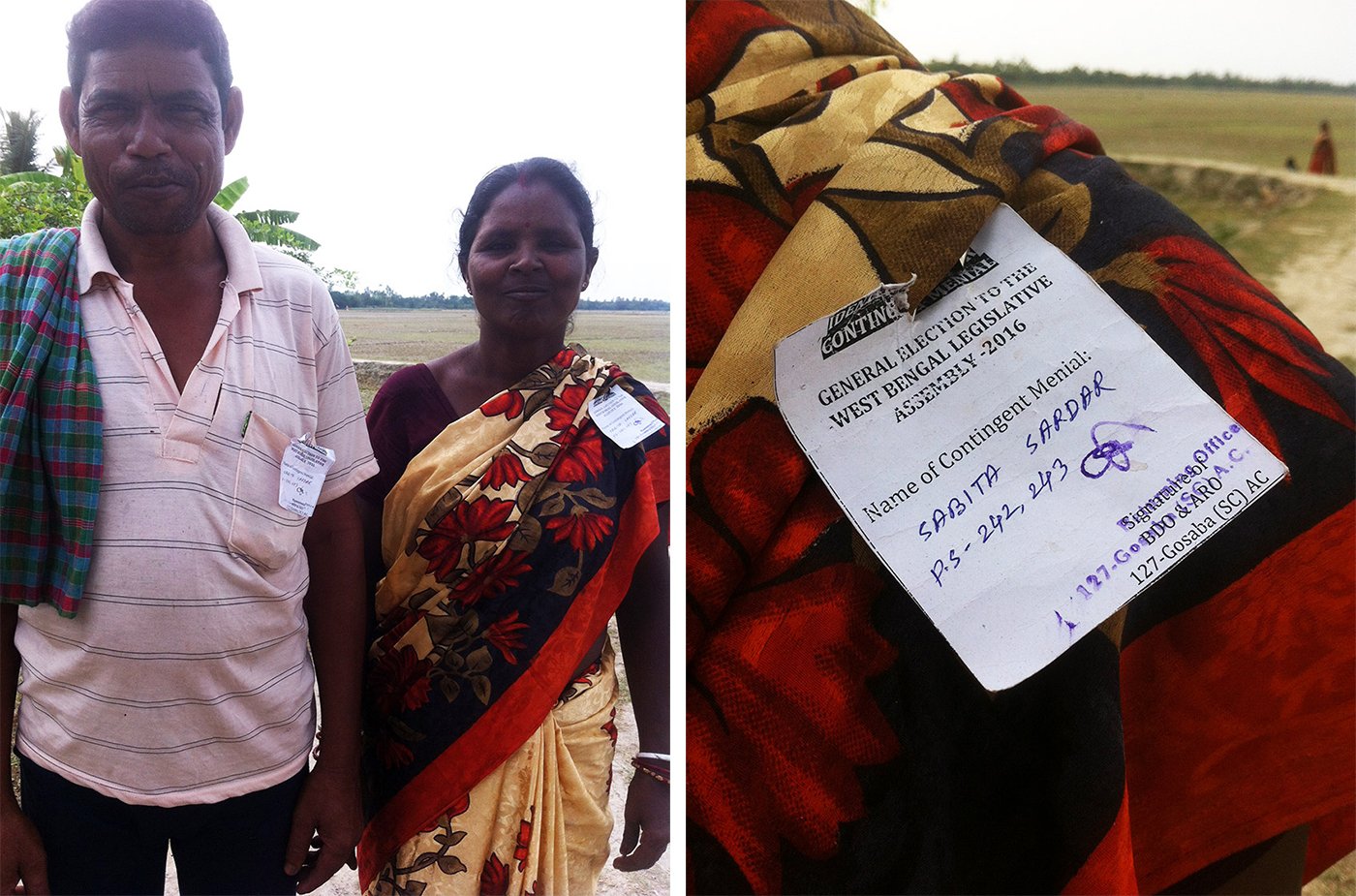
    Vinod and Sabita Sardar attended to the needs of polling officers; both are from a Scheduled Tribes community and were listed for election duty as ‘contingent menial’

    Coming out to vote in the sultry and humid Sundarbans is no easy feat. For some relief from the heat, locals, some affiliated to various parties, offered batasha drinks made from sugarcane and nuts to voters. Also on offer were paan and bidi .
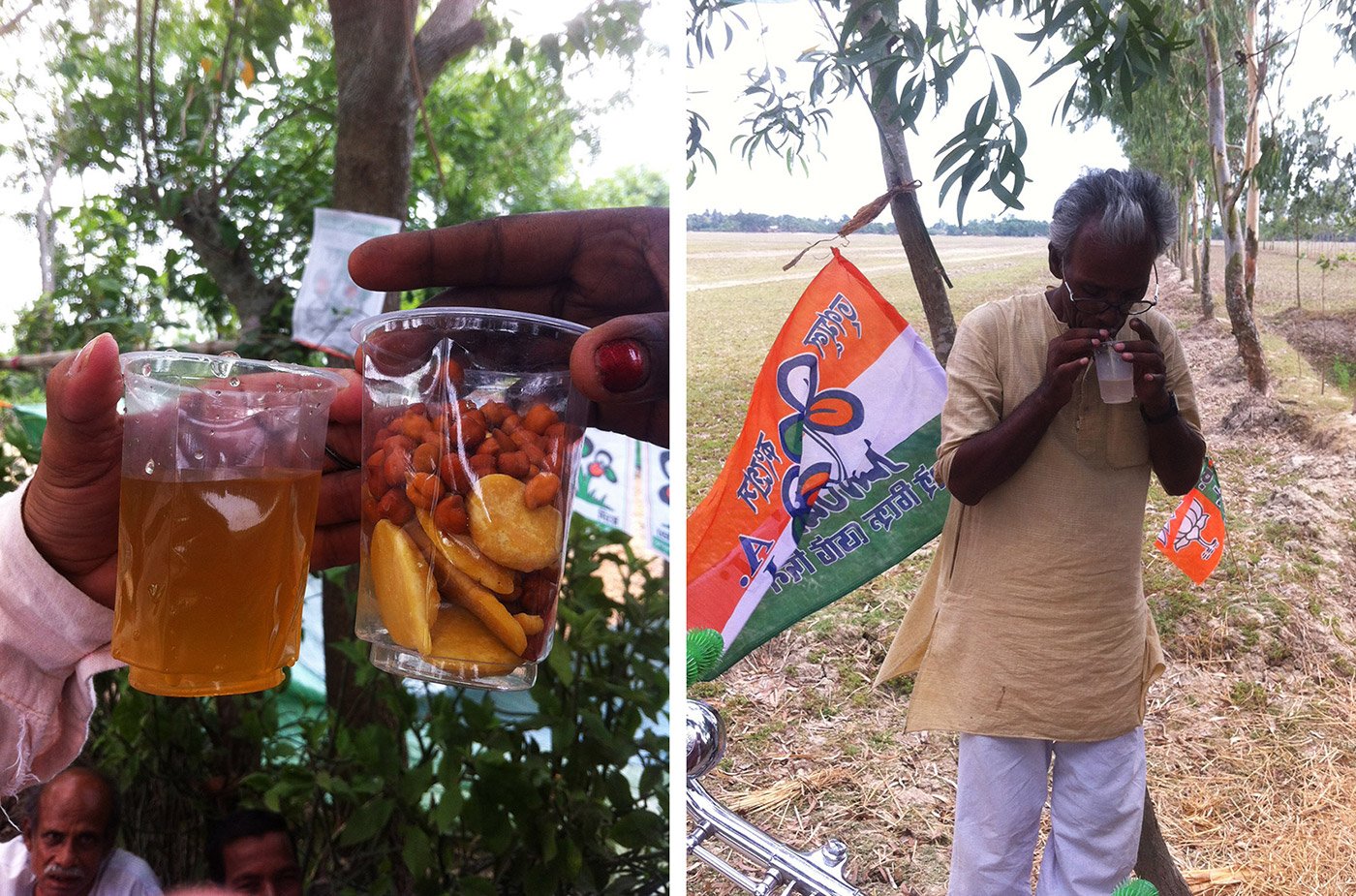
    Party workers offered cold drinks to the voters for some relief from the heat; Ronojit Burman (right) refreshes himself after casting his vote

    Political parties in the fray – such as the Revolutionary Socialist Party, the Trinamool Congress, and the Bharatiya Janata Party – set up mini tents where party workers helped voters match their voter identity numbers, and guided first-timers on how to vote. The tents had to be located at least 200 metres away from the polling booth.
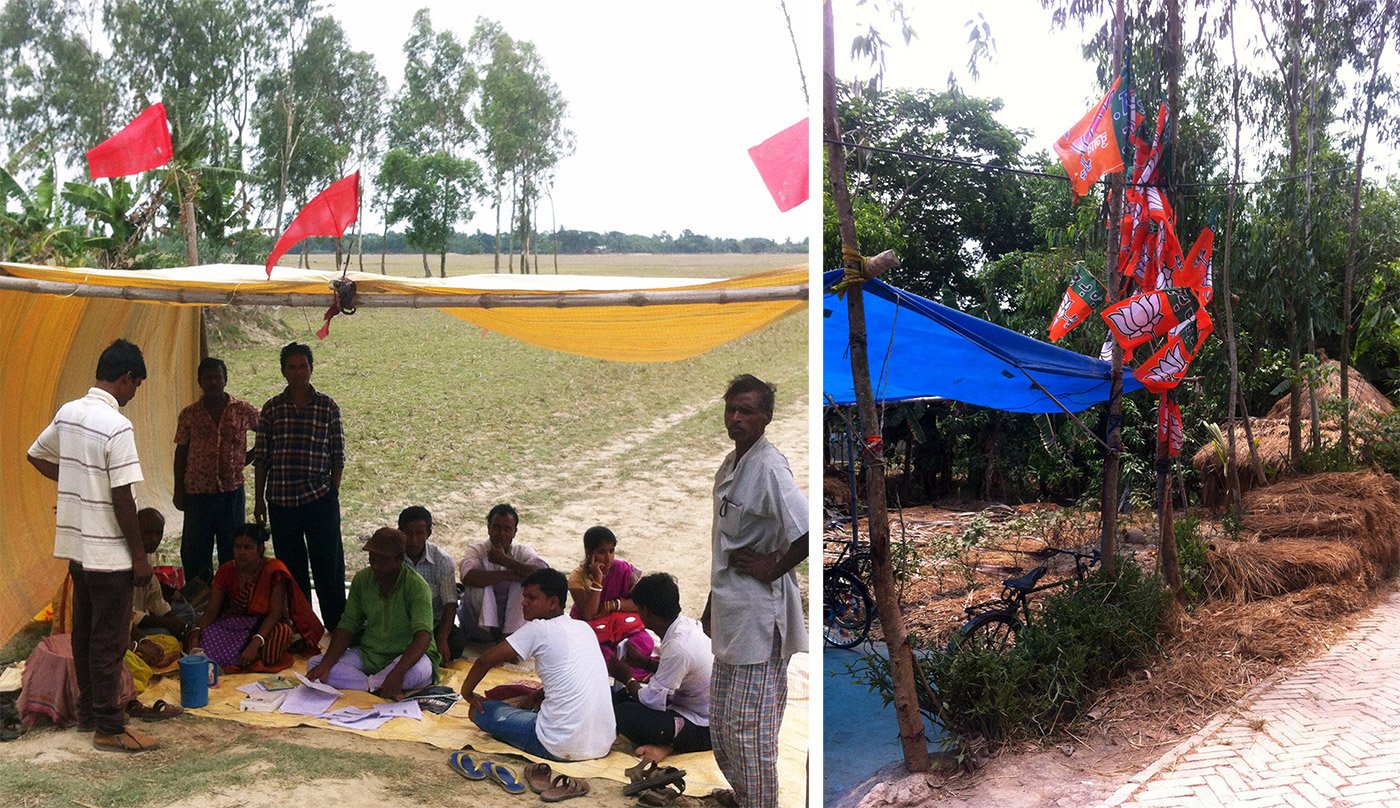
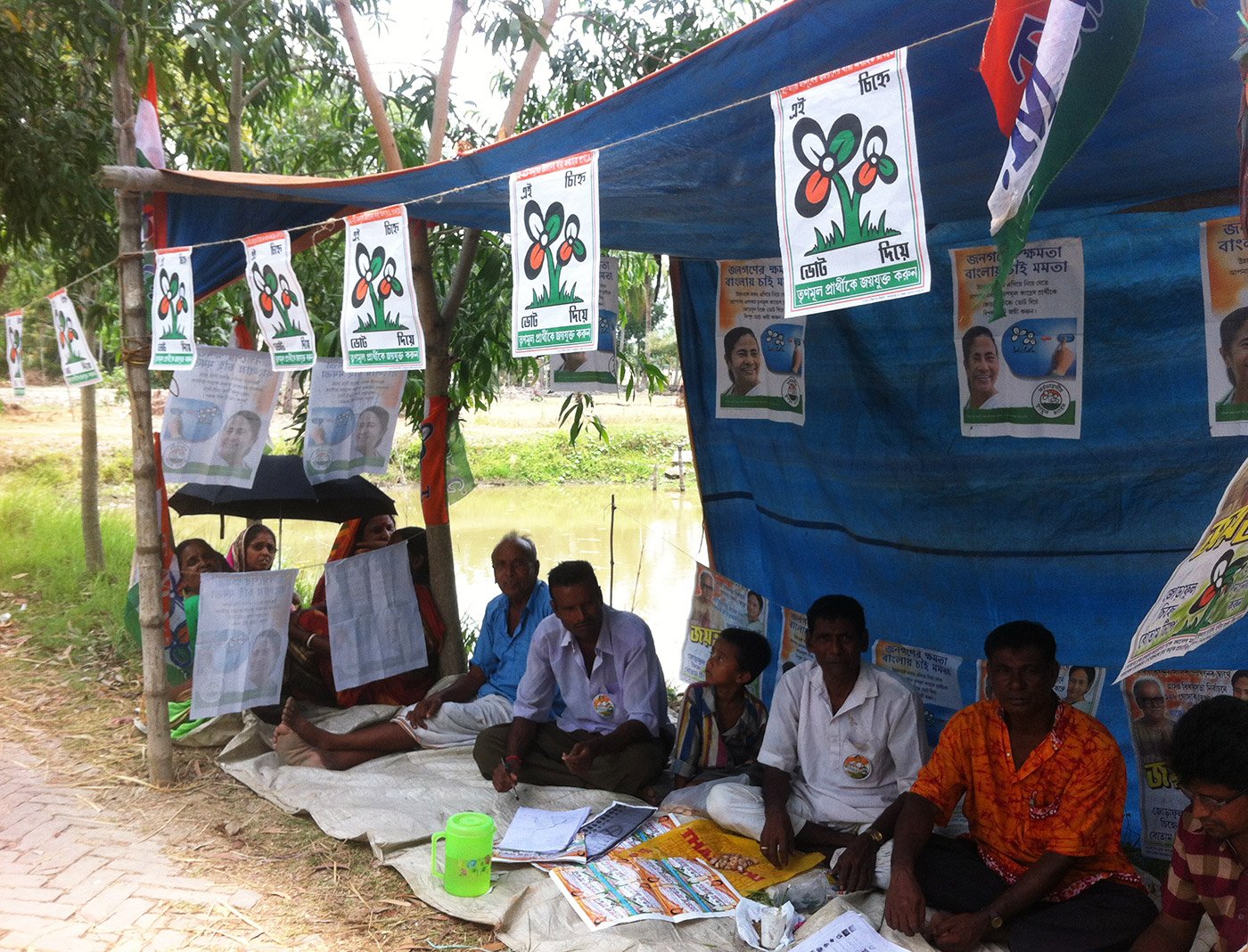
    Political parties set up tents to help voters match their identity numbers and guide first-timers

    Central Reserve Police Force personnel were present everywhere, patrolling the village and stationed at the polling booth. They refused to allow their faces to be photographed. One of them said: “We just came out for tea. If you take a picture of us sitting and relaxing under a tree, people will think we are not doing our duty.”
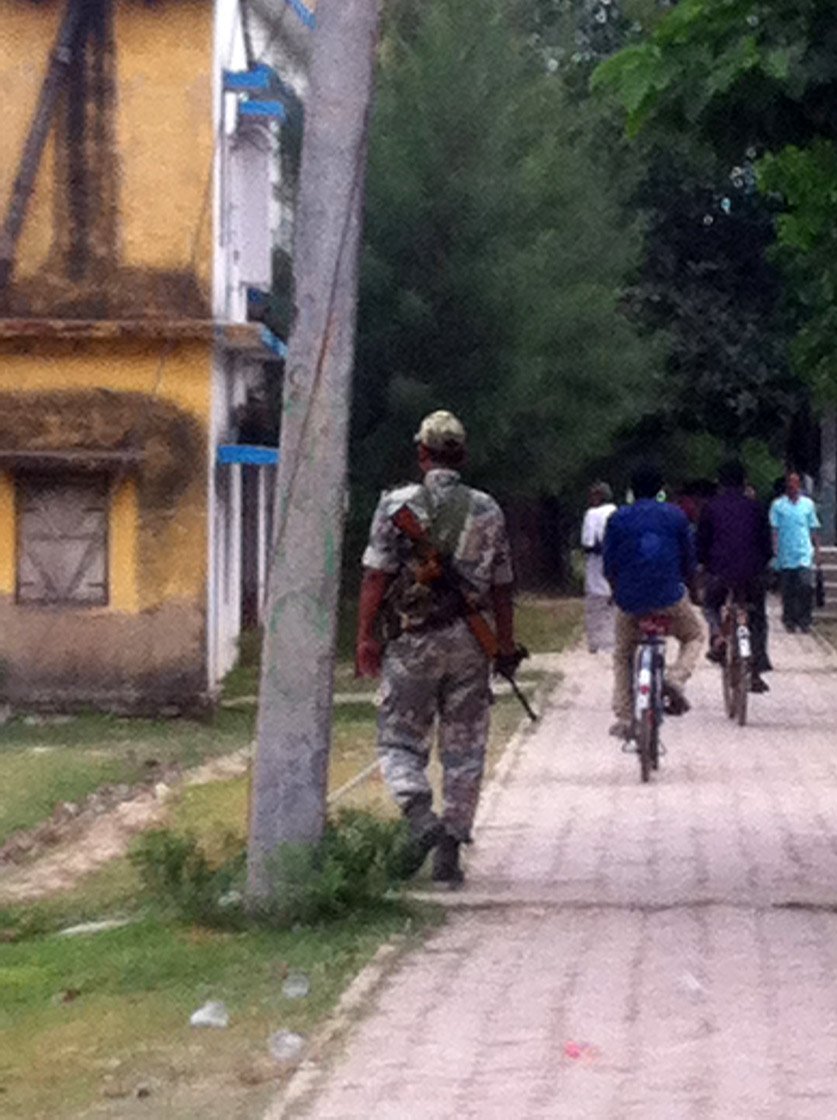
    High-visibility CRPF personnel were on patrol at the village and the voting venue

    Photos: Urvashi Sarkar

    Read the original article: https://ruralindiaonline.org/articles/voting-in-a-sunderbans-village/

  • Aligarh college girls make history of sorts

    Photo: Shiv Kumar Pushpakar

    Published in The Hindu. 20 January 2011

    The Aligarh Muslim University Women’s College, established way back in 1906, was forced to come into being 5 km away from the Mohammedan Anglo Oriental College (M.A.O.C.), later renamed AMU, as M.A.O.C. Principal William Archbold felt “female education was injurious to the health of the M.A.O. college”.

    Cut to 2011, students from the undergraduate women’s college took part in the AMU students’ union (AMUSU) elections here on Wednesday for the first time in the history of the university’s student union.

    The excitement in the air was palpable as scores of girls lined up in serpentine queues to cast their vote, eagerly brandishing their voting identification slips and identity cards.

    “Women too must have a say in the election process. It is heartening that girls from our college are contesting the elections for the first time,” said Sanae Rabbi, an arts student, as her friends nodded in agreement.

    Principal Bilquis Nasim Waris said: “Five girls are contesting the elections from the [women’s] college; two each for the posts of AMUSU vice-president and cabinet member, and one for student representative to the court.”

    The elections are taking place after more than four years.

    Voting took place for the posts of union president, vice-president, honorary secretary, 10 cabinet posts and 11 varsity court positions.

    The women’s college, usually out of bounds for men, barring university authorities, faculty and staff, opened its doors partially on Wednesday to admit male Press members with some hesitation. Male students were strictly barred from entering, and for about 15 minutes security personnel shut the entrance gates as some male students tried to enter the premises.

    “We are not allowed to interact with the students. How will they know about us as candidates? We would also like to see if proper voting is taking place inside the college, but we are not being allowed to enter,” complained a male presidential candidate.

    A total of 11 girls are contesting the elections — one each for the posts of president and honorary secretary, two for vice-president, four for cabinet and three for the AMU court. Of the total 18,500 voters, 6,500 are girls.

    However, the girls did not seem very optimistic about their prospects. “The girls are not voting in a united manner,” admitted a girl voter. “Still, we cannot vote blindly for someone just because it happens to be a girl. We will vote for meritorious candidates.”

    Honorary secretary candidate Naheed Mustafa said: “The votes are being split. Girls are not voting for female candidates owing to various reasons. The boys will not vote for us as they are unwilling to accept female post-holders. There will be no point in our having contested elections if we do not win.”

    Read the original article: https://www.thehindu.com/todays-paper/tp-national/Aligarh-college-girls-make-history-of-sorts/article15525245.ece

Urvashi Sarkar – 2026 – All rights reserved.

web things by Studio Goncharov