
Tag: Russia

  • How AI And Advanced Tech Are Reshaping The Battlefield

    How AI And Advanced Tech Are Reshaping The Battlefield

    The world is burning.

    In September 2024, thousands of pagers exploded in Lebanon in public streets, grocery stores and people’s homes. The next day, walkie-talkies were blown up. At least 37 people died and 2,931 people were injured. The attacks were carried out by Israel to target Hezbollah supporters known to carry pagers and walkie-talkies for communication and planning military operations.

    Hezbollah, a Shia militant group and movement in Lebanon, against whom Israel has a long-standing armed conflict, has been using old-fashioned pagers and walkie-talkies to avoid interception and hacking by Israeli forces. Israel managed to embed explosives in the pagers, which then exploded in Lebanon and Syria. The dystopian attack was widely condemned, especially since it did not account for harm to civilians, and spotlighted concerns about the rise of new types of cyber warfare.

    In the Russia-Ukraine theatre of conflict, Ukraine began using facial recognition to identify Russian targets as well as dead Russian soldiers. The technology was offered to Ukraine by Clearview AI, a facial recognition company, free of cost.

    The detonation of pagers and walkie-talkies, drones that deceive and kill, and the use of facial recognition to fight wars sound like hellish episodes from the pages of science fiction books or sub-plots of action movies. This isn’t fiction to be consumed vicariously from a distance, but a reality that we live and breathe.

    Wars Equipped With AI

    Clearly, war is no longer confined to the traditional remits of land, air and sea. The weaponisation of information flows and cyberspace, and the use of artificial intelligence (AI) are changing how wars are being conceived and implemented. We are already seeing the rise of technology-driven surveillance, cyber hacking and implanting of spyware, most infamously Israeli-origin Pegasus, on phones.

    The use of autonomous weapons, where critical functions of weapon systems are automated, throws up entirely new dimensions to conflict. According to the International Committee of the Red Cross, “Autonomous weapons can select (including search, detect, identify, track) and attack (use force against, neutralise, damage or destroy) targets without human intervention. After initial launch or activation by a human operator, it is the weapon system itself—using its sensors, computer programming (software) and weaponry—that takes on the targeting functions that would otherwise be controlled by humans.”

    Rise in Drone Warfare

    The war between Russia and Ukraine saw their armies use tanks, bombs, missiles and conventional artillery, but also the use of drones writes Dominika Kunertova in the journal of Contemporary Security Policy. “Russia and Ukraine have been using drones of all sorts from scouts collecting intelligence to lethal drone bomblets, one-way attack drones, loitering munition, and long-distance strike drones,”Kunertova writes. While these systems are not independently groundbreaking, the proliferation of low-cost drones shows the pace at which such technology is developing.

    For some time, drones have been equipped with stealth technology wherein they can evade being detected by enemies. Swarm drones include a group of drones that collectively perform tasks such as surveillance or coordinate attacks. Swarm drones are able to communicate with each other and act in coordination. These too were seen in action in the Russia-Ukraine conflict.

    Developments in CBRN Weapons

    Swift-paced developments in chemical, biological, radiological and nuclear (CBRN) weapons (more commonly known as weapons of mass destruction) are also unfolding. Annually, governments across the world are spending billions of dollars to finesse and fine-tune these weapons.

    Despite the destruction of chemical weapons stockpiles by member states of the Chemical Weapons Convention, the re-emergence of certain chemicals continues. Recent history is testimony to the use of toxic chemicals by states and non-state actors. A prime example is Syria, where chlorine gas was deployed by the Syrian government and sulphur mustard by terror group ISIL. Both Gaza and the Russia-Ukraine war are theatres where chemical weapons are being deployed with impunity with civilians suffering the worst of it.

    he use of chemical weapons isn’t new by any means. The US sprayed millions of gallons of ‘Agent Orange’ in the 1960s and 1970s during its invasion of Vietnam, with lasting repercussions for health and environment. AI is the new worrying addition to chemical warfare. Combined with chemistry and biology, AI is being used to develop and deploy newer toxic chemicals.

    Nuclear Weapons Proliferation

    After the bombing of Hiroshima and Nagasaki in 1945, people hoped that its horror and aftermath would be enough to deter nations from using nuclear weapons. In fact, A grassroots movement of the survivors of those atomic bombings, the Hibakusha, was awarded the 2024 Nobel Peace Prize for “its efforts to achieve a world free of nuclear weapons and for demonstrating through witness testimony that nuclear weapons must never be used again”.

    But here we are in 2025, perched on the nuclear precipice with nuclear flashpoints between Iran and Israel, North and South Korea, India and Pakistan, to name a few. Consider how advances in AI are being used to finesse nuclear energy production and what this means for the proliferation of nuclear weapons.

    Oklo Inc, a California-based company worth $3.33 billion in market capitalisation, started trading on the New York Stock Exchange in 2024. Its chairman is Sam Altman, the CEO of Open AI, the pathbreaking generative AI company. Why is Altman investing in nuclear energy? One reason is that the AI industry is eager to shed the ‘dirty’ label since it uses massive amounts of electricity to process data.

    AI’s alliances with the nuclear industry, as documented by physicist MV Ramana in his recent book Nuclear is Not the Solution: The Folly of Atomic Power in the Age of Climate Change allow whitewashing or greenwashing of AI and its power requirements and present itself as a clean technology.

    But there is another reason too, as Miles Pomper and Yanliang Pan suggest in the Bulletin of the Atomic Scientists.

    Advances in nuclear reactors, such as the micro-reactors being built by Oklo, clubbed with the application of AI increases the chances for proliferation of nuclear weapons. It could “increase the availability” of fissile materials such as weapons-grade uranium needed to build nuclear weapons in “less time, and lower detectability”.

    Bioweapons

    The use of bioweapons, not new by any means, presents an entire gamut of ethical and moral concerns. Biological weapons disseminate disease-causing organisms or toxins to harm or kill humans, animals or plants. They can be deadly and highly contagious. Diseases caused by such weapons may not be confined to national borders and could spread rapidly.

    CRISPR, a gene editing technology allows the rewriting of DNA sequences in any cell and has positive applications such as cancer therapy and exploring how to remove genetic illnesses. But then, CRISPR could also be weaponised to enable easier and widespread manipulation of pathogens and make targeted populations resistant to vaccines and treatments.

    At least three reasons exist for the current state of war. A giant military industrial complex where arms companies profit from wars through government contracts, a United Nations held hostage by the veto power of a narrow clique of countries, and the unchecked rise of technology for destructive purposes are taking conflict into deadly, uncharted waters.

    Originally published in Outlook Magazine.

    https://www.outlookindia.com/international/how-ai-and-advanced-tech-are-reshaping-the-battlefield
  • Why nuclear industry’s comeback hopes rest on very thin ice

    Why nuclear industry’s comeback hopes rest on very thin ice

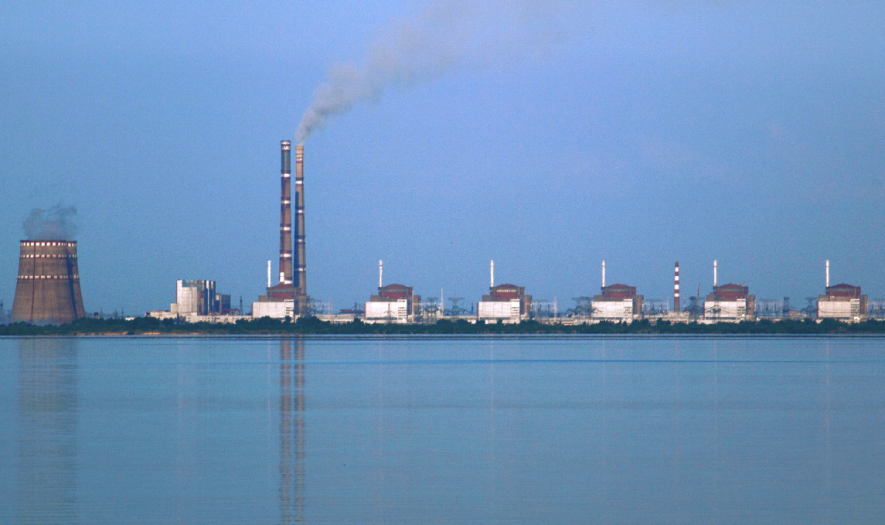
    Representational use only.Image Courtesy: Wikimedia Commons

    Originally published by Newsclick. 12 January 2023

    A little over ten years after an earthquake and tsunami caused the Fukushima nuclear meltdown, Japan has chosen to embrace atomic energy—again. Before the 2011 disaster, nuclear accounted for around 30% of the power generated in Japan. Subsequently, the country’s roughly fifty reactors were shut for maintenance, which meant Japan was deriving no electricity from nuclear energy.

    Currently, nuclear generates 6.4% of power in Japan. But last December, Prime Minister Kishida Fumio declared his intent to raise nuclear’s shares to 20 or 22% by 2030.

    What caused this dramatic shift?

    “Energy security has been a long-standing preoccupation in Japan, where electricity generation is overwhelmingly dependent on imported fossil fuels. Natural gas has become an increasingly important part of the mix, as the country sought to shut down polluting coal-fired plants and mothballed much of its nuclear power industry after the 2011 meltdown at the Fukushima Daiichi station,” the NYT reported last April.

    Japan, one of the largest importers of liquefied natural gas (LNG), relies extensively on Russia for supplies. With the war in Ukraine—one of the biggest LNG suppliers—upsetting global energy calculations, Japan was not left unscathed. Energy sanctions on Russia following its invasion of Ukraine have strained supplies and sent costs spiralling. As energy supplies were hit worldwide, the International Energy Agency described the situation as a “truly global energy crisis”.

    The war in Ukraine is, of course, not the lone factor. The climate change crisis has long required countries to clean up their act. With fossil fuels frowned upon, alternative renewable energy sources such as solar, wind, hydro and biomass are increasingly relied on. Nuclear energy, too, is being explored because of the perception it is clean and climate-friendly, primarily because of its supposed supposedly low carbon footprint.

    However, the fortunes of the nuclear industry plummeted after the 2011 Fukushima disaster as public faith in the safety of nuclear energy diminished. Countries began shuttering nuclear reactors and abandoned plans for new nuclear power plants. Prominent names like United States-based Westinghouse, France’s Areva and Germany’s Siemens entered choppy waters, and the nuclear industry took a significant beating.

    Westinghouse, Areva and Siemens

    In 2017, Westinghouse Electric Company, a subsidiary of Japan’s Toshiba, filed for bankruptcy in the United States. Massive cost escalations and time overruns at its Georgia and South Carolina projects put it on this path. Toshiba and Westinghouse had overestimated demand for nuclear power plants, and a string of confounding technical difficulties at their AP-1000 reactors exacerbated their time and cost overruns. Westinghouse is supposed to supply India with six AP-1000 nuclear reactors under the 2008 India-United States Civil Nuclear Agreement. It should set anyone thinking why India is keen on reactors which flunked in the United States.

    Not just Westinghouse, Areva’s financial debacle also added to the woes of nuclear power. In 2014, Areva posted a net loss of €4.8 billion after several preceding years of losses and technical, regulatory and legal problems. But the French government allowed Areva’s bailout in which it owned 90% of shares. The bailout occurred through French electricity utility EDF taking a majority stake in the company for €2.5 billion, and French taxpayers bore this cost. The French government owns about 84% of EDF. Nuclear energy has long been a symbol of French national pride though questions about sustainability and economics refuse to go away. Areva is a source of many jobs, which prompted France not to let the company sink.

    France relies on nuclear power for a significant chunk of its electricity. However, that is on the decline. Nuclear energy was 69% of total electricity consumption in 2021, down from 76.4% in 2000.

    All is not well with EDF, now France’s most prominent nuclear electric major. It is in debt for approximately $45 billion and has had recurring problems at its power plants, including outages. India is in talks with EDF to supply European Pressurised Reactors (EPRs), which have a very public troubling worldwide record of massive cost overruns and delays.

    Germany’s Siemens, a prominent nuclear power name, also withdrew from the nuclear industry as the country decided to close its nuclear power plants after Fukushima.

    When war struck Ukraine, the nuclear industry was staggering, its fortunes sinking. With heavy sanctions on Russian oil and gas exports, one outcome was an uptick in the preference for nuclear power. Some countries have started extending the life of existing reactors and planning new ones. This is despite well-known and mounting concerns that nuclear energy is neither clean nor environment-friendly because of long-term nuclear waste, nor even entirely safe—as Fukushima, Chernobyl, and the Three Mile Island disasters have proved.

    Nuclear energy advocates hope it will play a larger role in addressing power needs. But their hope is overstated. One glance at the numbers shows the underwhelming share of nuclear energy in global electricity production. According to the BP Statistical Review, non-hydro renewables– solar, wind and biomass; gas, and coal accounted for the most significant shares of electricity production in 2021, with nuclear and oil bringing up the bottom. Similarly, the World Nuclear Industry Status Report (WNISR) observed that the share of nuclear energy in gross global commercial electricity generation in 2021 was 9.8%—“the lowest value in four decades”.

    Against this backdrop, Japan hopes nuclear power will account for 20-22% of the electricity supply in 2030. In 2020, the figure was less than 5%. Japan’s decision to reinstate nuclear energy is not likely to get a groundswell of support since people have not forgotten the Fukushima disaster, and its aftermath continues to unfold. In the public memory, doubts persist regarding the efficacy of contingency and evacuation plans to address potential accidents. People anticipate colossal traffic jams, a lack of escape routes, and getting stuck for days without access to food, water or toilets in case of a mishap.

    Weak economic rationale

    It is not just continued public concern about the safety of nuclear power. The economics just does not cut it. Take the cost of under-development reactors, whose timelines and budgets are spiralling upward. For example, the Flamanville-3, a 1650 MWe reactor being built in France, was initially contracted to Areva and is now taken over by the electric utility EDF. Originally scheduled to start in 2012, the reactor is plagued with delays and snowballing costs. Its total cost is pegged at 13.2 billion Euros, more than four times the original estimate, and is likely to start in 2024.

    The Kakrapar project, where the 700 MWe, Unit 3 has been commissioned, is expected to cost Rs 19,220 crore, up from Rs 11,460 crore. Two upcoming reactors at Rawatbhata, Rajasthan, are expected to cost Rs 17,080 crore, not the earlier Rs 12,320 crore.

    The high capital and operating costs of nuclear power make it less attractive compared with renewable sources of energy, which are far more economical. In India, wind and solar each contributed more than 150% of nuclear to national power generation in India in 2021.

    In India, the price of solar energy is between Rs 2.2 and 2.5 per unit and prices are expected to dip. For solar power, though, storage costs and the rising prices of solar photovoltaic (PV) cells must be considered. A Global Wind Energy Council study has projected the levellised cost of energy (LCOE) or the net present generation cost for a generator over its lifetime at Rs 2.8-3.3/Kwh for 2022. The difference is stark compared with nuclear power tariffs. For example, NPCIL projects a tariff of 5.31/kWh for its upcoming Kakrapar units 3 and 4.

    The following numbers from WNISR 2022 shed more light on international developments:

    Unsubsidised average electricity generating costs declined between 2009 and 2021 in the case of solar PV from US $359 to US $36 per MWh, a 90% fall. For wind energy, the costs dipped 72% from US $135 to US $38 per MWh. For nuclear power, costs rose from US $123 to US $167 per MWh—a 36% jump.

    Nuclear Waste Management

    And then, the elephant in the room—long-term nuclear waste—which often (conveniently) escapes acknowledgement.

    “Despite decades of effort, the nuclear industry does not yet have a working solution for managing spent fuel and high-level waste, the most radioactive products generated by nuclear power plants,” writes physicist MV Ramana. The supposed answer is a long-term geological repository which will seal off nuclear waste for thousands of years. But there are significant uncertainties about the “long-term performance of repositories and behaviour of nuclear wastes” stored in such facilities and widespread public opposition at the prospect of nuclear waste repositories coming up near them. Therefore, Ramana writes, most countries have not yet been able to choose sites for nuclear repositories.

    Nuclear waste, most of which is spent fuel, comprises many elements that emit radiation over different periods. Over time, radioactive materials are no longer radioactive, but some have relatively short half-lives, which means they could decay in seconds to weeks. This is the most dangerous aspect of spent nuclear fuel. Once its radioactivity lapses, some can be reprocessed for fresh reactor fuel or find other uses in medicine, radiation therapy and power production. Most of the material in spent nuclear fuel is the relatively stable Uranium-238, which exists in nature. But it can take hundreds of years for spent fuel to reach this level of radioactivity. And even after decaying to relatively safe radioactivity levels, the material can carry a complex chemical profile, making it difficult and expensive to store or deal with permanently.

    Further, as reactors approach the end of their original lifecycles, they need to be decommissioned or permanently shut. This process, which requires a complete radioactivity clean-up and progressive dismantling, can run into decades and its costs mount to billions of dollars.

    So the actual costs of nuclear power are not that of power production alone but also the effect on future generations, a timespan that engineering projects do not typically consider. As it is difficult to estimate the accurate cost of nuclear waste management, studies can minimise and underestimate those costs.

    In a deep dive for The Guardian, journalist Samanth Subramanian writes about the timescales and costs of decommissioning the Sellafield nuclear power plant—the United Kingdom’s first atomic reactor, which started operations in 1950, manufacturing plutonium for nuclear weapons. Later, it generated electricity until 2003 and was also used to reprocess fuel or extract uranium and plutonium for used fuel rods. All of that has come to an end.

    “From an operational nuclear facility, Sellafield turned into a full-time storage depot—but an uncanny, precarious one, filled with toxic nuclear waste that has to be kept contained at any cost,” Subramanian writes. The challenge of dealing with nuclear waste includes waiting thousands of years as radioactivity tapers off, especially in high-level waste. The spent fuel rods, radioactive metals and liquids cannot simply lie around all this time. It must be stored in sealed buildings and artificial ponds, which are not permanent. Ultimately, the waste must be safely hauled to an “ultimate strongroom”, a geological disposal facility or repository carved from boring hundreds of metres into rock. Timelines estimate the process will take approximately 120 years (until 2120) and cost £121 billion.

    Sellafield presents the classic conundrum of the nuclear energy industry where countries embraced nuclear energy rapidly but are wrestling with nuclear waste, a by-product of that process.

    As it weans itself off nuclear power, Germany still does not have a nuclear waste repository, which is unlikely to go smoothly. It has announced 90 possible locations for the nuclear repository, but strong opposition is expected in each place. Previous attempts did prove utterly divisive.

    India’s nuclear waste

    India has 22 nuclear power plants and a slew of proposed reactors. Villagers near the Kudankulam Nuclear Power Plant, built with Russian cooperation, have been protesting the storage of spent nuclear fuel from KNPP 1 and 2 at the plant premises. The political leadership of Tamil Nadu has demanded the spent fuel be transported to Russia. The government has demurred that the spent fuel is a “valuable recyclable fuel” that can be reprocessed to produce more fuel for next-stage reactors.

    In December 2021, the government told the Lok Sabha that since a “very small quantity” of high-level waste is generated, there is no need for a deep underground geological disposal facility in the near future. SP Udayakumar of the People’s Movement Against Nuclear Energy warned in an editorial that the government cannot be haphazard or vague in nuclear waste management.

    “If the Union and state governments, scientists and technocrats, have not managed to clean up the dangerous Bhopal waste that has been lying there for the past 38 years, how are they going to convince us about nuclear waste management? Nuclear waste management has to be planned from the beginning and not as we go along,” Udayakumar wrote.

    There are tensions at KNPP over an Away from Reactor (AFR) store for spent nuclear fuel until a final repository is constructed. The uneasiness is because there seem to be no definite timelines for the final repository, without which the AFR may become permanent spent fuel storage. There are fears that other states may treat the Kudankulam AFR as a dumping ground for nuclear waste from their reactors.

    Spent nuclear fuel, a part of which forms nuclear waste, can be highly radioactive. What happens to it, where, how it is stored, for how long, and the safety of storage arrangements are crucial public health questions the nuclear establishment must answer.

    Kudankulam is not the only reactor generating spent nuclear fuel. At least 20 others in India generate spent fuel—what happens to that is a question.

    It is unclear what lessons India learned from the Fukushima disaster. India’s nuclear regulatory authority, the Atomic Energy Regulatory Board (AERB), remains weak despite warnings from the Comptroller and Auditor General and the IAEA. Even the Nuclear Safety Regulatory Authority Bill 2011 has been effectively shelved.

    Remarkably, countries have steered away from nuclear power after Fukushima, but Indian governments have pushed ahead. The adverse effects on energy supplies and prices of war in Ukraine made governments in Japan and Germany walk the nuclear power path again, but the economics and waste management problem of nuclear energy pose enormous hurdles for the sector.

    A Massachusetts Institute of Technology study sums it up succinctly: “The prospects for the expansion of nuclear energy remain decidedly dim in many parts of the world. The fundamental problem is cost. Other generation technologies have become cheaper in recent decades, while new nuclear plants have only become costlier.” The costs make it a less attractive option as far as decarbonising is concerned.

    Besides, the risk of geopolitical disasters at nuclear power plants can no longer be ignored, as when Ukraine’s Zaporizhzhia nuclear power plant was caught in the cross-hairs of the war in 2022. Hopes for a renewed nuclear industry stand on thin ice. Grand claims about its resurgence must be viewed with caution and scepticism.

    Read the original article: https://www.newsclick.in/Why-Nuclear-Industry-Comeback-Hopes-Rest-Very-Thin-Ice

  • India’s refusal to side with the West should not be interpreted as a revival of its non-alignment policy

    India’s refusal to side with the West should not be interpreted as a revival of its non-alignment policy

    Photo: AP

    Published by City University of London. 6 June 2022

    India’s refusal to outrightly condemn Russia for invading Ukraine is driven by its own interests and not by the nobler ideals which imbued the non-aligned movement of the 1960s and 1970s.

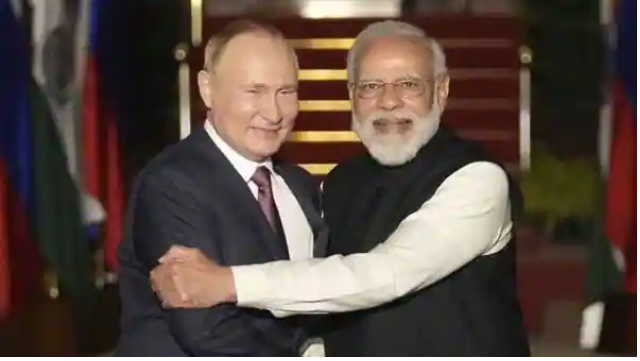
    Thick in the midst of its bloody invasion of Ukraine, Russia’s Foreign Minister Sergei Lavrov found time to visit India in early April 2022. Lavrov met India’s Prime Minister Narendra Modi and foreign minister S. Jaishankar and praised India for not taking a “one-sided” view of the war and considering “the entirety of facts”.

    Lavrov’s visit coincided with visits of UK Foreign Secretary Liz Truss and US Deputy National Security Advisor Daleep Singh to Delhi. Truss was in India to urge democracies to counter Russia’s invasion of Ukraine, especially by reducing dependence on Russian oil imports.  Meanwhile, Singh said that countries trying to circumvent sanctions on Russia would face consequences.

    Both the West and Russia share close ties with India and are keen to enlist its support on the war in Ukraine. India on its part has refrained from directly condemning Russia, ignored sanctions and stepped up purchases of discounted Russian oil.

    Observers of India’s foreign relations wonder if India’s explicit alignment with Russia and pushback against the West marks a new direction in India’s foreign policy. But on the contrary, India’s foreign policy choices are a continuation of the muscular and strongman policies set in motion by the Narendra Modi government since it came to power in 2014.

    Electoral manifestoes of Bharatiya Janata Party (BJP) to which Narendra Modi belongs, promise a major role for India in shaping the global agenda. While this is a positive goal for India, in practice the effects have not always been benign.  For example, in South Asia, where India is the most dominant country, neighbours like Nepal and Bhutan— while economically dependent on India — also resent its interference.

    India’s ‘unofficial’ economic blockade of fuel and supplies to Nepal in 2015, because it did not approve of its new Constitution, triggered deep resentment in the country. Nepal accused the Indian government of the blockade, which the latter denied.

    Bhutan too is uncomfortable with India’s influence. This was evident during the 2017 stand-off between India and China over the Doklam Pass which is contested territory between Bhutan and China and located at the tri-junction of the three countries. Bhutan was not pleased with India’s intervention.

    India which was earlier known for sheltering refugees has subjected Rohingyas fleeing genocide in Myanmar to discrimination, detention and deportation.  Though India hosts approximately 40,000 Rohingyas, there have been multiple instances of refugee camps being set on fire. BJP leaders have labelled Rohingyas as terrorists and demanded that they be expelled from the country. Interestingly, even as the Myanmar government stands accused of genocide, the country was the largest recipient of Indian military exports from 2017-2021.

    Another visible transformation in India’s foreign policy since the Modi government took power is its proximity to Israel and diminishing support for Palestine. Modi became the first Indian Prime Minister to visit Israel in 2017 and India was the top recipient of Israeli military exports from 2017-2021. The Indian government is also reported to have purchased  Israeli Pegasus spyware, and used it to spy on journalists, politicians, lawyers, students, activists and bureaucrats —a charge that it is yet to confirm or deny.

    Even as the Modi government flexes muscle internationally, it has been authoritarian domestically too; suppressing dissent and permitting right-wing vigilante groups to target Muslims and Christian minorities. Recent celebrations of the Hindu festival Ram Navami saw hate speech against Muslims and vandalism of their shops and properties. A Muslim majority neighbourhood of Delhi’s Jahangirpuri also witnessed an unprecedented demolition drive of their homes. When confronted with international criticism over its human rights record, amending citizenship laws or clamping down on major protests by farmers – India has been dismissive and defiant.

    It is admittedly hard to ignore India because of its economy, population and powerful diaspora. It is a top supplier of vaccines and plays an important role in groupings such as the Quad.

    Significantly, India is also the world’s largest importer of arms with Russia being a major supplier. Russian Foreign Minister Lavrov underlined India’s importance when he pointed out that Russia is a major foreign contractor for New Delhi.

    But Russia is equally important to India, supporting the latter’s bid for a permanent UNSC seat, during the 1971 Bangladesh war and opposed sanctions on India for testing nuclear weapons in 1998. In not criticising Russia, India is not just returning favours but also protecting its interests which include imports of Russian arms and oil.

    These actions cumulatively signal India’s continuing aggressive and muscular foreign policy, in line with the vision of its right-wing government whose authoritarian tendencies are increasingly evident, at home and abroad.

    India’s refusal to side with the West should not be interpreted as a revival of its non-alignment policy which was imbued with ideals of anti-colonialism, anti-imperialism and Third World solidarity.  Instead, realpolitik and hard realism drive India’s current decisions.

    Read the original article: https://blogs.city.ac.uk/internationalsystemofpower/2022/06/06/indias-refusal-to-side-with-the-west-should-not-be-interpreted-as-a-revival-of-its-non-alignment-policy/

Urvashi Sarkar – 2026 – All rights reserved.

web things by Studio Goncharov