Tag: Environment

  • UN’s green award for Modi comes despite criticism of environmental record

    UN’s green award for Modi comes despite criticism of environmental record

    Photo:Credit: facebook.com/narendramodi

    Published in The Wire. 3 October 2018

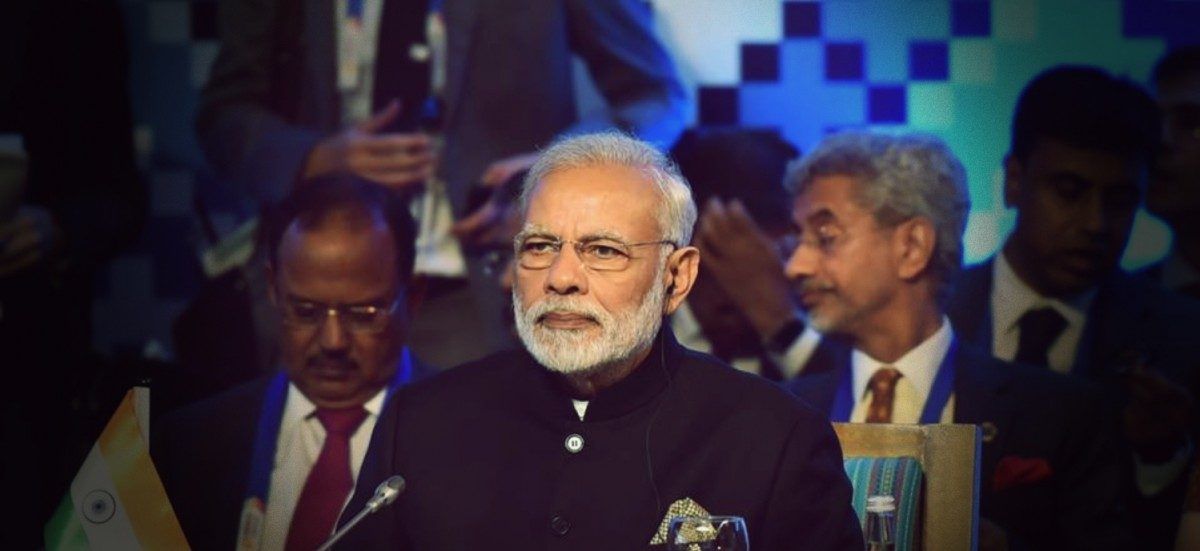
    New York: Narendra Modi this week became the fourth South Asian leader to be given the UN’s highest environmental award when the United Nations Environment Programme (UNEP) named the Indian prime minister and French President Emmanuel Macron as joint ‘Champions of the Earth’ in the policy leadership category. The other Indian awardee was Kochi International Airport, in the entrepreneurial vision category.

    Previous winners since the awards were instituted in 2005 include King Jigme Singye Wangchuk of Bhutan (2005), President Mohammed Nasheed of the Maldives (2010) and Prime Minister Sheikh Hasina of Bangladesh (2015).

    Modi and Macron were awarded for “championing the International Solar Alliance and promoting new areas of levels of cooperation on environmental action, including Macron’s work on the Global Pact for the Environment and Modi’s unprecedented pledge to eliminate all single-use plastic in India by 2022.”

    Controversial record

    While the PMO has been quick to celebrate the award, environmentalists in India said there was a gap between the international perception of the Modi’s commitment to the environment and the policies of his government on the ground.

    This week, for example, the country’s only Turtle Wildlife Sanctuary on the Ganges at Varanasi has been denotified on questionable grounds – the first dismantling of a wildlife reserve since India’s landmark wildlife law was passed in 1972. As the noted environmental writer Bahar Dutt has argued, the denotification is believed to be prompted by the desire to dredge the banks of the river so as to allow it to be used as an inland waterway for the transport of coal to serve new thermal powerplants.

    The Centre for Science and Environment has drawn up a catalogue of Modi’s policies which does not make for flattering reading, even on the issue of plastic – the specific subject for which Modi is now being called a ‘champion of the earth’.

    According to CSE, the attack on the environment began from day one:

    “In its first year of governance between August 2014 and April 2015, the Prime Minister’s Office under Modi considered and implemented “a list of 60 urgent action points submitted by the Confederation of Indian Industry, meant to remove hurdles of environment clearances for industry.”

    Since then, what the CSE calls the “Modi government’s ‘dilution spree’ of laws pertaining to India’s forests, coasts, wildlife, air and waste” has continued. This includes:

    India also ranks 177 of 180 countries in the Environmental Performance Index 2018 rankings, down from 141 in 2016.

    Modi and the UN

    The UNEP award to Modi comes weeks after a UN report on 39 countries highlighted the fact that environmental activists are among those who have been subject to reprisals by the Indian government. The report names countries who intimidate activists who cooperate with and assist the UN in its human rights work.

    The report mentions intimidation of the Centre for Social Development, which works on the land and resource rights of indigenous people, for using foreign contributions to highlight uranium mining in Meghalaya at global platforms.

    The special rapporteurs of the Human Rights Council have in recent reports  to the OHCHR noted the protests against the Sterlite copper smelting plant, the displacement of people caused by the Sardar Sarovar dam and the arrest of environmental activists.

    When asked about the process of nomination for Modi and Macron, UNEP head Eric Solheim told this reporter: “We have a process that we go through to judge who we believe are the right nominees. In the past we have awarded individuals like the former Chilean President Michelle Bachelet and Rwandan President Paul Kagame who showed political leadership in environment issues. The UNEP is awarding Modi and Macron for taking the lead on the International Solar Alliance. France has also initiated a global pact for environment, which is a process within the UN to negotiate an instrument for protection of the climate. Macron has a strong environmental record and so does Modi.”

    Prime Minister Narendra Modi with French president Emmanuel Macron. Credit: Reuters

    According to Solheim, Modi could also count the electrification of villages and the Swachh Bharat campaign as a success. Ironically, the UN special rapporteur on drinking water and sanitation, Leo Heller, who visited India last year, said after his visit: “Eliminating open defecation is not only about building latrines, but requires adequate methods for behaviour change, and sufficient water supply is a pre-requisite for the sustainable and safe use of adequate, low-cost latrines.” He added that the programme “should not involuntarily contribute to violating fundamental rights of others, such as those specific caste-affected groups engaged in manual scavenging, or those who are marginalised such as ethnic minorities and people living in remote rural areas… “.

    With regard to the contradictory actions of United Nations agencies, UN staff who did not want to be quoted, said that UN agencies are spread across the world and may not necessarily coordinate and in some cases even be aware of each other’s work.

    Environmentalists react

    Reacting to the award to Modi, environmental researcher Kanchi Kohli said, “There is a deep irony in India being considered a Champion of the Earth, with the prime minister as the awardee. This comes at a time when the country is dealing with an acute crisis of water and air quality, severe groundwater stress and land use conflicts, all of which impact lives and livelihoods of people. Several environmental laws have already been diluted or are in the process of being amended citing ease of doing business as official reasons. The decisions related to the ban of single use plastic or expansion of renewables should not be viewed in isolation of several other decisions that are marred with environment justice concerns.”

    Ashish Kothari, researcher and activist with Kalpavriksh Pune added: “While the Congress regime was bad enough with regard to environment, the BJP’s stint is worse, in terms of dilution of environmental laws and procedures, the pace of clearance to ‘development’ projects and the push for major infrastructure in ecologically fragile areas, home to tribal communities.”

    According to Kothari, an ambitious solar programme is welcome, but will make no difference, without the reduction of fossil fuels and nuclear power. “Large scale solar production implies issues of land grabbing, where the access of the poor may be as problematic as for other sources. The ban on single use plastic is welcome, but is a small part of a much bigger problem, which is the mass production of solid waste. India is reeling under a massive waste crisis and piecemeal solutions will not help much. There needs to be a move away from a development model that is only fixated on consumption-driven economic growth.”

    Selection process

    In a written response, UNEP said that the policy leadership award category is about inspiring future action for our planet, not a wholesale endorsement of the recipient’s agenda. “In jointly recognising Prime Minister Modi and President Macron, we are spotlighting the spirit of cooperative leadership and bold environmental initiative which we hope to see taken up by other world leaders.”

    On the selection process, it said: “Champions are selected from hundreds of global nominees submitted during an annual public nominating process. Once submitted, a team of independently dedicated Champions of the Earth staff located in UN Environment headquarters in Nairobi, Kenya, research and prepare detailed profiles of each candidate, their achievements and qualifications. Those profiles are then reviewed by UN Environment’s senior management team located in regional offices around the world. After an open comment period and further vetting, by a selection of senior UN staff the three-month process concludes with final selections made by UN Environment’s Executive Director.”

    Read the original article: https://thewire.in/environment/un-green-award-narendra-modi-controversial-environmental-record
  • Adani’s Aussie coal mine could fuel China’s BRI

    Published in Asia Times. 30 November 2017

    The Indian-owned Adani Group’s bid to seek funds from a Chinese state-owned-enterprise for its controversial project in Australia – to build the world’s largest coal mine – could spark further problems, according to a US think tank. There are fears that coal from the mine could be headed to China’s ambitious Belt and Road Initiative (BRI), which has been vigorously opposed by India.

    A subsidiary of the Adani Group is seeking finance for the contentious  Carmichael coal mine and rail project from the Chinese Machinery Engineering Corporation (CMEC), according to a research brief released earlier this month by the  Institute for Energy Economics and Financial Analysis (IEEFA), a pro-renewable energy US think tank. According to an ABC report, the Adani Group is close to securing funding from China.

    Financing by CMEC might bring the Carmichael coal project into China’s ambitious infrastructure project, according to the IEFFA brief. The chance that the Adani project might become part of the Belt and Road project would clash with the Indian government’s opposition to the scheme.

    This is not the first time Adani has done business with Chinese firms. Earlier this year, the group signed a deal with East Hope Group, one of China’s largest companies, which plans to invest over $300 million in solar power generation at the Mundra Special Economic Zone in their home state of Gujarat. Adani had earlier placed engineering, procurement and construction orders with Chinese companies for its Mundra power facility.

    The Carmichael coal mine has been beset with financial difficulties as Adani has struggled to find A$16 billion to fund the project. Major Australian banks have refused to back the mine, while a decision by the Northern Australian Infrastructure Facility (NAIF) to loan A$1 billion to build a rail line to a coal terminal on the coast is pending. Protests have been staged all around Australia amid anger that the national government would provide huge support to a project likely to cause huge damage to the environment.

    IEEFA researchers have cited a January 2017 press release by CMEC stating that its “president Zhang Chun met with Adani Mining CFO Praveen Khandelwal and Downer EDI”. The latter is involved in the construction and operation of the Carmichael project and a ‘strategic partner’ of CMEC. The press release does not mention the Carmichael project but states that CMEC hopes to cooperate with Adani and Downer EDI in financing, construction and operation of relevant coal mines and railway projects.

    One of the authors of the IEEFA report Tim Buckley told Asia Times in an interview: “Negotiations between CMEC and Adani on the Carmichael project are ongoing for engineering, procurement and construction contracts for CMEC. If the negotiations come through, CMEC might acquire a minority equity stake in the project – which it is known to have done in previous projects – and bring in Chinese financing through the Export Import Bank of China or China Construction Bank. Progress in talks may be subject to NAIF’s billion dollar loan coming through.”

    Headquartered in Beijing, CMEC is among a range of state enterprises which has a significant role in taking the Belt and Road scheme forward. According to Chinese government figures, 47 state enterprises have participated in 1,676 BRI projects involving infrastructure and energy since 2013.

    A 2015 report by CMEC said the enterprise has extensive cooperation with countries and regions along the BRI route and targets engineering contracting plans and services. It said it also planned to reform its corporate structure to be in line with various strategies such as the BRI. CMEC is also one of China’s largest overseas engineering contractors.

    Interestingly, CMEC’s BRI projects include Pakistan’s Block-II of the Thar coal mine and power station project, which is part of the China Pakistan Economic Corridor (CPEC). The Indian government has also opposed the CPEC, which passes through Pakistan Occupied Kashmir.

    IEEFA said that CMEC’s involvement in the Carmichael project may hint at Pakistan as a potential alternative destination for the coal. However, this could open the door to geopolitical factors – and it would not be a cheap source of electricity for Pakistan. China is also unlikely to buy the coal, as it is making a major transition to renewable energy and pitching itself as a leader in eliminating CO2 emissions and fighting climate change.

    Where will the Carmichael coal end up?

    A key question that many have asked is where will the Carmichael coal go. According to evidence given in a Queensland court, a report on behalf of Adani said that two coal products would be created: low ash/moderate energy coal suitable for premium Asian markets and high ash/low energy product suitable for non-premium markets, notably India.

    Adani has frequently maintained that the project will address “power poverty for hundreds of millions of Indians”. According to the Adani Australia website, the Carmichael coal mine will be linked to its bulk loading facility at Abbot Point, from where it will be shipped to Adani’s power stations in India.

    The coal was initially meant for Adani’s Mundra power facility. But with Mundra in acute financial distress, Adani wants to sell a 51% stake in the plant to Gujarat State Electricity Board – for 1 rupee. Meanwhile, charges of environmental damage and corruption surround the plant.

    Buckley feels that as India’s biggest coal plants reliant on imported coal have become financially unviable, the possibility of Carmichael coal ending up in India is small. “The largest importer of thermal coal for power generation in India is Adani Mundra followed by Tata Mundra. These have both become unviable. India’s coal minister Piyush Goyal has also stated that India needs to move away from reliance on expensive imported thermal coal. International prices of coal will certainly matter, even if Adani plans to sell Carmichael coal to his own power plants,” he said.

    The involvement of Chinese state-owned enterprises (SoE) in coal-fired power plants across the world has also sparked concerns about whether some of these entities violate environmental regulations and boost carbon emissions. In terms of climate and geopolitics, the Carmichael coal mine looks to be increasingly poised on thin ice.

    Dr Aravind Yelery, a senior fellow at the Institute of Chinese Studies in New Delhi, said there was nothing surprising about an Indian company seeking outside funding, but Chinese funding of an Indian company in a third country was unusual. “This has happened earlier in a consortium model in Latin America where Indian and Chinese companies had come together. But the funding of a single Indian entity by a Chinese SoE in a third company is quite rare.”

    Yelery said the sudden involvement of China raised questions about who would profit and how. “When Adani signed the deal, there was no mention of China, but now they are involved. China will benefit by selling equipment, giving high-interest loans and creating jobs for its people. China could quite possibly brand the Adani coal mine as a BRI project, since they are branding many overseas investments under the initiative. While Adani would not be expected to make the same claim, the group would get some of the funding they require.”

    It could be a case of mutual benefits for Adani and China, but the promise of jobs in Australia and energy security of millions of Indians would be on fragile ground.

    Detailed questions were mailed to the Adani Group and CMEC, over two weeks ago, but they did not respond. This story will be updated if and when they do.

    Cover photo: Reuters

    Read the original article: https://asiatimes.com/2017/11/coal-adanis-aussie-mine-end-fueling-chinas-bri/

  • Widowed by tigers, abandoned by the state

    Published in People’s Archive of Rural India. 12 October 2017

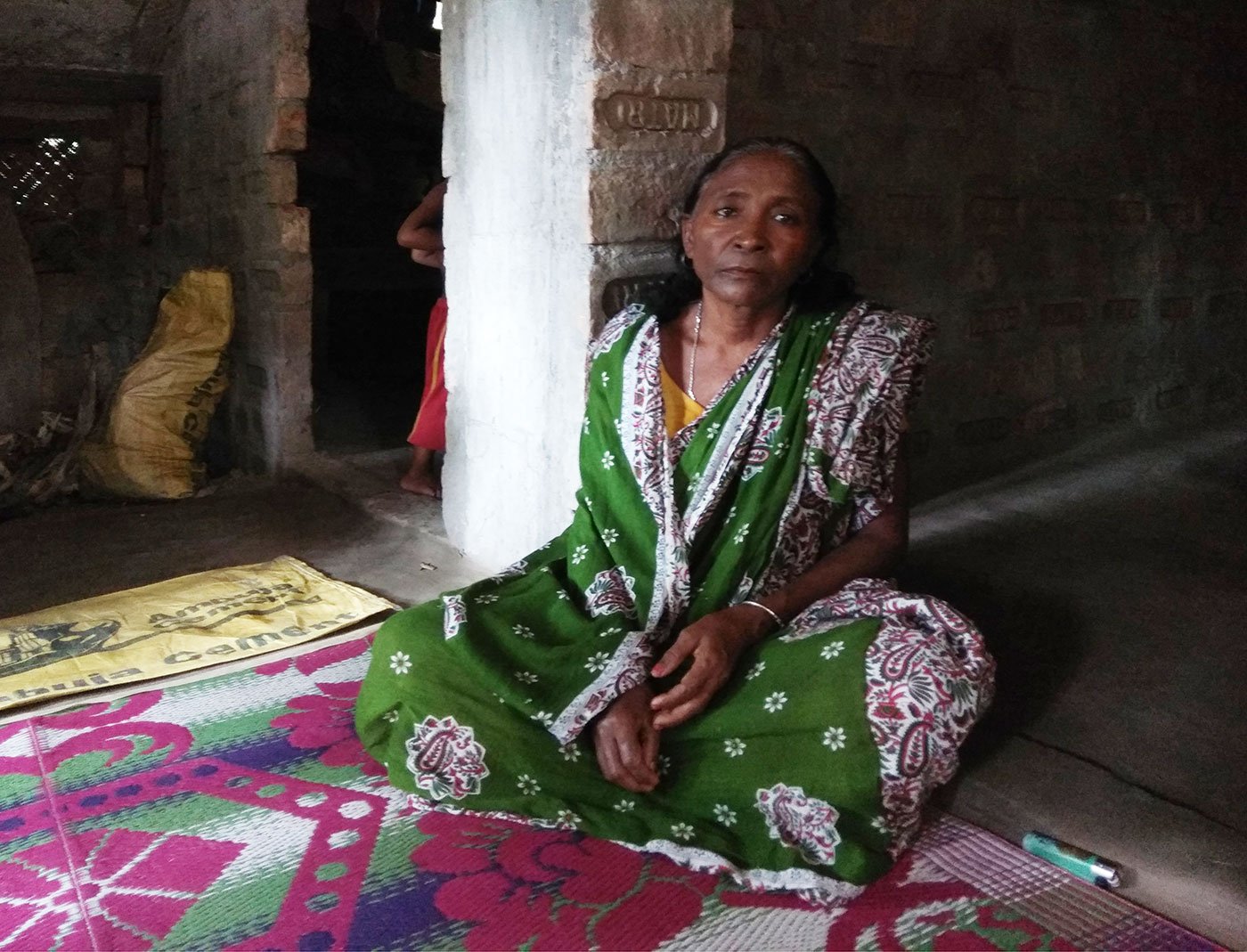
    Shikha Mondal  lost her husband Asit in November 2015. “He went with two other men to the Garal river in the Baganbari forest to catch crabs. The other two  returned and told me that a tiger carried my husband away,” she says. Asit Mondal was 32 when he died, the family’s sole earning member, and the father of two school-going sons.

    Determined to claim compensation, Shikha, a resident of Jahar Colony village in  West Bengal’s Gosaba block, paid a lawyer Rs. 10,000 to help her. “There were many documents to gather – no objection certificates (NOCs) from the police and  Forest Department, insurance card, a letter from the village pradhan, and a death certificate.”

    The lawyer managed to get the insurance company to pay Rs. 1 lakh in compensation. But Shikha was denied an NOC from the Forest Department because her husband died in the core area. The insurance company has not yet returned her documents.

    Shikha now catches crabs and prawns, does odd jobs and agricultural labour, and somehow manages to send her sons to school. Unable to afford an independent household, she and her children live at an uncle’s house.

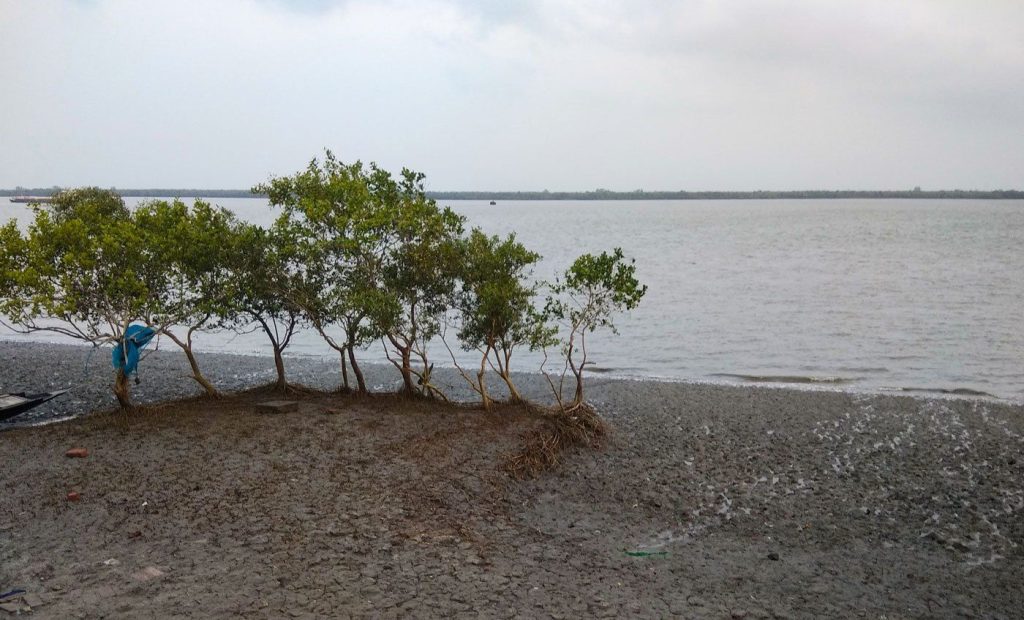
    Thousands of women in the Sunderbans have similarly lost their husbands to tiger attacks. This delta region, spread over around 4,200 square kilometres in eastern India and home to the world’s largest mangrove forests, is synonymous with tigers.

    Watch video: Shikha Mondal describes her ordeal of trying to get compensation after her husband died in 2015

    The tigers in the forests of Hingalganj, Gosaba, Kultali, Pathar Pratima and Basanti blocks are a threat to the villagers who depend on the forests for their daily needs and livelihoods. These blocks are close to the Sundarbans National Park (and tiger reserve), which includes a core area of around 1,700 square kilometres and a buffer area of around 900 square kilometres, where some livelihood activities are allowed. Usually, it is the men in the villages here who venture into the forests to catch fish and crabs, or to gather honey and wood. In a face-off with a tiger, most often the man dies.

    The exact number of women widowed in this manner in the Sundarbans is unknown, but locals, non-governmental organisations and others estimate the number is at least 3,000 over three decades – or around a 100 a year.

    “Since 2011, nearly 250 women have lost their husbands to tiger attacks in Gosaba’s Lahiripur gram panchayat area [consisting of 22 villages],” says Arjun Mondal, who manages the Sundarbans Rural Development Society, an NGO that works for the welfare of the ‘tiger widows’. “Not a single one has received compensation,” he adds.

    The women are entitled to total compensation of roughly Rs. 4-5 lakhs from the West Bengal government’s Forest Department, Fisheries Department and the state’s Group Personal Accident Insurance Scheme. However, there are many conditions; Arjun lists a few: “The husband should not have died in the core area, he should have had a boat licence certificate (BLC) and a permit from the Forest Department. Additionally, the wife is required to submit several documents to the different departments to get the compensation.”

    Invariably, people from the villages do wander into the core area. Arjun, a fisherman himself, says, “We don’t realise where the buffer zone ends and the core area begins. The government issues very few BLCs, and not everyone can afford one. Getting permits also depends on the will of the Forest Department.”

    Therefore, the odds are stacked against the wives of men who do not have BLCs or permits. The situation worsens when the men die in the core areas, which the villagers here are not allowed to enter at all, with or without permits.

    As it did for Namita Biswas, 40, from Patharpara village in Gosaba block. Her husband Manoranjan, a fisherman, was attacked by a tiger in the core area in February 2015. He survived and was admitted to a hospital, but died a few days after he was discharged. “The infection from his head injury had not healed,” Namita explains. “My husband had a BLC, but the police refused to take my statement. We gave all our documents and medical bills to the Forest Department for reimbursement. The money is yet to come. There are so many widows like me. The government should at least give us a monthly pension.”

    Purmila Burman’s documents have been taken away by a middleman who has disappeared
     Purmila Burman was duped by an ‘agent’ claiming he could get compensation for her husband’s death

    While Shikha and Namita still await compensation, Purmila Burman, 55, of Patharpara, has no such hope. In March 2016, her fisherman husband Shubhendu was killed by a tiger in the core area. “A middleman promised to help me when Shubhendu died. I gathered all my documents and gave them to him, believing he would help,” Purmila says. The agent has since disappeared with her documents, and she has received no compensation.

    The Sundarbans are full of stories like these. In some families, consecutive generations of families have lost their men to tiger attacks. Most of the villages where this has happened have bidhoba paras or ‘widow localities’. In most households, the women’s lives are marked by distress and penury. It is difficult for them to re-marry since remarriage is frowned upon.

    In July 2016, this writer filed three separate Right to Information (RTI) petitions enquiring about compensation for tiger widows with the West Bengal government’s Fisheries Department, Forest Department and Department of Sundarban Affairs.

    Only the Fisheries Department responded: in the last six years, only five women – a tiny portion of the estimated 100 women whose husbands are killed by tigers every year – have filed for compensation with the department. Of them, only three received Rs. 1 lakh each. The other two were denied compensation since the postmortem reports for their husbands were not available.

    But contrary to the Fisheries Department data, most of the women I talked to said that they had applied for compensation – so it is likely that their claims are not being accepted due to incomplete documents or other conditions they fail to meet.

    “The entire process is daunting, with many documents to submit and a lot of running around. The woman may even be misled or might be unaware of the process,” says Pradip Chatterjee of the Dakshinbanga Matsyajibi Forum. (The Fishworkers Forum of South Bengal, which is trying to help ‘tiger widows’ claim compensation and find work). “Meanwhile, fresh killings by tigers are reported every year, adding to the numbers of widowed women,” he says.

    And some women, Chatterjee adds, fearful of the questioning by the Forest Department, ‘suppress’ the death of their husband, especially if he has been killed in the core area – they don’t even register it with the authorities, and nor do they claim compensation.

    But Ranbibala Mondal of Patharpara village did try to claim the compensation. Her husband was attacked by a tiger many years ago. “After all these years, the government has given me nothing,” she says. “Can you do something?”

    Photos: Urvashi Sarkar

    Read the original article: https://ruralindiaonline.org/articles/widowed-by-tigers-abandoned-by-the-state/

  • The sting of bees and the tyranny of tigers

    Published in People’s Archive of Rural India. 23 September 2016

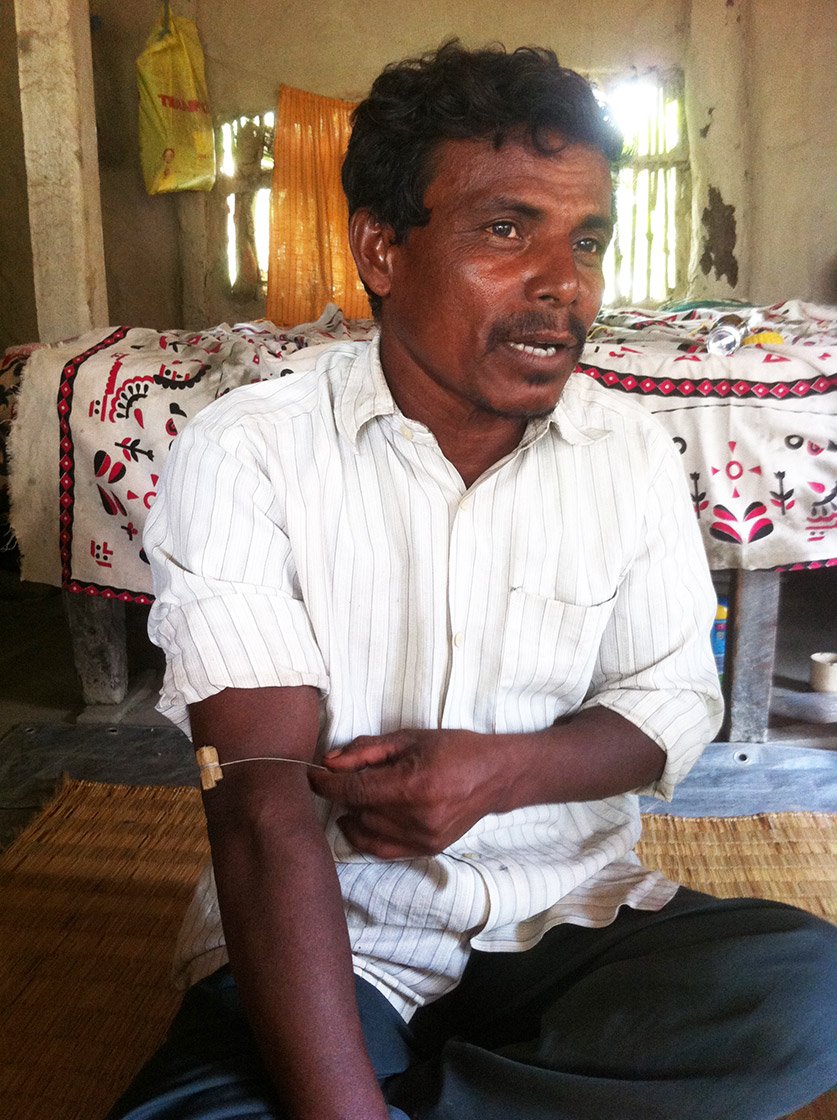
    “I grabbed the kamot with my arms. You can see its teeth marks even now.” Nitai Joddar, a mouley (honey collector), remembers exactly when a kamot (crocodile) bit him, from hip to leg. It was on March 23 in 1980, and he had gone to the Raimangal river to catch fish.

    Nitai, of Hemnagar village in the North 24 Parganas district of West Bengal, is 41 now. His father, a honey collector, started taking him along on his work trips to the jungle when he was 10. After the kamot incident, Nitai began wearing an amulet as a safeguard. Encounters with crocodiles are common on the riverbanks of many parts of the Sundarbans. People, especially fish workers, have been injured or have even been killed.

    Nitai Joddar wore this armlet after being bitten by a crocodile, and has placed his complete trust in it to protect him in the jungles of the Sundarbans

    Collecting honey for sale is a common occupation in the Sundarbans – and it can be very hazardous. For Nitai and others, just as real as the possibility of being attacked by a crocodile, is the threat of tigers while fishing or collecting honey from the dense jungles. According to the website of the Department of Sundarbans Affairs, “…men in the Sundarbans are attacked by wild animals – sharks, crocodiles, or tigers… especially when fishermen or honey collectors enter the dense mangrove forests…” Women, of course, are equally at risk of such attacks, though usually the community does not allow them to go on the extended honey gathering trips.

    Honey is collected in the Sundarbans mainly from April to June. During these months, the state government bans the catching of fish, so that the fish can replenish themselves. This is when many fishermen become honey collectors and make two trips to the jungle, each lasting 15 days or longer. West Bengal is a major honey-producing state and exports a large part of its production.

    Collecting honey requires advance preparations. The honey gatherers inform the Forest Department, rent a boat whose owner has a BLC (boat licence certificate) and borrow from the money lender or mahajan . Nitai’s son Sanjit Joddar, 23, explains: “If five or six people go together to collect honey, we take a combined loan of Rs. 10,000-15,000. The interest is 2-3 per cent, which we repay along with principle in 30-45 days. The loan is taken once a year.”

    Mouleys of the Sundarbans’ (right to left): Nitai Joddar, Binay Mondal and Haripada Joddar

    The loan is required to buy provisions for the 15-day journey. Renting the boat costs Rs. 2,800-3,000 for the season [a little over 60 days between April to June] of honey collecting. The boat owner is also paid in kind – with a few kilos of honey. Another Rs. 120 is paid annually to the Forest Department as insurance in case of an accident in the jungle. After clearing all debts and payments, each mouley gets Rs. 15,000-25,000 [for the entire season].

    At times, the mouleys incur another expense: dacoits in the jungles steal from them or even kidnap them. Nitai recalls an instance when a few men were kidnapped last year and their families had to put together Rs. 2-3 lakhs for their release.

    “We set off on when the sky is clear and the river is at low tide,” Nitai says. “It takes several hours to reach our location, depending on the tide. We leave the boat and enter the jungle. One person stays behind to row the boat along the bank. When some honey is gathered, it is deposited in the boat. We eat and sleep in the boat itself.”

    The direction in which the bees fly guides the mouleys to the trees with hives. “We prepare bundles, layered with dry leaves and green hetal leaves, which are attached to sticks,” Nitai says. “We burn the bundles and the ensuing smoke curls up to the hives, driving away the bees. A sharp curved instrument is used to break the hive. We do not break the entire hive, since it needs to regrow.”

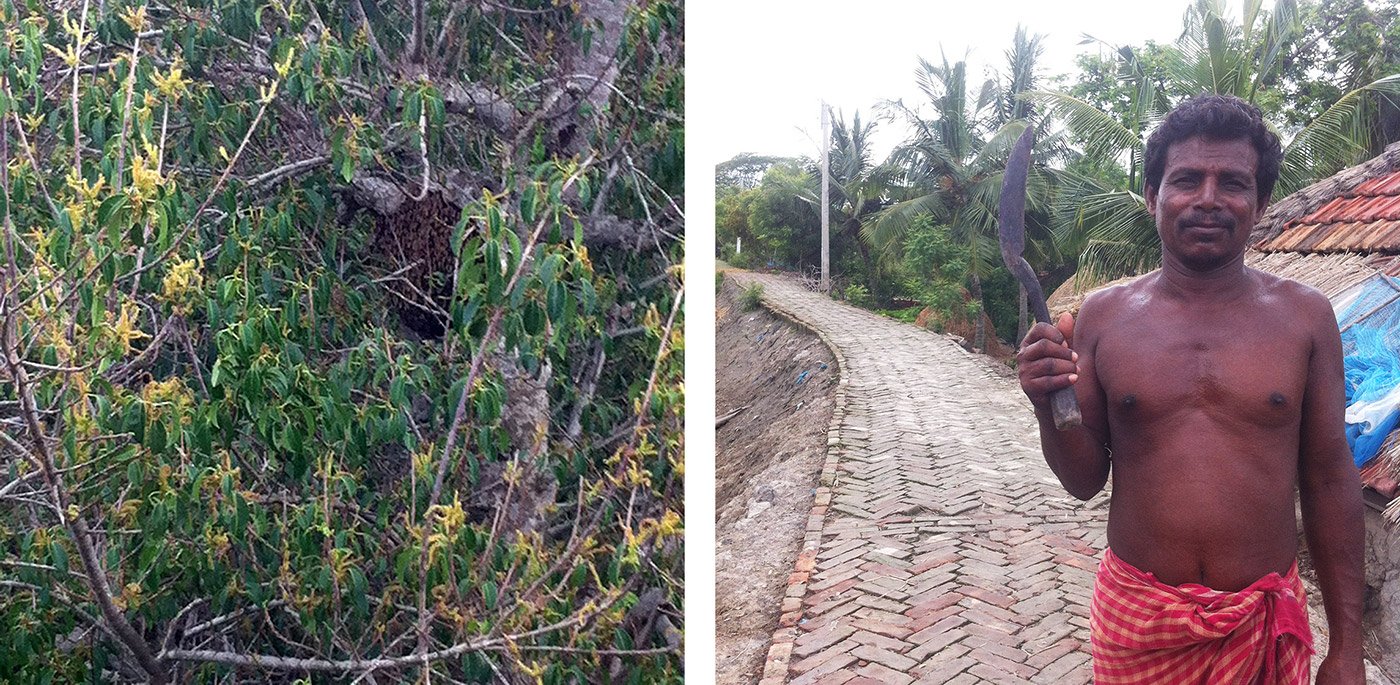
    A beehive on a tree in Hemnagar village / The sharp and curved instrument used to break the bee hives

    Sometimes the bees sense the threat and sting even before the smoke rises.  But Nitai and his co-workers have no use for ointments or protective clothing. “We only pluck out the sting with our fingers. Once a man was stung by 300-400 bees. He could not get up or eat for weeks!”

    Nitai expresses faith in two things: his amulet and Bonbibi, protector of the forests and people, a highly revered deity in the Sundarbans.  “There are different chants to the goddess according to the difficulty of the situation,” he says. We ask him to recite a chant; he breathlessly rattles off one in Bengali that the honey gatherers use when leaving home for the jungle.

    As often happens when in the Sundarbans, the conversation turns to tigers. And everyone has a story or two to tell. “Once a tiger confronted my friend and he froze with terror,” Nitai recalls. “I chanted some mantras to Bonbibi – but could not rescue him and the tiger killed him. I found the body and took it to his home. Many years ago, about 150-200 men surrounded a tiger in the jungle. Even then it carried away 1-2 people.”

    There was a time, he says, when the government rewarded villagers for killing tigers. “But now, one cannot touch them, because of laws.” Nitai, like others living in the Sundarbans, sometimes feels that the state protects the tiger more than the people. “We cannot even go to the forest in case we disturb the tiger’s sleep,” he jokes. But he knows that tigers are important and is a member of the local Forest Protection Committee, a part of the government’s forest management strategy. “If the tiger goes, Sundarbans goes. Nothing will stop people from entering and destroying the forests.”

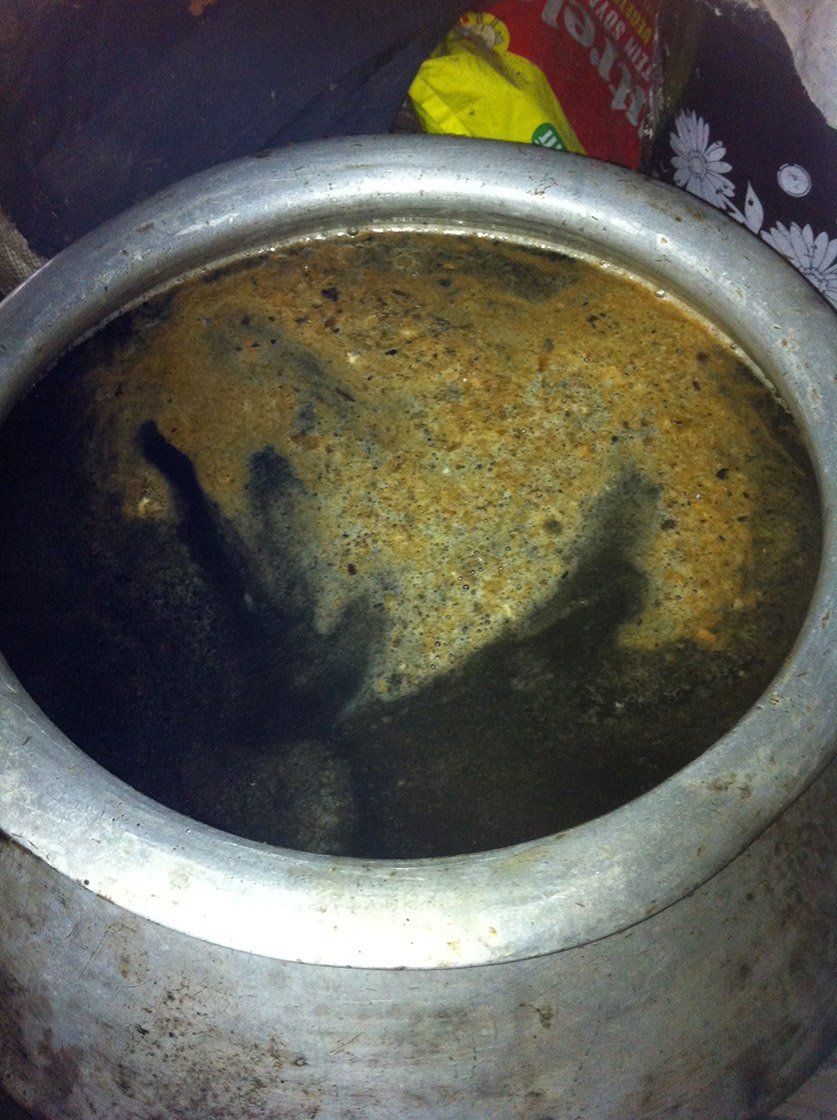
    We go to Nitai’s small and cramped house, where he stores honey in aluminium containers and cans on the floor. “Depending on which trees and flowers  – kewra, goran, khols i – you extract it from and the season, the colour and taste varies. But your commercial honey looks and tastes exactly the same through the year.”

    The honey is stored in an aluminium container. Its colour and taste vary according to the trees, flowers and seasons, unlike commercial honey which tastes and looks the same throughout the year

    Usually, 6-7 individuals participate in a single 15-day trip and gather roughly 1-1.5 quintals of honey each. The mouleys are compelled to sell most of the collected honey to the Forest Department at a price fixed by the government. The price this year, Sanjit says, was Rs. 115 for a kilo – and in August 2016 the price at which the department sold the honey in the market was Rs. 300 a kilo.  The West Bengal Forest Development Cooperation Limited refines and markets it as the Mouban brand of honey.

    This year, instead of all the collected honey, the Forest Department specified a quota that the mouleys were required to deposit. “They did not buy honey from our family because the department met its quota early,” Sanjit says. He and his family plan to sell the surplus themselves. “We collected 80-90 kilos and have priced it at Rs. 200-250 per kilo for the neighbouring village areas. In Kolkata, we can get a higher rate.”

    In previous years, Sanjit says, “We could take home only five kilos. We had to deposit the rest with the Forest Department. They searched our boats for hidden honey. If caught selling in the market, our boats could be seized.”

    Although Sanjit, like his father, is a fisherman and honey collector, he migrates for 2-3 months every year to Bangalore and Chennai to work on construction sites where he earns Rs. 350-400 per day. “My father and his friends have worked only in the Sundarbans. They have fallen in love with the forest and say there cannot be peace without it. My generation goes to bidesh [outside] to work. How do we feed our family just by catching fish and collecting honey?”

    Sanjit had to drop out before completing his BA degree to help with his family’s earnings. He now has an 18-month-old son who he wants to educate. “My son should not go to the jungles. Too dangerous.”

    But Nitai believes that those who migrate are not happy, since there are more chances of getting cheated or murdered in the big cities. To him, the dangers of working in the Sundarbans seem preferable.

    Nitai Joddar, 41, started going to the jungles with his father, also a honey collector, three decades ago

    In 2015, a Trinamool Congress member of Parliament, Pratima Mandal, highlighted these dangers in the Lok Sabha when she spoke of the issues faced by the honey collectors of the Sundarbans. She asked the central government to take safety measures and allot funds.

    It may be too early to know if this has had an impact, but over the years a few measures have indeed been taken. Pradip Chatterjee, president of the Dakshinbanga Matsyajibi Forum (Fishworkers Forum of South Bengal), says, “There have been some improvements. Four years ago, the Forest Department would pay the mouleys only Rs. 42 per kilo of honey; now the rate is more than Rs. 100 for a kilo, and they are free to sell extra honey in the market. The department would earlier give only one pass of 15 days for honey collection, now they give two such passes.”

    However, he says, nothing has been done to protect the men at work. “There is no provision for their individual safety or safety as a group.” And so, men like Nitai continue working in the dense and dangerous jungles without any safeguards.

    Photos: Urvashi Sarkar

    Read the original article: https://ruralindiaonline.org/articles/the-sting-of-bees-and-the-tyranny-of-tigers/

Urvashi Sarkar – 2026 – All rights reserved.

web things by Studio Goncharov