Tag: India

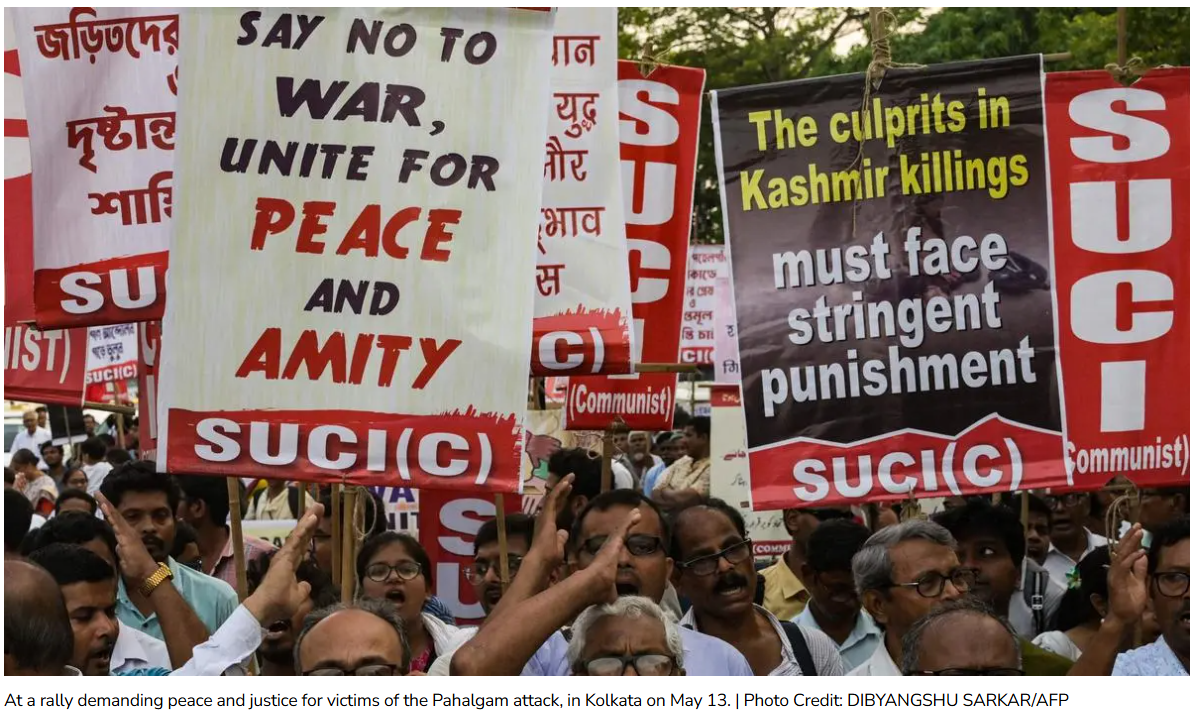
  • India-Pakistan tensions: The idea of peace is alive, but not kicking

    India-Pakistan tensions: The idea of peace is alive, but not kicking

    The hostilities have silenced peace-building networks, hurt workers and families, and replaced dialogue with televised aggression.

    After the brazen killing of 26 tourists by terrorists in Pahalgam, India and Pakistan unleashed a series of war salvos, which were aired in real time and amplified by social media and television. A shaky ceasefire of sorts was finally brokered, with US President Donald Trump claiming credit for it.

    One wondered what had happened to the voices of reason—the mediators and the pacifists. The discourse leading up to the ceasefire and beyond was directed by hate-spewing TV news anchors and motivated social media warriors who are bent on spreading disinformation and malice. Statements issued by the government and military spokespersons have been interpreted at will by self-appointed analysts with hot takes.

    In the midst of the click-baiters and the dis/misinformation peddlers, a cross-section of people in the two nations remain deeply invested in peace. But they are not being heard in the din of conflict.

    Full article: https://frontline.thehindu.com/politics/india-pakistan-peace-cross-border-dialogue-kashmir/

  • Is India the Arms Exporter it Claims to Be?

    Is India the Arms Exporter it Claims to Be?

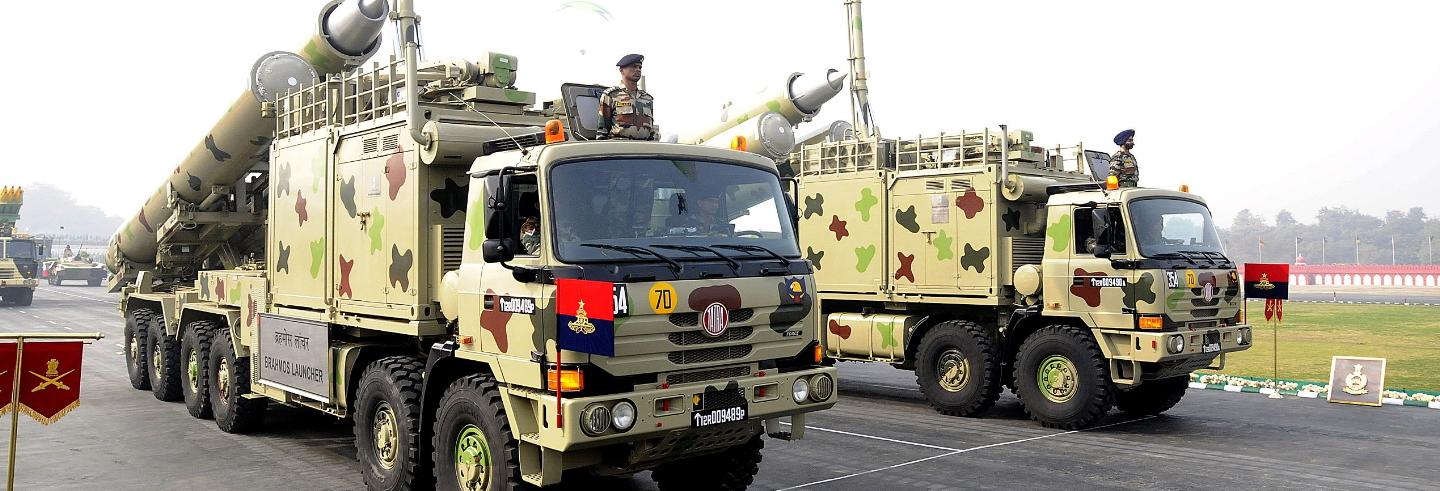
    A BrahMos missile launcher, on display in a parade on the Indian Army Day (15 January 2013) | Wikimedia

    Eyebrows were raised when the defence ministry informed Parliament in March 2022 that India’s defence exports had increased six times in value since 2014. Minister of State for Defence Ajay Bhatt stated that defence exports rose to Rs 11,607 crore by March 2022 from Rs. 1,941 crore in 2014–15.

    Reports about India’s ability as an arms exporter are increasingly published in the media and the government goes the extra length to project grand perceptions of its success and release impressive-sounding figures. In a recent announcement, the Narendra Modi government stated that defence exports have risen 334% in the last five years with India exporting to more than 75 countries. The Press Information Bureau tweeted, “The Indian Defence sector, the second largest armed force is at the cusp of revolution.”

    India’s entry last year to the Stockholm International Peace Research Institute’s (SIPRI) list of the world’s top 25 arms exporters was celebrated by media commentators and strategic analysts alike. Home Minister Rajnath Singh declared that India had “transformed” from being one of the largest defence importers to “breaching” the list of the top 25 exporters in the world. SIPRI reports usually highlight India as a major arms importer. That the country featured on a top 25 arms exporters list was seen as a moment of victory. SIPRI recorded a 119% increase in the total volume of India’s arms exports between 2012–2016 and 2017–2021.

    Such statistics are taken at face value by the media and have been promoted by the government as evidence of India’s imminent rise as an arms exporter. Yet, the picture becomes complicated when one actually scrutinises the numbers; the claims then appear to be embellished.

    SIPRI’s data shows that India ranked 23rd among the top 25 arms exporters with a share of just 0.2% of the total global arms exports between 2017 and 2021.

    Since coming to power in 2014, a key stated priority of the Modi government has been to increase self-reliance in defence production, including major arms and ammunition. India targets Rs 35,000 crore worth of defence exports by 2025.

    These figures and rankings seem impressive, but SIPRI’s data shows that India ranked 23rd in the top 25 arms exporters with a share of just 0.2% of the total global arms exports between 2017 and 2021. The United States (39%), Russia (19%), and France (11%) were the top exporters during this period.

    The data provided to Parliament in March 2022 showed that there are substantial hurdles in the way of India achieving its goal of Rs 35,000 crore worth of arms exports by 2025. Amit Cowshish, a former financial advisor to the defence ministry, listed several of these in February. He pointed to an over-reliance on exports of parts and components rather than major defence equipment, the very few indigenously built platforms and equipment on offer for export, and the reputational setbacks suffered by India’s defence industry with nations such as Nepal and Ecuador finding fault with their imports. He also referred to the government’s tendency to “pat oneself on the back” for its ‘Make in India’ rhetoric and pointed to the need for “an honest and objective assessment” of ground realities and the challenges to boosting exports.

    India’s Arms Exports

    A study by the Centre for Land Warfare Studies, a think tank of the Indian Army, noted that in 2017–2018 and 2018–2019 the value of “aircraft, spacecraft and parts thereof” imports was Rs 14,609 crore and Rs 9,215 crore respectively. The export of major arms and ammunition, including parts and accessories, pulled in just Rs 637 crore and Rs 580 crore in these two years.

    “Exporting parts, components, and low-value, low-tech items is one thing; exporting high-value lethal equipment is altogether different,” Laxman Kumar Behera wrote in the Journal of Defence & Security Analysis in June 2022. “India’s major exports are to countries with low paying capacity, and with which it has strong political ties. Barring a few orders, most of the major items are through non-competitive arrangements.”

    Geopolitical objectives are an important part of India’s defence deals.

    Russia’s invasion of Ukraine earlier this year and the sanctions on Russia have also cast a shadow on India’s defence exports. In January 2022, India signed a deal worth $375 million with the Philippines for the sale of three batteries of the BrahMos supersonic cruise missile system developed jointly with Russia. The missile can be launched from land, sea, and air. Its export marked a major landmark in India’s bid to position itself as an exporter of arms. However, according to an analysis by the Economist Intelligence Unit in April 2022, “The fulfilment of this commitment will now be delayed, while planned pitches to Indonesia and Vietnam will also be deferred.”

    In 2020–2021, the main recipients of Indian arms imports were Myanmar (50%), Sri Lanka (25%), and Armenia (11%). African countries were also on the client list with Mauritius accounting for 6.6% of India’s arms exports between 2017 and 2021, followed by Mozambique (5%) and Seychelles (2.3%), according to a working paper by the Export-Import Bank of India in October 2022. India has the capacity to “fulfil Africa’s maritime, aerospace and defence requirements,” the paper said, mentioning the possibility of exporting indigenously developed maritime technologies, including unmanned underwater systems, unmanned aerial systems, and drones, to African countries.

    The main defence equipment exported by India in the five years before 2021 included weapon simulators, tear gas launchers, torpedo loading mechanisms, alarm monitoring and control, night vision monoculars and binoculars, light weight torpedoes and fire control systems, armoured protection vehicles, weapons locating radar, high frequency radios, and coastal surveillance radars. India is also trying to get buyers for major defence platforms such as the BrahMos missile system, the Pinaka multi-barrel rocket launch system, the Akash air defence system, Tejas aircraft, various artillery guns, and radar and anti-tank missiles.

    Geopolitical objectives are an important part of India’s defence deals. “The geopolitical intent of arms export was on full display when India decided to gift one of its submarines to Myanmar,” Behera wrote. The submarine, inducted into Myanmar’s navy in October 2020, was supposedly India’s response to China’s forays into Myanmar. India also entered into an agreement with Armenia on October 2020 for the supply of rockets, missiles, and ammunition to be used in its border conflict with Azerbaijan.

    The import-export divide

    Defence Secretary Ajay Singh recently made a tall claim at Defexpo, India’s flagship defence exhibition held in October 2022. According to him, India is witnessing a “transformational journey from being the largest defence importer to a net exporter.” A cursory look at India’s import figures put this claim to rest.

    Consider these well-known figures. According to SIPRI data, India was the biggest importer of arms in the world in 2021 with its purchases constituting 11% of global arms imports. Its main suppliers were Russia, France, and the US. SIPRI identified 164 states as importers of major arms between 2016 and 2020. The five largest arms importers were Saudi Arabia, India, Egypt, Australia, and China, which together accounted for 36% of total global arms imports.

    Between 2012–16 and 2017–21, Indian arms imports decreased by 21%. “Despite this, India was the world’s largest importer of major arms in 2017–21,” the SIPRI report said, describing the drop in India’s arms imports as “temporary” and attributing it to the country’s slow and complex procurement process and a shift in suppliers.

    Critical weapons systems needed by India to replace old ones, and equipment such as diesel electric submarines and twin-engine fighters are yet to be manufactured in the country.

    India will have to scale up arms imports because of growing threats from China and significant delays in the production of its own major arms. It is widely acknowledged that Prime Minister Modi’s pressure to indigenise India’s defence production and a ban on certain defence imports is leading to shortages of helicopters and fighter jets, compelling the armed forces to continue using obsolete equipment. Critical weapons systems needed by India to replace old ones, and equipment such as diesel electric submarines and twin-engine fighters are yet to be manufactured in the country. Even though there are projects in the pipeline, these will take years to develop.

    Defence analyst Rahul Bedi told the Business Standard newspaper in September 2022 that the Modi government’s import substitution plans fail to factor in the billions of dollars and many years of research required to build world-class weapon systems. “Make in India for defence isn’t thought through properly,” he said. “It is a good slogan, beyond that there isn’t much to show as yet.”

    SIPRI’s assessment of arms production capabilities in the Indo-Pacific region does not support the image of India as a behemoth arms exporter that the Modi government is trying to project. According to its report published in October 2022, India is highly dependent on imports of major arms, including those produced under licence or as components for its domestic production. Of India’s total volume of procurement between 2016 and 2020, 84% was of foreign origin.

    Some products such as land-attack missiles and Arihant, a nuclear-powered ballistic missile submarine, have Indian designs, as do some surface ships. But these domestic designs are dependent on key components that are imported such as engines and radars. There are “serious doubts about whether India will be able to significantly reduce its dependence on imports in the short or medium terms”, says the SIPRI report.

    It is time we look into the government’s claims about burgeoning defence exports in a more critical manner than taking them at face value.

    Urvashi Sarkar is an independent journalist based in Mumbai who focuses on international politics, nuclear energy, climate change and political-corporate lobbying.

    Read the original article: https://www.theindiaforum.in/forum/india-arms-exporter-it-claims-be

  • Review: India’s “Rocket Boys” series fetishizes science-and the atomic bomb-in a dangerous way

    Review: India’s “Rocket Boys” series fetishizes science-and the atomic bomb-in a dangerous way

    While Rocket Boys makes for engaging drama, does it tell this story with due diligence to scientific and historical facts? Unfortunately, the answer is resoundingly in the negative.

    The year is 1962. China had attacked India. In a friction-ridden meeting of India’s Atomic Energy Commission, the chairman, and scientist Homi J. Bhabha convinces the group to build India’s first atomic bomb. “We can stop any other country from ever thinking of attacking us again,” Bhabha tells the group forcefully. Not everyone agrees. Bhabha’s long-time friend and fellow Atomic Energy Commission member, Vikram Sarabhai, walks out of the meeting and resigns in protest. “How can you in good conscience do this?” he asks Bhabha.

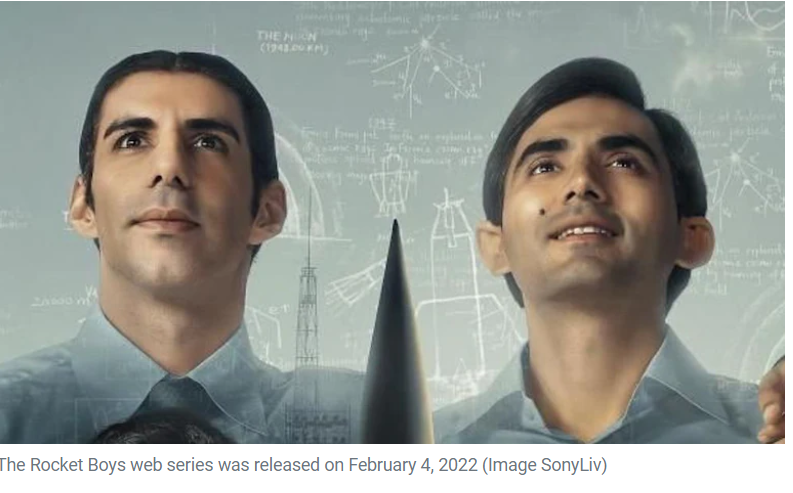
    These are the opening scenes to Rocket Boys, a web series released on February 4, that tells the story of three scientific leaders at the origin of India’s nuclear and space programs—Homi J. Bhabha, Vikram Sarabhai, and A.P.J. Abdul Kalam. Rocket Boys shows similarities with Parmanu, a movie that was released in 2018. Where Parmanu explores the run-up to India’s nuclear tests of 1999 and its aftermath, Rocket Boys depicts the circumstances in which India decided to adopt the path of nuclear energy. While Rocket Boys makes for engaging drama, does it tell this story with due diligence to scientific and historical facts? Unfortunately, the answer is resoundingly in the negative.

    The web series received early positive reviews in the media. But scholars well-versed in the history of these programs soon exposed glaring flaws in the science and the problematic ways in which key personalities are presented. The narrative conveniently plays into the dominant hyper-nationalist narratives prevailing in India and deepens fault lines in Indian society.

    Twisting reality. In a piece appropriately headlined “As a historian of the nuclear program, I can only laugh at the howlers in Rocket Boys,” political scientist Itty Abraham mentions a scene in which a fully-suited Bhabha jumps into a radioactive swimming pool reactor to repair malfunctioning fuel rods. He is supposed to get the reactor up and running in time for Prime Minister Jawaharlal Nehru’s visit. The scene is intended as suspenseful and nail-biting. But it is simply not credible; no nuclear physicist would do such a thing.

    Abraham—author of The Making of the Indian Atomic Bomb: Science, Secrecy and the Postcolonial State—also criticizes the sequences showing the runup to India’s first rocket launch, scenes that portray India’s scientists as careless and inept. “Bhabha and Sarabhai would be horrified to think that their pioneering vision and extraordinary achievements were being reduced, decades later, to the celebration of last-minute screwdrivers and ropes pulling up launch platforms,” he writes. Journalist Gita Aravamudan, who has been closely associated with the Indian space program and personally knew several individuals portrayed in Rocket Boys, writes about being “appalled at the liberties that have been blithely taken. … [T]he science has been subsumed completely by the need to make the two main rocket boys cool.” The irony, Aravamudan adds, is that the actual story of India’s space program is so dramatic and intriguing that the fictional embellishments adopted by Rocket Boys were unnecessary.

    Insidious script. Aravamudan wryly writes that watching Rocket Boys feels like a bad Bollywood movie in which iconic scientists have been turned into the worst of scientist stereotypes. To add further drama to the web series, Bhabha is pitted against an adversary, Mehdi Raza, a fictional character evidently inspired by the Indian astrophysicist Meghnad Saha. Yet the portrayal of Raza is immensely problematic, stealing from Saha’s formidable reputation and personality, only to twist it in egregious ways. Saha was one of India’s most towering scientists of the time, in the same league as Bhabha. He built India’s first cyclotron—which Raza in the series is shown as doing—and also established the Institute of Nuclear Physics in Kolkata.

    Of particular note, Rocket Boys distorts Saha’s background in an insidious way. Saha was Dalit—the most repressed and discriminated social group in India, earlier known as untouchable and treated as outcaste. Yet the makers of the web series borrow from Saha’s professional background using it to flesh out an adversary who is Muslim, deliberately cashing in on dominant anti-Islamist currents in India. In a further manipulation of truth, the series shows Raza as cozying up with the CIA to subvert India’s nuclear program—when Saha was a socialist who was inspired by Soviet planning and tried to replicate it in India.

    Rocket Boys does attempt to give a glimpse into the personal lives of Bhabha and Sarabhai, exploring their relationships with their families and the women in their lives. But since two men are the chief protagonists of the series, the women appear as largely romantic props instead of fully fleshed-out characters and fade out only to suddenly reappear in a few scenes.

    Good acting. There is a redeeming feature in Rocket Boys—the superlative acting by Jim Sarbh and Ishwak Singh, who play Bhabha and Sarabhai respectively. The arguments between Sarabhai and Bhabha as best friends and sparring partners are some of the most watchable moments of Rocket Boys. The two scientists come to life as they debate an independent India’s future, scientific progress, their ambitions, and their love lives. Homi Bhabha is portrayed as a debonair maverick and prodigy and Sarabhai as his foil—quiet, razor-sharp, and unafraid to challenge his mentor, Bhabha.

    Above all though, Rocket Boys eulogizes science’s role in elevating a poor and newly independent nation in the 1960s. “Science by the late colonial period was burdened with an unrealistic set of expectations. It came to be regarded as how India would reverse centuries of underdevelopment,” writes Sankaran Krishna in the 2009 edited volume, South Asian Cultures of the Bomb: Atomic Publics and the State in India and Pakistan. Indian elites offered to achieve nuclear power status as a response to the abysmal state of general economic development in the country, he adds.

    The release of Rocket Boys earlier this year comes at a time when India’s growth, prosperity, and progress are seriously questioned. Its nostalgic tone and fetishizing of science—and the atomic bomb—match the beats of the ultra-nationalist and jingoistic media and political narratives dominating India’s present-day public discourse. Unfortunately, that discourse and the Rocket Boys series both play loose with facts and bend reality in potentially dangerous directions.

    Read the original article: https://thebulletin.org/2022/06/review-indias-rocket-boys-series-fetishizes-science-and-the-atomic-bomb-in-a-dangerous-way/#post-heading

  • India’s refusal to side with the West should not be interpreted as a revival of its non-alignment policy

    India’s refusal to side with the West should not be interpreted as a revival of its non-alignment policy

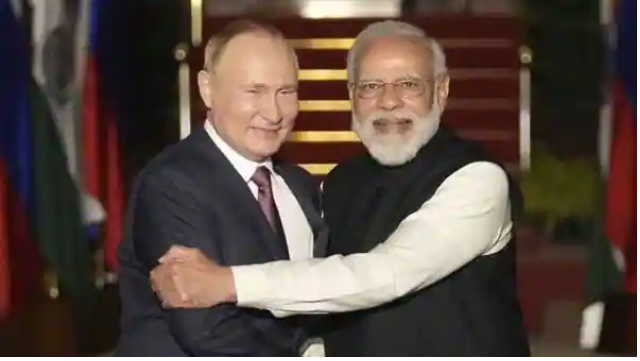
    Photo: AP

    Published by City University of London. 6 June 2022

    India’s refusal to outrightly condemn Russia for invading Ukraine is driven by its own interests and not by the nobler ideals which imbued the non-aligned movement of the 1960s and 1970s.

    Thick in the midst of its bloody invasion of Ukraine, Russia’s Foreign Minister Sergei Lavrov found time to visit India in early April 2022. Lavrov met India’s Prime Minister Narendra Modi and foreign minister S. Jaishankar and praised India for not taking a “one-sided” view of the war and considering “the entirety of facts”.

    Lavrov’s visit coincided with visits of UK Foreign Secretary Liz Truss and US Deputy National Security Advisor Daleep Singh to Delhi. Truss was in India to urge democracies to counter Russia’s invasion of Ukraine, especially by reducing dependence on Russian oil imports.  Meanwhile, Singh said that countries trying to circumvent sanctions on Russia would face consequences.

    Both the West and Russia share close ties with India and are keen to enlist its support on the war in Ukraine. India on its part has refrained from directly condemning Russia, ignored sanctions and stepped up purchases of discounted Russian oil.

    Observers of India’s foreign relations wonder if India’s explicit alignment with Russia and pushback against the West marks a new direction in India’s foreign policy. But on the contrary, India’s foreign policy choices are a continuation of the muscular and strongman policies set in motion by the Narendra Modi government since it came to power in 2014.

    Electoral manifestoes of Bharatiya Janata Party (BJP) to which Narendra Modi belongs, promise a major role for India in shaping the global agenda. While this is a positive goal for India, in practice the effects have not always been benign.  For example, in South Asia, where India is the most dominant country, neighbours like Nepal and Bhutan— while economically dependent on India — also resent its interference.

    India’s ‘unofficial’ economic blockade of fuel and supplies to Nepal in 2015, because it did not approve of its new Constitution, triggered deep resentment in the country. Nepal accused the Indian government of the blockade, which the latter denied.

    Bhutan too is uncomfortable with India’s influence. This was evident during the 2017 stand-off between India and China over the Doklam Pass which is contested territory between Bhutan and China and located at the tri-junction of the three countries. Bhutan was not pleased with India’s intervention.

    India which was earlier known for sheltering refugees has subjected Rohingyas fleeing genocide in Myanmar to discrimination, detention and deportation.  Though India hosts approximately 40,000 Rohingyas, there have been multiple instances of refugee camps being set on fire. BJP leaders have labelled Rohingyas as terrorists and demanded that they be expelled from the country. Interestingly, even as the Myanmar government stands accused of genocide, the country was the largest recipient of Indian military exports from 2017-2021.

    Another visible transformation in India’s foreign policy since the Modi government took power is its proximity to Israel and diminishing support for Palestine. Modi became the first Indian Prime Minister to visit Israel in 2017 and India was the top recipient of Israeli military exports from 2017-2021. The Indian government is also reported to have purchased  Israeli Pegasus spyware, and used it to spy on journalists, politicians, lawyers, students, activists and bureaucrats —a charge that it is yet to confirm or deny.

    Even as the Modi government flexes muscle internationally, it has been authoritarian domestically too; suppressing dissent and permitting right-wing vigilante groups to target Muslims and Christian minorities. Recent celebrations of the Hindu festival Ram Navami saw hate speech against Muslims and vandalism of their shops and properties. A Muslim majority neighbourhood of Delhi’s Jahangirpuri also witnessed an unprecedented demolition drive of their homes. When confronted with international criticism over its human rights record, amending citizenship laws or clamping down on major protests by farmers – India has been dismissive and defiant.

    It is admittedly hard to ignore India because of its economy, population and powerful diaspora. It is a top supplier of vaccines and plays an important role in groupings such as the Quad.

    Significantly, India is also the world’s largest importer of arms with Russia being a major supplier. Russian Foreign Minister Lavrov underlined India’s importance when he pointed out that Russia is a major foreign contractor for New Delhi.

    But Russia is equally important to India, supporting the latter’s bid for a permanent UNSC seat, during the 1971 Bangladesh war and opposed sanctions on India for testing nuclear weapons in 1998. In not criticising Russia, India is not just returning favours but also protecting its interests which include imports of Russian arms and oil.

    These actions cumulatively signal India’s continuing aggressive and muscular foreign policy, in line with the vision of its right-wing government whose authoritarian tendencies are increasingly evident, at home and abroad.

    India’s refusal to side with the West should not be interpreted as a revival of its non-alignment policy which was imbued with ideals of anti-colonialism, anti-imperialism and Third World solidarity.  Instead, realpolitik and hard realism drive India’s current decisions.

    Read the original article: https://blogs.city.ac.uk/internationalsystemofpower/2022/06/06/indias-refusal-to-side-with-the-west-should-not-be-interpreted-as-a-revival-of-its-non-alignment-policy/

  • What’s known—and not known—about India’s nuclear weapons budget

    What’s known—and not known—about India’s nuclear weapons budget

    Published in Bulletin of the Atomic Scientists. 17 November 2021.

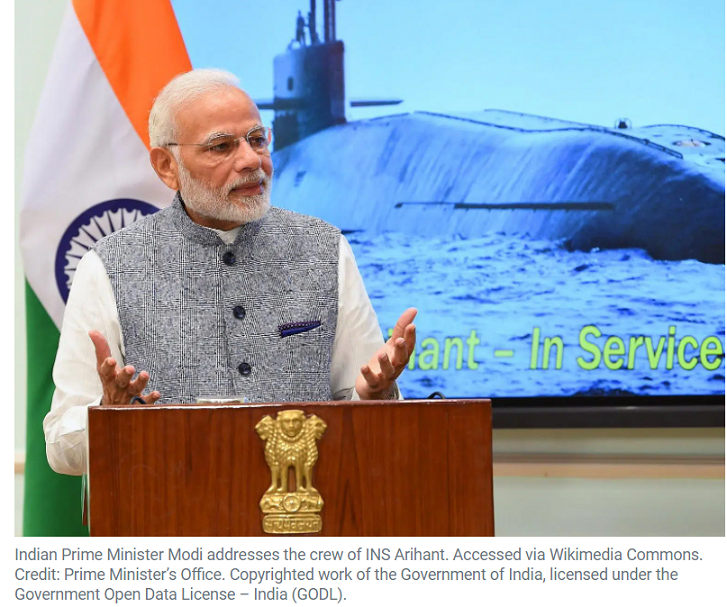
    In 2016, India inducted its first nuclear-powered ballistic missile submarine, the INS Arihant, into its navy, extending nuclear military capabilities from land and air to the sea. “Arihant” translates to “destroyer of the enemy,” a name chosen for its “subtlety and appropriateness.” A year after Arihant’s induction, the vehicle reportedly suffered damage, prompting a member of Parliament to ask about the cost of repairs. A defense minister responded, “The information cannot be divulged in the interest of National Security.”

    In India, acute poverty persists against a backdrop of urgent development priorities that jostle for financial resources. Meanwhile, India’s lack of transparency around nuclear weapon expenditures—including the government agencies responsible for approval, spending, and audits of those expenditures—carries on. Indian taxpayers deserve to know how much their government spends on nuclear weapons, particularly compared to spending on education and health. Also, transparency on nuclear weapons expenditures would signal to the world that India’s claimed commitment to disarmament is not empty talk.

    Indian government secrecy on nuclear defense systems costs is not new. In 2001, for example, the government declined to say how much it paid for multirole fighter aircraft, citing a confidentiality clause in the contract. More recently, the Indian government refused to divulge expenditures incurred in developing and testing an interceptor ballistic missile, leasing submarines from Russia, or developing a land-based ballistic missile known as Prithvi-II.

    “There is a now a culture of not asking questions on issues which the government categorises as national security,” said Venkatesh Nayak, an activist who has filed several right-to-information requests with the Indian government. India’s equivalent of the US Freedom of Information Act, the Right to Information Act has been a great source of information about many government and private programs in India—excepting those run by nuclear agencies.

    Government agencies that focus on nuclear weapons often omit the word “nuclear” from their websites and reports. Instead, they say that nuclear weapons are “strategic.” Terms like “strategic forces,” “strategic purposes,” and ”strategic weapons” obfuscate meaning. India’s Strategic Forces Command, responsible for procuring, holding, and maintaining the country’s nuclear weapons, was recently added to a list of intelligence and security organizations exempt from the Right to Information Act.

    Sparse information about Indian nuclear weapon expenditures. When the Indian government divulges information on nuclear costs, it does so sparingly. In 2010, for example, the government stated the cost of test firing Dhanush, a nuclear-capable ballistic missile, was 110 million Indian rupees ($1.46 million). In 2013, the Indian Parliament was informed that the cost of upgrading a Mirage-2000 fighter aircraft was 1.67 billion Indian rupees ($22.27 million) per aircraft. The cost of INS Arihant was $2.9 billion, at least according to one media report, but the figure’s source and cost breakdown were unclear.

    One comprehensive attempt at trying to understand costs of India’s nuclear weapons program was undertaken by economist C. Rammanohar Reddy in 2003.  Based on piecing together the scarce data and drawing heavily on a 1998 cost estimate of the US nuclear weapons program, Reddy estimated that India would spend approximately 0.5 percent or more of its gross domestic product on nuclear weapons over the decade that followed. This cost estimate included expenditures on fissile material for bombs, delivery systems, and command and control infrastructure. To estimate the full cost, Reddy noted that he would also need to factor in past costs related to nuclear research reactors that provide plutonium for nuclear weapons, weapons-grade plutonium production, previously built aircraft development, and land- and sea-based ballistic missiles. Since Reddy’s prediction, leading experts have noted the difficulty in providing more recent estimates.

    “…[E]ven government bureaucracies like the Comptroller and Auditor General (CAG) and the Ministry of Statistics and Programme Implementation, whose function is to monitor expenditures and criticize cost overruns, do not seem to have access to expenses relating to weapons facilities,” wrote MV Ramana, a physicist focused on international security and nuclear energy at the University of British Columbia. To the extent they have tried to oversee expenditures, the Comptroller and Auditor General of India has criticized some of the agencies involved in defense research for project cost overruns and shortcomings in budgeting and accounts.

    To complicate matters further, civilian and military nuclear facilities often overlap, which means nuclear weapon expenditures may be presented as part of the civilian energy program.

    Some information may be gleaned from scattered op-eds by members of the defense community or from quotes by unnamed sources. For example, a 2014 article attributed information on the cost breakdown of INS Arihant to an unnamed source. The International Campaign to Abolish Nuclear Weapons estimates that India spent $2.48 billion on nuclear weapons in 2020. Although better than nothing, one cannot have much confidence in these numbers. Reliable estimates of India’s spending on nuclear weapons do not exist.

    That said, these expenditures seem to be increasing, at least if one looks at the overall budgets of the umbrella agencies charged with overseeing nuclear activities. The Department of Atomic Energy, which is responsible for both nuclear energy and weapons, saw its budget increase from 121.15 billion rupees during the 2010-11 fiscal year to 182.21 billion rupees in 2019-20—both inflation-adjusted to 2020 ($1.62 billion to $2.43 billion in inflation-adjusted 2020 US dollars). In other words, the budget of the department went up by over 50 percent over the decade, even after adjusting for inflation. But the budget documents do not provide a breakdown of expenditure by program, which makes it impossible to determine how much is allocated to nuclear weapons.

    India’s Defense Research and Development Organization produces weapons systems and defense technologies domestically for the army, navy, and air force. This agency is in charge of developing missiles and other means of delivering nuclear weapons. From the 2013-14 fiscal year to 2019-20, its budget increased from 139.30 billion to 185.40 billion in inflation-adjusted 2020 Indian rupees ($1.86 billion to $2.47 billion in inflation-adjusted 2020 US dollars, a 33 percent increase).  Since the Defense Research and Development Organization is also exempted from questions under the Right to Information Act, the percentage spent on developing nuclear weapons is unknown.

    RELATED:China’s silence on nuclear arms buildup fuels speculation on motives

    What about Pakistan’s lack of transparency in its nuclear budget? Like India, Pakistan’s nuclear-weapon spending is hard to estimate, as funds for its program are placed under a secret budget head, according to Pakistani journalist Baqir Sajjad Syed.

    “The cost of Pakistan [sic] nuclear weapons programme cannot be estimated with any reliability,” Zia Mian, a physicist and nuclear policy expert at Princeton University, writes. In 2011, Mian noted that Pakistan could be spending between $800 million and $2 billion annually on nuclear weapons, including health and environmental costs.

    Of Pakistan’s $10 billion military budget for 2019-2020, Mian suggests that spending on nuclear weapons was approximately 10 percent. Pakistan’s military spending also includes the substantial assistance it receives from the United States and China.

    Still, the Indian government should not justify secrecy around its nuclear weapon program costs by comparing itself to Pakistan—a country it accuses of sponsoring terror attacks and of being a failed state. India has long aspired for recognition as a global leader. Financial transparency on nuclear weapon spending offers India an opportunity to demonstrate leadership on the global stage.

    The case for India to disclose nuclear weapon expenditures. “Powerful lobbies, including the military-industrial complex, weigh heavily on parliaments and governments and impose priorities that have no democratic legitimacy,” a statement from the UN Office of the High Commissioner for Human Rights said. The statement urges states to proactively inform their citizens about past, present, and future military expenditures.

    The national health budget in India has been less than a quarter of the defense budget in the last two years—even as the country was dealing with a COVID-19 pandemic and a devastating public health crisis. India’s defense budget places the country among the world’s top five military spenders, according to the Stockholm Institute of Peace and Research.

    Meanwhile, Indian government spending on healthcare is among the lowest worldwide—a fact reflected in poor health infrastructure and exorbitant private healthcare. India is also among the nations with the most malnourished and stunted children and has an escalating rate of non-communicable diseases.

    According to the economist Jayati Ghosh, Indira Gandhi, the former Indian prime minister under whom India conducted its first nuclear tests once noted that the cost of an intercontinental ballistic missile was 340,000 primary schools or 65,000 health care centers.

    India should take steps towards disclosing nuclear weapon expenditures. Transparency would allow for important analysis about the balance of nuclear spending with education and health, bolster its claims as a responsible nuclear power committed to disarmament, and set a “subtle and appropriate” example for other nations to follow.

    Read the original article: https://thebulletin.org/2021/11/whats-known-and-not-known-about-indias-nuclear-weapons-budget/

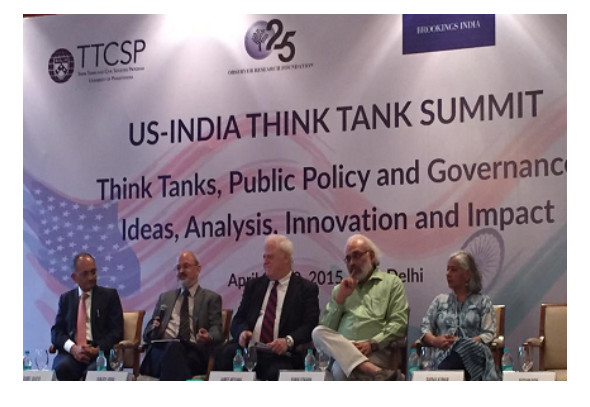
  • Think tanks in India and the United States and the alignment of state and corporate goals

    Think tanks in India and the United States and the alignment of state and corporate goals

    Photo: Gateway House

    Published by City University of London. 9 July 2021

    For several years, the United States has emerged as India’s most important bilateral partner.  There are several components to this relationship not limited to trade, defense deals, and immigration.

    In 2019, U.S.-India bilateral trade in goods and services reached $149 billion. Indian American diaspora in the United States number around four million (United States Department of State, 2021). Joint military exercises, defense cooperation and defense trade are a crucial peg of relationship. The two countries also became part of the Quadrilateral Security Dialogue (or the Quad), along with Japan and Australia as a flagship initiative in the U.S. Indo-Pacific Strategy (Kronstadt et al., 2021). These are just a few of the many areas in which India and the United States cooperate.

    Since the United States exercises control over both the global financial system and international political system, many countries including India feel that they must actively lobby the United States and be persuasive of their interests. To name a few such interests, India has concerns about restrictions to the H1-B visa programme which makes it possible for thousands of Indian IT workers to work in the USA (Iyengar, 2021). There are also concerns about the US government seeking lesser and lesser tariffs and duties on its exports to India (Miglani et al., 2018), issues with US foreign policy in Afghanistan and Pakistan and many other areas where India seeks concessions and better bargains.

    Also, there are costs to getting on the wrong side the US, as many countries such as Iran have discovered. India too underwent US economic sanctions after the 1999 nuclear tests (Wadhwa, 1998).

    Lobbying, diplomacy and advocacy mechanisms

    India deploys a range of instruments which work to build support for Indian government’s viewpoint in the United States. These include formal Embassy presence in Washington DC, Indian consulates across various cities, high level diplomatic exchanges and the more informal Track-II exchanges.  The Indian government also spends hundreds of thousands of dollars annually in employing lobbying firms, who in turn lobby US lawmakers and opinion makers. The relationship is additionally bolstered by think tanks, universities, and a range of interest groups which promote different aspects of ties, including business, educational, cultural and scientific. In the context of private sector ties, commerce and industry bodies like Federation of Indian Chambers of Commerce and Industry (FICCI), CII (Confederation of Indian Industry) (Malik and Medcalf, 2011), NASSCOM, US based groups like the Indo-US Friendship Council, US-India Political Action Committee, US India Strategic Partnership Forum, US India Business Council and the like have an important part to play.

    This paper is especially interested in understanding how Indian foreign policy think tanks have played a role in enhancing US-India ties, and how this is driven by a common alignment of goals of the Indian and American states and the private sector of the two countries.

    Indian foreign policy thinks

    While the role of foreign think tanks in America’s policy making is fairly well understood and documented, this has not been the case in India. New studies are looking at the subject and attempting to plug this gap (See Reading list). As of 2020, India had the third largest number of think tanks (Global Go To Think Tank Index Report, 2020) in the world (612), behind China and United States.  In 2019 (Global Go To Think Tank Index Report, 2019), India had the second largest (509), behind the United States (1871).

    Most Indian foreign policy think tanks tend to be based in Delhi, while a handful are located in cities such as Mumbai, Kolkata and Chennai.

    Several foreign policy think tanks offer funding information in varying degrees of transparency on their websites. However, the funding and/or political affiliations are rarely if ever publicly explained, debated or elaborated on. In some cases, even the source of funding for the think tank isn’t public information.

    In course of her research on Indian think tanks, the author learnt that non-government foreign policy think tanks struggle to get much funding from the Ministry of External Affairs. Even while select private think tanks have been beneficiaries of some government largesse, by and large, private think tanks need to raise much of their funds from external sources. They thus turn to the Indian private sector, foundations, international development aid agencies, embassies and consulates of foreign countries, and international organizations like the United Nations.

    India’s prominent business families and corporations have widely invested in foreign policy, energy, environment and telecom think tanks. But even as Indian foreign policy think tanks owe much to the Indian private sector, the broader opinion in the think tank community is that big Indian business gives much more generously to American universities and think tanks.

    For example, the businessman Anand Mahindra gave $10 million to Harvard University’s Humanities Centre in 2010 (PTI, 2010). The same year Harvard Business School received a gift of $ 50 million from Tata Trusts and Companies (HBS, 2010).

    In 2017-2018 alone, Carnegie Endowment for International Peace received over $ 1 million from Indian sources like the Tata Education and Development Trusts, in the range of $100,000-499,999 from Bharti Enterprises, Kiran Mazumdar-Shaw, GM Rao and Tata Consultancy Services (carnegieendowment.org)

    Interestingly, the same set of Indian business donors which fund think tanks domestically also pour millions into educational institutions and think tanks in the United States.

    Endorsing ties with the US

    Delhi’s foreign policy think tanks in Delhi usually endorse stronger ties with the US. Indian think tanks also feel deeply inspired by their American counterparts. At one point, the Reliance Industries funded Observer Research Foundation (ORF) aspired to be the ‘Indian Brookings’ (Muni, 2010). When India’s defense ministry founded the Institute for Defense Studies and Analyses (IDSA), America’s RAND Corporation and the London’s International Institute for Strategic Studies (IISS) were considered as possible models (Subrahmanyam, 1990). The Indian Council of World Affairs, established by the Ministry of External Affairs was partly inspired by the Institute of Pacific Relations (Thakur and Davis, 2017).

    Interest from the US foreign policy community in India gained significant momentum after India’s nuclear tests of 1998. “With India going nuclear in May 1998, there was a growing eagerness in the US and other western countries to plumb the thinking in strategic circles here. In addition, India’s economic growth and its emergence as an investment destination stoked further interest.” (Sharma, 2011)

    In 2001, the Confederation of Indian Industry (CII) partnered with the United States-based Aspen Institute to sponsor a meeting between Indian and American leaders in the Indian city of Udaipur.  The meeting brought together names like Henry A. Kissinger, Brent Scowcroft, the scholar Joseph S. Nye Jr., industrialist Ratan N. Tata and influential Indian diplomats. (Yardley, 2012)

    This gave birth to the US-India strategic dialogue, a Track II dialogue, involving participation from academia, industry, media, NGOs, members of US Congress and Indian parliamentarians (aspeninstitute.org).  A few years later the Ananta Aspen Centre was established in Delhi, as an offshoot of the US based Aspen Institute. A major activity of the Ananta Aspen institute has been the convening of track-II dialogues with the US, in addition to nations like Singapore and Israel (anantaaspencentre.in).

    The Indo-US nuclear deal negotiated in the 2000s added to  India’s visibility in international fora. Plus, increasing Chinese activities in the South China Sea and India’s emergence as a major consumer market and with lucrative projects in gas, oil and infrastructure, in addition to its increasing purchase of arms made India much more significant (Interview to the author by Ajai Shukla, 2017).

    Delegations from the Brookings Institution, Rand Corporation, Centre for International and Strategic Studies and Heritage Foundation and other think tanks cultivated increasing ties with Indian think tanks (Sharma, 2011), government and analysts, seeking to understand Indian strategic and business interests and the common ground with the United States.

    The Brookings Institution set up its Delhi office in 2013 while the Carnegie Endowment followed suit in 2013. Brookings had already opened its China and Doha centres.

    According to ‘Brookings 2.0‘, a vision document of the think tank, suggests that the overseas centres will work towards promoting American leadership abroad, which it views as ‘essential’ (Sarkar, 2018)

    “Brookings is well positioned to be part of the solution to America’s problems precisely because we know our city well. Since America’s difficulties are troublesome for the world and American leadership abroad is essential, our identity as a Washington-based think tank is an asset as we ply our trade globally by virtue of our overseas centers.”

    Similarly, Carnegie Endowment with its headquarters in Washington has centres in Brussels, Moscow, Beirut, Beijing, and established its Delhi office in 2016. The stated rationale for the centres being that the think tank needed to globalise because issues like trade, terrorism, nonproliferation and climate change have a global significance – and areas where US leadership is needed (Sarkar 2017).

    Carnegie and Brookings were perhaps following the American flag in setting up their overseas centres. However, their arrival in India was facilitated and welcomed by different sections of the Indian elite including government, media, academia and business (ibid.).

    Brookings India was renamed as the Centre for Social and Economic Progress in 2020 (Mukul, 2020), while continuing to retain Brookings India’s personnel, values and funding structures (csep.org). Its major donors represent big Indian business, ranging from Adi Godrej, Aditya Birla Group, Nita and Mukesh Ambani, Rahul Bajaj, Tata Group and Kiran Mazumdar Shaw among others (ibid.). Carnegie India is a recipient of similar funding.

    Indian business interests also had a major role in establishing the Ananta Aspen Centre in the early 2000s. The former director general of the Confederation of Indian Industrry (CII), Tarun Das was a longtime advocate of an Aspen Institute in India (anantaaspencentre.in).

    Indian business too is represented on the boards of American think tanks. For example, businessmen Ratan Tata and CK Birla are on the board of trustees of the Carnegie Endowment (carnegieendowment.org). Representatives of Bharti Enterprises and ArcelorMittal Europe are on the Brookings’ board of trustees (brookings.edu).

    Figures from the US India Business Council give us further insights into the significant extent of India US business ties. More than 750 US companies are operational in India while Indian companies invested $13.1 billion in the US in 2017 (USIBC, 2019)

    Following the flag

    More recently, the India US relationship was constrained when the Indian BJP government under Prime Minister passed a series of controversial and deeply contested measures, which were also the subject of much international criticism.

    These include but are not limited to abrogation of Article 370 which changed the special status of Kashmir, the 2019 Citizenship Amendment Act which discriminates against Muslims, and new farming bills, which triggered tremendous unrest and brought Indian farmers on to the streets. The protests were met with a brutal government crackdown.   These developments received adverse commentary in American press, were raised by US senators and were also the subject of US Congress hearings (Kronstadt et al., 2021).

    The broader issue of human rights in India has received growing attention in the U.S. Congress especially with regard to Kashmir, new Indian citizenship laws, freedoms of religion and expression, and, most recently, Indian farmer protests (ibid.)

    The 2021 Annual Report of the U.S. Commission on International Religious Freedom (USCIRF) recommended that the United States designate India as a “country of particular concern” for engaging in and tolerating systematic, egregious religious freedom violations. The Indian government rejected the findings of the USCIRF reports, calling them “prejudiced, inaccurate, and misleading. The Narendra Modi led government has also been widely criticised for ordering internet shutdowns, arresting journalists and activists, and stiflling dissent- all strong indicators of authoritarianism (ibid.)

    The international criticism (Haider, 2020) was such that rather than dealing with bilateral ties,  India’s  Ministry of External Affairs and its missions abroad were ”fully devoted to dealing with India’s domestic concerns and their fallout.” India’s External Affairs Minister S. Jaishankar had to give extensive interviews to the European and US, media and make speeches at prominent think tanks in Washington and New York “Missions everywhere, including in friendly countries, have been overworked, disseminating FAQs and lobbying with lawmakers on Article 370, the Ayodhya verdict and the CAA.  (ibid).”

    It was on the heels of the abrogation of Article 370 in Kashmir that Observer Research Foundation, an Indian think tank with very close links to the Indian government and founded by Reliance Industries, a giant Indian corporation – announced the launch of ORF America, its overseas affiliate in Washington. Interestingly, the son of Indian External Affairs Minister, S. Jaishankar was chosen to lead the think tank’s Washington operations.  (Sarkar, 2020).

    Of the seven board members of ORF America, one is a senior executive of Reliance Jio (orfamerica.org).

    ORF America’s launch was made evident at a high profile event jointly organised in Washington DC by ORF India and the conservative Heritage Foundation. Held in September 2019, the event was titled India on the Hill: Charting a Future for Indo-US Relations,” and attended by India’s ambassador to the United States, Indian and US politicians the corporate world. It was timed to occur just before a week-long visit to the United States by Indian Prime Minister Narendra Modi (Sarkar, 2020).

    The think tank maintains that it is independent, but it doubtlessly remains deeply tied to its core funder Reliance Industries, both financially and operationally. ORF India is also the organizer of India’s flagship foreign policy conference known as the Raisina Dialogue, which it organizes jointly with the Indian Ministry of  External Affairs (ibid.)

    Conclusion

    India and the United States have maintained their ties through wide-ranging means and mechanisms. Indian and American foreign policy think tanks, backed by corporate funding in both countries, have played a significant but less understood role. The last decade saw prominent American think tanks express interest in establishing India centres. A much more recent development is that Indian think tanks, supported by private sector funding and the Indian government, are trying to make their presence felt in Washington.

    References

    Brookings. Board of Trustees. Available at: https://www.brookings.edu/about-us/board-of-trustees/

    Read original article: https://blogs.city.ac.uk/internationalsystemofpower/2021/09/07/think-tanks-in-india-and-the-united-states-and-the-alignment-of-state-and-corporate-goals-urvashi-sarkar/

    Carnegie Endowment for International Peace.  About/Board of Trustees. Available at: https://carnegieendowment.org/about/trustees

    CSEP (2020). Who We Are. Available at: https://csep.org/who-we-are/

    Harvard Business School (2010).  Harvard Business School Receives $50 Million Gift from the Tata Trusts and Companies. Available at: https://www.hbs.edu/news/releases/Pages/tatagift.aspx

    Haider, S. (2020). The new worry of depleting diplomatic capital. The Hindu. 2 Jan. Available at: https://www.thehindu.com/opinion/lead/the-new-worry-of-depleting-diplomatic-capital/article30453800.ece

    Iyengar, R. (2019). H-1B visas are good for India and Silicon Valley. Capping them would hurt. CNN Business. 21 June. Available at: https://edition.cnn.com/2019/06/20/tech/h1b-visa-cap-india-us/index.html

    Kronstadt, et al.  (2021). India-US Relations.  Congressional Research Service. Available at: https://sgp.fas.org/crs/row/R46845.pdf

    Malik, A. and Medcalf, R., (2011). India’s New World: Civil Society in the Making of Foreign Policy. Lowy Institute for International Policy. Available at: <https://www.files.ethz.ch/isn/130113/Malik%20and%20Medcalf,%20India’s%20new%20world_web.pdf&gt;

    Miglani et.al (2018). U.S. tells India to cut tariffs as trade friction heats up. Reuters. [online] 23 Feb. Available at: https://www.reuters.com/article/us-india-usa-trade-exclusive-idINKCN1G70J3.

    Mukul, J. (2020). After ending ties with Brookings, CSEP brings Adi Godrej, 6 others on board. Business Standard. 25 Sep. Available at: https://www.business-standard.com/article/companies/after-ending-ties-with-brookings-csep-brings-adi-godrej-6-others-on-board-120092401390_1.html.

    Muni, S., 2010. Public Policy. The Man, His Mission and His Message. In: A Brahmin Without Caste. Rupa & Company.

    ORF America. Board of Directors. Available at: https://orfamerica.org/board

    PTI (2010). Anand Mahindra donates $10 million to Harvard University. The Economic Times.  4 Oct.  Available at:  https://economictimes.indiatimes.com/anand-mahindra-donates-10-million-to-harvard-university/articleshow/6684592.cms?from=mdr

    Sarkar, U. (2020). Parent Entity. The Jaishankars blur the lines between the ministry of external affairs and Reliance-funded ORF. The Caravan. Available at: https://caravanmagazine.in/government/jaishankar-orf-reliance-dhruva-conflict-interest-raisina-kashmir.

    Sarkar, U. (2018). Brookings Demystified: Overlapping Networks And The Business Of Influencing Policy. The Wire. 3 Jan. Available at: https://thewire.in/diplomacy/brookings-business-influencing-policy.

    Sarkar, U. (2017). Carnegie Endowment In India: Promoting US Leadership With Indian Corporate Wealth. The Wire. Available at: https://thewire.in/business/carnegie-india-think-tank-role

    Sharma, P. (2011). Bases For Heads. Outlook India. Available at: https://magazine.outlookindia.com/story/bases-for-heads/278938

    Subrahmanyam, K., 1990. ‘The Birth of IDSA and the Early Years. Strategic Analysis, 13(4).

    Thakur, V. and Davis, A., 2017. A Communal Affair over International Affairs: The Arrival of IR in Late Colonial India. South Asia: Journal of South Asian Studies, 40(4)

    The Aspen Institute. 2021. The U.S.-India Strategic Dialogue – The Aspen Institute. Available at: <https://www.aspeninstitute.org/programs/aspen-strategy-group/the-u-s-india-strategic-dialogue/&gt;

    United States Department of State (2021). U.S. Relations With India – United States Department of State. Available at: https://www.state.gov/u-s-relations-with-india/.

    U.S.-India Business Council. The Voice of Industry. Available at:   https://www.usibc.com/USIBC-Pamphlet-(February-2019).pdf

    Wadhwa D. (1998). Costs of Economic Sanctions: Aftermath of Pokhran II. Economic and Political Weekly, 33(26).

    Yardley, J. (2012). Industry in India Helps Open a Door to the World. The New York Times. 31 March. Available at: https://www.nytimes.com/2012/04/01/world/asia/private-sector-helps-propel-india-onto-world-stage.html.

    Suggested readings:

    Khan, R. and Kollner, P. (2018). Foreign Policy Think Tanks in India: New Actors, Divergent Profiles. German Institute for Global and Area Studies Focus. Available at: https://www.researchgate.net/profile/Patrick-Koellner/publication/323285210_Foreign_Policy_Think_Tanks_in_India_New_Actors_Divergent_Profiles/links/5ac77740a6fdcc8bfc7fa137/Foreign-Policy-Think-Tanks-in-India-New-Actors-Divergent-Profiles.pdf

    Miller C., M. (2013). India’s Feeble Foreign Policy: A Would-Be Great Power Resists Its Own Rise. Foreign Affairs, 92(3). Available at: https://www.jstor.org/stable/23526832.

    Stuti Bhatnagar (2021). India’s Pakistan policy : How Think tanks are Shaping Foreign Relations. : Routledge, Taylor & Francis Group.
  • India-China rivalries overshadow the larger purpose of BRICS

    Published in Asia Dialogue (University of Nottingham-Asia Research Institute). 11 September 2017

    Photo: The Kremlin

    The ninth BRICS summit in China began on September 3, 2017 in the shadow of tense relations between India and China. The summit came in the wake of border tensions on the Doklam plateau, with the two countries agreeing to end the stalemate just days before the summit.  The BRICS Summit concluded on September 5. For India, the main takeaway was that the summit declaration contained a reference to Pakistan-based terror groups Jaish-e-Mohammad (JeM) and Lashkar-e-Taiba as posing a threat to the security of the region. While Pakistan was not specifically mentioned, the names of the terror groups it supports were explicitly mentioned.

    This was interpreted as a victory by India which had unsuccessfully tried to insert a reference to cross-border terrorism by Pakistan in the previous year’s Goa summit declaration.

    Issues prior to Doklam

    Prior to the Doklam tensions, the India-China relationship was already tenuous on several counts. China’s refusal to back India’s membership at the Nuclear Supplier’s Group and opposition to including JeM chief Masood Azhar on a list of UN-designated terrorists caused resentment in India. India’s decision to stay out of the China’s Belt and Road Initiative (BRI) has not pleased China either.  Longstanding and unresolved matters like the border dispute, trade imbalance, China’s cultivation of India’s neighbours (which the latter perceives as encirclement), and India’s support to Tibetan leader Dalai Lama have continued to dog the relationship.

    The most recent and significant setback to ties was when China started road construction activities in the Doklam plateau, an area over which China and Bhutan have contesting claims, and which is a tri-junction of sorts between China, Bhutan and India. India intervened to fulfil its security obligations to Bhutan, in an area that is close to India’s borders. Tensions escalated between the two countries to new levels with the Chinese People’s Liberation Army (PLA) spokesperson Wu Qian warning India that it should learn lessons from its defeat in the 1962 war between the two countries.

    The two month stand-off came to an end days before the BRICS summit began in Xiamen. There was speculation about whether India’s Prime Minister Narendra Modi would attend the summit. Eventually, he did attend.

    The 9th BRICS summit declaration specifically mentions the names of Pakistan-based terror groups.  But whether China will actually agree to designate JeM Masood Azhar as a global terrorist group at the UN Security Council remains to be seen.  As the Indian newspaper The Hindu pointed out, this was not the first time China had agreed to name JeM and LeT in a declaration. At the Heart of Asia conference in Amritsar last year, 14 countries including India and China signed a declaration specially naming Pakistan-based terror groups.

    BRICS defuses tensions

    It is not entirely clear why China conceded to the reference in the declaration, especially since Beijing had already communicated to India that ‘Pakistan’s counter-terrorism’ was not an appropriate topic to be discussed at the BRICS summit.  However, the BRICS summit certainly succeeded in defusing tensions between the two countries.

    Analysing the role of BRICS in defusing tensions, Oliver Stuenkel, Assistant Professor of International Relations at the Getúlio Vargas Foundation (FGV) in Sao Paulo writes: “Asia is the region with the world’s lowest institutional density, and opportunities such as the BRICS’ National Security Advisors’ meetings are less frequent than most would assume. Particularly when nationalist fervour runs high, merely inviting the other side for a meeting to discuss the matter can be interpreted as a sign of weakness. In such instances, there is nothing better than a long-scheduled meeting that offers a low-cost opportunity to continue talking. In addition, the BRICS grouping is one of the few outfits that forces Indian and Chinese policy makers to work together on numerous issues, thus creating personal relationships that can matter greatly in moments of tension.”

    Narendra Modi and Chinese President Xi Jinping also participated in a bilateral meeting, the first after the Doklam standoff.  There were two gains for India: the mention of terror groups in the declaration and the bilateral meeting with Xi.

    Original purpose of BRICS

    While this is well and good, strangely, the bigger questions about BRICS are not being asked.  Other than having a role in defusing the Doklam tensions, what are the other takeaways from the summit? No doubt, the issue of terror needs to be dealt with strongly and countries need to act unitedly. But the tensions between India and China appear to be taking over the multilateral goals and original purposes of the BRICS.

    The BRICS was formed, taking cognisance of the need for reform of international financial institutions like the World Bank and International Monetary Fund, which continue to be dominated by the United States and Europe. It was meant to be an alternative to – if not a replacement of  – Western hegemony.  However, the recent actions of BRICS have not lived up to the intent.

    A report by the INGO ActionAid ‘Reclaiming Relevance: BRICS and the new multipolarity’ says:  “the BRICS  seem to be too deeply subsumed within the existing global capitalist development paradigm to pose a frontal challenge”.  For example, the BRICS nations allied with the Washington-led Copenhagen Accord, a strategy that allowed them to avoid binding emission cuts, and weakens the Paris Agreement on Climate Change. This allows developed countries and the BRICS governments to continue pursuing an extractive, high carbon economic model. Second, while the BRICS succeeded in achieving a quota-shift in favour of large emerging economies at the IMF, the BRICS still require borrowing countries to have an agreement with the IMF if they want to draw more than 30 per cent of funds from the CRA.

    The BRICS countries are also against the unipolarity of  the United States. However, India continues to seek closer relations with the US. Indian commentator and analyst C. Raja Mohan writes: “Indian leaders would stand up in Washington and talk of a “natural alliance” with the sole super power, America. At the same time, India would sit down with Russia and China to call for a “multipolar world.” According to Raja Mohan, this is not hypocrisy but India’s need to manage multiple contradictions after the Cold War. One might disagree about whether this constitutes hypocrisy or not, but it certainly indicates a lack of coherence in policy as far as BRICS is concerned.

    The BRICS have also repeatedly endorsed a multipolar world order. However, China’s efforts in the Belt and Road Initiative (BRI) and CPEC (China Pakistan Economic Corridor) have been interpreted as an effort to bring about Chinese unipolarity in Asia.

    These contradictions weaken the BRICS, while the internal rivalries of its members also divert it from its purposes. In this regard, the South Asian Association for Regional Cooperation (SAARC) comes to mind. The SAARC was established to forge unity and cooperation among South Asian nations. But the prolonged rivalry between members India and Pakistan has resulted in the erosion of SAARC over time.

    Of course, the BRICS have the signature New Development Bank (NDB) and Contingency Reserve Arrangement to show for it, since the first BRICS summit in 2009. However, the unique selling proposition (USP) of the NDB is still not clear. The bank has not shown how it will treat loan conditionality differently from the major international financial institutions that the BRICS repeatedly criticise. Despite being a development bank, its policy documents are silent on concerns of poverty and inequality, major challenges of the BRICS countries.  The NDB will fund largescale infrastructure projects — but how it will deal with social and environmental concerns any differently from existing development banks? These are important questions that the NDB will have to address, in order to stay true to the original intent with which the BRICS was formed.

    More of a decisive role in world affairs

    On the political front too, BRICS could take a lead in addressing some of the major crises which confront the world today — whether it is the burgeoning global refugee crisis, the challenges from a Trump administration, the rise of xenophobia and hatred or the growing resource conflicts in the world. It is a well-known fact that Indian and Chinese companies are themselves competitors in Africa for access to resources. It should step up peace-making efforts in Syria and participate in international actions to free Palestine from Israeli occupation. In a little noted section of the Xiamen declaration, the BRICS called for direct dialogue with North Korea as opposed to the United States which called for a military response to North Korea’s testing of a hydrogen bomb.

    Such responses from the BRICS are welcome and more interventions needed. It is high time that the BRICS becomes a more decisive force in world affairs.

    Read the original article: https://theasiadialogue.com/2017/09/11/india-china-rivalries-overshadow-the-larger-purpose-of-brics/

  • BRICS may not replace the old world order – but it could still make a difference

    Photo:Reuters/Sergei Karpukhin

    Article published in Scroll.in. 4 October 2016

    Since its first summit in 2009, the BRICS group of nations has done what it takes to be noticed – carved out a multilateral bank with an initial authorised capital of $100 billion and created a Contingency Reserve Arrangement to tackle financial crises. However, as the group of emerging economies gears up for its eighth summit that will be held in Goa on October 15-16, in a year India assumed the BRICS presidency, questions remain about its credibility.

    BRICS first started with Brazil, Russia, India and China as its constituents, and was joined by South Africa in 2010. It was envisaged as an alternative to dominant Western financial institutions like the World Bank and International Monetary Fund, which, 70-odd years after they were set up, continue to be dominated by the United States and Europe.

    However, links with the International Monetary Fund remain in place. A BRICS country, when in need, still requires an agreement with the financial body to withdraw more than 30% of its quota from the Contingency Reserve Arrangement. Also, the growing ties of India and Brazil with the United States further undermines the grouping’s credibility.

    BRICS nations – comprising 43% of the world population, 31% of global GDP (purchasing power parity basis) and 17% of world trade – also face other serious problems. High levels of poverty and great inequality mark their societies. The faltering of their economies, barring India, is a concern. Critics also draw attention to a renewed scramble for Africa by BRICS countries, resulting in natural resources extraction and impoverishment of locals.

    Different political structures, varied economic trajectories and inter-rivalries such as between member nations India and China, make it difficult to accept that BRICS can have a cohesive position on anything.

    Great expectations

    Despite such problems, ahead of the eighth summit, different constituencies have their expectations. For instance, business-related groups want it to be easier to do business with each other and seek increased trade, and civil society groups hope to be consulted in policy making.

    “The BRICS countries could have better levels of intra-BRICS trade,” said Onkar Kanwar, chairman of BRICS Business Council (India). “This can be done through harmonisation of customs regulations, easier visa regime, uniformity in technical standards and easier access to information on trade and investment.”

    The BRICS Business Council will also press for a travel card, or special business visa, which will make it easier for people doing business in these five countries to travel across BRICS.

    The Indian government’s expectations from BRICS is best expressed in terms of what not to expect. Contrary to popular and media perceptions, issues like the Kashmir dispute or India’s Nuclear Suppliers Group membership cannot be pursued.

    “If these issues are pursued, BRICS would only be occupied with India-China border problems or Brazil-China anti-dumping disputes,” said former Ambassador HHS Viswanathan, who works with the Observer Research Foundation and heads the BRICS Academic Forum from India. “Bilateral issues are off the agenda. Even if international issues relating to third countries crop up in discussions, we try not to enter them. And if we do need to mention them, references are watered down.”

    India and BRICS

    So, how does India gain from BRICS?

    BRICS wants to alter institutions such as the World Bank and International Monetary Fund and pushes for reform of the United Nations Security Council, and India is keen on both processes.

    Further, by being a founding and contributing member of the New Development Bank and Contingency Reserve Arrangement, India has come a long way since it had to request food aid from the United States in the 1970s, and negotiate assistance from the International Monetary Fund in 1991, during the balance of payments crisis.

    BRICS also provides a space for India and China, which share thorny ties, to find areas of cooperation such as in railways, industrial parks, tourism, urbanisation and agriculture. The group can be a source of investment for initiatives like Make in India and smart cities, and facilitate investments by Indian companies in BRICS countries.

    As far as civil society in India goes, the belief is that the legitimacy of BRICS can increase if civil society organisations that are attuned to people’s concerns are also consulted for inputs into policy making.

    While the government-approved civil BRICS with a focus on Sustainable Development Goals will take place in Delhi, a separate gathering, People’s Forum on BRICS, will be held in Goa later this month. The forum will focus on BRICS from a relatively critical lens, with discussions on public services, natural resource governance and human rights.

    While civil society organisations have demanded that their participation be formally recognised in BRICS summits, as in the case of academia and business participation at present. But though the Indian government will facilitate a gathering of such organisations, or civil BRICS, it still does not mean institutional recognition. Further, the recommendations from the gathering may not be accepted in the final summit outcomes since there is no formal mechanism for accepting recommendations.

    Concerns about the New Development Bank have also been raised by civil society groups.

    Joe Athialy of the Centre for Financial Accountability said: “If the NDB [New Development Bank] cannot show transparency and accountability and evades environmental and social concerns, it won’t be any different from multilateral development banks like World Bank and Asian Development Bank.”

    BRICS and the world order

    BRICS remains a young institution still in the process of contact building among member countries. Existing areas of cooperation include attempts to provide an alternative to dominant financial institutions, reducing international financial market risks and concerns about disruptive monetary policies of advanced countries. Further grounds of cooperation are being identified with each summit.

    BRICS cannot be the new world order and perhaps does not intend to be, given its differences and continued cooperation with existing institutions of power. The attempt will not be to replace these institutions, but to occupy space within them, and gain a share of global governance through arrangements like the BRICS bank, Contingency Reserve Arrangement, and trading in local country currencies. But more importantly, global governance entities like the World Bank, International Monetary Fund and the UN Security Council are in serious need of a shake up to reflect current global realities, and BRICS might just be able to deliver this. It is therefore premature to write it off, just yet.

    Read the original article: https://scroll.in/article/817619/brics-may-not-replace-the-old-world-order-but-it-could-still-make-a-difference

  • How to fight intolerance with culture: A Palestinian-Indian theatre production shows the way

    Photo: The Palestinian Embassy, New Delhi

    Published in Scroll.in. 22 November 2015

    In 1989, Safdar Hashmi – the Indian actor, playwright and theatre activist – was shot dead while performing a street play in Jhandapur village in Uttar Pradesh. More than two decades later, in 2011, the Palestinian-Israeli actor Juliano Mer-Khamis was struck by a hail of bullets outside The Freedom Theatre in West Bank’s Jenin refugee camp.

    Both Hashmi and Mer-Khamis were murdered for the ideas they espoused: in Mer-Khamis’s case, it was Palestinian freedom from Israeli occupation, and in Hashmi’s instance, it was concerns about the working classes and the divisive forces of communalism. Both Hashmi and Mer-Khamis were united by a concern for the oppressed. Both of them were agitating for freedoms.

    To push forward their ideals of countering oppression through culture, The Freedom Theatre and Jan Natya Manch, the theatre company co-founded by Hashmi, have come together this year. Both groups will participate in a joint production which will travel, over the next three months, to Lucknow, Bhopal, Mumbai, Bangalore, Hyderabad, Kolkata, Patna, Kozhikode and Mallapuram. There will also be a performance on January 1, 2016, at Jhandapur, where Hashmi was assassinated.

    The TFT website notes: “Janam and TFT have suffered the loss of friends as a consequence of intolerance; we are connected by experiences of resisting oppression in search of freedom.”

    This collaboration, announced by the Palestine embassy in Delhi last week, becomes important in the light of the killings of MM Kalburgi, Govind Pansare and Narendra Dabholkar. Prominent writers or activists, they were again murdered for their views.

    ‌‌Courtesy: Jan Natya Manch

    For Faisal Abu Alhayjaa, director of The Freedom Theatre, art and culture have a strong ability to shake up the status quo.

    “Do you know what intifada means?” he asked. “It is an Arabic word meaning shaking up. The first Palestinian intifada of the 1980s saw demonstrations, a lot of street fighting and stone pelting. The second intifada, which began in 2000, was more aggressive – with soldiers, guns and F-16. The third intifada must be cultural.

    “The killing of Hashmi and Mer-Khamis showed that their art was effective. It proved that their art could be dangerous. They opened new ways of thinking, offering ways of saying no, and saying no is dangerous. But this is a responsibility of art.”

    In the same vein, he cites the works of writer Ghassan Kanafani and cartoonist Naji al-Ali, both Palestinian, who were also killed.

    Cultural resistance

    Faisal, who learnt from and was greatly inspired by Mer-Khamis, feels theatre is a powerful weapon against the Israeli occupation. “The Israelis want to us become shaheed, that we become stone pelters so that they can kill us. Even children are attracted by the idea of becoming a shaheed when they grow up. Palestine isn’t just a name, it has to grow and needs it people.”

    The Israeli occupation isn’t just a physical occupation, he says. “It is in the minds, thoughts and images. This needs to be countered.”

    “When we perform a play it stays for 100 years. Take Arna’s Children, a documentary which shows the history of TFT. It was made by Mer-Khamis and shows the history of a theatre which had its origins in the ’80s. But we still talk about it and ask people to see it.”

    Faisal feels that Palestinians have always been placed in situations where they could only react. “Even intifadas were a reaction. But we need to ask questions, create and initiate. This is possible through theatre.”

    Brijesh Sharma, actor and writer for Jan Natya Manch, says the Indian theatre company’s production with TFT will raise awareness of the occupation of Palestine and show the “parallels of experiences of anti-imperialism in India and Palestine”. Given the rise of intolerance in India, he adds, cultural resistance will be crucial.

    Read the original article: https://scroll.in/article/769703/how-to-fight-intolerance-with-culture-a-palestinian-indian-theatre-production-shows-the-way

  • Is India’s trade with Israel significant enough to justify jettisoning its support for Palestine?

    Photo: President of India/Facebook

    Published in Scroll.in. 17 October 2015

    A “historic political milestone” is how President Reuven Rivlin of Israel described Pranab Mukherjee’s just concluded visit, the first by an Indian President to Israel and Palestine.

    Prime Minister Narendra Modi is expected to visit Israel in 2016. India and Israel have never been closer, and the cooperation between them never quite as visible.

    Advocates of India-Israel partnership on economic grounds cite burgeoning trade, investment and business ties as reasons for this close relationship. Israel’s considerable defence supplies to India are also considered an important component in the relationship.

    However, the trade figures tell us another story, leading to the question: Does Israel need India more in this relationship?

    History of economic cooperation

    India recognised Israel in September 1950 and full diplomatic relations were established in 1992.  PR Kumaraswamy notes in India’s Israel Policy:

    “Indo-Arab trade was growing, but India’s bilateral trade with Israel was meagre and negligible. In 1960, the government informed the Lok Sabha that the size of the Israeli market was small and thus offered little incentive for Indian exports.”

    At the time of assassination of Prime Minister Indira Gandhi in 1984, Indo-Israel relations were at rock bottom, but under Rajiv Gandhi they started improving. Bilateral trade showed improvement, and was dominated by trade in diamonds, controlled by a group of Indian diamond merchants based in the Tel Aviv suburb of Ramat Gan, who had started operating in the late 1970s.  Though trade has diversified, diamonds continue to dominate.

    Kumaraswamy writes that from 1996-2006, the diamond trade ranged between 52%-71% of total trade.

    In 2014, diamonds still constituted 53.5% of bilateral trade. Bilateral trade which was $200 million in 1992 passed the billion mark before the end of the decade. By the end of the 1990s, Israel had emerged as India’s fourth-largest trading partner in the wider Middle East.

    In 2014, bilateral trade had reached $4.52 billion, excluding defence.

    Not a major trading partner

    Despite the expansion in trade, Israel does not figure among India’s top trading allies, not even among the top 10.  According to EXIM bank figures, India’s top bilateral trade partner is China with a trade partnership amounting to $72.4 billion for the financial year 2015, followed by the United States and United Arab Emirates. India’s trade partnership with Saudi Arabia is to the tune of $39.4 billion.  Even with Iran, a major Israeli rival, India has an annual bilateral trade of over $14 billion.

    In comparison, the India-Israel bilateral trade is under $5 billion. As for Israel, India is Israel’s tenth-largest trade partner and third-largest partner in Asia after China and Hong Kong.

    The defence partnership

    The real business between India and Israel is its defence partnership, and from which Israel has been earning nearly $1 billion annually and is currently valued at $10 billion over the past decade.

    Interestingly, according to the Stockholm International Peace Research Institute Israel was among the top 10 global exporters of arms between 2010-14. India emerged as the top arms importer in the same period.

    Exports are crucial for Israel’s defence economy. Ajai Shukla, Strategic Affairs Editor of the Business Standard, explains the economics:

    “The Israeli Defence Forces are largely equipped with American equipment which comes in the form of US aid. That means Israeli defence forces buy relatively small amounts of equipment from Israeli defence companies, which must, therefore, rely on sales to foreign markets. India, the world’s biggest arms importer, has become a major buyer of Israeli defence equipment.

    Israel is more willing than most other arms producers to transfer defence technology to India. India enjoys leverage with Israel, since a significant amount of Israeli defence research is funded through Indian purchases of Israeli arms. Much of the R&D of Elta Systems (an Israeli defence electronics company) for instance is supported by the proceeds of sales to India, not by Israeli tax payers.”

    Shukla points out that much of this support that India provides to Israeli firms could have been spent by the Ministry of Defence to support Indian defence research and development, but this has not been the practice.  However, he points out that both sides have benefited:

    “Active defence cooperation between India and Israel began during the Kargil war in 1999, when India urgently required defence equipment and ammunition, which Israel promptly supplied, no questions asked.”

    State of Israeli economy

    The recently released UNCTAD World Investment 2015 report showed that Foreign Direct Investment in Israel dropped by 46%. Inward FDI in Israel in the year 2014 was $6,432 million as against $11,804 million in 2013.  The decline, according to one of the authors of the report, was primarily because of the Israel Defence Forces Operation Edge of 2014 and international boycotts against the country for alleged violations of international law.

    Israel is facing tough trade negotiations with European Union, its largest trading partner, over the labelling of products made in Israeli settlements in the occupied territories. In order to reduce its dependence on the EU, it is actively tapping markets in Latin America and Asia. In fact, India, China, and Brazil are “focus” markets for increased trade.

    Even with regard to Israeli FDI in India, it is not a major source. During April 2000-October 2012, Israel ranked 43rd among foreign direct investors in India with with an investment of of $55.32 million in India.

    Though there is an India-Israel free trade agreement in the pipeline, which aims to significantly boost bilateral trade, and Israel is rendering assistance in a range of areas such as agriculture, irrigation, water, technology, education and Information Technology,   it appears that Israel has a much greater need for India as an ally, in a world where it faces isolation on account of its occupation and severely discriminatory policies towards Palestine.

    India under Modi is obliging, despite a history of active and vocal support for Palestine.

    Read the original article: https://scroll.in/article/762931/is-indias-trade-with-israel-significant-enough-to-justify-jettisoning-its-support-for-palestine

Urvashi Sarkar – 2026 – All rights reserved.

web things by Studio Goncharov