Tag: Labour

  • Slow train, hard work, low wages, long days

    Slow train, hard work, low wages, long days

    Published in People’s Archive of Rural India. 28 December, 2018

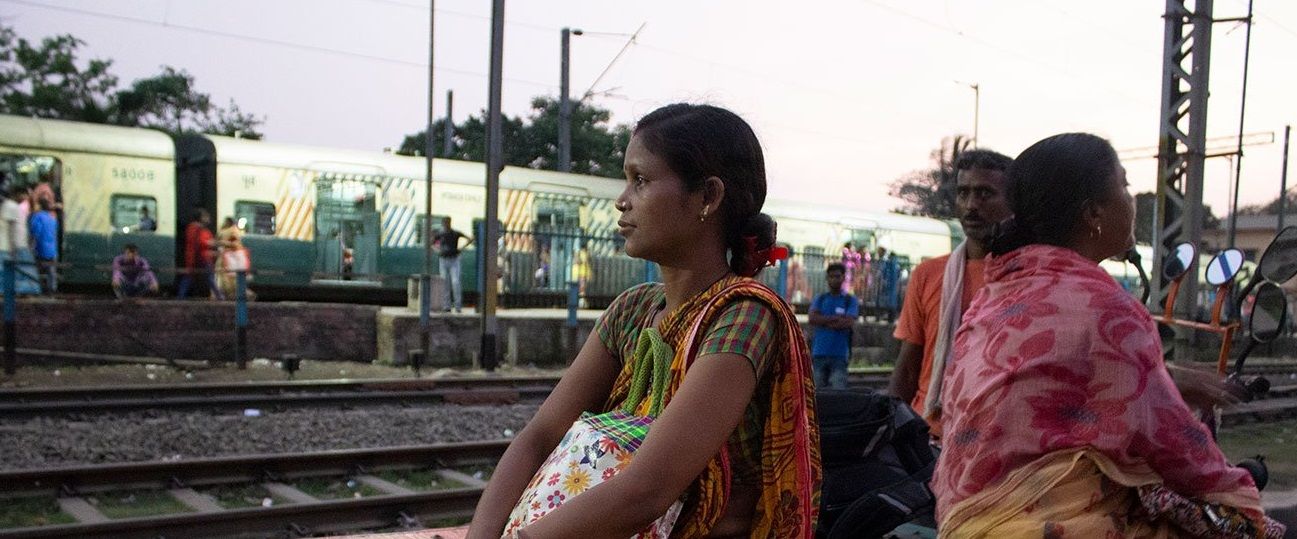
    “Do you think, there will be a place to sit inside the train today?” yells Breshpati Sardar, standing on a crowded platform at Jadavpur railway station in south Kolkata. The women waiting next to her shake their heads in disappointment and laugh at the question.

    Breshpati is waiting for the 4:35 p.m. train to Canning. The train rushes into Jadavpur station. The women brace themselves in the crowd, pushing to enter one of the two already-full ladies compartments.

    The train has come from Sealdah station in north Kolkata, stopping at Park Circus, Ballygunge Junction and Dhakuria. After Jadavpur, it will halt at Bagha Jatin, New Garia and Garia – all predominantly middle class and affluent areas of South Kolkata. The women waiting at Jadavpur – as well as at the other stations along the route – work as domestic helpers in these south Kolkata localities.

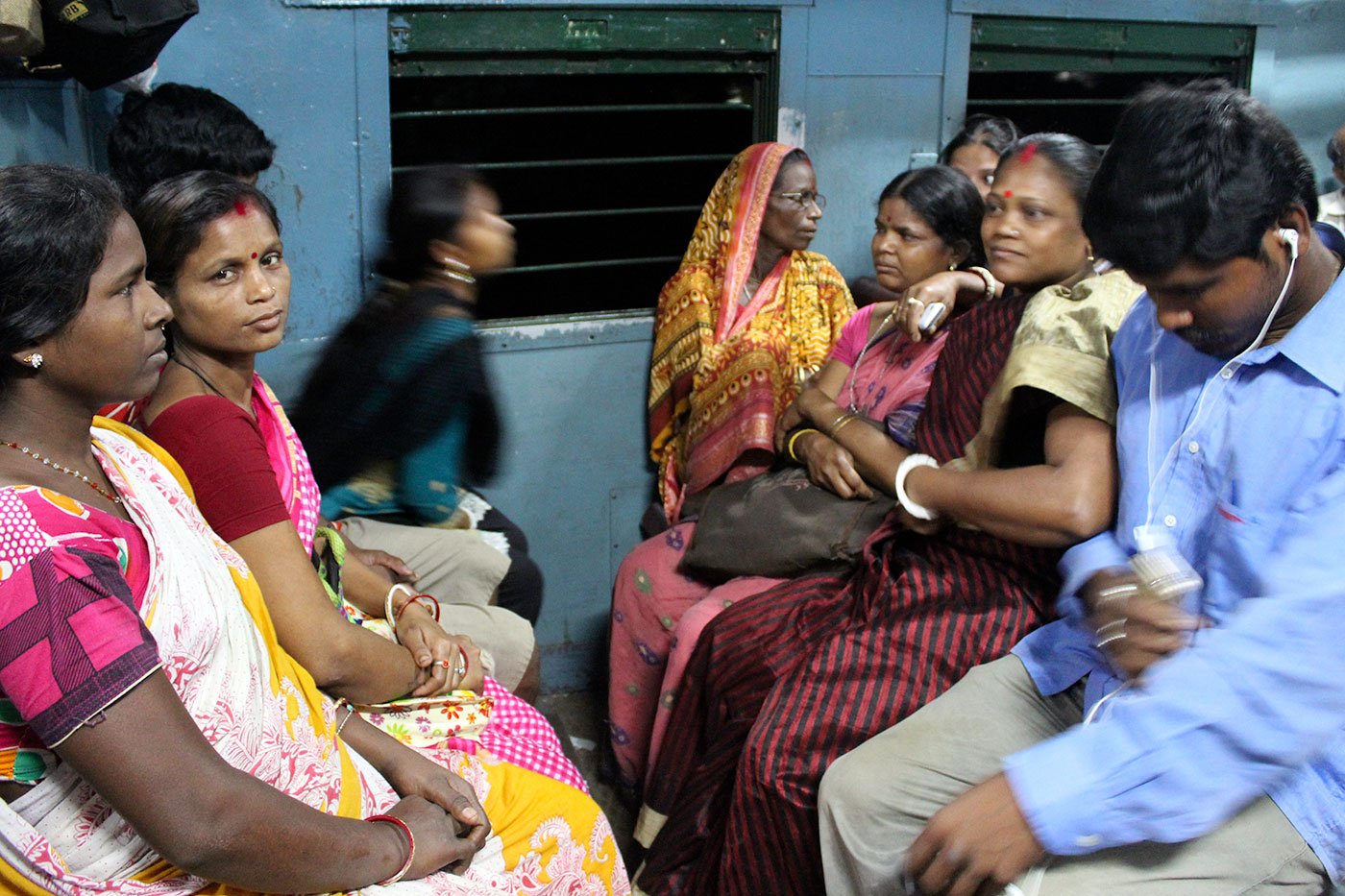
    Many of them take the 45-kilometres Sealdah-Canning route, which covers 16 stations, and the 65-kilometres Sealdah-Lakshmikantapur train that halts at 25 stations, or the Sealdah-Namkhana line, which goes even further south.  So some in Kolkata call these Eastern Railways trains the  ‘jhi special’.  Jhi is a disparaging term in Bengali for female domestic workers.
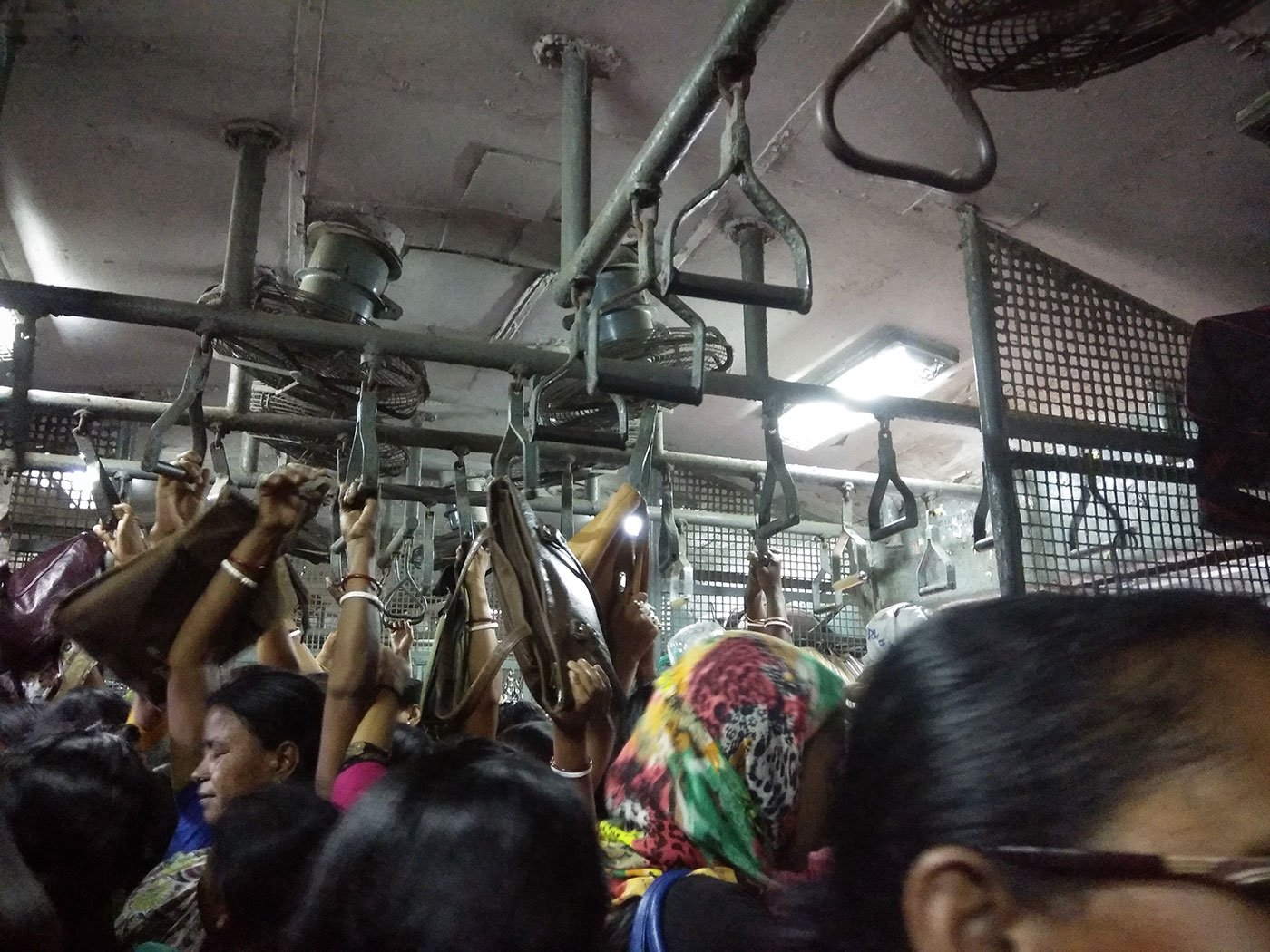
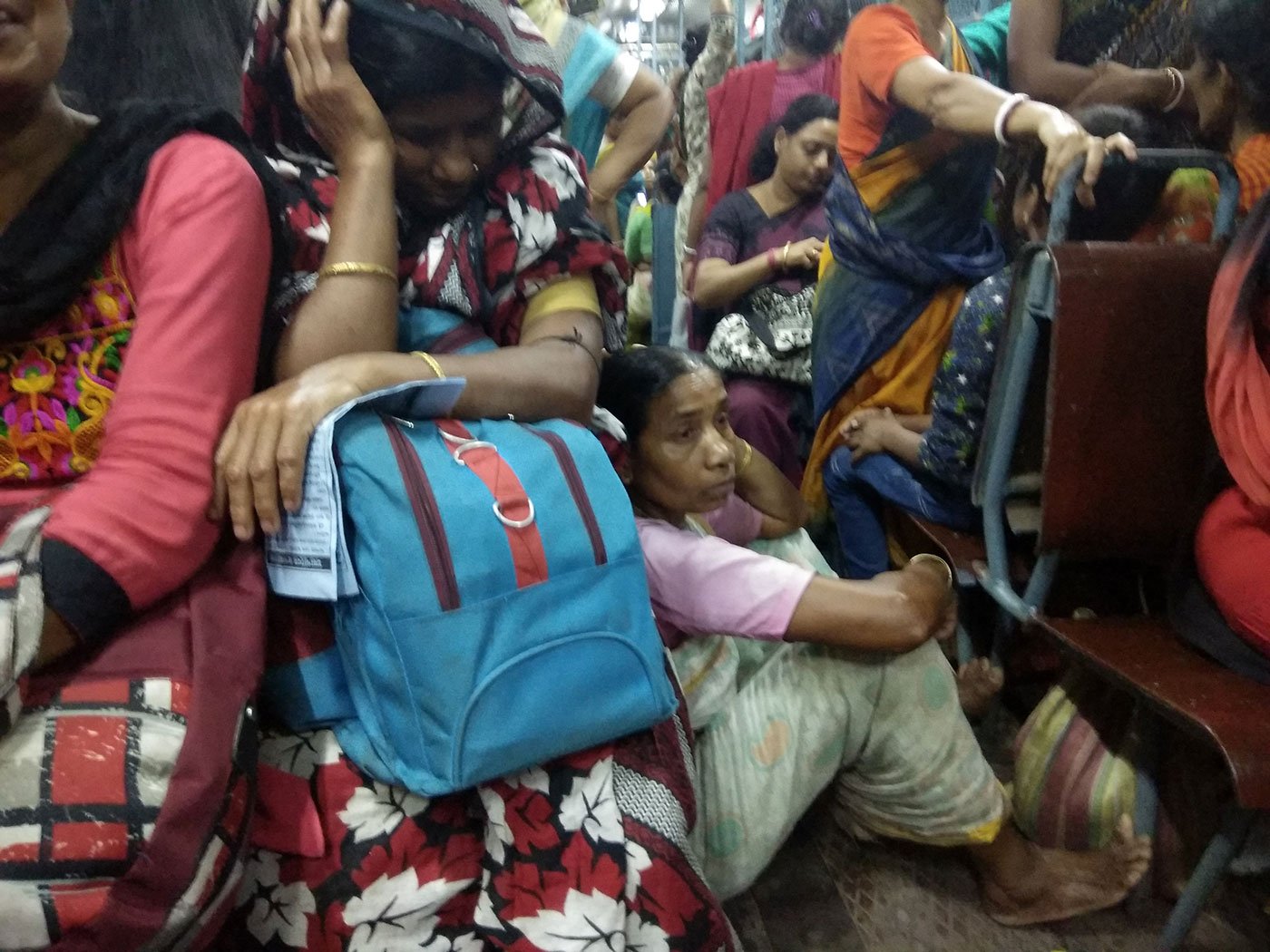
    Breshpati Sardar and other women workers on a crowded train from Sealdah to Canning, via Jadavpur
    Photo: Urvashi Sarkar
    Breshpati Sardar and other women workers on a crowded train from Sealdah to Canning, via Jadavpur
    Photo: Urvashi Sarkar On the Sealdah-Canning train: some in Kolkata call these Eastern Railways trains the ‘jhi special’ – ‘jhi‘ is a disparaging term in Bengali for female domestic workers

    That afternoon, on her way back home from work, wearing an orange saree, a red bindi and clutching a white handbag, Breshpati pushes her way into the compartment. Inside, amid the crush of bodies, bags and bangles, she finds a narrow space, just enough to stand. And repeatedly looks at the nearest window seat. When the person sitting there gets up to leave, Breshpati dives in to capture the coveted seat. Another woman, who has been pushed aside, screams at her.

    A fight erupts. Breshpati’s voice rises and she turns red with anger. Other women quickly intervene. She calms down and settles down on another woman’s lap.  The smile returns to her face and she excitedly shows a video of a snake consuming a rabbit to the women near her. “I usually never get into fights. But didn’t you see how the woman was behaving?” she says, angrily.

    Some 75 minutes later, the train pulls into Canning, around 45 kilometres from Jadavpur, where Breshpati boarded the train. Canning is on the outer edges of the Sundarbans region in South 24 Parganas district. A lack of work options near their homes forces the women to commute to the city every day.

    Breshpati’s house is a 30-minute walk from the station, near the market. On the way, she tells me, “Earlier I lived with my parents and went to school. But after Class 5, it became difficult for them to make ends meet.” Breshpati has three sisters and a brother. She started working in people’s houses when she was 11, and has continued ever since. She was married at the age of 14, and is now 28.
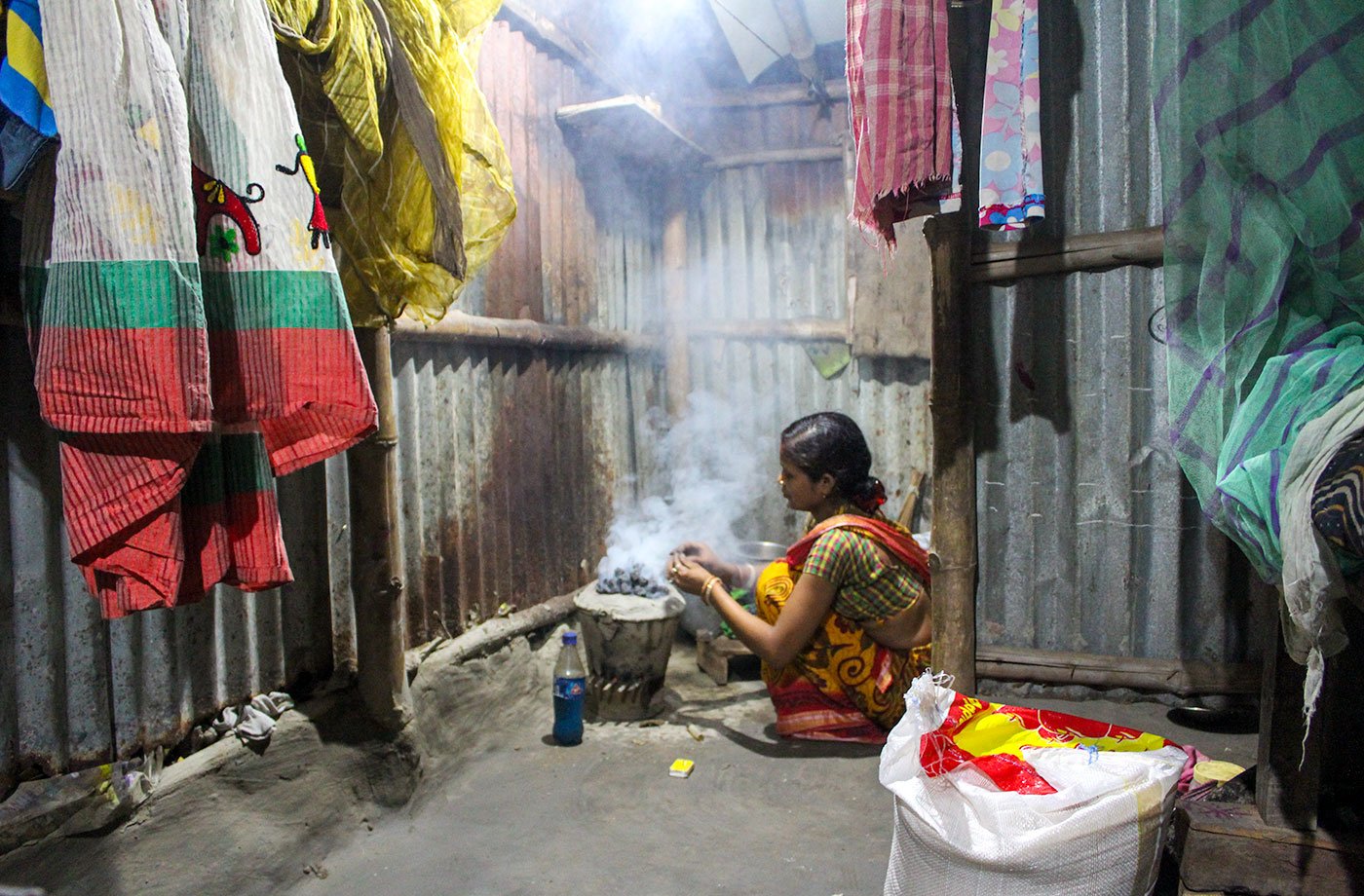
    At Breshpati Sardar’s home
    Photo: Siddharth Adelkar
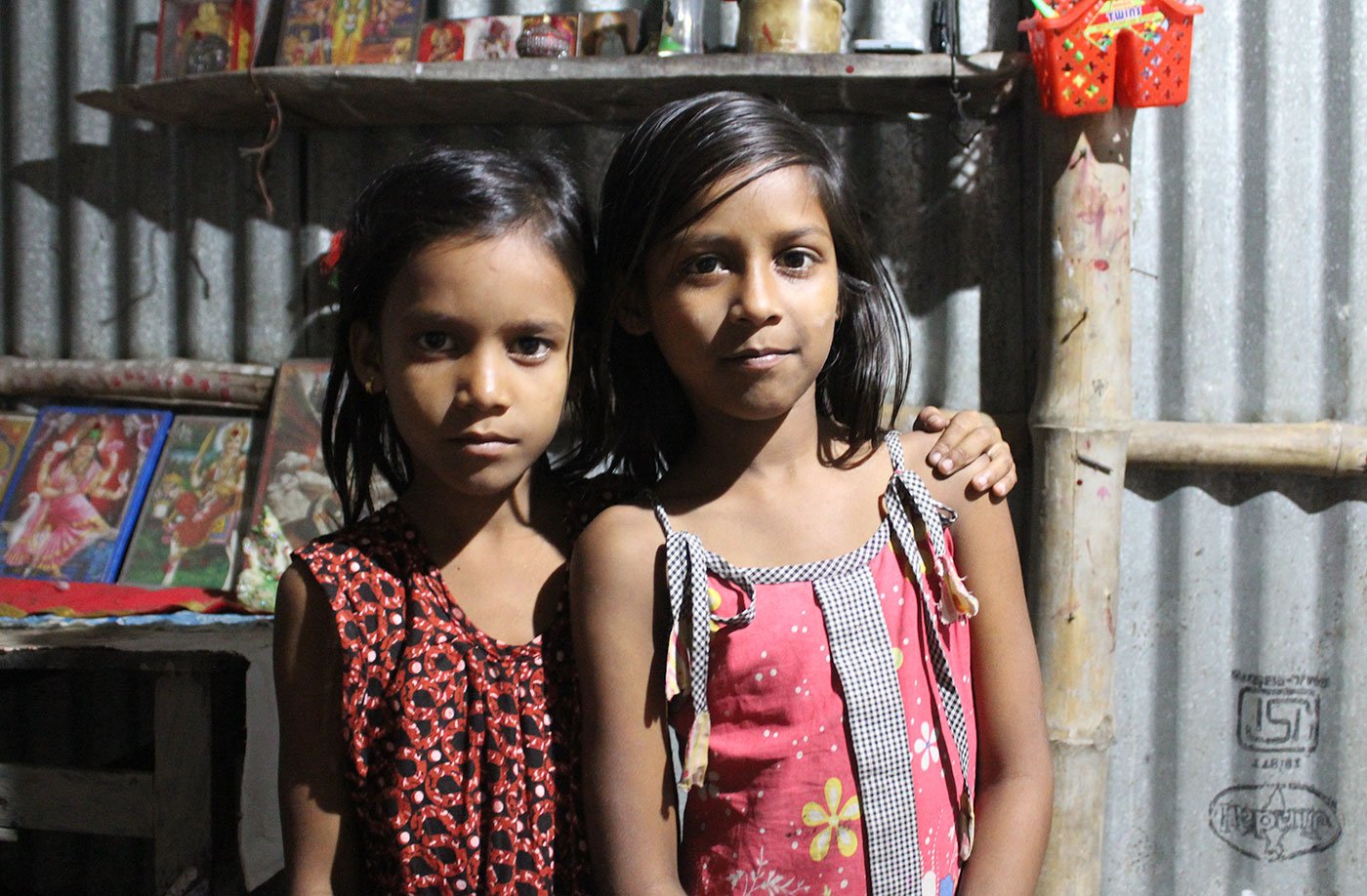
    Breshpati Sardar’s daughters
    Photo: Siddharth Adelkar. Breshpati Sardar takes the 4:30 a.m. train from Canning to Jadavpur in south Kolkata, and the 4:35 p.m. train back to her two-room tin home (left); her daughters Sanya and Tanya (right) and a son live with her parents and in-laws because the work schedules of Breshpati and her husband allow them almost no time at home

    Breshpati’s daughters, Tanya, 11 and Sanya, 10, are waiting for her when we reach their two-room tin house around 6 p.m. She also has a six-year-old son, Biswajit. The children live with her parents and in-laws. The work schedules of Breshpati and her husband, Sanjib Sardar, leave them with little spare time. Sanijb works in a farsan-making unit and earns Rs. 9,000 a month.

    That evening, their daughters are visiting. Breshpati instructs them to buy oil and vegetables, lights up the gobar gas furnace for cooking and fetches water from a nearby tubewell. Sanjib too will be home soon. After feeding the family and herself, and cleaning the utensils, Breshpati will sleep for a few hours and wake up at 3 a.m. to be able to reach Canning station in time for the 4:30 a.m. train to Jadavpur. “It is dark and sometimes cold. But I do not feel scared because many of us from my neighbourhood work at people’s homes in Kolkata and travel together. We call out to each other as we pass each other’s houses,” she says.

    Breshpati’s day then covers work in six households. “My tasks include cooking, washing clothes and utensils, and cleaning. I get Rs. 8,500 a month in all. I usually get tea and food at my employers’ houses and 3-4 holidays a month. But not all employers are good. Once, an employer cut 20 days salary because I did not come to work for a few days. I stopped going there.”

    Though Breshpati claims to be largely treated well by her employers, domestic workers usually labour in difficult conditions. A lack of decent wages, an absence of defined hours and benefit, abuse and sexual harassment are some of the issues they regularly face, says a 2016 memorandum submitted to the West Bengal government by the Griho Shramik Adhikar Abhiyan, a collective of organisations and unions of domestic workers.

    ‘If the women ask for more wages, they can lose their jobs, since others are willing to work at lesser rates. They are sometimes given stale food…’

    Watch video: Riding the dawn train, doing the domestic work grind

    The memorandum also lists victimisation by traffickers and placement agencies, forced migration, a lack of welfare measures and of skill development avenues. It notes that domestic workers are recognised under the Unorganised Workers’ Social Security Act (2008) and the Sexual Harassment of Women at Workplace (Prevention, Prohibition and Redressal) Act, 2013. But their working conditions were yet to be regulated by the West Bengal government.

    The central government has formulated a draft national policy for domestic workers with recommendations on social security and minimum wages. But its implementation has been left to the states.

    In June 2018, a domestic workers’ organisation, Paschim Banga Griha Paricharika Samity was granted trade union status for the first time in West Bengal.  Soon after, the organisation presented its demands to the state government, including Rs. 54 as the hourly wage, maternal leave, four days paid leave each month and the right to use the toilet at the workplace.

    “If the women ask for more wages, they can lose their jobs, since others are willing to work at lesser rates,” says Mallika Das, who works with Parichiti, a Kolkata-based non-governmental organisation that works with domestic workers. “There is no creche at the workplace, so they are forced to leave their children with others. They are sometimes given stale food to eat. Some employers do not even allow them use their toilets. The toilets in the railway station are mostly locked, broken or in such a bad condition that the women have to hold themselves until they reach home in the evening.”
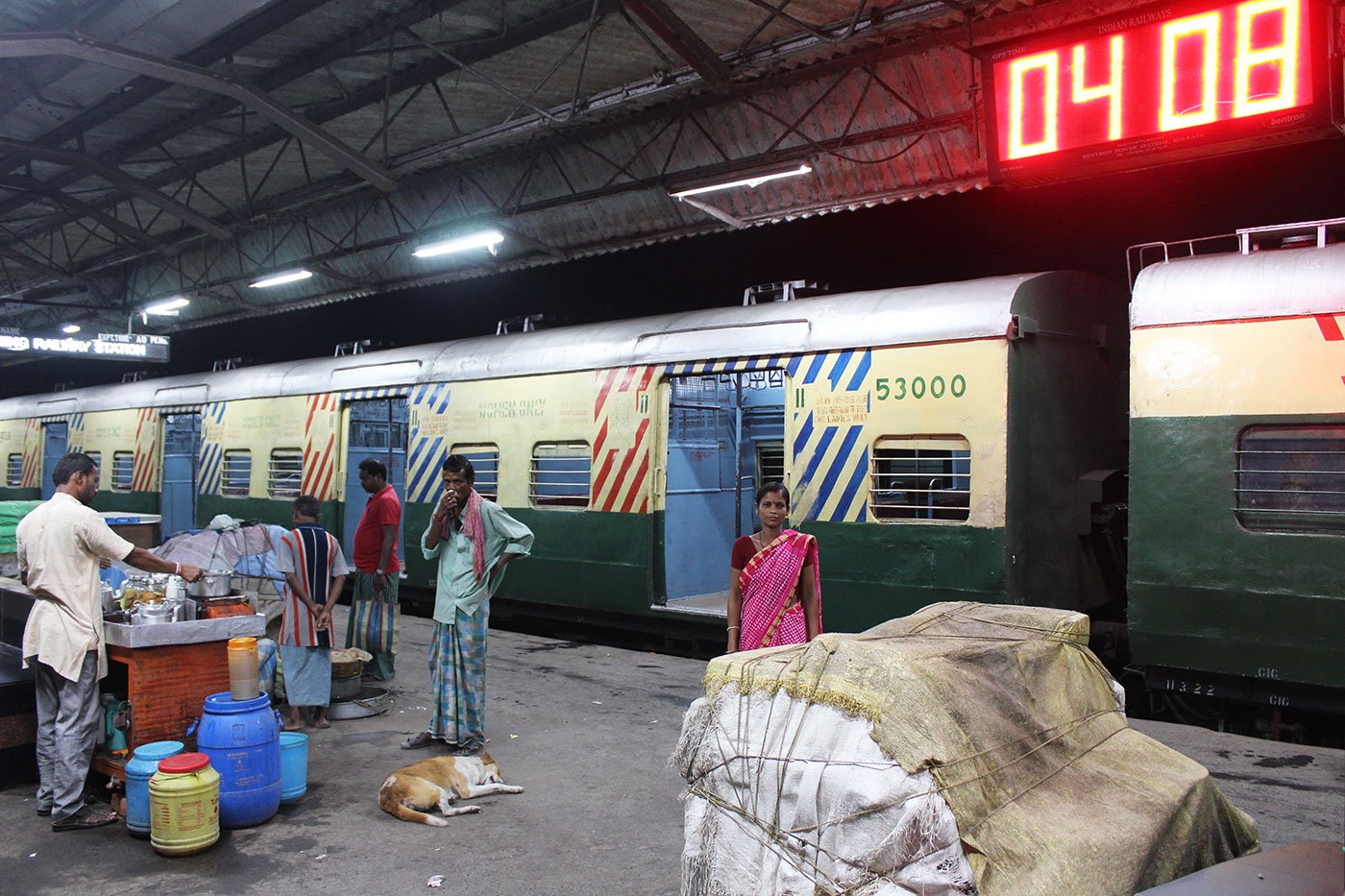
    Breshpati Sardar at Canning railway station in the morning
    Photo: Siddharth Adelkar
    Breshpati Sardar sitting in the train early in the morning
    Photo: Siddharth Adelkar. Breshpati Sardar at the Canning railway station in the morning, and on the train heading to work before daylight

    Breshpati’s employers permit her to use their toilets.  “I knead their chapatis and cut and chop vegetables with my own hands. Why should they object?” Her biggest  discomfort is having to stand all day in the houses she works at and in the train while returning. “My legs and back constantly ache,” she admits.

    The night passes and Canning station begins to stir around 4 a.m. We see Breshpati on the platform, a cup of tea and biscuits in hand. At that early hour, she appears fresh with her hair tied in a bun, the bindi in place and her face shining. Other women arrive, all going to work, including her friend Basanti Sardar, who works at Jadavpur too. “Come rain or shine, we maids must go and work, else our employers will be angry. They can’t do without us!” says Basanti. The women laugh.
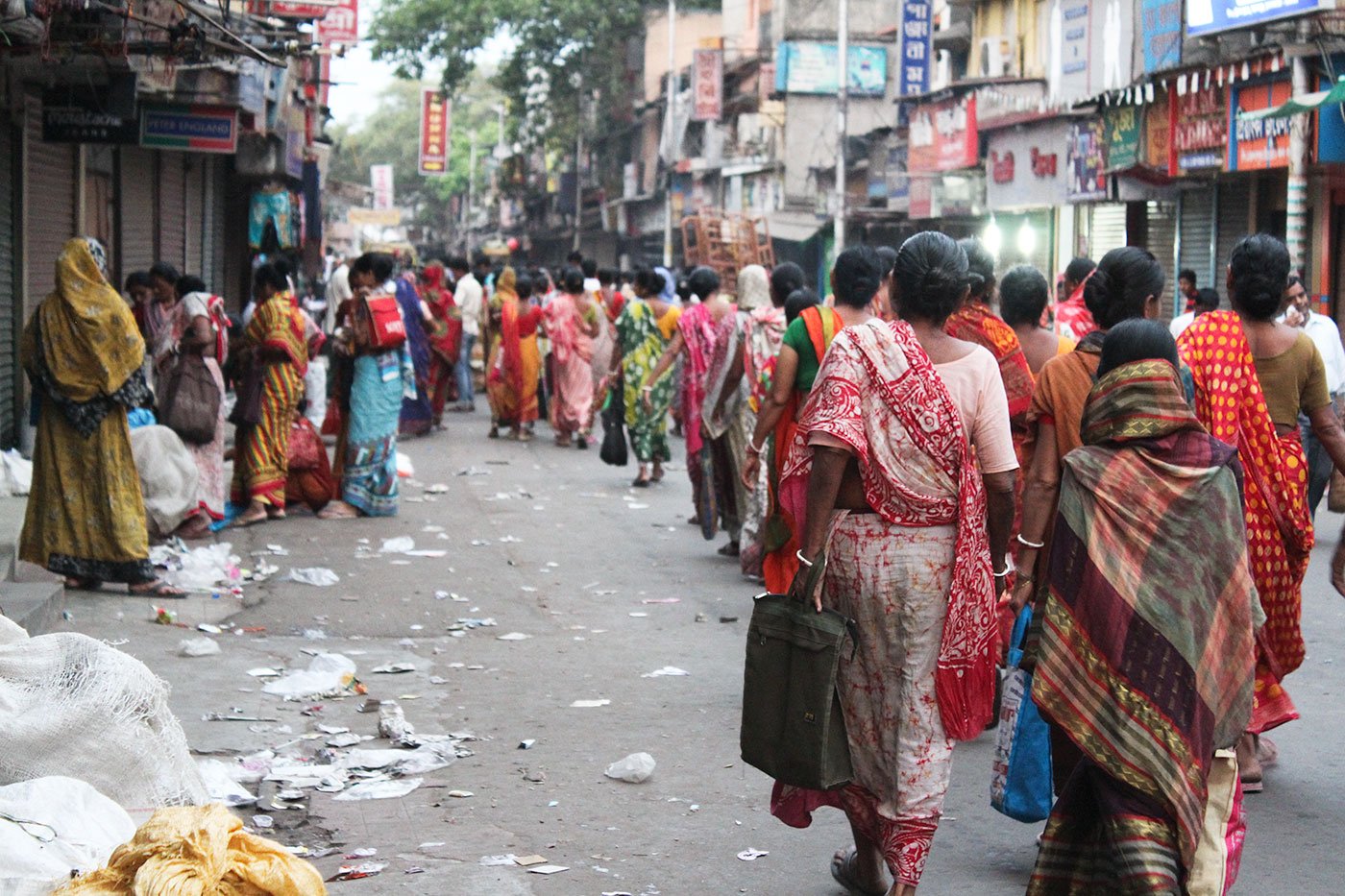
    Workers outside Jadavpur railway station
    Photo: Siddharth Adelkar. After alighting at Jadavpur (above) and other stations, the women walk off to work

    “Our lives are tough and we are poor. But these are the moments of laughter that we live for,” says Breshpati. At that early hour, the train is empty, but it will rapidly fill as it heads into Kolkata. Breshpati and Basanti sit in the general compartment instead of the ladies compartment. “In the general compartment, men sometimes offer their seats and will not scream at us. When possible, we board this compartment,” Basanti says.

    The train leaves at 4:30 a.m. and reached Jadavpur after roughly 75 minutes. Breshpati hurries away, walking, to her workplace, amid the crowds of other domestic workers making their way outside the station.

    Many workers also travel from Lakshmikantapur town in South 24 Parganas district, to Sealdah. The train journey of over 60 kilometres takes around 85 minutes. Chameli Baidya boards from Mathurapur Road station, the third stop on the line. She works at six households in the Ballygunge neighbourhood in south Kolkata. Ten years ago, she had a different life.

    “My husband and I owned a paan-beedi shop,” she recalls. “Things were fine for some time, then my husband stopped working and began wasting money. We had to close the shop and I started working at people’s houses. When I ran the shop, I was independent. Now, working at people’s places, I get scolded if I am late or if I miss even a day’s work.” Chameli is now unable to even pay her house rent, and she and her husband, along with their three daughters and a son, live in a shanty near the Mathurapur railway line.

    Chameli says the train journey is more difficult than working in houses. “I suffer each morning during the journey. Everyone pushes and screams. Sometimes, people even start hitting each other. There is no place to sit. If I had a handful of rice to put in my children’s mouths, I would not make this journey. I would stay at home.”

    Read the original article: https://ruralindiaonline.org/articles/slow-train-hard-work-low-wages-long-days/
  • From river to plate: the journey of the Sundarbans tiger prawn

    Published in People’s Archive of Rural India. 11 January 2017

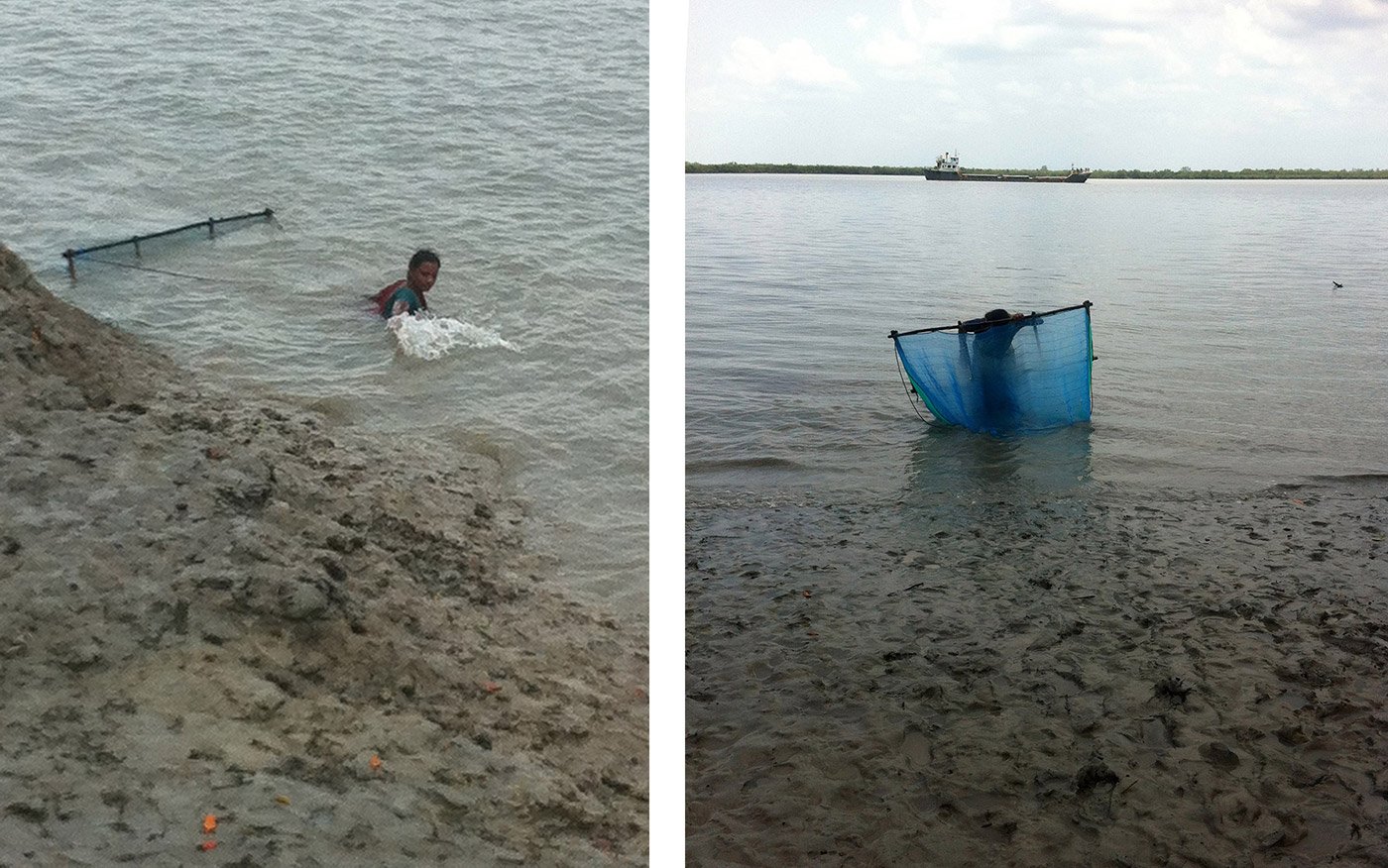
    Purnima Mistry walks out of the Raimangal river with her fishing net, water swirling around her waist. She has been swimming near the riverbank for half-an-hour, dragging the net behind her in search of tiger prawn seedlings.

    On the riverbank, she sorts the contents of the net, separating the seedlings from weeds, twigs and other fish. Her saree and plait are beginning to dry under the hot sun. But Purnima has to get back to the river again. “I have to collect enough tiger prawn seedlings so that I can sell them. It will take another 2-3 hours,” she says.

    Squatting on the muddy bank to sort the catch, Purnima talks about the long hours she spends in saline waters and mud, which cause skin infections and itches.  “Look how difficult our jobs are,” she says. “This is how the people of Sundarbans live and eat.”

    Purnima started doing this work two years ago to support her family, which includes two daughters and a son. Her husband is afraid of water and cannot go fishing, which is the most common occupation here. So he grows vegetables for sale at home.

    Watch video: Purnima Mistry trawls through the Raimangal river to catch enough seedlings to sell

    Is she afraid of encountering crocodiles and tigers – both common in some parts of the Sundarbans?  “Sometimes, I am scared of crocodiles; they have attacked people in this village,” Purnima says. “The tigers do not come to here because a security net near the forest keeps them away.”

    Purnima lives in Jogesganj, a village of 7,000-plus people and houses scattered along the banks of the Raimangal river in Hingalganj block of West Bengal. Many of the women and children in Jogesganj, like in the rest of the Sundarbans, work as seedling collectors. This supplements their household incomes from the sale of fish and crabs, and of forest products such as honey and wood.

    State government data [from 2009] shows that poverty drives more than 2 lakh people – of the 44 lakhs who live in the Sundarbans – to collect tiger prawn seedlings.

    Shoma Mondal of Hemnagar village says this work is mostly done by women. “Men go after bigger catch like crabs, which fetch better returns [and for which they hire boats in groups]. Gathering seedlings becomes the women’s task, and in very poor houses, even children [do this work]. The returns are poor but there are no other options. At least one woman from every household in the village does this work.  We cannot do much agriculture, because for much of the year the soil and water are saline, except in the monsoons, when we cultivate rice.”

    Left: The people who collect tiger prawn seedlings spend close to five hours in the water to get a sufficient catch. Right: A woman drags her net into the river at low tide, which is the best time to gather the seedlings
    Left: The people who collect tiger prawn seedlings spend close to five hours in the water to get a sufficient catch. Right: A woman drags her net into the river at low tide, which is the best time to gather the seedlings

    Shoma goes to the river almost every day at low tide in search of seedlings. Low tides are the best for a good catch – but they occur at different times. So Shoma sometimes goes to the river at midnight or at 4 a.m. “When it is pitch dark, we are unable to see if there are crocodiles or other wild animals nearby. In the daylight, at least we can see them and move away.”

    The earnings of seedling collectors like Purnima and Shoma vary according to the season. “During winter, which is peak season, we get Rs. 300 per 1,000 seedlings,” she says. “At other times, the prices can drop to Rs. 100 and even sink as low as Rs. 60.”

    On good days, the catch reaches 2,000 seedlings, but this is only a few times a year. Most other times, Shoma only manages to net 200-500 seedlings. “It’s enough money to go to the market [in Hemnagar] and buy essentials [like rice and pulses], but nothing more,” she says.

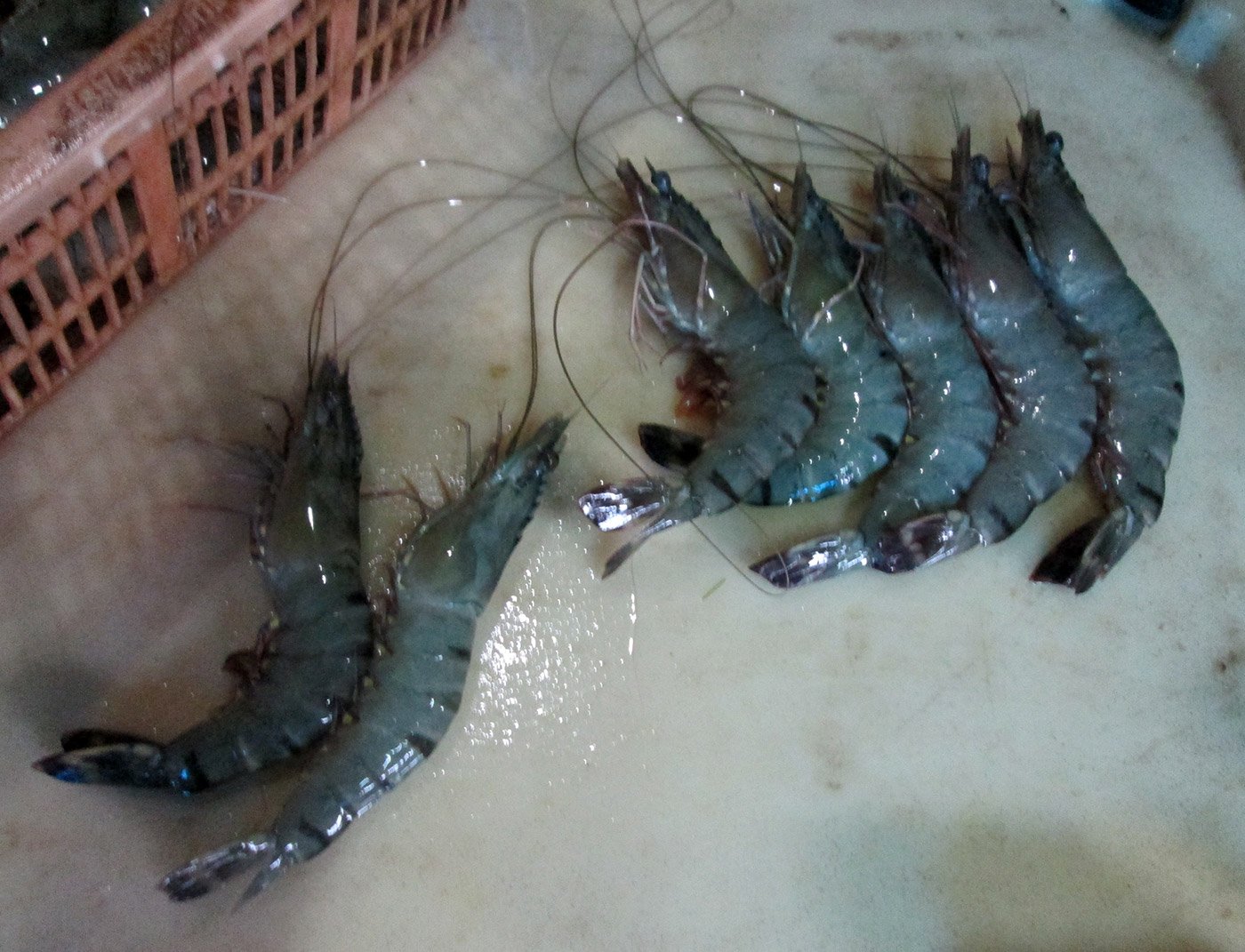
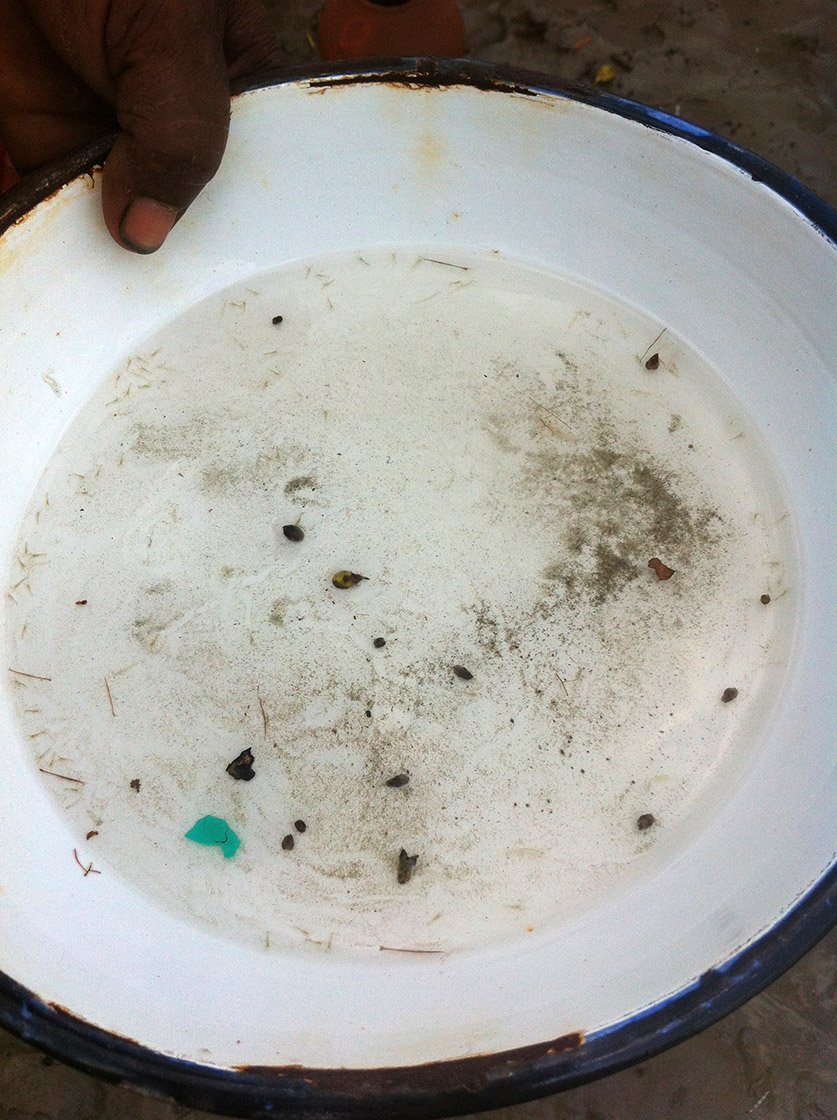
    Tiger prawn seedlings are tiny, almost like strands of hair. Their price is fixed per 1,000 seedlings
    After cultivation in brackish water enclosures in South 24 Parganas district, the seedlings grow in size

    During the winter months, from December to February, Shoma goes to Erode district in Tamil Nadu to work in a garments factory, where she stitches curtains and pillow covers. Although winter can bring the highest rates for the seedlings, many women try to not work in the biting cold river waters. Shoma’s husband Soumen Mondol works full-time in the same factory in Erode. She earns between Rs. 200-500 daily, he earns a little more.  Their five-year-old daughter stays back in the village with her grandmother.

    The methods of collecting prawn seedlings have been criticised by environmentalists as well as the state’s Forest Department. The nets trap many other fish species besides the seedlings. But the women usually discard the other fish, which can deplete those species.  The dragging of nets causes soil erosion and weakens embankments meant to prevent rivers from overflowing.

    Purnima however does not throw away the other fish. She has a pond near her home, where she harvests these species. “Those who do not have ponds have to throw away the remaining fish,” she explains, as she continues to sort the seedlings on the Raimangal riverbank.

    Although the tiger prawn trade rests on the labour of the women in these villages, they are paid the least along the chain. After the seedlings are collected, men take over the profitable part of the trade.

    Typically, middlemen visit the villages to purchase the seedlings from the women and sell it for cultivation in bheries. These are large artificial enclosures for brackish water aquaculture in Canning, Jibantala, Sarberia and other locations in the South 24 Parganas district. Here, the seedlings are cultivated for at least three months during which they grow in size.  Then they are sold in the wholesale markets of Canning, Barasat and Dhamakhali , and sent onward for export – often by men on motorbikes who carry the seedlings in plastic bags full of water.

    After cultivation in brackish water enclosures in South 24 Parganas district, the seedlings grow in size
    After cultivation in brackish water enclosures in South 24 Parganas district, the seedlings grow in size

    Full-grown tiger prawns fetch attractive prices in the wholesale markets. Tarun Mondal, a wholesaler in the Canning fish market, says his main income comes from tiger prawns.  “It is good business. We buy them at a rate of Rs. 380-880 per kilo from the bheries, and we sell them for Rs. 400-900 [per kilo, depending on size]. Our profit margin is Rs. 10- 20 [per kilo]. Most of our supply is from the Sunderbans, from blocks such as Basanti and Gosaba. We sell them to agents who work for bigger companies that ultimately export them.”

    India’s seafood exports were valued at $4.68 billion in 2015-16 ; shrimps constitute almost 70 per cent of these exports and are mostly exported to Japan, China and the United States. Tiger prawns, also known as black tiger shrimps, are an important part of shrimp exports. West Bengal is one of India’s largest shrimp producers and exporters of seafood.

    Seedling collectors like Shoma and Purnima though see only a fraction of this money. The women are unable to demand higher prices because the agents determine their rates and control the trade. “In addition to the price of seedlings, the middleman gives us an annual deposit [of Rs. 200-500 per person], which we don’t have to return, ” Shoma says. “The deposit forces us to sell only to him, and nobody else. We women are unable to gather in large numbers and bargain.” But it is the labour of workers like Shoma and Purnima that sustains the wholesale and export markets in tiger prawns, and brings these expensive delicacies to upscale plates in India and around the world.

    Photos: Urvashi Sarkar

    Read the original article: https://ruralindiaonline.org/articles/from-river-to-plate-the-journey-of-the-sundarbans-tiger-prawn/

  • Informal workers organisations wary of new labour reforms

    Photo: Ryan/CC 2.0

    Article published in The Wire. 9 August 2015

    Abolition of the floor wage, revised minimum daily wage of Rs 500 and monthly wage of Rs. 15000, and pension and provident fund to informal sector workers were some of the key demands made at a convention on workers in the informal sector held here on August 6-7 in Delhi.

    Labour activists, trade unions, lawyers, parliamentarians, voluntary organisations and journalists participated in the convention, organised by the Working People’s Charter Process, a collective which works to articulate the demands of people dependent on the informal economy.

    Critique of the proposed reforms of labour laws by the Modi government, and the need to push forward long standing demands of the informal sector with regard to revised minimum wages and universal social security formed the context for discussions. Demands were also made in relation to strengthened labour administration, provision of a living wage with decent standard of living, workers’ rights to housing, and rights of migrant workers.

    Proposed labour law reforms

    According to the proposed reforms, 44 labour laws are to be replaced by four codes in the areas of wages, industrial relations, social security and working conditions. The government’s stated aim in the creation of these codes is to boost job creation and investment, but there are fears that the move will have an adverse effect on workers and working conditions.

    Advocate Ramapriya Gopalakrishnan explained how these codes would greatly limit the role of labour inspectors, enable self-certification for employers, impose hefty fines for participating in ‘illegal’ strikes, restrict the number of outsiders who can hold trade union office, allow the compounding of offences by employers and exempt small factories – units with less than 40 workers – from labour laws relating to payment of wages, bonus, maternity benefits, compensation and child labour. Senior Supreme Court lawyer Colin Gonsalves, legal expert Usha Ramanathan, social activist Swami Agnivesh, and former NCPCR chairperson Shantha Sinha also participated.

    Call for participation in national strike

    Discussions ranged from exploitative practices of bonded labour, issues of migrant workers, domestic workers, street vendors, rag pickers, brick kiln work to questions around employment generation, social protection, housing rights, labour administration and the media coverage of labour issues. The need to form solidarities of labour across formal and informal sectors was reiterated by speakers, and a call was made to participate in the strike of central trade unions on September 2.

    Trade unions represented included the Centre of Indian Trade Unions (CITU), New Trade Union Initiative (NTUI), Indian National Trade Union Congress (INTUC), Bharatiya Mazdoor Sangh (BMS), and Trade Union Coordination Committee (TUCC). The Delhi Employers Association was represented, while from the government, Minister of State for Labour and Employment Bandaru Dattatreya and Director General Labour Welfare Bipin Mallick were present.

    Read the original article: https://thewire.in/economy/informal-workers-organisations-wary-of-new-labour-reforms

  • A right to fish, a fight to live

    Published in People’s Archive of Rural India. 12 March 2015

    A tall and lean fisherwoman with a strong face stares at the evening sun fading into the still waters running through Kultali, an island in the Sunderbans forest; Anima Mandal is angry. She hasn’t eaten since
    morning.

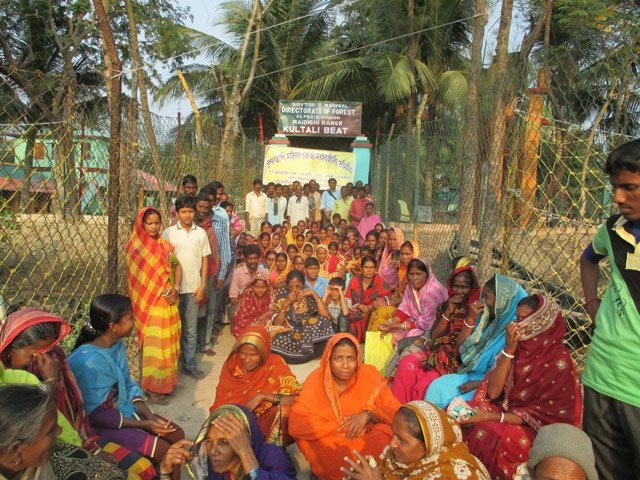
    She was there for a meeting that the Kultali Forest Range beat officer had fixed for 2 pm on February 14, 2015 at the forest range compound in a corner of Kultali, across a river. Nearly 50 women, and a few men, had turned up for this crucial meeting to make two pressing demands – the return of their confiscated fishing canoes (dongas) and for the women to be recognized as traditional small-scale fishworkers, with a right to fish for their livelihood.

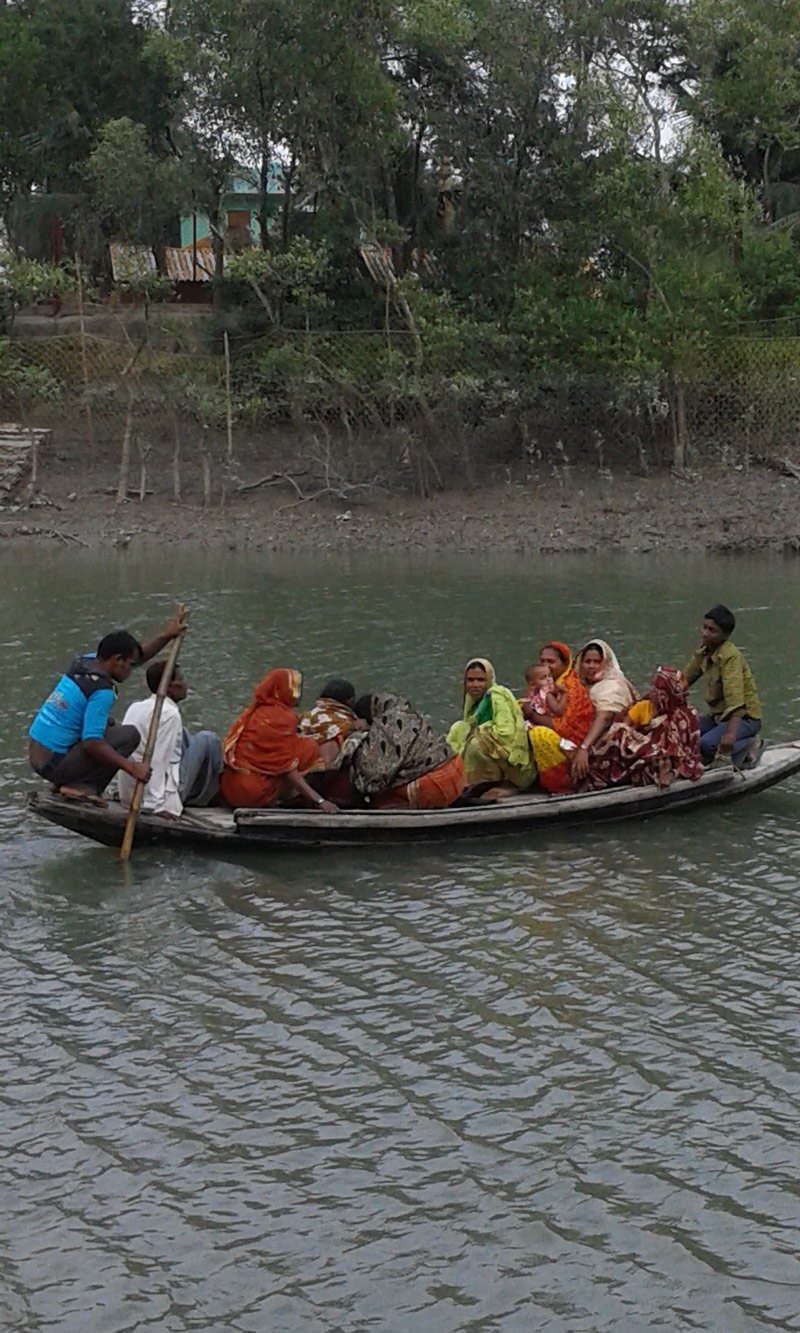
    The women, organized under the Kultali Mahila Donga Matsyajibi Samity, had travelled a long way from Madhya Gurguria village – on foot, on cycles fitted with wooden planks and by boat – to make it to their appointment.

    It is already past 5 pm. A number of women begin tracing their steps back towards a dinghy headed homeward: some hurry back to feed and care for the children they’ve left at home and others return home for fear of husbands who could turn violent. Anima and a few others choose to stay back at Kultali and represent the group, determined to get a response from the Forest Department.

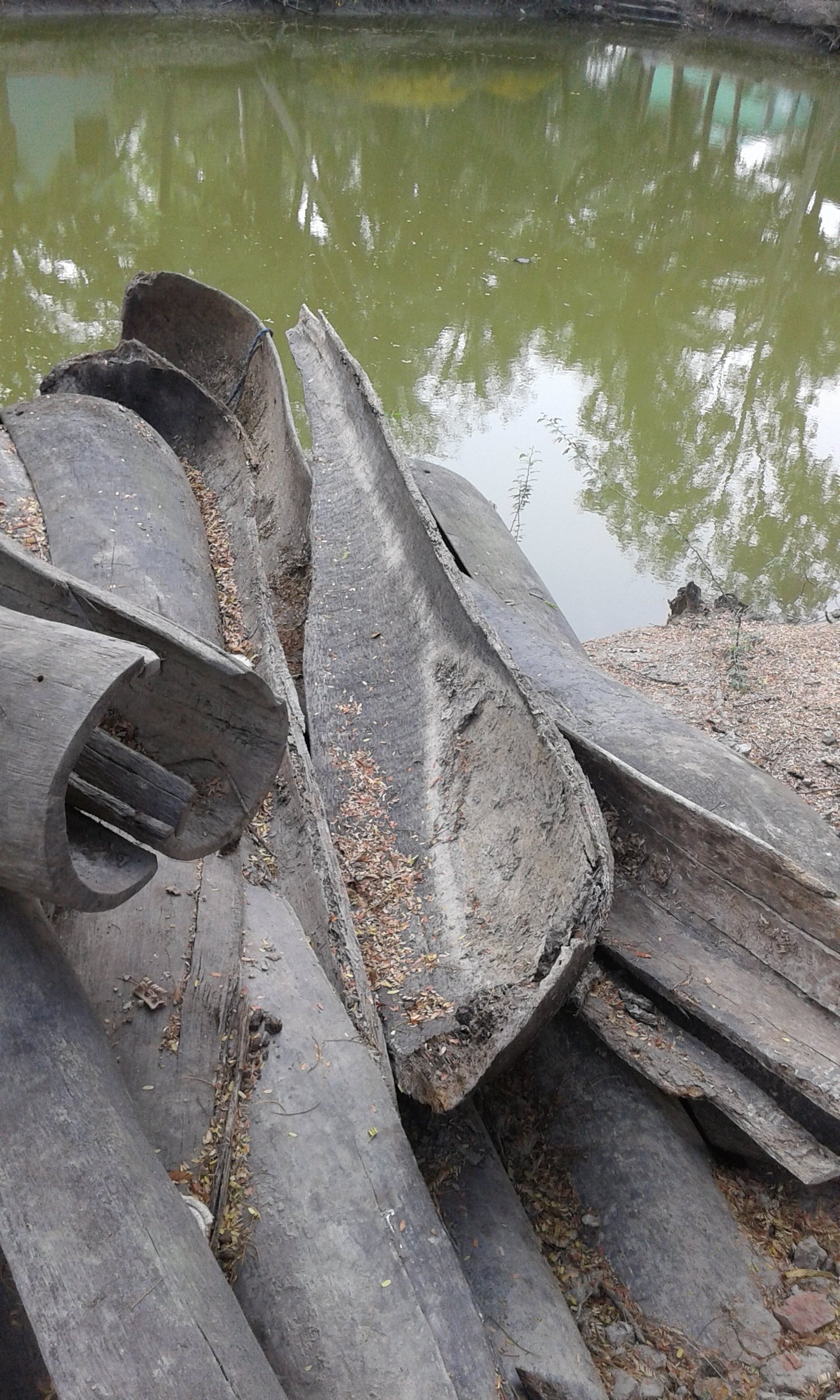
    They walk around the compound, to the edge of a murky green pond, where their confiscated canoes of palm trunk lie stacked. The women are appalled; debris and wood bits from the canoes have started to peel off and mingle with the water. “Our canoes have been broken into pieces and thrown into the water. There must be lakhs of rupees (floating) in this river, ” says Geeta Sahu, a fisherwoman speaking softly. Her indignation, however, is unmistakable, shared by the workers standing beside her, still waiting.

    Sole Means

    The conversation among the waiting crowd turns to input costs: the cost of palm trunks from which the canoes are dug out, the labour cost for chiseling, and the cost for coal-tar coating maintenance, all amounting to about Rs 5,000. Almost every confiscation necessitates this princely expenditure on their part, to build a canoe from scratch. “It can take at least two or three months to gather such a sum. Wooden boats, permitted by the Forest Department, are too expensive to afford,” explains Beena Bag, one of the fisherwomen.

    They walk down some distance and spot a couple of confiscated dinghies, still sturdy, poking out through a mass of trees. The canoes and dinghies are the fishworkers’ only means to catch crab and fish, their sole means to earn a living. By now Anima is fuming: “Why confiscate the canoes and hurt us in the stomach? We don’t earn salaries, you know. This is not Calcutta city, where each month people earn something to be deposited in the bank. Nobody is going to hand me a bag of vegetables to cook. Life is different here.”

    Slice of Life

    Indeed, life is starkly different in the Sunderbans. For Anima, and other fisherwomen like her, the day begins at 3 am. After housework, they take their canoes into the rivers. To make a catch, they wade into cold, chest-level water. Once they have caught the fish, they return home to cook and feed their children. Crab and fish depots are the next stop. The women come here to sell their catch with hope and no guarantees to make a little money. On days there are earnings, they are funneled into immediate household expenses, fishing input costs (if any), and savings for the less fortunate days in the week. Many of the communities here are landless second or third generation fishworkers, entirely dependent on fishing for their survival. And so, what they earn will determine what they buy at the market.

    No Avenues

    Anima was 10 or 12 when she got married. She recently lost her husband to a stroke. “There is no decent hospital here. Even pregnant women need to travel for two hours to Joynagar, where there are hospitals,” she exclaims, frustrated. The number of men in the Sunderbans has declined over time, mainly due to migration for better livelihoods; most move to cities as construction workers or get involved in tiger killings for the profit.

    The women are also bitter about having no stake in the proposed tourism projects in the Sunderbans. “Why won’t they involve us in the tourism projects? It will give us better jobs and a better quality of life. Nobody seems to wants to (positively) engage with us. For instance, the big boats catch fish and crab just like we do, but it is us that the Forest Department goes after.”

    Certified Catch

    If life is not hard enough, the Forest Department’s confiscation of their canoes has ensured that it becomes even harder. The reason cited is that since the canoes do not have a boat license certificate (BLC), granted by the Forest Department, they are therefore not authorised to ply in the Sunderbans; Kultali is part of Sunderbans reserve forest area, preventing the fishworkers from catching crab on their own land, unless they have a BLCs.

    The BLC regime has several problems including a non-transferable nature, the possession of BLCs by those who are no longer fishworkers, a thriving black market, and the non-issuance of fresh licenses. A study on the Sunderbans fishers by the International Collective in Support of Fishworkers (ICSF) outlines these problems in detail. To deter fishworkers, the Forest Department uses methods such as seizing fishing nets; the women complained of receiving threats that glass bits would be mixed into with the riverbank sand, to prevent them from going (as they walk barefoot) to fish.

    “The denial of the community rights of the forest dependent fisherwomen to fish in the forest waters is a violation of the FRA,” says Pradip Chatterjee, President of the Dakshinbanga Matsyajibi Forum. The Forest Rights Act (FRA) is meant to secure the access rights of forest-dwelling people, including sustainable use and conservation of the biodiversity of their home grounds.

    He notes that despite repeated calls, the West Bengal government is yet to notify the FRA in the North and South 24 Parganas Districts: “The failure to notify the Act has resulted in the denial of livelihood rights to forest-dependent people including fishers, wild honey collectors, drywood collectors, and shell collectors (among others), leading to consequent conflicts with the Forest Department.” Implementing the FRA would allow fishworkers to catch crab without BLCs.

    Hope and a victory

    The beat officer enters the scene a little past 6 pm. He speaks with the women of the Mahila Donga Samity
    and members of the Dakshin Matsyajibi Forum. The officer states that the canoes have been confiscated because of their alleged use for poaching. Episodes of poaching involving canoes have been sporadic, the
    women argue, the entire fishing community should not be penalised.

    They promise to act as informers for the Forest Department during instances of poaching, but insist on their right to continue using canoes for fishing. The beat officer agrees not to seize canoes for the next three months, during which time the movements of the canoes will be supervised. He also agrees to take up the issue of the rights of forest-dependent fisher communities with higher authorities.

    When he voices a grouse about the government having to pay compensation when there are deaths caused by fishworkers venturing into tiger territory, he is reminded that fishworkers do not voluntarily venture into tiger territory, but because it is a question of their livelihood.

    By the time discussions conclude, night has already set in. The women are happy to have this victory, even if temporary. They pile into a dinghy that takes them into the dark waters of the Sunderbans. Anima gazes at the still waters and towards home.

    Read the original article: https://ruralindiaonline.org/articles/a-right-to-fish-a-fight-to-live/

Urvashi Sarkar – 2026 – All rights reserved.

web things by Studio Goncharov