Tag: Bangladesh

  • Beyond disaster and wildlife in the Sundarbans

    Beyond disaster and wildlife in the Sundarbans

    It’s a Sunday morning, but Jyotirindra Narayan Lahiri is busy. In a corner room of his apartment in Hooghly district, the 50-year-old is poring over the first map of the Sundarbans prepared by Major James Rennel in 1778.

    “This is the first authentic map of the Sundarbans based on a survey by the British. This map shows mangroves extending right up to Kolkata. So much has changed since then,” Lahiri says, his finger tracing the map. Straddling both India and Bangladesh, the Sundarbans, the site of the world’s largest mangroves, is known for its immense biodiversity and, of course, the Royal Bengal Tiger ( Panthera tigris ).

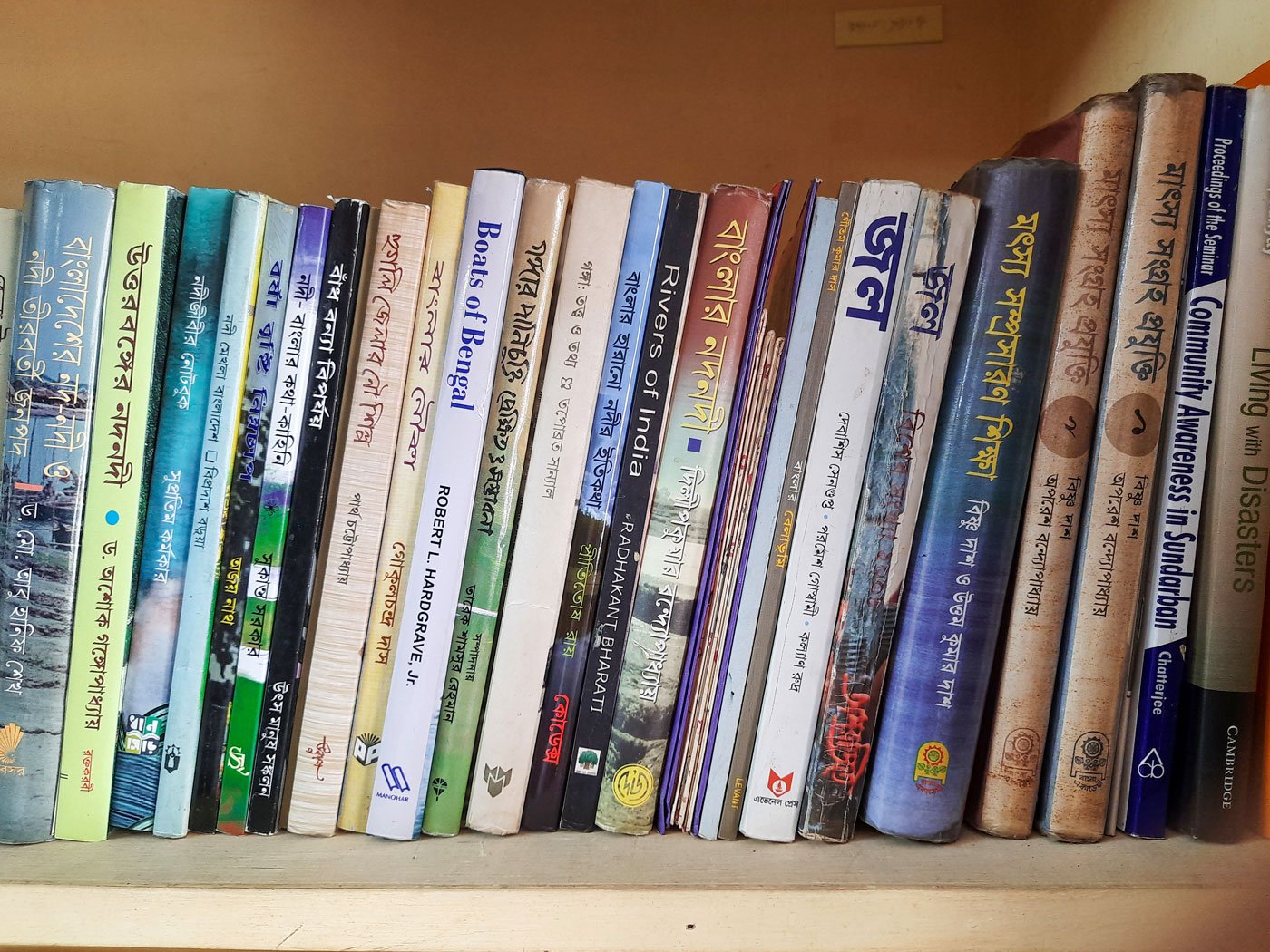
    The bookcases lining the walls of his room are packed with hundreds of titles on every conceivable subject about the Sundarbans – flora, fauna, daily life, maps, atlases, and children’s books in English and Bengali. This is where he researches and plans issues of Sudhu Sundarban Charcha , a quarterly publication about the Sundarbans that he started after Cyclone Aila left a trail of devastation in the region in 2009.

    “I made repeated trips to see the condition of the area. It was frightening,’’ he recalls. “Children were out of school, people had lost their homes, masses of men had migrated, and everything was left to the women to take care of. The people’s fate entirely depended on whether the river embankments would stay in place or collapse.”

    Lahiri found media reports on the disaster sparse and superficial. “The media recycles stereotypes about the Sundarbans. Typically, you will find accounts of tiger attacks or rain. When it isn’t raining or flooded, the Sundarbans is rarely in the news,” he says. “Disaster, wildlife and tourism – that is the sum of what interests the media.”
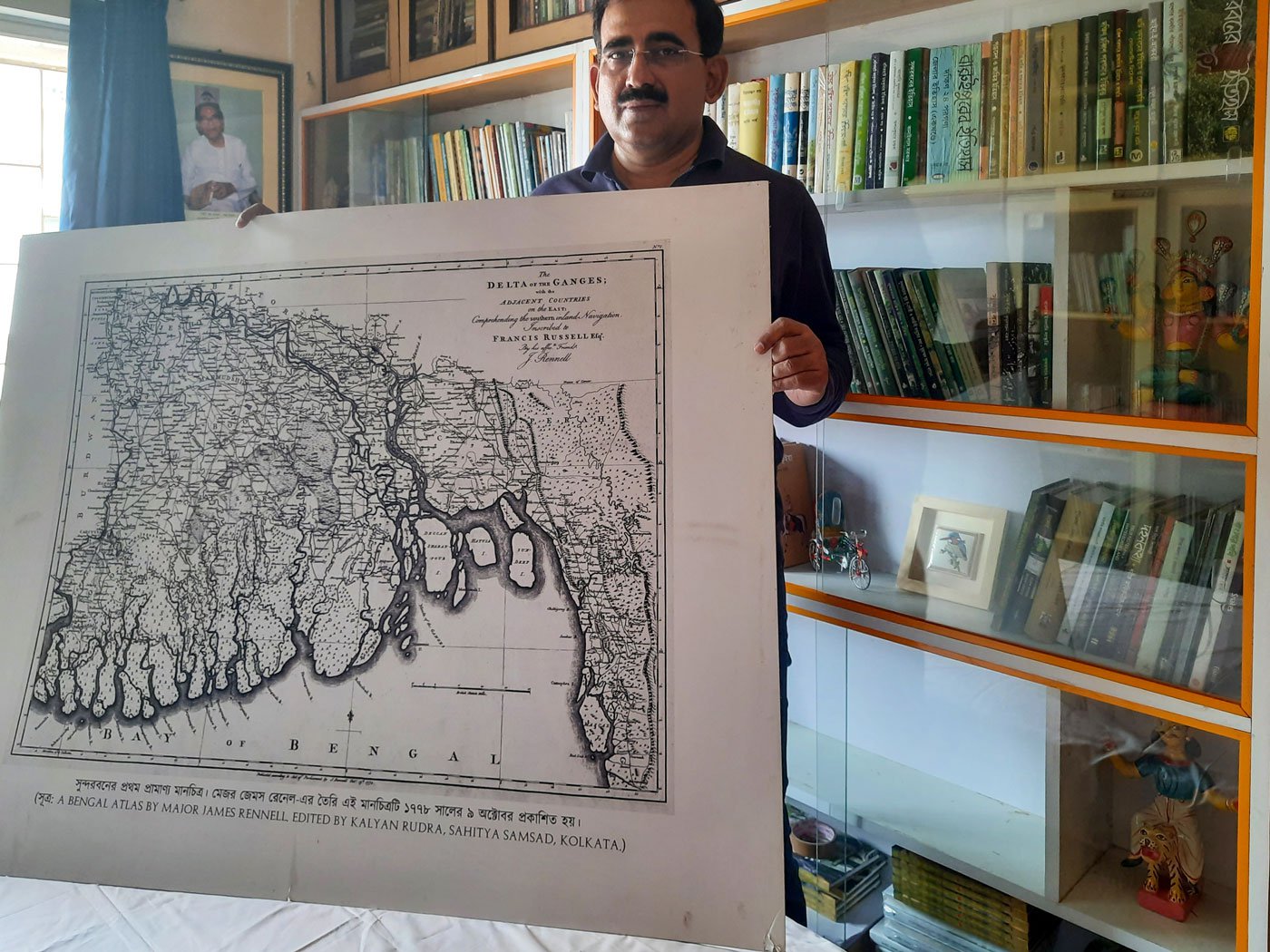
    Lahiri holds the first map of the Sundarbans (left) prepared by Major James Rennel in 1778. In his collection (right) are many books on the region
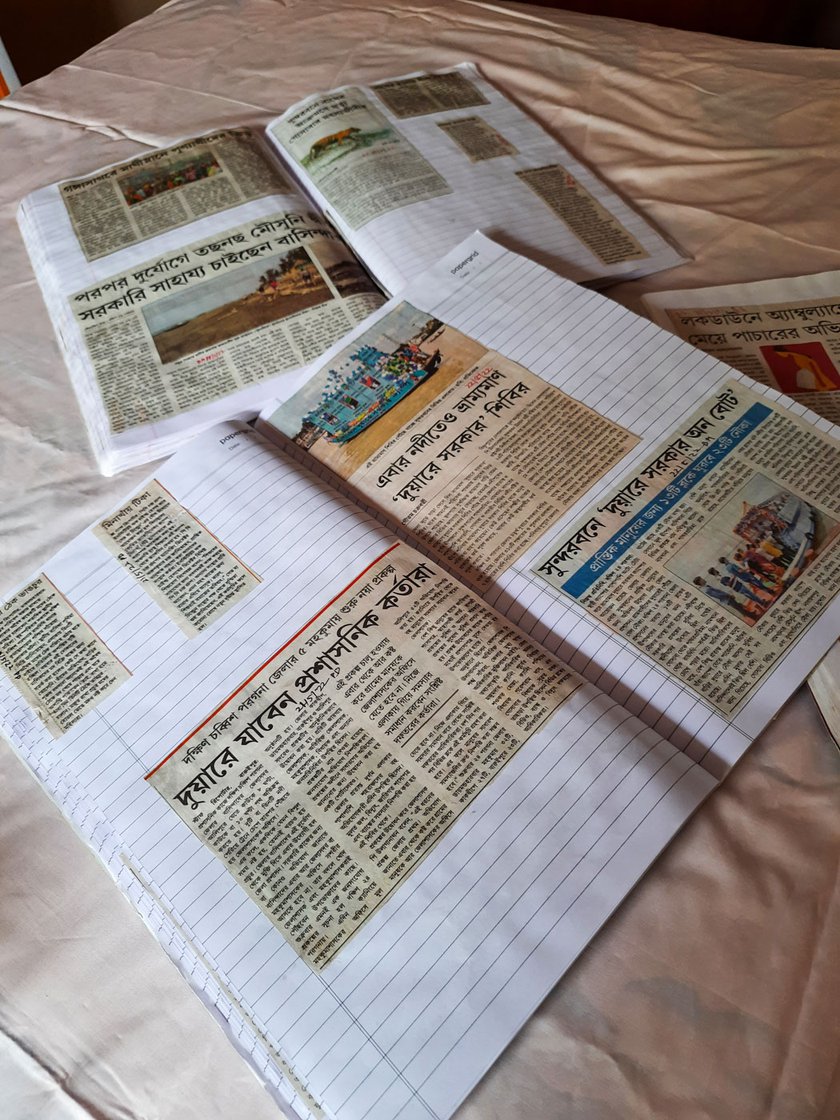
    PHOTO • Urvashi Sarkar
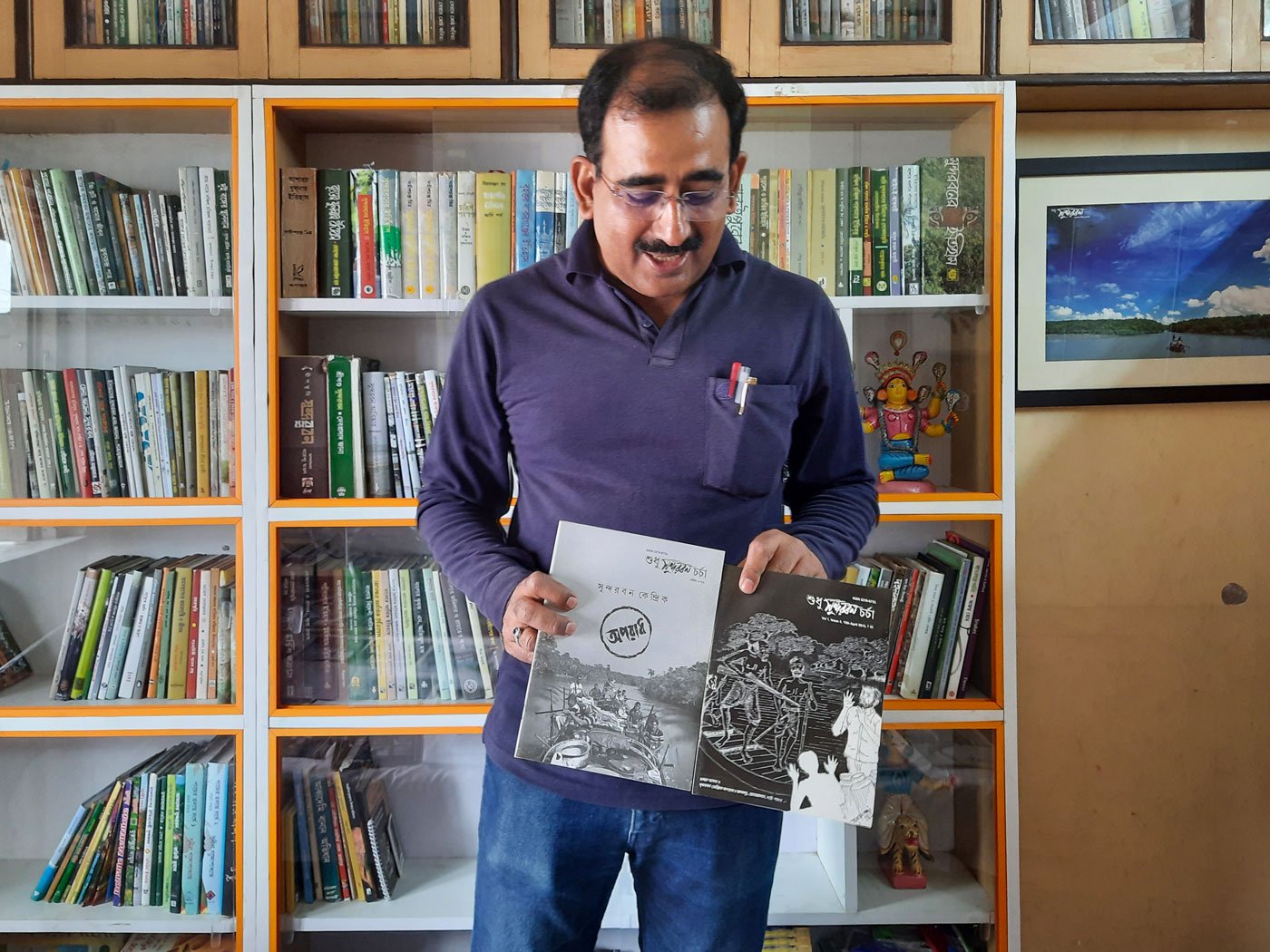
    Lahiri holds the first map of the Sundarbans (left) prepared by Major James Rennel in 1778. In his collection (right) are many books on the region

    PHOTO • Urvashi Sarkar

    Lahiri holds the first map of the Sundarbans (left) prepared by Major James Rennel in 1778. In his collection (right) are many books on the region

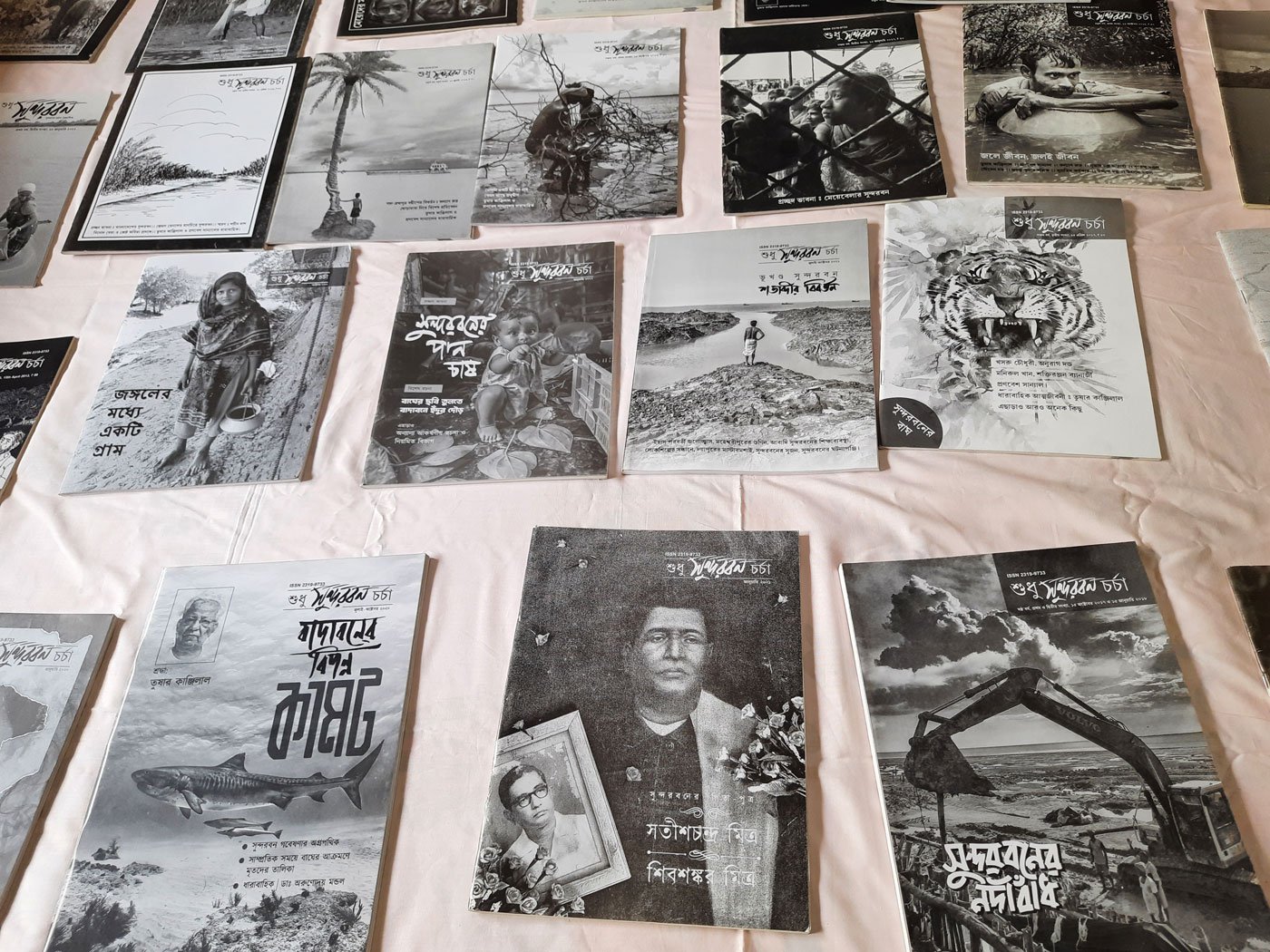
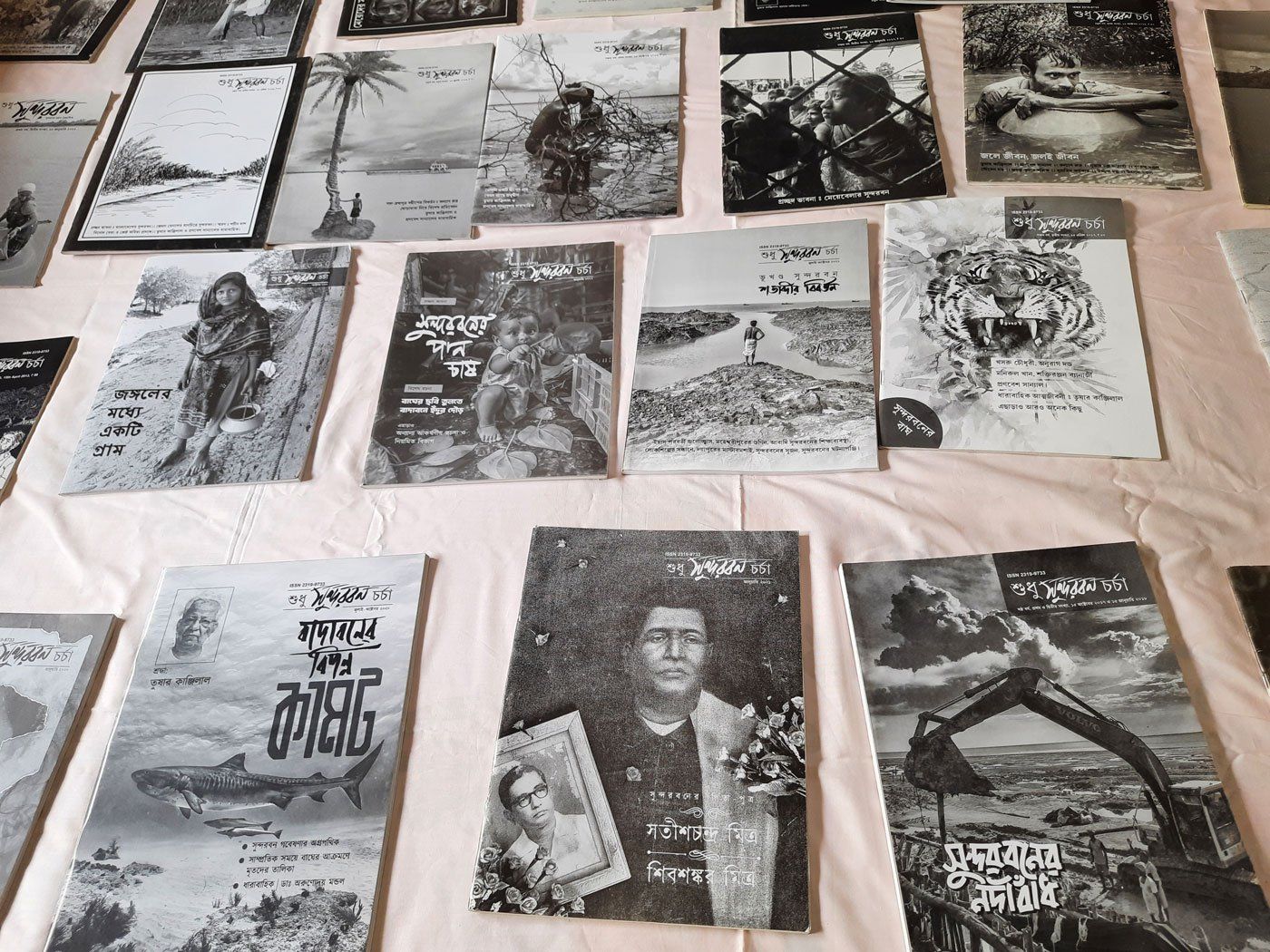
    Lahiri has been collecting news (left) about the Sundarbans for many years. 'When it isn’t raining or flooded, the Sundarbans is rarely in the news,' he says. He holds up issues of Sudhu Sundarban Charcha (right), a magazine he founded in 2010 to counter this and provide local Indian and Bangladeshi perspectives on the region

    PHOTO • Urvashi Sarkar

    Lahiri has been collecting news (left) about the Sundarbans for many years. ‘When it isn’t raining or flooded, the Sundarbans is rarely in the news,’ he says. He holds up issues of Sudhu Sundarban Charcha (right), a magazine he founded in 2010 to counter this and provide local Indian and Bangladeshi perspectives on the region

    He founded Sudhu Sundarban Charcha (loosely translated as ‘Just Sundarbans Discussions’) to comprehensively cover the region from both Indian and Bangladeshi perspectives. Since 2010, he has published 49 issues of the magazine and the 50th issue is slated to be published in November 2023. “Past issues have focused on everything, from how paan is grown, to maps of the Sundarbans, the lives of girl children, profiles of individual villages, piracy and rainfall,” he says. One issue even discussed how media covers the Sundarbans, featuring perspectives from journalists in West Bengal and Bangladesh.

    The magazine’s last issue published in April 2023 – its 49th – is dedicated to mangroves and tigers. “Sundarbans are possibly the only mangroves in the world where tigers live. Therefore, we planned an issue around this.” he says. Planning has also begun on the 50th issue, which will focus on the work of a retired university professor who has extensively researched how climate change and rising sea levels impact the Sundarbans.

    “Our readers are usually students and university researchers seeking specific data or information, and individuals genuinely interested in the region. We even have 80-year-old patrons who read our issues line by line,” says Lahiri.

    Approximately 1,000 copies of the magazine are printed each quarter. “We have 520-530 regular subscribers, mostly in West Bengal. The magazine is couriered to them. Some 50 copies go to Bangladesh – we do not directly courier these copies as that becomes too expensive,” Lahiri explains. Instead, Bangladeshi booksellers purchase copies from Kolkata’s popular book market in College Street and carry them back to their country. “We also publish Bangladeshi writers and photographers,” he says.
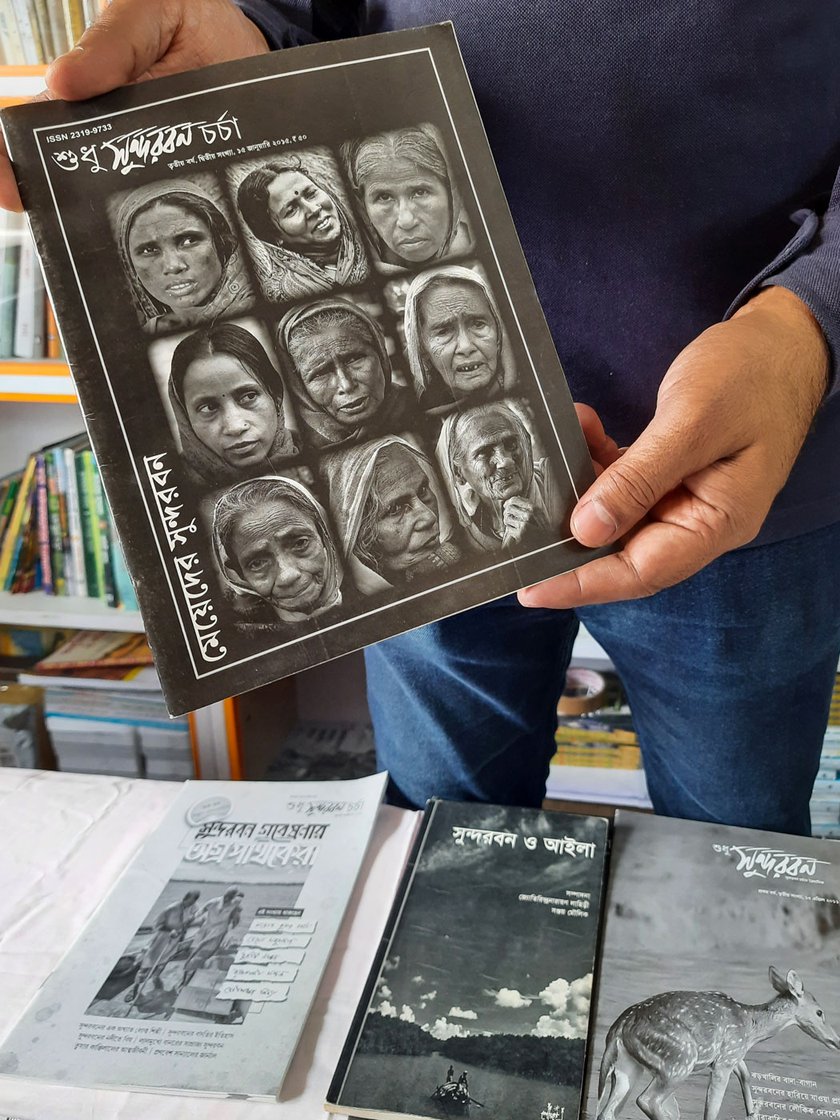
    Left: An issue of Sudhu Sundarban Charcha that focuses on women in the Sundarbans

    PHOTO • Urvashi Sarkar

    Right: Forty nine issues have been published so far

    PHOTO • Urvashi Sarkar

    Left: An issue of Sudhu Sundarban Charcha that focuses on women in the Sundarbans. Right: Forty nine issues have been published so far
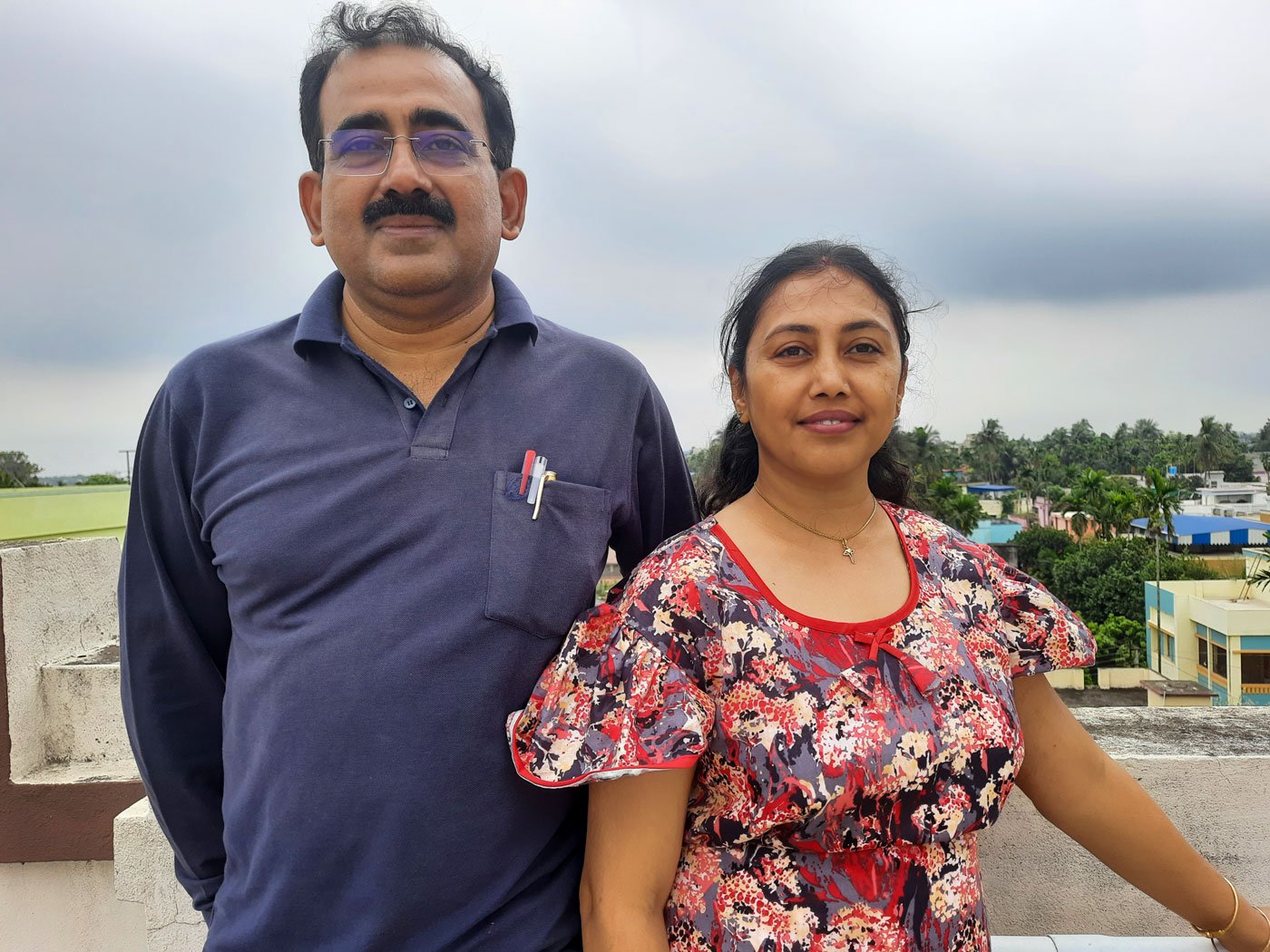
    Jyotirindra Narayan Lahiri with his wife Srijani Sadhukhan. She along with their two children, Ritaja and Archisman help in running the magazine

    PHOTO • Urvashi Sarkar

    Jyotirindra Narayan Lahiri with his wife Srijani Sadhukhan. She along with their two children, Ritaja and Archisman help in running the magazine

    Bringing out the magazine is a costly exercise as every edition is typeset before being printed in black and white on glossy paper. “Then, there are ink, paper, and transport costs. However, our editorial costs are not high because we do everything ourselves,” says Lahiri, who is assisted by his wife Srijani Sadhukhan , 48, daughter Ritaja, 22, and son Archisman, 15. The editorial team consists of around 15-16 members who pitch in with their time and effort free of cost. “We do not have the means to employ people. Those who contribute their time and labour do so because they care about the issues we raise in the magazine,” he says.

    A copy of the magazine is priced at Rs. 150. “If our own cost is 80 rupees, we must sell [each copy] at 150 rupees because we need to straightaway give [news] stand owners a 35 per cent commission,” says Lahiri, explaining the economics of publishing.

    Nearly every day, Lahiri and his family monitor six Bengali and three English newspapers for news on the region. Since he is himself a recognised voice in the area, news – of tiger attacks, for example – often reaches him directly. Lahiri also collects letters written by readers to the editors of newspapers. “The readers may not be rich or powerful, but they know their subject and ask relevant questions,” he says.

    The magazine is not his only responsibility. Every day, he travels 180 km to the adjoining Purba Bardhaman district to teach Geography to Classes V-XII students in a government school. “I leave home at 7 a.m. and return only at 8 p.m. The printing press is in Bardhaman city, so if there is work to be done there, I stop by the press and return home late evening,” says Lahiri who has been teaching since the last 26 years. “Teaching is my passion, just like the magazine,” he says.

    Published in the People’s Archive of Rural India.

    Link to original article:
  • The Rohingya Refugees Who Show Life In Bangladesh Through Instagram

    The Rohingya Refugees Who Show Life In Bangladesh Through Instagram

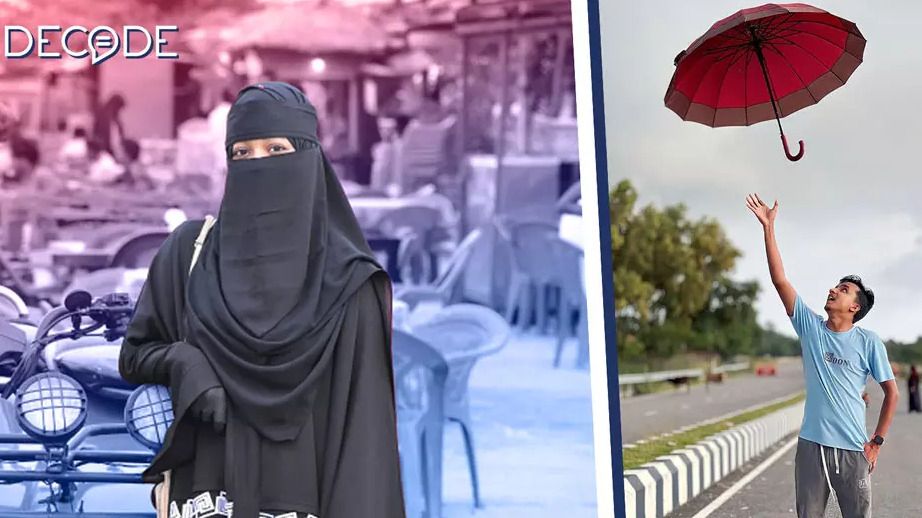
    Photographers Azimul Hasson and Omal Khair use Instagram to show  everyday life in Bangladesh’s Rohingya refugee camps

    A devastating fire ripped through Balukhali refugee camp in Cox’s Bazar, Bangladesh on a hot summer day in March 2023. The fire which was attributed to a ‘planned act of sabotage’ left nearly 15,000 Rohingya refugees homeless and set ablaze 2,800 shelters including Azimul Hasson’s house which he shared with his parents, two brothers and a sister. The 21-year-old watched helplessly as the deadly fire consumed his home and those of his friends and relatives. “The fire was big and had set ablaze many shelters. People were crying and running,” said Azimul, remembering the day. He wanted to act but didn’t know what to do.

    Azimul then did what he knew best. He took out his phone and started taking photos and a video of the billowing smoke and destroyed shelters which he posted on his Instagram account where he has 3,000 plus followers. “I took some photos, not many, because I was terrified,” he added. Azimul and his family later shifted to another site where they constructed a fresh shelter made with bamboo, thatched material, tarpaulin and tin sheets.

    Omal Khair, a resident of the same camp, and a budding photographer like Azimul, took photos of the fire’s aftermath. Her photos, posted on Instagram where she too has over 3,000 followers, revealed destroyed structures and people labouring to reconstruct their shelters. Her own house was mercifully spared from the fire.

    Hasson, 21, and Khair, 20, are Rohingyas refugees who along with their families fled mass killings and persecution of the Rohingya community in Myanmar in August 2017, crossing over to neighbouring Bangladesh where they now live. Hemmed in by the barbed wire fences of the refugee camp where they share space with an estimated 600,000 plus refugees in one of the world’s largest refugee camps, Hasson and Khair’s window to the world beyond is through Instagram and their way of telling the world that they exist, through photographs of everyday life in the camps.

    When I speak to Hasson on a video call, his eyes show fatigue and the longing to escape his confines. “I feel as if we are trapped in a cage. I want to go back and live in harmony,” he says. True to his words, Azimul’s photos are often of barbed wire which runs around the camp, and which Azimul hopes to escape one day.
    Azimul sends me a recently taken photo where dozens of empty cans, buckets and aluminium pots are lined up against each other. “We have a shortage of water in the camp and therefore we must constantly store water,” he explains and adds, “I want the world to see what I see through my eyes.”

    When I speak to Omal, it is late at night and she looks tired after studying through the day. Omal was studying in Class 10 when she was forced to drop out and flee Myanmar. In the absence of formal schooling, Omal tutors herself in maths, English and social sciences by studying online. Omal too wants to return. “I miss my home so much”, she says, but admits that “Rakhine state is still not safe for us.”

    Omal’s images are most often of smiling and hopeful faces of girl children with captions expressing their desires and aspirations such as becoming a doctor and her concern about the lack of formal education in the camps. In a striking photo, a young Rohingya woman is seen sitting on the ruins of her house destroyed by a fire which broke out in March 2021 while her toddler rests its head on her lap, holding on to a UNICEF bag. Omal, Azimul and Dil Kayas – another Rohingya refugee photographer – who could not be reached for the story were introduced to photography in 2018 through a training programme conducted in the refugee camps by Fortify Rights, a human rights organisation which works with Rohingya refugees and Doha Debates, a platform that hosts debates on current affairs.

    Matthew Smith, Chief Executive Officer of Fortify Rights said the trio had emerged as the most exceptional participants during the initial training. “They’ve since amassed online followers, published their first book, and had a major art opening in Doha. Their work is extraordinary and powerful, and also a testament to the fact that Rohingyas are more than genocide survivors. In this case, they’re photographers, artists, authors, and more,” Smith said in an email.

    Omal and Azimul capture the hardships of refugees through their images, but the focus is also on everyday life – whether children laughing with abandon, the sobriety of a funeral procession, fires erupting in the camps, refugees performing odd jobs, or mourning crowds observing Rohinga genocide remembrance day. They also shoot Rohingya cuisine and rituals like applying thanaka, a paste made from tree bark, and even occasionally caption their photos in Burmese script.

    While the two are not paid for the content they post on Instagram, they receive requests for photos through which they earn some money. “Sometimes journalists contact me for stories for which they want photos. I take photos of life in the camps, the suffering of my people, the shortage of water and the lack of education,” Azimul says.

    Both use smartphones rather than cameras to shoot images to avoid attracting attention from security personnel. Azimul uses an iPhone which he purchased with his earnings while Omal uses Samsung Galaxy A51 given to her by Fortify Rights. Despite owning a good quality phone Azimul rues the lack of a camera.

    “Sometimes, my photos captured with a phone are not of good quality. A camera would have been convenient but unfortunately as I’m surviving in a cage and trapped, using a camera would bring trouble for me. But I hope I can do it one day,” he says. The duo’s photographs have been compiled and published in a book titled ‘A Chance to Breathe’, published by Fortify Rights and Doha Debates. Even as their work was being exhibited in Doha and Bangkok, with the help of Fortify Rights and Doha Debates, none of the photographers could physically attend the exhibitions because of restrictions on their movements as refugees.

    Their journey as young and rising photographers with a growing social media following hasn’t been smooth. Omal explains that it was especially difficult when she started photography as a 16 year old by participating in the media training organised by Fortify Rights and Doha Debates.

    In the early days of her photography, Omal encountered both online and offline harassment. She prefers not to dwell on specific instances of harassment but says she is at the receiving end of comments as a hijab wearing woman working outside her home. “Traditionally, Rohingya girls who reached adulthood were discouraged from venturing out alone to work. Those who did, faced criticism, and were accused of not adhering to Islamic rules, despite Islam allowing females to study and work while wearing a hijab.”

    Omal says she took time to explain her purpose to her critics: documenting the suffering and dire conditions faced by Rohingya refugees. “Over time, more people understood the importance of my work and now I receive encouragement and appreciation,” she says. Omal lives with her mother and two siblings in a cramped house in the camp. “My family members appreciate my work and support me but it is challenging to live in this crowded and unsafe camp,” she says.

    Both Omal and Azimul want to become professional journalists and spread the message about injustice to their community and hope to receive scholarships which would allow them to study and travel. Despite a modest following on Instagram, the two refuse to feel discouraged while desiring more followers.Omal wishes for “millions of followers” while Azimul is content that his followers like both him and his work and wants “more and more” in future.

    Originally published in Boomlive

    Link to article: https://www.boomlive.in/decode/the-rohingya-refugees-who-show-life-in-bangladesh-through-instagram-23333

  • Systematically terrorised: Rohingyas face severe health restrictions in Myanmar

    Systematically terrorised: Rohingyas face severe health restrictions in Myanmar

    Photo: Urvashi Sarkar

    Published in The New Arab. 15 May 2018

    The year was 2008. Gultaz Begum was pregnant and days away from delivering a baby. Her husband and an uncle helped her cross the mountains of Rakhine state, Myanmar into neighbouring Bangladesh. Travelling at night without passports, the three made it to Cox’s Bazar district, under the cover of darkness. Kusum Fatema was born, a day or two later, on February 8 in a government hospital in Cox’s Bazar, Bangladesh.

    Why did Gultaz, a Rohingya Muslim, not give birth to her daughter in Myanmar? Gultaz says she was admitted in a government hospital in Rakhine state.

    “I was poorly treated at the hospital. The nurses mocked me, were careless and made me feel unsafe. When my husband demanded my release, the hospital refused. They let me go, only after my family placed a great deal of pressure on them and paid a lot of money,” she said.

    Ten years later, Gultaz, her husband and three children are among the thousands of Rohingyas who live in Kutupalong and other refugee camps in Cox’s Bazar, following the August 2017 violence by Myanmar’s military which forced them to leave the country.

    The government of Myanmar does not recognise Rohingyas as citizens and has been systematically terrorising and forcefully displacing them, since many years. They face discrimination and severe restrictions in practically all areas of life – freedom of movement, in the practice of religion, access to healthcare and education, marriage and the number of children they can have.

    “Even when sick, we were stopped from going to hospitals, which were also far from our homes. We would be turned away at the checkpoints by police or military unless we paid bribes. Those of us who did manage to reach a hospital, would either be denied admission or charged exorbitantly to be admitted,” says Gultaz. According to her, even after being admitted to a hospital, the Rohingyas were not assured of reliable treatment.

    “As a result, and because we were scared, we stopped going to hospitals. When we fell ill, we would consult rural medical workers who are barely qualified. Those who could afford it, went to Bangladesh for treatment. The rest simply died.”

    Tasmina Begum who is in her mid-20s and fled Rakhine state in August 2017, too has a traumatic experience to share. A pregnant Tasmina did not go to the hospital to deliver her baby. When she developed fever, she took medicines prescribed by a local medic.

    “After taking the medicines, I bled severely and lost the baby. But I was too scared to go to a hospital. I went to Bangladesh where I had a blood transfusion done at a private hospital in Cox’s Bazar.”

    Dr Mohammed Abdus Salam, a government appointed civil surgeon at Cox’s Bazar who has been treating Rohingya patients, attests to the poor health of the refugees.

    “Malnutrition is high, especially among women and children – 161 cases of HIV have been detected since March 2018. Most people have not received vaccination and suffer from measles, rubella, diarrhoea, cholera and diphtheria.”

    Diphtheria became a major source of worry for the Bangladesh government which had nearly eradicated the disease among its people.

    To prevent a fresh outbreak, the government with the help of aid organisations started mass vaccination programmes for the Rohingyas, local communities, and aid workers.

    According to Dr Salam, the refugees who arrived last year were in a traumatised condition because they had been sexually assaulted, injured from mine blasts or gunshots, or had sharp cuts on their bodies.

    A health worker with the International Organisation for Migration (IOM) in Cox’s Bazar and who did not wish to be named, said: “The Rohingyas did not receive information about family planning or maternal health treatment. Even medicines were not freely available, compelling the Rohingya to come to Bangladesh. This is just the tip of the iceberg, since the Rohingyas have been discriminated against in several other ways.”

    Human rights violations against the Rohingyas, including in the areas of health, were highlighted in a report published by Amnesty International last year.

    According to the report, authorities in Myanmar have severely restricted Rohingya from accessing the state hospital in Sittwe, Rakhine state.

    “Only in the most serious of cases will Rohingya patients be accepted, and even then, only after special permission has been given by the Rakhine State authorities and the sick must travel with a security escort. Once admitted, they are placed in separate “Muslim wards” and are vulnerable to extortion and other “fees” from police and hospital porters.” The report described the situation as apartheid.

    Photo: Urvashi Sarkar. Najma (L) was beaten up during a brawl in the camp where she lives. In this picture, she is with her mother Romeda Begum at the Ukhia government health complex

    Another report of the Advisory Commission on Rakhine state – established by the Kofi Annan Foundation and Myanmar’s Office of the State Counsellor with the assent of Nobel Peace Prize winner Aung San Suu Kyi – also notes the discrimination and human rights violations of Muslims in Rakhine state.

    Suu Kyi was widely criticised for not coming out against the atrocities on the Rohingyas. This report too acknowledges discrimination against Muslims in Rakhine state, without mentioning the term Rohingya.

    “While all communities suffer from inadequate medical services, access to health is particularly low within the Muslim community in the northern and central parts of the [Rakhine] state. The refusal of some health facilities to treat Muslim patients… prevent ready access to health facilities,” the report says.

    The allegations of genocide and human rights violations have been so far denied by the Myanmar government which has asked instead for “clear evidence.”

    Fortify Rights, an organisation based in South-East Asia and registered in the United States, and which does work in Myanmar, has called for the referring of crimes against Rohingya to the International Criminal Court (ICC).

    “The rights of the Rohingyas have been abused in every possible manner and they have been discriminated against owing to their ethnicity and religion,” said co-founder, Matthew F. Smith.

    “The only way forward is for the UN Security Council to refer the situation in Myanmar to the ICC which should probe the allegations of genocide and prosecute as well.”

    Read the original article: https://english.alaraby.co.uk/english/indepth/2018/5/15/systematically-terrorised-rohingya-refugees-face-severe-healthcare-restrictions

  • With no formal schools or jobs, young Rohingya left in lurch

    Published in Al Jazeera. 13 April 2018.

    Cox’s Bazar, Bangladesh – It is a hot, chaotic morning at Kutupalong, the world’s largest refugee camp located on the Bangladesh-Myanmar border. Rohingya women, men and children, uprooted from Myanmar, form long queues outside the offices of various aid organisations and wait to receive clothes, food and medicines.

    There is a rush to collect stacks of bamboo to protect weak settlements from the upcoming monsoon. Children help out too, carrying the heavy poles as they balance boxes of aid material on their little heads. Some children run around and play in groups, while others attend temporary learning centres where English, Burmese and mathematics are taught.

    The Rohingya have faced brutal persecution and discrimination at the hands of the Myanmar government, which refuses to recognise them as citizens and has killed or forced out large chunks of their population in repeated, barbaric acts of ethnic cleansing.

    Following the most recent cycle of violence in August 2017, more than 700,000 Rohingya have sought refuge in Bangladesh’s Cox’s Bazar district, taking their population in Bangladesh to about a million now.

    Children and youth between 3-24 years comprise nearly half of the Rohingya refugees and are not allowed to pursue formal education in Bangladesh.

    Only informal education is available through temporary learning centres and religious schools or ‘maktabs’ which offer Arabic language and Quranic education.

    Maktabs are separate from the network of temporary learning centres and are funded by private Bangladeshi donors or countries like Saudi Arabia and Turkey.

    Viewed against the backdrop of religious oppression of the Rohingya in Rakhine state, the maktabs are seen positively by the refugees in Bangladesh camp. The maktabs also keep the children occupied, since any movement outside the camp is not allowed.

    Informal education their only option

    Set up by UNICEF, Save the Children and local Bangladeshi organisations, the temporary learning centres, now numbering close to 1,100, provide informal education to Rohingya children aged 4-14 years.

    Bengali, however, is not being taught, since the Bangladesh government does not plan to integrate Rohingya refugees with the local population.

    It is past noon, and the temporary learning centre at the camp has wound up for the day. Children scamper out of the small room made of tin, sticks, and coarse cloth.

    A blackboard, bearing the words ‘beard’, ‘buttocks’ and ‘abdomen’ in English, stands in a corner. The teacher, Mohammed Abdullah, an 18-year-old Rohingya refugee, rubs it clean.

    As s Abdullah explains the curriculum to me, he is joined by Janatullah, also 18 and a Rohingya refugee.

    Janatullah appears restless and angry – he was unable to attend his matriculation exam because of the violence that broke out in Myanmar’s Rakhine state in August 2017.

    “I would have appeared for the examination this year. I was the best in my class. But the violence drove us out. The Myanmar government murdered our families and prevented us from education. I wanted to study in a university and learn English. I do not know if it will ever happen. Now, I can only live on charity,” Janatullah told Al Jazeera.

    Staring at a bleak future

    Janatullah speaks in English, which he says he learned after arriving in Bangladesh. But since he is 18 years old, no form of education – even informal – is available for him in the refugee camp. While Abdullah was able to find work as a teacher in the camp, Janatullah was not as fortunate.

    His despair is echoed by Sanjib Sil, a resident of the adjacent Hindupara camp. A Hindu Rohingya in his early 20s, Sanjib said he had both fertile land and his own business in Myanmar. Now, he has nothing.

    “I do not have even five rupees. I have to stand in line and beg for charity. I cannot step out of the camp. My future is ruined, and I am condemned to an unproductive existence. No girl will be willing to marry me,” said a distraught Sanjib.

    The tribulations of Janatullah and Sanjib are shared by hundreds of young Rohingya in Bangladeshi refugee camps who have been abruptly wrested from formal education and any chances of employment.

    Photo: Siddharth Adelkar

    There are no formal jobs available for Rohingya in the camps. According to a recent report, nearly 62,000 refugees have been able to do small cash jobs in the camps.

    There are also a few Rohingya who managed to escape Myanmar with some money and have been able to set up small shops where they sell vegetables, fruits and clothes to other refugees.

    Nizamuddin, 32, is a Rohingya teacher at a temporary learning centre in Balukhali camp. He is a graduate, a rare distinction among the refugees because of long discrimination against the Rohingya in schools and universities in Rakhine state.

    “It was not easy to complete graduation. I ignored the insults and humiliation of Muslims and tried not to get into fights. I passed out of Rakhine state’s Sittwe University before 2012. That was the year fighting broke out between Muslims and Buddhists, and many Muslims were killed. It became almost impossible for Muslims to get admission in Rakhine colleges after 2012,” he said.

    Nizamuddin worked as a private tutor and taught in small rural schools in Rakhine and earned a satisfactory living. In Bangladesh, he earns 8000 taka ($96) a month and can teach only Burmese, English and mathematics, whereas, in Myanmar, he could teach more subjects.

    My prospects have reduced here. I remember how I struggled to graduate. Has it amounted to nothing?” he asked.

    Rohingya girls’ situation worse

    If boys and young Rohingya men are staring at a bleak future as stateless refugees, the situation is possibly grimmer for female children and adolescents who, apart from being forced to pull out of formal education, face the additional threats of child marriage and sex trafficking.

    Nine-year-old Kasmin Fatema goes to both a temporary learning centre and a maktab at the Kutupalong camp. Gultaz Begum, her mother, has yet not decided how long she will permit Kasmin to go out.

    Gultaz herself dropped out after third grade in Myanmar. “As I grew up, my family was scared that I would be harassed by Rakhine men,” she said.

    However, she is happy that Kasmin is learning English at the temporary centre. “Despite attending school in Myanmar, my daughter could not even write her name.”

    “Muslims faced a lot of discrimination in schools. Now she can write her name in English and read too,” she said, hoping against hope that Kasmin could become a teacher one day.

    Cover photo: Urvashi Sarkar

    Read the original article: https://www.aljazeera.com/features/2018/04/13/with-no-formal-schools-or-jobs-young-rohingya-left-in-lurch/

  • Azeem Ibrahim’s book on Rohingyas is a portrait of a people persecuted left, right and centre

    Published in The Print. 4 February 2018

    If Azeem Ibrahim’s book were to be summarised in one line, it would indeed be this— ‘The Rohingyas: Inside Myanmar’s Hidden Genocide’ examines attitudes towards the Rohingyas in different periods of Myanmar’s history and shows the hatred meted out to them.

    The writer prods the motivations of various actors – whether the military, Aung San SuuKyi’s National League for Democracy (NLD), the Buddhist extremists and the international community to show their collective complicity in the persecution and ethnic cleansing of a people.

    By constantly marking the Rohingya as outsiders who did not historically belong to Myanmar, the military rulers of Myanmar and their supporters strengthened the frameworks of exclusion to such a point that it became possible to deny them any form of citizenship and render them stateless.

    Ibrahim uses census and other historical records to trace the presence of Rohingyas in the Arakan region to the period well before the British invasion of 1826. After the British left, it became important to define who is Burmese; as being a Burmese came to mean being a Buddhist and the military had a strong hand in conflating the basis of citizenship with being Buddhist.

    The book is as much an analysis of the politics that dominates modern Myanmar, as it is about the tracing of systematic discrimination against the Rohingyas. Some of the most interesting parts of the book pertain to the NLD, which was the main opposition to the military rule, but also dependent on support from Buddhist monks, including extremists intolerant of the Rohingyas.

    Ibrahim notes that NLD has failed to directly challenge the military, in part because of the common interests of the military and some of the NLD elite. In fact, attacking the Rohingyas is one issue that the military and some of the Buddhists and NLD can agree on. The references to Nobel laureate Aung San Suu Kyi show her to be equally complicit in her refusal to act for the Rohingyas and her beliefs about them.

    The motivations that drive Myanmar’s military leadership to maintain their grip over the country are brought out in detail. Their suspicion towards the international community is balanced by a need to trade and get weapons. Ibrahim reminds us that the international community which could have used much more leverage over Myanmar’s rulers has failed to do so. Following the 2012 massacres of the Rohingyas, the United States and Europe actually praised the ‘even-handed’ approach of the regime in containing the violence.

    The symbiotic relationship between Buddhism and the state are emphasised in Ibrahim’s analysis. The rigid elements of Theravada Buddhism, the Ma Ba Tha and 969 Movement, and the emergence of ‘Buddhism’s Bin Laden’ show the complete lack of tolerance for non-Buddhists and the hatred for Muslims in particular.

    In this analysis, it becomes important for Ibrahim to trace the reasons for the greater persecution of the Rohingyas as an ethnic minority compared to the other ethnic minorities of Myanmar. After Burma gained independence, life for Rohingyas was as difficult as life for other non-Burman ethnic groups. But the deterioration of the economy in the 1970s created the need to find internal enemies who would serve as a distraction. The Rohingya were ideal because they were unarmed, easily identifiable, spoke a non-Burmese language and were Muslims in a country with an overwhelming Buddhist population.

    Over various electoral cycles and periods of framing the Constitution, the rights of Rohingyas were systematically clipped and Buddhist identity became the base for citizenship. The 2014 census excluded them and forced them to identify as ‘foreigners’.

    Interestingly, the term used by the ruling dispensation for Rohingyas is ‘Bengalis’, that is, people who do not belong to Myanmar, but Bangladesh and should therefore go there.

    As life becomes increasingly difficult for Rohingyas in Myanmar, with restrictions on marriage, having children, travel and being forced to live in temporary camps, Rohingyas who flee the country do not fare much better. Many end up being trafficked and become slaves and offer cheap labour in Thailand’s fishing industry, while the women are forced into prostitution.

    Ibrahim’s book is ultimately a warning— what is happening to the Rohingyas qualifies as genocide. Though written before the 2017 massacre and mass displacement of Rohingyas, it delves into previous periods of violence and the reasons thereof, provide the much needed context for understanding the scale of one of the worst humanitarian disasters that has been unfolding for a long time, which the world has noticed only now.

    Read the original article: https://theprint.in/pageturner/afterword/azeem-ibrahims-the-rohingyas-inside-myanmars-hidden-genocide-is-portrait-of-a-people-persecuted-left-right-and-centre/33378/

  • ‘The People Next door’ provides a wide angle view of India-Pakistan relations

    People Next Door, book cover and the author TCA Raghavan

    Published in The Print. 23 December 2017

    The India-Pakistan story has seen multiple iterations, told from various perspectives. Reams of literature have scrutinised the relationship, whether the layers of ties between the people or bilateral issues between the governments. Various authors have written about rifts and wars caused by disputes over land and water or spoken about the common grounds of history, language, sport and culture. We have had hardnosed militaristic analyses and conciliatory peace perspectives. Beyond this, can one have anything new to add?

    This is where T.C.A. Raghavan’s work, intriguingly titled The People Next door. The Curious History of India’s Relations with Pakistan comes in. Raghavan who was the deputy high commissioner in Islamabad from 2003 to 2007 and high commissioner from 2013 to 2015, finds the gaps and spaces in the telling of well-known historical events, bringing to light little known and curious aspects of the relationship.

    The heads of states and foreign ministers who decided the course of history were not just names but real people with idiosyncrasies and prejudices, in Raghavan’s telling. Pakistan’s military rulers like Ayub Khan and Zia-ul-Haq are not evil incarnate, but people who tried in their own way to resolve differences between the two countries. Therefore, we are told that Ayub Khan could have taken advantage by attacking India during the 1962 war with China, but chose not to. We learn about the great personal camaraderie between Morarji Desai and Zia-ul-Haq, but also about the subsequent coldness between Indira Gandhi and Zia. We also receive an account of Track-II peace efforts and the fate of these initiatives.

    As Indians, we are aware of the different views within the country on Pakistan. But how do Pakistanis view India? This is also where the book succeeds — in repeatedly holding up mirror images of the two peoples and how both view each other, rather than offering only a one-sided view of history. The author constantly evokes the title of his book through the course of chapters — we are constantly made aware of us and them of us — the people next door, staring at each other from close quarters but hopelessly distant and separated.

    In times of hyper nationalism, Raghavan’s is a measured voice of balance which gives us a view of what was happening behind the curtains of official history and formal motions of diplomacy on both sides. His account of the Bangladesh war of independence and its very different impacts on India and Pakistan make us aware of how crushing it was for Pakistan and how at diplomatic forums like the United Nations, Indian delegates were instructed by Swaran Singh to not display triumphalism.

    Raghavan attempts to show to us the flesh and blood of the relationship than just mapping the skeleton. How did people interpret the meaning of Partition in their lives? The fate of properties and belongings left behind when choosing the other country as home is exemplified in the story of ‘Bombay’s Jinnah House’ owned by Pakistan’s founder Mohammed Ali Jinnah. Who should have legitimate claims to it? The daughter of Jinnah who lived in India, his sister who lived in Pakistan, or the government of India or Pakistan?

    Raghavan reminds us that the business of Partition had to be conducted too — the mass flows of people, administration of Hyderabad, Junagadh and Kashmir, division of territories and water bodies. He writes that the two governments had to work closely together and after the horrific violence of Punjab, were concerned about how the flows of people between the erstwhile East Pakistan and West Bengal could be peaceful.

    Harking back to another era, we are taken to a time when it was possible for thousands to travel to Lahore to watch a test match and for the governor general of Pakistan, Malik Ghulam Muhammad, to be present at India’s 1955 Republic Day celebrations. We are also made privy to the awkward episode of the high commissioner Kewal Singh attending the wedding reception of the son of Pakistan’s finance minister in Rawalpindi, coinciding with the outbreak of the 1965 war. The war was indeed a turning point in ties. Travel ceased and getting a visa became a herculean task. The ups and downs would thus continue over the decades.

    Raghavan’s book provides us a wide angle view of India-Pakistan relations and ought to be read by anyone interested in a humanist narration of ties between the two countries, told with a good dose of empathy.

    Read the original article: https://theprint.in/pageturner/afterword/people-next-door-provides-wide-angle-view-india-pakistan-relations/24466/

  • ‘Maach (fishing) and chaash (cultivation) brought us to Sundarbans’

    Published in People’s Archive of Rural India. 10 April 2017

    The year was 1949. Jiban Krishna Poddar, 14 years old, fled from his home in Barisal district to West Bengal, along with his parents and grandmother. The Noakhali riots of 1946 had sparked off waves of migration which would continue for many years. Two years after their flight, the family made their way to the Sundarbans.

    Now over 80 and seated in the verandah of his home on a rainy evening, he reminisces about the journey that brought him to Krishnadaspur village in Patharpratima block, the place he calls home: “There was violence, so we had to leave. My mother, Usha Rani Poddar, packed all our belongings into 14 bags. We reached Khulna city [then in East Bengal] by ship. A train took us to Benapole.  We hid our money and ornaments in clothes and belongings.”

    Jiban recalls that the family was taken to a refugee camp in Nadia district of West Bengal, where they lived for 11 months with more than 20,000 others. The refugees were asked to settle in Dandakaranya (the forested Bastar region of central India), the Andaman islands or the Sundarbans in West Bengal.

    “My father, Sarat Chandra Poddar, chose the Sundarbans,” Jiban says. “He wanted to own and farm land. Maach and chaash (Bengali for fish and agriculture) were the two main attractions. He felt that the Dandakaranya and Andamans were uninhabited jungles where it would have been difficult to live.”

    Jiban’s family was among the 150 families that left from Howrah for the Sundarbans by ship. They came to Mathurapur block where the Indian government asked them to clear the jungles for agriculture. “When we began farming, it was difficult. The area was 60 per cent water and 40 per cent jungle. The drinking water was not clean and many people died of cholera. The doctor would come once in 15 days. There was a famine and we had to suffer great hunger.”

    Jiban’s father got a job in a government office where his task was to operate a hand fan for other employees. His mother kept buffaloes and sold milk and eggs.

    The family was eventually allotted 10 bighas of land (one bigha is around one-third of an acre in West Bengal) in Krishnadaspur village, where they began cultivating rice. After saving some money, they bought more land and built a house in the village, which now has a population of 2,653 (2011 Census).

    Jiban lives with his wife and 11 children, and retired as postmaster of the village post office around 2010. Priyaranjan Das, 64, who retired from the village post office as a peon, also traces his origins to East Bengal. He arrived from Noakhali with his parents in the early 1950s, when he was two years old. “We would boil stems and eat them since there was no food.  There would be severe outbreaks of cholera, causing many people to leave. But we stayed on,” he remembers.

    Many other families came to the Sundarbans from different parts of West Bengal, the Chota Nagpur Plateau and Odisha after 1765, when the East India Company acquired the civil administration in Bengal. Amites Mukhopadhyay ( Living with Disasters: Communities and Development in the Indian Sundarbans ) and Annu Jalais ( People and Tigers: An Anthropological Study of the Sundarbans of West Bengal, India ) write that the colonial rulers, interested in increasing their revenues, hired labourers from different parts of the subcontinent to reclaim and cultivate land.

    Robi Mondal of the Tagore Society for Rural Development, a non-governmental organisation that works in the Sundarbans, says: “The floods and famine in Medinipur, the 1947 Partition of Bengal and the 1971 Bangladesh war of independence caused a further exodus of people, and many of them landed up in Sundarbans.”

    Another round of migration took place around 1905, when Scottish businessman  Daniel Hamilton was working towards rural reconstruction through a cooperative movement in the islands of Gosaba block. He leased out land to labourers for cultivation. Many of the descendants of the migrants still live in Gosaba, and remember his contribution to the development of the Sundarbans.

    Eighty-year-old Revati Singh, who lives in Jotirampur village, is originally from Ranchi. His grandfather, Anandmai Singh, came to Gosaba in 1907, during Hamilton’s cooperative movement. “He arrived in Canning block by tram. They would probably have walked from there to Gosaba, which is currently more than 12 hours on foot. Later, Hamilton built small boat launches to transport them.”

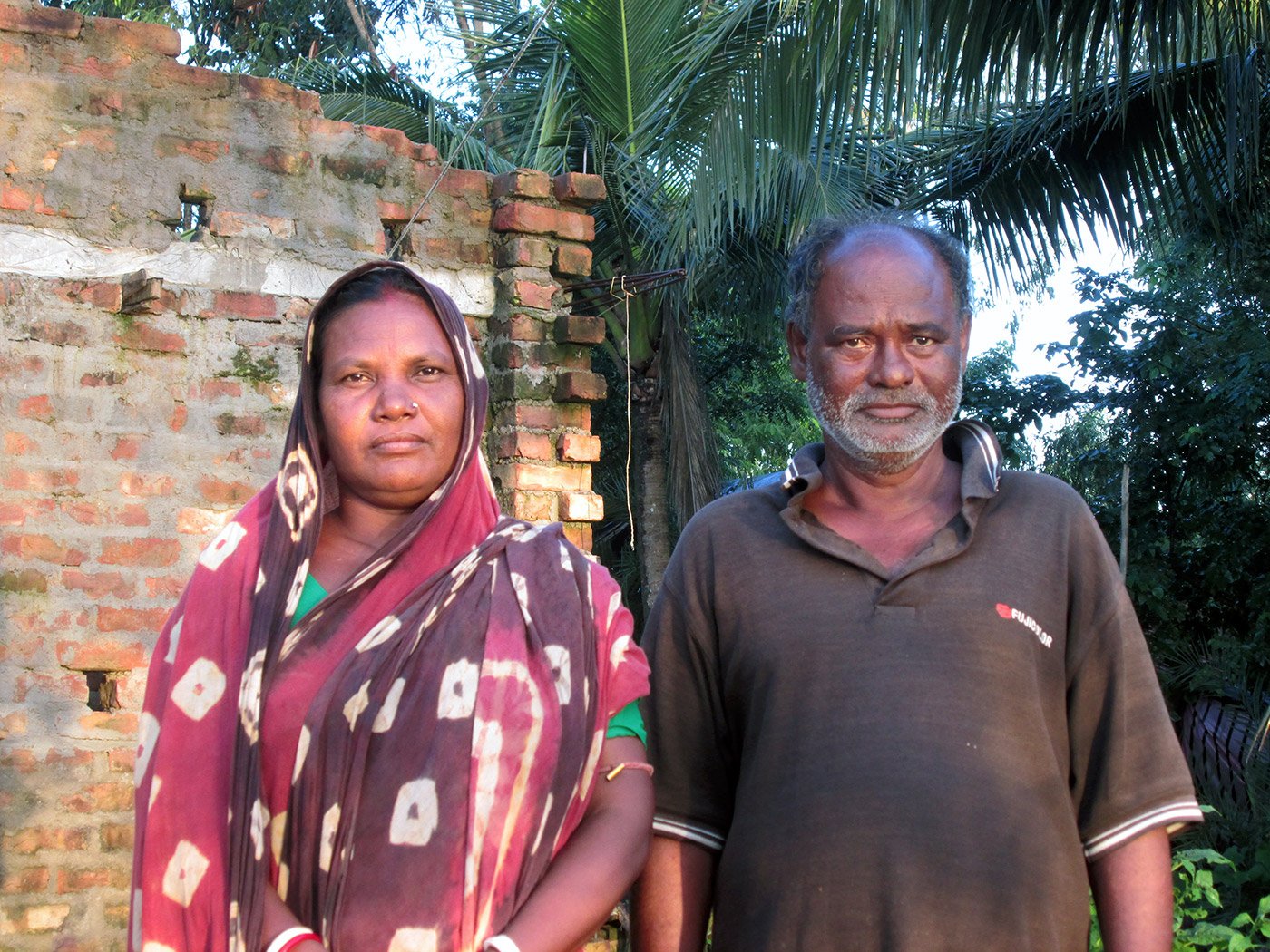
    a man and a woman
    Lakhan and Sandhya Sardar. Lakhan’s grandfather migrated from Ranchi to Gosaba in the early 1900s
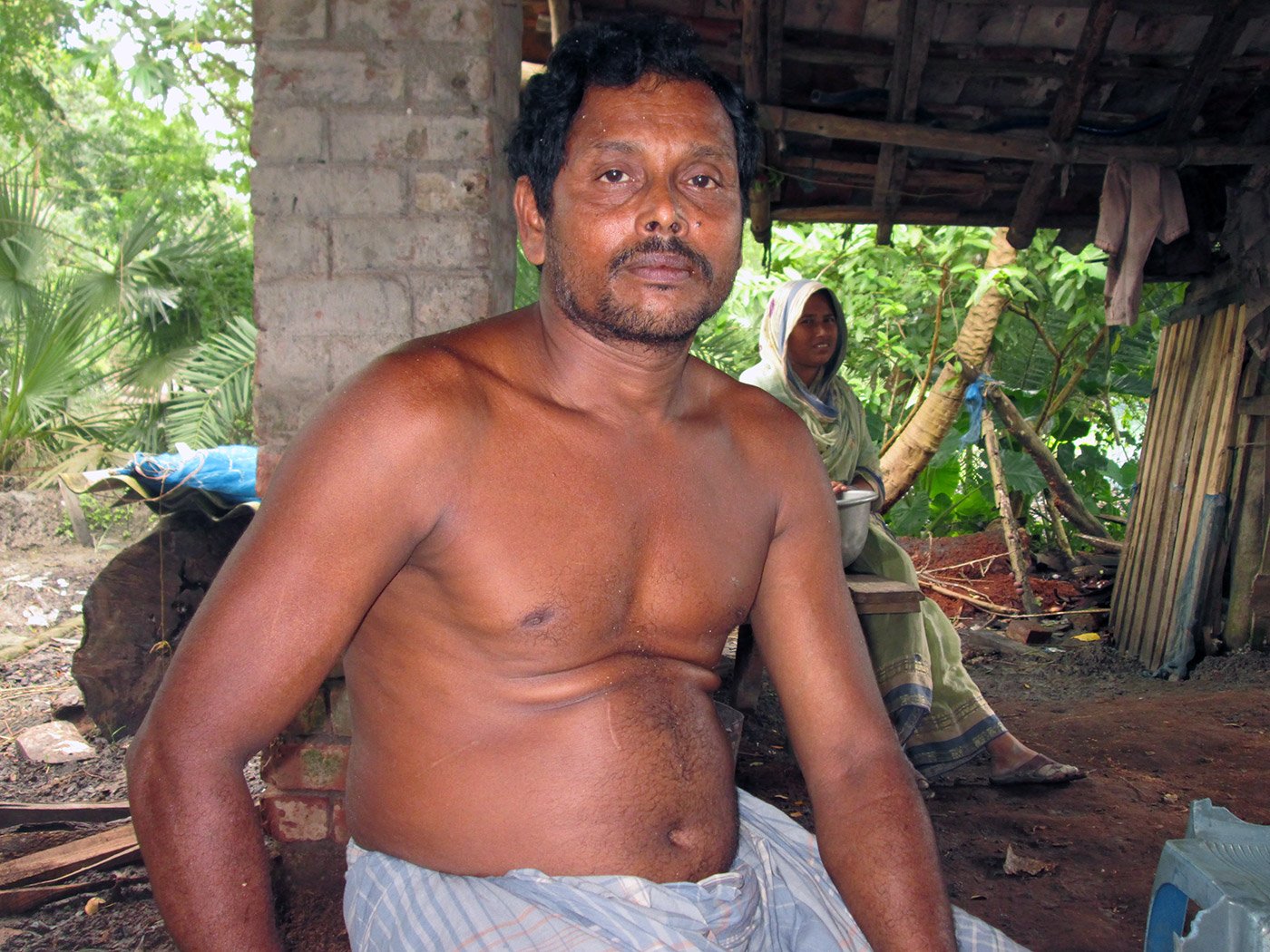
    a man whose ancestors migrated

    Mohammed Molhor Sheikh’s great grandfather arrived in the Sundarbans from Midnapore some 150 years ago

    Revati has heard that the population at the time was small, and there were recurring attacks by tigers and crocodiles, and no clean drinking water. Has the situation changed? “Fewer tigers attack now,” he says. “There were no jobs then, and even now getting work is a problem. I used to cultivate rice but stopped because the river would overflow into the fields.” Revati’s three sons have informal jobs.

    Lakhan Sardar, whose grandfather Bhagal Sardar also migrated from Ranchi to be a part of the cooperative movement, remembers that on Hamilton’s invitation, renowned poet and writer Rabindranath Tagore visited Gosaba in 1932.

    A large section of the population of the Sundarbans is from the Medinipur area of West Bengal. Frequent flood and famine in Medinipur drove inhabitants to the Sundarbans to work as labourers or cultivators of land. Jyotirmoy Mondal from Jotirampur village recalls that his grandparents walked from Medinipur to the Sundarbans before the onset of Hamilton’s cooperative movement. “Grandfather became a night watchman and eventually died of fever.  My grandmother, Digambari Mondal, would guard people’s buffaloes for a living, cultivate rice and sell ghee.”

    Mohammed Molhor Sheikh cuts wood for a living in Arampur village in Gosaba. His great grandfather came with two brothers from Medinipur to the Sundarbans, 150 years ago. “We heard stories of how they would chase tigers with iron rods flaming with fire. We also heard how they would frequently suffer flood and famine and the destruction of their rice fields.”

    Another wave of migration from Medinipur occurred during the severe 1943 famine in West Bengal.  Seventy-one-year-old Haripriya Kar’s husband’s family migrated to Gosaba during this period. The village Jotirampur, where she lives, is named after Jotiram Kar, her father-in-law.  “Jotiram and Khetramohan were brothers who came from Medinipur to Gosaba, bringing 27 families with them. These families cleared the surrounding forests and settled down,” she says.

    Haripriya’s house is cast in darkness as she speaks. The electricity was cut a few hours ago. Livelihood options here are few, it is difficult to get medical help, and connectivity with roads and transport is a huge hurdle. Still, the descendants of the original settlers of the Sundarbans do not have it as hard as their ancestors did. The struggle for a better life continues, even as they recollect the hardships and deprivations of the past.

    Photos: Urvashi Sarkar

    Read the original article: https://ruralindiaonline.org/articles/maach-and-chaash-brought-us-to-sundarbans/

  • The neighbourhood bazaar

    Article published in The Hindu Sunday Magazine. 24 December 2011

    Dam ka Qeema mix, Haleem mix, Barbeque Biriyani mix, Paya mix, Karahi Gosht mix, Seekh kebab mix. As I scanned the glossy expanse of spice mixture packets used for pepping up a myriad of delicacies, I was instantly tempted to buy a packet of each from the Habib Spice Stall where they were on display at the Pakistan pavilion of the recently concluded India International Trade Fair.

    Accompanied by drool-worthy pictures of the dish, complete with directions to cook it the traditional Pakistani way, these spice offerings were truly hot. A Karachi-based company, Habib was one of the few spice brands which set up shop at the trade fair. “Habib has been exhibiting at the IITF since two years,” says stall manager Mustafa Hasan. “Shan (another spice brand) has been exhibiting its products at the IITF since six years,” he adds. Shan and Habib, I am told, are major rivals in the spices segment of Pakistan. “There are 70 Pakistani exhibitors. If more space had been allotted, more exhibitors from Pakistan would have come forward,” Mustafa says.

    Most of the spices on sale are meant to flavour non-vegetarian dishes. “Indians are mostly vegetarian, while in Pakistan, the diet is predominantly non-vegetarian,” says Mustafa, echoing a widely-held belief regarding the food habits of the two countries. However, sales are brisk.

    Persisting beliefs

    As we speak, Mustafa tells me that he is interested in buying Indian ethnic goods. He has visited Fabindia and wants more suggestions. Based on my limited knowledge, I ask him to visit the Cottage Industries Emporium, Dilli Haat and Khadi Emporium. Mustafa has heard of the first two.

    Moving on, I see Sabeen Akbar, Chief Executive of her clothing enterprise, using her persuasive skills to convince a woman to buy a richly embellished suit piece. She quotes a high price. “These goods would not be so expensive if they were not hand-made. Karachi deals mainly in manufactured goods while handmade items can be found in Multan,” she says.

    As I roam from stall to stall, I ask how business has been and get mostly discouraging replies. “The buying power of Indians has decreased,” claims Jehangir Iqbal Khokal whose stoles and suit pieces did not find too many takers.

    Folding a dressy cotton suit, Mohammed Salim from a neighbouring stall says that sales have not been too good. “People baulk at the prospect of paying more than Rs. 1,000 for cotton. They are oblivious to the amount of labour needed for work on the material itself.”

    For many of the exhibitors, the sales raked in at the fair are not as crucial as the materialisation of partnerships with Indian traders and sellers. A.N. Alim Ahmad, whose exquisite silk saris from Bangladesh are drawing interested buyers, says, “The partnerships that we had hoped for are not developing. We want Indians to sell our goods here. But the people on the Indian side want our goods on credit which we cannot agree to,” he says.

    I spend some time at the stall admiring the brilliant greens and fiery reds and golds that come to life on China silk and Bangla silk material. The saris don’t come cheap and start from Rs. 2,200. At another emporium, Afsaruddin, a salesman, is delighted to hear me speak Bengali. He exclaims: “Thank God someone speaks Bengali!” Jamdani silk and muslin have sold rapidly, I am told.

    Here too, the saris are exorbitantly priced. Afsaruddin claims that Bangladeshi women purchase saris worth Rs. 50,000 without batting an eyelid. “Here you tell the women that a sari costs Rs. 3,000, they baulk even if they have the money,” he says. Jute and silk saris are the main items of sale at the Bangladesh pavilion.

    I head to Hall number 18 which was hosting the exhibits of a number of other countries. The Turkey pavilion immediately beckoned me with its brilliantly coloured and bewitching lanterns and lamps in all possible hues and shades. The eyes and flashbulb were both extremely gratified. It was a pleasure to just stand there and muse on the warm lighting and note every glint and wink of the coloured lights. I trooped to the nearby Afghanistan pavilion where stall managers were kept busy with purchasers buying dry fruits in bulk. Mainly from Mazar-e-Sharif, the most lapped up items were anjeers, chilkot, dried mulberries, giant raisins and khurmanis. Saffron from Herat saw interested buyers but not much sale owing to the high rates. Qudratullah Rahmati of the Afghan Saffron Company said his sales had not been satisfactory owing to the proliferation of saffron stalls.

    The security cops, however, hung around the saffron stall demanding that saffron should be mixed with the water they were drinking!

    Learning experience

    More wandering took me to the carpet stall of Muhammad Hanif Rahim. This is Muhammad’s maiden participation in the IITF. For Muhammad, this experience has been about learning about Indian culture as much as it is about getting to know customer requirements. “Indians demand smaller carpets while Afghans buy much bigger ones,” he says. “Each room in an Afghan house must have a carpet.”

    The carpets which are made at Mazar-e-Sharif are priced at US$ 200 per square metre and created by local artisans in their homes. They are made of wool sourced from Australia and China.

    Does the instability in Afghanistan prevent them from doing work? “We find it difficult to sell Afghan goods to foreigners in Afghanistan,” answers Muhammad. This is because “foreigners don’t come to Afghan bazaars and stay in their bases. But the local demand is very good.” Mazar-e-Sharif, claims Muhammad is one of the safest places in Afghanistan. More stalls beckoned, but my tired feet stopped only once — to sample an Iranian date which was being offered to taste. I have never bitten into a softer or more tasteful date.

    Cover photo: Urvashi Sarkar

    Read the original article: https://www.thehindu.com/features/magazine/the-neighbourhood-bazaar/article2744455.ece

Urvashi Sarkar – 2026 – All rights reserved.

web things by Studio Goncharov