
Tag: Gender

  • Political leadership: Does gender make a difference?

    Political leadership: Does gender make a difference?

    A mere handful of women are in top positions in politics and government across the world. According to recent data published by the United Nations, just 18 countries have a woman Head of State, and 16 countries have a woman Head of Government.

    “I think what the world is suffering from is too much male leadership,” said Ireland’s first woman president, Mary Robinson, who served from 1990 to 1997. “We need 50 per cent of the governments to be women-led and that would help all the discussions at global level. The best leadership is when there is a balance between women and men because we bring different perspectives, different experiences,” Robinson said during a recent visit to India.

    Robinson feels that “a woman’s way of leading” is essential in a fractured world.  What is a woman’s way of leading? Can specific values be ascribed to female leadership which make it distinct from a male brand of leadership?  The evidence is mixed, with women leaders holding an entire range of views from progressive to reactionary and the spectrum in between.

    For example, Italian Prime Minister Giorgia Meloni, a conservative, has strengthened anti-abortion lobbies in Italy and increased stigma around the practice. Meloni was also instrumental in dropping the clause on safe and legal abortion from a statement of G7 countries.

    German politician Alice Weidel is a study in contrasts. Weidel, who is gay and has a Sri Lankan partner, is a prominent member and leader of Germany’s far-right Alternative for Germany (AfD) party, which opposes same sex marriage and takes a belligerent position on immigration. “Burqas, headscarf girls and subsidised knifemen and other good-for-nothings will not secure our prosperity, economic growth and, above all, the welfare state,” Weidel said with reference to immigrants.

    Angela Merkel was Germany’s first female chancellor, a position she would occupy for 16 years. Merkel was labelled a ‘reluctant feminist’ – one of the grounds on which her legacy is examined is whether she did enough for women. Merkel would concede she was a feminist only at the very end of her term. Women leaders are willy-nilly judged on whether they did enough for their own kind, a criterion which would be unheard of for men to be subjected to.

    Closer home, Rekha Sharma, former chairperson of the National Commission of Women who is now a member of the Rajya Sabha (upper house of Parliament), accused wrestler Vinesh Phogat of lying to enter politics (she is a member of the Haryana Legislative Assembly, having won a seat in the 2024 state polls). Phogat, an internationally acclaimed wrestler, was one of several women who accused Wrestling Federation of India chief Brij Bhushan Sharan Singh of sexual harassment. This is not the only instance where Sharma blundered by being less than supportive to survivors of sexual harassment.

    In contrast, former Prime Minister of New Zealand, Jacinda Ardern picked a diverse cabinet with representation from women, people of colour, the LGBTQ+ community and indigenous MPs. Ardern made history as the first female leader to bring her baby to the General Assembly of the United Nations in 2018. Ardern was also the first New Zealand PM to march in a gay pride parade the same year. Ardern is admired for being compassionate and kind. Her government’s response while tackling COVID-19 invited a mix of plaudits and criticism.

    Her decision to resign as Prime Minister generated surprise and shock. While many praised it as a selfless act and as an example of how politicians should conduct themselves, there was also speculation about whether or not Ardern crumbled under the pressure of misogyny and online hate. The BBC reported her resignation in an article with a controversially titled headline, ‘Can Women Have it All?’ – which the broadcaster later withdrew and republished with a different title.

    Mexico’s first female President, Claudia Sheinbaum, who is Jewish, made headlines for extending a warm welcome to Palestinian ambassador Nadya RH Rasheed. Sheinbaum is the country’s first female president in more than 200 years of independence. She has stood out for her adroit diplomacy with Donald Trump, ensuring that Mexico neither fawns over nor is in the bad books of the US President. A climate scientist, she was also part of the UN Intergovernmental Panel on Climate Change team that shared a Nobel Peace Prize with former US Vice President Al Gore in 2007.

    In South Asia, leaders like Indira Gandhi of India and Benazir Bhutto of Pakistan have left defining legacies despite their chequered records. In Bangladesh, the now ousted Prime Minister, Sheikh Hasina of the Awami League and Khaleda Zia of the Bangladesh Nationalist Party – who served as PM thrice – have been the most popular contemporary political leaders of the country. Both regimes have been accused of corruption and nepotism.

    In 2024, Harini Amarasuriya was elected Prime Minister of Sri Lanka, making her the first woman to hold this position in 24 years. Sirimavo Bandaranaike was not just Sri Lanka’s first female Prime Minister but also the world’s first woman to hold such a position when she took office in 1960. Then, in 1994, Chandrika Bandaranaike Kumaratunga was elected Sri Lanka’s President, a position she held till 2005. She is Sri Lanka’s longest serving President and survived an assassination attempt in 2000.

    There have been prominent female political leaders in other parts of the world, too. In March 2025 Sara Zaafarani became the second woman Prime Minister of Tunisia, following Najla Bouden, who took office in October 2021. In June 2024 Judith Suminwa became the first woman in the history of the Democratic Republic of Congo to assume the role of Prime Minister.

    Ellen Johnson Sirleaf, the first female democratically elected head of state in Africa, became President of Liberia in 2005 and remained in the post till 2018. She was awarded the 2011 Nobel Peace Prize, along with two other women, Leymah Gbowee and Tawakkol Karman, for their non-violent efforts to promote peace and her struggle for women’s rights. Widely known as Africa’s Iron Lady, she led Liberia through reconciliation and recovery following the country’s decade-long civil war and the Ebola health crisis.

    Michelle Bachelet, twice President of Chile (2006-10 and 2014-18) is one the most widely recognised Latin American female politicians on the world stage. Dilma Rousseff of Brazil (2011-2016), Cristina Fernández de Kirchner of Argentina (2007-15, then Vice President 2019-23) and Laura Chinchilla of Costa Rica (2010-14), all elected Presidents of their respective countries, have left behind defining and powerful legacies.

    History suggests that women-led regimes are not necessarily more or less peaceful, collaborative, or progressive than their male counterparts. In order to prove their mettle as heads of nations, women have needed to appear ‘strong,’ authorise warfare and command militaries. It is worth noting that several women leaders have been described as ‘Iron Lady” – most famously, perhaps, ‘Iron Lady’ Margaret Thatcher, but also Ellen Johnson Sirleaf (along with the women in her cabinet), Indira Gandhi and Golda Meir, the fourth Prime Minister of Israel and the first (and so far only) woman to hold the post (1969-74).

    Women in general are traditionally considered more peace-loving, humane and caring than men. But such perceptions tend to essentialise gender values and reduce men and women to certain opinions and behaviours based solely on being male or female.

    The issue at the heart of this is the exercise of power. When an individual is appointed to a country’s top executive post, power, responsibility and accountability come with it. Ultimately, they must be evaluated on their record on governance.

    This is not to suggest that the gender of a head of state and government does not matter. The very idea of a woman at the pinnacle of government is powerful and inspiring. It is a message to society that younger women and girls need not settle for junior or middling positions at work and that it is possible for women to reach the very top. It is also a message to men that women cannot be dismissed or treated as inferior counterparts.

    There is enough evidence to suggest that when women are represented in politics, there are positive spillover effects on health and education parameters, as well as on livelihood prospects for girls and women of the country and region. Women are needed in politics and government now more than ever. More women decision-makers are required to pave the way for gender justice and peace, as well as better outcomes in health, education, the environment and employment.

    Originally published: https://nwmindia.org/gender-lens/gender-media-elections/political-leadership-does-gender-make-a-difference/
  • Sundarbans: Not a blade of grass grew

    Sundarbans: Not a blade of grass grew

    Photo: Urvashi Sarkar

    Published in People’s Archive of Rural India. 10 September, 2019

    South 24 Parganas, West Bengal: Kajal Lata Biswas is still haunted by memories of the cyclone. Though it’s been 10 years since Aila hit the Sundarbans, she still clearly recalls May 25, 2009.

    It was just before noon. “The [Kalindi] river water rushed into the village and flooded all the houses,” says Kajal Lata. She was at a relative’s house in Kumirmari village that day, around seven kilometres from her own village, Gobindakati. “Some 40-50 of us took shelter in a boat where we stayed the whole day and night. We watched trees, boats, cattle and paddy being swept away. At night, we could not see a thing. Even the matchsticks were soaked. We could see only when lightning flashed across the sky.”

    Sitting outside her house and cleaning fish for lunch, 48-year-old Kajal Lata, a farmer, continues, “That night can never be forgotten. There wasn’t a drop of drinking water. Somehow, I collected a few raindrops in a plastic bag, which I used to wet the lips of my two daughters and niece, who were very thirsty.” Her voice shakes with the memory.

    The next morning, they used a boat to to reach their village. Then waded through flood water to reach home. “Tanushree, my elder daughter, then 17, almost drowned where the water was very high. Luckily, she grabbed her aunt’s saree pallu which had come loose,” Kajal Lata says, her eyes relaying the fear she felt.

    In May 2019, her fear returned with cyclone Fani, its arrival coinciding with the wedding of her younger daughter, 25-year-old Anushree.

    Kajal Lata Biswas, cleaning fish outside her house in Gobindakati village, recalls the terror of approaching cyclones; paddy is stored in these huts in her village, and the crop has taken a hit

    The wedding was fixed for May 6. Loudspeaker announcements about Fani by the panchayat and on radio by the government had started a few days earlier. “Imagine our plight and fear,” Kajal Lata says. “We were terrified that winds and rain would destroy all the preparations. There was some rain in the days before the wedding. But thankfully, the cyclone did not affect our village,” she adds, clearly relieved.

    On May 2, the India Meteorological Department had issued a warning about Fani hitting Andhra Pradesh, Odisha (which turned out to be the worst affected) and West Bengal. Talking about Fani, Prafulla Mondal, an 80-year-old farmer and former teacher in Rajat Jubilee village, raises his voice a few notches: “Fani missed the Sundarbans very narrowly. The winds whistled by us. If it had hit our village, we would have been destroyed, along with our houses and land…”

    As both Mondal and Kajal Lata know only too well, cyclones are common in the Sundarbans. The Disaster Management and Civil Defence Department of the West Bengal government categorises both South and 24 North Parganas districts as ‘very high damage risk zones’ due to cyclones.

    Mondal’s village is in Gosaba block of South 24 Parganas district, and Kajal Lata’s village is in North 24 Parganas district’s Hingalganj block. Both are among the 19 blocks which comprise the Indian Sundarbans in West Bengal – 6 blocks in North 24 Parganas and 13 in South 24 Parganas.

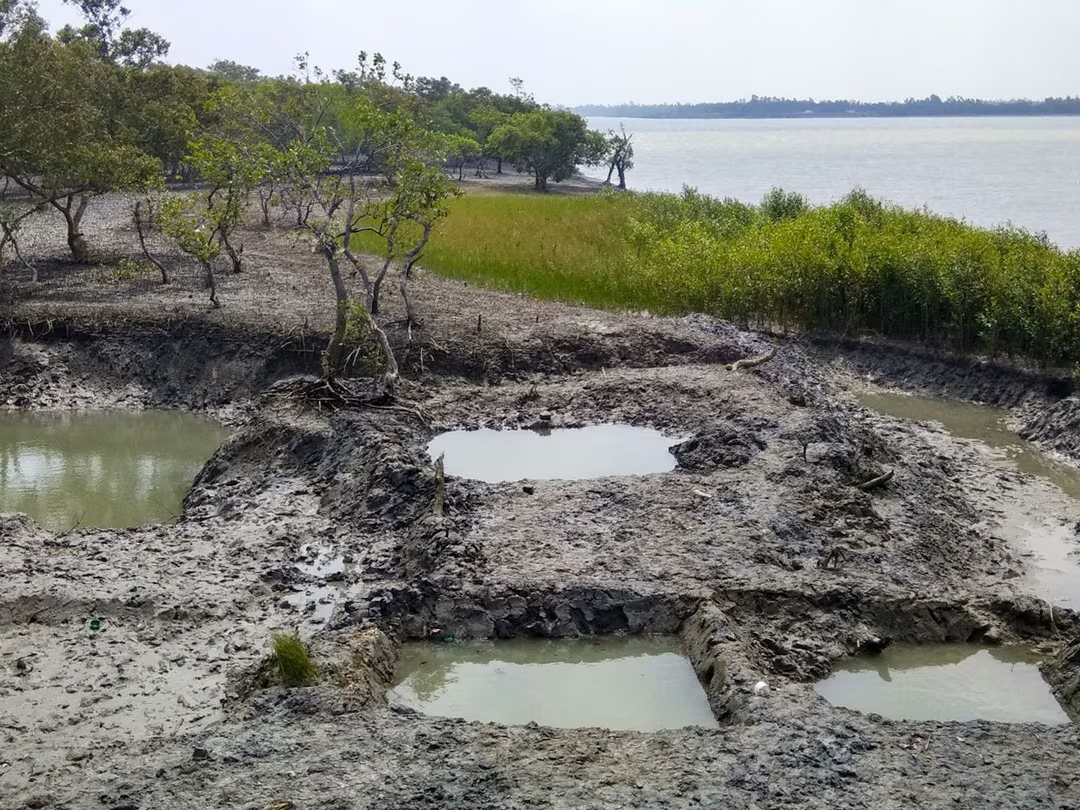
    Spread across India and Bangladesh, the Sundarbans is a vast delta with perhaps the largest contiguous mangrove forest in the world – covering around 10,200 square kilometres. “The Sundarbans region is one of the richest ecosystems in the world…” says a 2014 report by the World Bank titled Building Resilience for the Sustainable Development of the Sundarbans. “The entire mangrove forest region is known for its exceptional biodiversity, including numerous threatened species such as the Royal Bengal tiger, estuarine crocodile, Indian python, and several species of river dolphin. It is home to more than 10 per cent of mammal and 25 percent of bird species found in India.”

    The Indian Sundarbans – roughly 4,200 square kilometres – is also home to nearly 4.5 million people, many of whom live on the edge, struggling with meagre livelihoods, a harsh terrain and weather extremes.

    Though the region has not seen a major cyclone after Aila, it remains severely vulnerable. A 2006 report by the Indian Institute of Technology, Kharagpur, done for the West Bengal government’s Department of Disaster Management, notes that the state experienced 71 cyclonic storms from the years 1891 to 2004.  In that period, South 24 Pargana district’s Gosaba was the most affected block, with six severe cyclones and 19 cyclones.

    n Rajat Jubilee village, 80-year-old Prafulla Mondal has weathered many storms, but his family is now struggling with erratic weather changes

    Prafulla can thus recall cyclones even before Aila. “I cannot forget the 1998 cyclone [described as West Bengal’s ‘most intense storm’ since Independence, stronger even than Aila, which was a ‘severe cyclonic storm’] with its strong and violent winds. Before that too, I can remember the cyclone of 1988,” he says.

    But even given this stormy past, cyclonic depressions (a tropical weather disturbance at sea, in the range of 31- 60 kilometres an hour, below the range of a cyclonic storm of 62-82 kilometres) have increased 2.5 times in the last 10 years in the lower Gangetic delta (where the Sundarbans are located), notes Dr. Abhijit Mitra, a Kolkata-based oceanographer, in a 2019 book titled Mangrove Forests in India. Exploring  Ecosystem Services. “This means that cyclones occur more frequently,” he says.

    Various other studies show that the incidence of cyclones has increased in the Bay of Bengal, alongside the Sundarbans. One study published in 2015 in the Diversity journal puts the increase at 26 per cent between 1881 and 2001. And using available data from 1877 to 2005 on cyclones in the Bay of Bengal during May, October and November, a 2007 study shows that the frequency of severe cyclonic storms here has registered significant increasing trends in past 129 years during these intense cyclonic months

    In part, this is attributed to the increase in sea surface temperature (notes, among others, a paper in the Journal of Earth Science & Climate Change). These temperatures rose in the Indian Sundarbans at 0.5 degrees Celsius per decade from 1980 through 2007 – higher than the globally observed warming rate of 0.06° C per decade.

    There have been several catastrophic fallouts. “While the Sundarbans last experienced a major cyclone in 2009,” says Prof. Sugata Hazra of the School of Oceanographic Studies at Jadavpur University, Kolkata, “the region has suffered because of repeated inundation and embankment failure owing to subsequent cyclones in the northern Bay of Bengal.”

    Rising sea levels and sea surface temperatures, among several other shifts, are threatening the Sundarbans

    Embankments, the World Bank report notes, “play a key role in the Sundarbans as systems of defense against cyclonic storms and sea level rise. The people and the productivity of their holdings are under increased threat from deltaic subsidence, sea level rise, and increased cyclone intensity as climate change and the decay of a 19th century 3,500-kilometer system of embankments take their toll…”

    A 2011 World Wildlife Fund paper says that the relative mean sea level for 2002-2009 measured at the Sagar island observatory, Sundarbans, rose at the rate of 12 mm per year or at the rate of 8 mm per year for 25 years.

    The warming and related sea level rise is also adverse affecting mangroves. These forests help protect coastal areas from cyclones and erosion, act as breeding ground for fish and other species, and are also the habitat of the Bengal Tiger. A 2010 paper by Jadavpur University’s School of Oceanographic Studies, titled Temporal Change Detection (2001-2008) Study of Sundarban notes that the rise in sea level and cyclones seriously affect the health of Sundarban’s mangrove forests by reducing the forest cover.

    Arjun Mondal a fisherman from Rajat Jubilee village, was acutely aware of the importance of mangroves to the Sundarbans. He worked with an NGO, the Sundarbans Rural Development Society. “Everyone has heard of climate change, but how is it affecting us? We need to know more about this,” he told me in May 2019.

    On June 29, 2019, Arjun was carried away by a tiger while hunting for crabs in the Pirkhali forest. While humans have for long been attacked by tigers in the Sundarbans, the increasing reports of attacks are at least partially due to the erosion of forest land caused by rising sea levels, bringing tigers in closer contact with inhabited villages.

    With the battering of the region by cyclones, water salinity levels have also risen, especially in the central Sundarbans, where Gosaba is located. “…the ecosystem is being adversely impacted by significant increases in salinity due, in part, to sea level rise as well as reductions in freshwater flows to the delta,” notes the World Bank report.

    The extensive embankments in the Sundarbans, crucial to farming and controlling soil salinity, are steadily being eroded by the rising sea levels

    A research paper co-authored by Dr. Mitra describes the Sundarbans as ‘hypersaline’. “Water salinity has increased due to rising sea levels in the central part of Sundarbans. This is clearly linked to climate change,” says Dr Mitra.

    Other researchers have noted that the siltation of the Bidyadhari river, which prevents fresh water flows from the Himalayas to the central and eastern Sundarbans. Researchers have attributed the siltation in part to land reclamation, cultivation, dumping of sewage sludge and fisheries waste. The building of the Farakka Barrage in 1975 (on the Ganga, in West Bengal’s Murshidabad district) also contributed to the increasing salinity of the central Sundarbans.

    The Mondal family in Rajat Jubilee knows the effects of the high salinity – they had no rice to sell for three years after Aila. Their annual income of Rs. 10, 000- 12,000 from selling rice was wiped out. “With rice cultivation gone, entire villages emptied out as men left to hunt for work, to Tamil Nadu, Karnataka, Gujarat and Maharashtra, where they joined factories or construction sites as labourers,” Prafulla recalls.

    Across the state, Aila affected more than 2 lakh hectares of cropped area and over 6 million people, and it killed 137  and destroyed over 1 million houses .  “There was nobody in my village who did not suffer losses,” Prafulla says. “My house and crops were destroyed. I lost 14 goats and could not cultivate paddy for three years. Everything had to be rebuilt from scratch. Those were hard years. I took up carpentry and odd jobs to make a living.”

    After Aila intensified salinity, Kajal Lata’s family too had to sell six bighas of their 23 bighas (7.6 acres) of land. “Not a blade of grass grew for two years because the soil was so salty. Not even rice could grow. Slowly, vegetables like mustard, cabbage, cauliflower and gourds are growing again, enough for our consumption, but not enough to sell,” she says.  “We also had a pond which produced different fish like shol, magur, rui and we could earn Rs. 25,000-30,000 a year by selling these. But after Aila, the water became entirely salty, so there is barely any fish.”

    Mangroves are critical to the ecosystem of the Sundarbans, but they too are slowly thinning out

    The soil degradation – including high salinity and high alkalinity – caused by Aila resulted in poor paddy growth across much of North and South 24 Pargana, notes a 2016 paper in the Journal of Experimental Biology and Agricultural Sciences. A study in the journal shows that to grow paddy again, phosphate and potash-based fertiliser had to be used above the recommended levels.

    “After Aila, fertiliser use has increased. Only then we are able to get the required yield,” says Prabir Mondal, Prafulla’s 48-year-old son. “It isn’t healthy to eat, but we still need to eat it. I remember the rice we ate as children. You could eat it as it is. Now, even when eaten with vegetables, something feels amiss.”

    His father owns 13 bighas (4.29 acres) of land which produces 8-9 bastas of rice per bigha – one basta equals 60 kilos. “The cost of planting, cutting and lifting the rice plus fertiliser costs means that we earn very little over what we have spent,” says Prabir.

    Paddy production across the Sundarbans, a 2018 research article observes, fell by half after Aila – from 64-80 quintal to 32-40 quintals per 1.6 hectares. Though paddy production has now stabilised to pre-Aila levels, says Prabir, his family and others in his village remain completely dependent on rainfall from June to September.

    And that rainfall has become unreliable. “The accelerated sea level rise,” says Prof. Hazra, “and the delayed arrival and deficiency of monsoon, are impacts of climate change in the long run.”

    High rainfall exceeding 100 millimetres a day is occurring more often in the last two decades over the northern Bay of Bengal (where the Sundarbans is located), says ongoing research at the School of Oceanographic Studies, Kolkata. At the same time, in the sowing season, Prof. Hazra says, the monsoon has often fallen short, as it did this year – till September 4, around 307 millimetres short in South 24 Parganas and nearly 157 mm less in North 24 Parganas.

    It’s not just this year – a shortfall  or excess rain has been recurring in the Sundarbans for some years. The normal June to September monsoon rain in South 24 Parganas is 1552.6 mm. The monsoon data for 2012-2017 the district indicates that rainfall was deficient in four out of six years, with major lows in 2017 (1173.3 mm) and  2012 (1130.4 mm).

    In the North 24 Parganas, the opposite has happened: excess rainfall. The normal June to September rainfall here is 1172.8 mm. The monsoon data for 2012-2017  shows that rainfall was excess in four out of these six years with the highest in 2015 – 1428 mm.

    “The real trouble is the untimely rain,” says Kajal Lata. “In February this year, there was plenty of rain, almost like monsoon. Even the elders said they could not recall a time when it rained so much in February.” Her family depends on paddy for an income, sown in June-July and harvested in November-December. “The paddy growth depends entirely on rainfall. If there is no rain, the rice will not grow.”

    Since the last four or five years, she says, it’s been raining in her village in November-December, in addition to the monsoon months. While some showers during these months usually occur here, their intensity can harm the paddy harvest. “Either there is no rain when required or it rains excessively out of season. This is destroying the harvest. Every year we think this time there won’t be excessive [unseasonal] rain. But it rains so much and the crop is completely destroyed. That is why we have the saying, ‘Aashay morey chaasa’ [‘Hope kills the farmer’].”

    In Rajat Jubilee village, Prabir Mondal is also worried. “Through June and July, there was no rainfall [in my village]. Some paddy leaves dried up. Thankfully, rain has arrived [in August]. But will it be enough? What if it rains too much and the crop drowns?”

    As a healthcare practitioner (he has a BA degree in alternative medicine), Prabir says his patients also increasingly complain of the heat. “Many now suffer from heat stroke. It can hit at any time and can be fatal,” he explains.

    Land temperatures in the Sundarbans are also increasing, besides the rising sea surface temperatures. From 180 days in a year when the temperature was 32 degrees Celsius or higher here in 1960, the number of such days increased to 188 in 2017, show data on an interactive portal of the New York Times on climate and global warming. This could become 213 to 258 days by the end of the century.

    Buffeted repeatedly by the growing heat, cyclones, erratic rain, salinity, vanishing mangroves and more, the residents of the Sundarbans live in a near-constant state of uncertainty. Prafulla Mondal, witness of several storms and cyclones, wonders: “Who knows what will come next?”

    Read the original article: https://ruralindiaonline.org/articles/sundarbans-not-a-blade-of-grass-grew…/

  • Slow train, hard work, low wages, long days

    Slow train, hard work, low wages, long days

    Published in People’s Archive of Rural India. 28 December, 2018

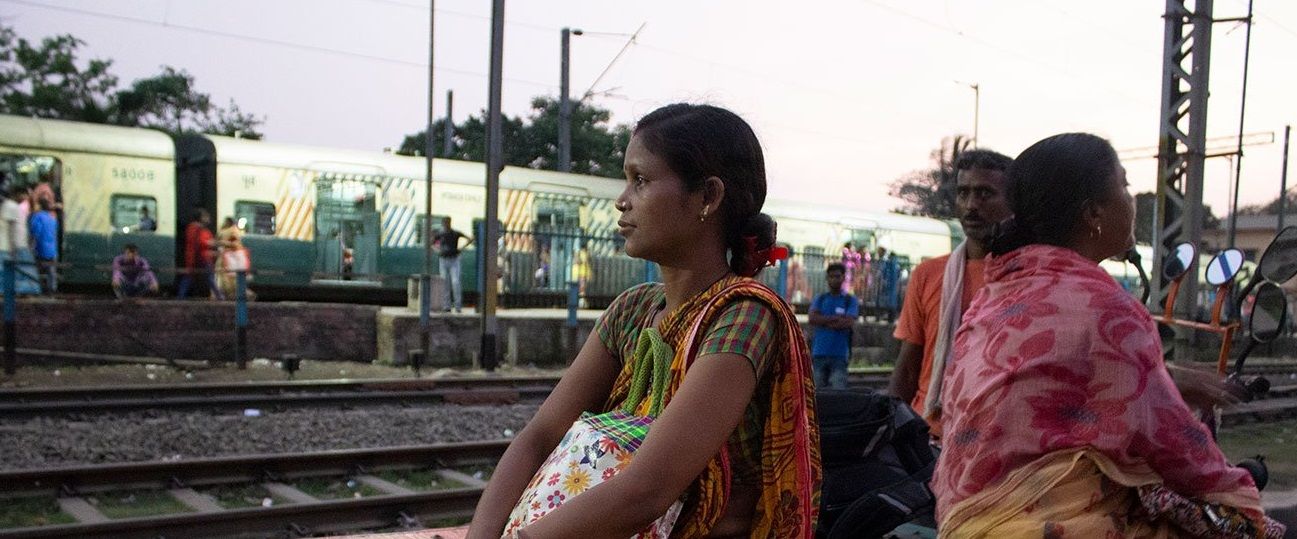
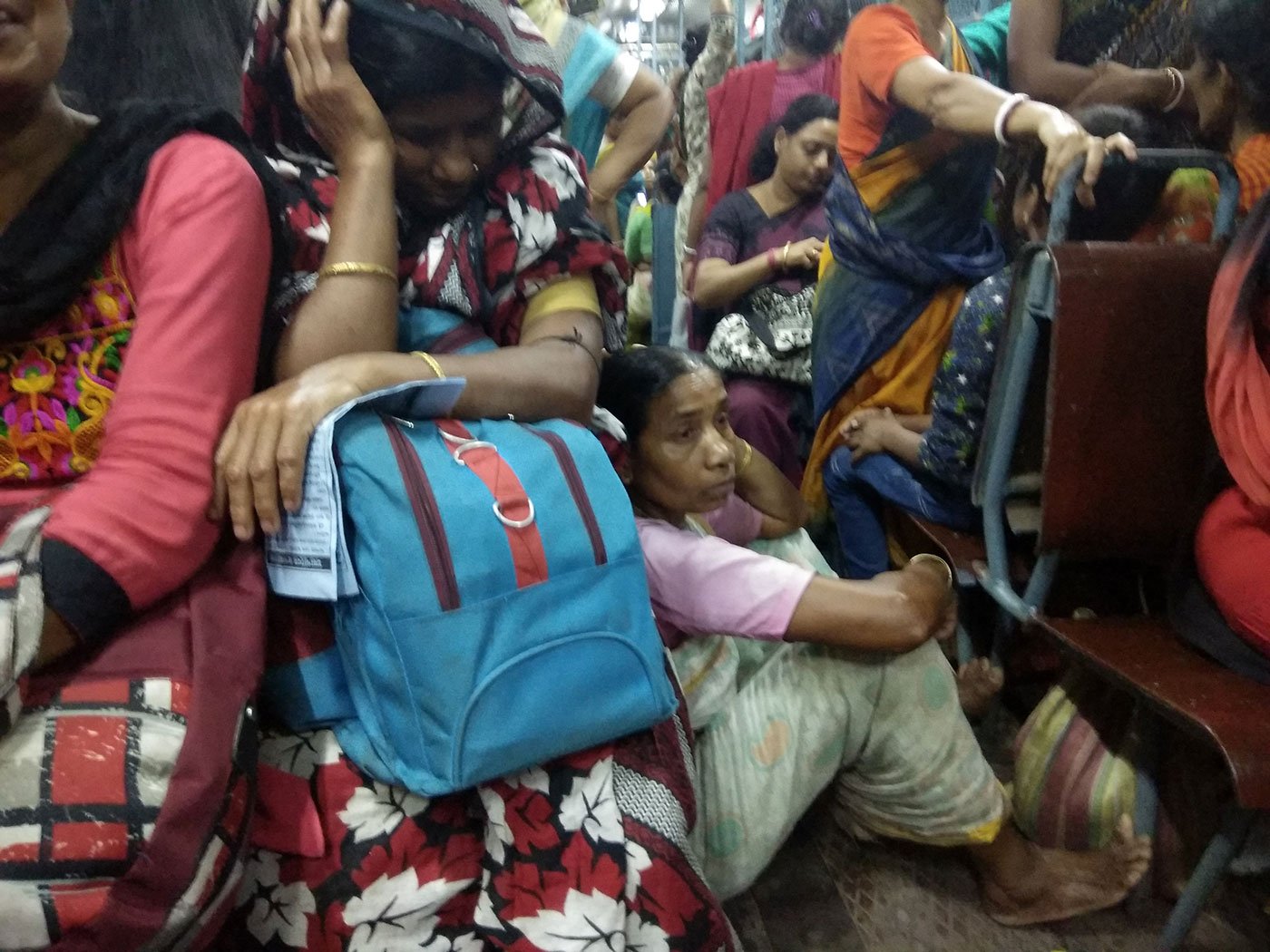
    “Do you think, there will be a place to sit inside the train today?” yells Breshpati Sardar, standing on a crowded platform at Jadavpur railway station in south Kolkata. The women waiting next to her shake their heads in disappointment and laugh at the question.

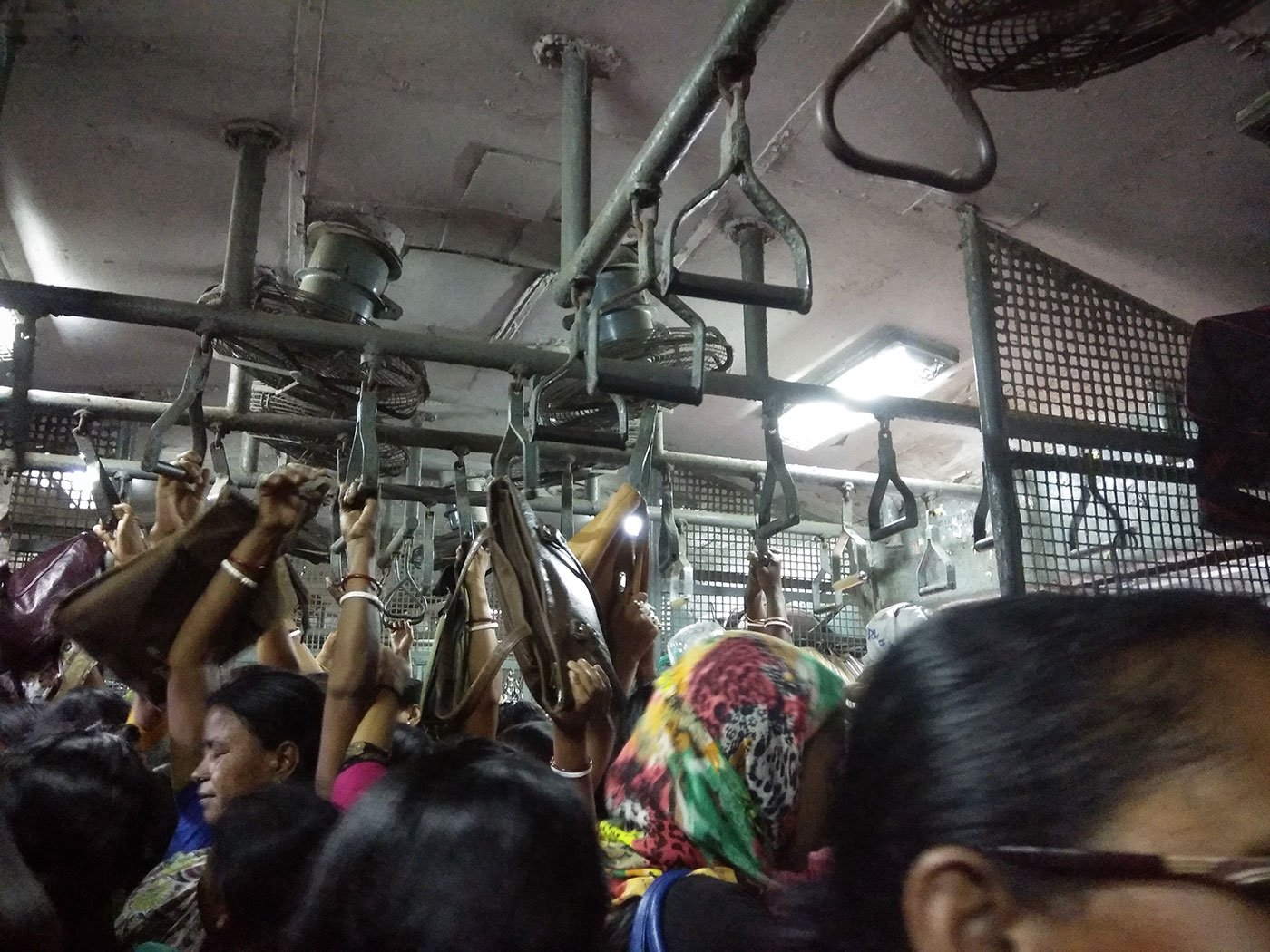
    Breshpati is waiting for the 4:35 p.m. train to Canning. The train rushes into Jadavpur station. The women brace themselves in the crowd, pushing to enter one of the two already-full ladies compartments.

    The train has come from Sealdah station in north Kolkata, stopping at Park Circus, Ballygunge Junction and Dhakuria. After Jadavpur, it will halt at Bagha Jatin, New Garia and Garia – all predominantly middle class and affluent areas of South Kolkata. The women waiting at Jadavpur – as well as at the other stations along the route – work as domestic helpers in these south Kolkata localities.

    Many of them take the 45-kilometres Sealdah-Canning route, which covers 16 stations, and the 65-kilometres Sealdah-Lakshmikantapur train that halts at 25 stations, or the Sealdah-Namkhana line, which goes even further south.  So some in Kolkata call these Eastern Railways trains the  ‘jhi special’.  Jhi is a disparaging term in Bengali for female domestic workers.

    Breshpati Sardar and other women workers on a crowded train from Sealdah to Canning, via Jadavpur
    Photo: Urvashi Sarkar
    Breshpati Sardar and other women workers on a crowded train from Sealdah to Canning, via Jadavpur
    Photo: Urvashi Sarkar On the Sealdah-Canning train: some in Kolkata call these Eastern Railways trains the ‘jhi special’ – ‘jhi‘ is a disparaging term in Bengali for female domestic workers

    That afternoon, on her way back home from work, wearing an orange saree, a red bindi and clutching a white handbag, Breshpati pushes her way into the compartment. Inside, amid the crush of bodies, bags and bangles, she finds a narrow space, just enough to stand. And repeatedly looks at the nearest window seat. When the person sitting there gets up to leave, Breshpati dives in to capture the coveted seat. Another woman, who has been pushed aside, screams at her.

    A fight erupts. Breshpati’s voice rises and she turns red with anger. Other women quickly intervene. She calms down and settles down on another woman’s lap.  The smile returns to her face and she excitedly shows a video of a snake consuming a rabbit to the women near her. “I usually never get into fights. But didn’t you see how the woman was behaving?” she says, angrily.

    Some 75 minutes later, the train pulls into Canning, around 45 kilometres from Jadavpur, where Breshpati boarded the train. Canning is on the outer edges of the Sundarbans region in South 24 Parganas district. A lack of work options near their homes forces the women to commute to the city every day.

    Breshpati’s house is a 30-minute walk from the station, near the market. On the way, she tells me, “Earlier I lived with my parents and went to school. But after Class 5, it became difficult for them to make ends meet.” Breshpati has three sisters and a brother. She started working in people’s houses when she was 11, and has continued ever since. She was married at the age of 14, and is now 28.

    At Breshpati Sardar’s home
    Photo: Siddharth Adelkar
    Breshpati Sardar’s daughters
    Photo: Siddharth Adelkar. Breshpati Sardar takes the 4:30 a.m. train from Canning to Jadavpur in south Kolkata, and the 4:35 p.m. train back to her two-room tin home (left); her daughters Sanya and Tanya (right) and a son live with her parents and in-laws because the work schedules of Breshpati and her husband allow them almost no time at home

    Breshpati’s daughters, Tanya, 11 and Sanya, 10, are waiting for her when we reach their two-room tin house around 6 p.m. She also has a six-year-old son, Biswajit. The children live with her parents and in-laws. The work schedules of Breshpati and her husband, Sanjib Sardar, leave them with little spare time. Sanijb works in a farsan-making unit and earns Rs. 9,000 a month.

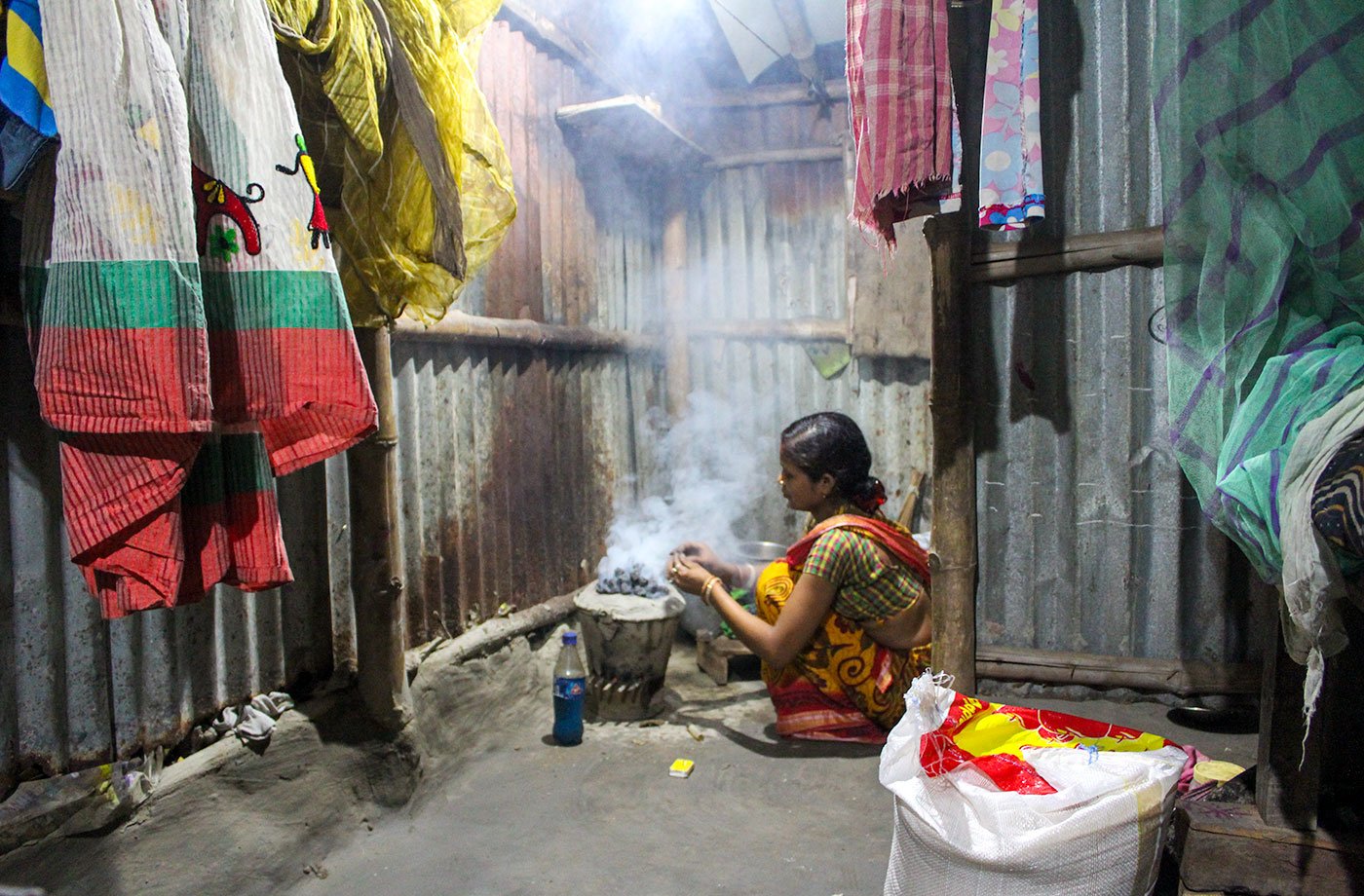
    That evening, their daughters are visiting. Breshpati instructs them to buy oil and vegetables, lights up the gobar gas furnace for cooking and fetches water from a nearby tubewell. Sanjib too will be home soon. After feeding the family and herself, and cleaning the utensils, Breshpati will sleep for a few hours and wake up at 3 a.m. to be able to reach Canning station in time for the 4:30 a.m. train to Jadavpur. “It is dark and sometimes cold. But I do not feel scared because many of us from my neighbourhood work at people’s homes in Kolkata and travel together. We call out to each other as we pass each other’s houses,” she says.

    Breshpati’s day then covers work in six households. “My tasks include cooking, washing clothes and utensils, and cleaning. I get Rs. 8,500 a month in all. I usually get tea and food at my employers’ houses and 3-4 holidays a month. But not all employers are good. Once, an employer cut 20 days salary because I did not come to work for a few days. I stopped going there.”

    Though Breshpati claims to be largely treated well by her employers, domestic workers usually labour in difficult conditions. A lack of decent wages, an absence of defined hours and benefit, abuse and sexual harassment are some of the issues they regularly face, says a 2016 memorandum submitted to the West Bengal government by the Griho Shramik Adhikar Abhiyan, a collective of organisations and unions of domestic workers.

    ‘If the women ask for more wages, they can lose their jobs, since others are willing to work at lesser rates. They are sometimes given stale food…’

    Watch video: Riding the dawn train, doing the domestic work grind

    The memorandum also lists victimisation by traffickers and placement agencies, forced migration, a lack of welfare measures and of skill development avenues. It notes that domestic workers are recognised under the Unorganised Workers’ Social Security Act (2008) and the Sexual Harassment of Women at Workplace (Prevention, Prohibition and Redressal) Act, 2013. But their working conditions were yet to be regulated by the West Bengal government.

    The central government has formulated a draft national policy for domestic workers with recommendations on social security and minimum wages. But its implementation has been left to the states.

    In June 2018, a domestic workers’ organisation, Paschim Banga Griha Paricharika Samity was granted trade union status for the first time in West Bengal.  Soon after, the organisation presented its demands to the state government, including Rs. 54 as the hourly wage, maternal leave, four days paid leave each month and the right to use the toilet at the workplace.

    “If the women ask for more wages, they can lose their jobs, since others are willing to work at lesser rates,” says Mallika Das, who works with Parichiti, a Kolkata-based non-governmental organisation that works with domestic workers. “There is no creche at the workplace, so they are forced to leave their children with others. They are sometimes given stale food to eat. Some employers do not even allow them use their toilets. The toilets in the railway station are mostly locked, broken or in such a bad condition that the women have to hold themselves until they reach home in the evening.”

    Breshpati Sardar at Canning railway station in the morning
    Photo: Siddharth Adelkar
    Breshpati Sardar sitting in the train early in the morning
    Photo: Siddharth Adelkar. Breshpati Sardar at the Canning railway station in the morning, and on the train heading to work before daylight

    Breshpati’s employers permit her to use their toilets.  “I knead their chapatis and cut and chop vegetables with my own hands. Why should they object?” Her biggest  discomfort is having to stand all day in the houses she works at and in the train while returning. “My legs and back constantly ache,” she admits.

    The night passes and Canning station begins to stir around 4 a.m. We see Breshpati on the platform, a cup of tea and biscuits in hand. At that early hour, she appears fresh with her hair tied in a bun, the bindi in place and her face shining. Other women arrive, all going to work, including her friend Basanti Sardar, who works at Jadavpur too. “Come rain or shine, we maids must go and work, else our employers will be angry. They can’t do without us!” says Basanti. The women laugh.

    Workers outside Jadavpur railway station
    Photo: Siddharth Adelkar. After alighting at Jadavpur (above) and other stations, the women walk off to work

    “Our lives are tough and we are poor. But these are the moments of laughter that we live for,” says Breshpati. At that early hour, the train is empty, but it will rapidly fill as it heads into Kolkata. Breshpati and Basanti sit in the general compartment instead of the ladies compartment. “In the general compartment, men sometimes offer their seats and will not scream at us. When possible, we board this compartment,” Basanti says.

    The train leaves at 4:30 a.m. and reached Jadavpur after roughly 75 minutes. Breshpati hurries away, walking, to her workplace, amid the crowds of other domestic workers making their way outside the station.

    Many workers also travel from Lakshmikantapur town in South 24 Parganas district, to Sealdah. The train journey of over 60 kilometres takes around 85 minutes. Chameli Baidya boards from Mathurapur Road station, the third stop on the line. She works at six households in the Ballygunge neighbourhood in south Kolkata. Ten years ago, she had a different life.

    “My husband and I owned a paan-beedi shop,” she recalls. “Things were fine for some time, then my husband stopped working and began wasting money. We had to close the shop and I started working at people’s houses. When I ran the shop, I was independent. Now, working at people’s places, I get scolded if I am late or if I miss even a day’s work.” Chameli is now unable to even pay her house rent, and she and her husband, along with their three daughters and a son, live in a shanty near the Mathurapur railway line.

    Chameli says the train journey is more difficult than working in houses. “I suffer each morning during the journey. Everyone pushes and screams. Sometimes, people even start hitting each other. There is no place to sit. If I had a handful of rice to put in my children’s mouths, I would not make this journey. I would stay at home.”

    Read the original article: https://ruralindiaonline.org/articles/slow-train-hard-work-low-wages-long-days/

  • Systematically terrorised: Rohingyas face severe health restrictions in Myanmar

    Systematically terrorised: Rohingyas face severe health restrictions in Myanmar

    Photo: Urvashi Sarkar

    Published in The New Arab. 15 May 2018

    The year was 2008. Gultaz Begum was pregnant and days away from delivering a baby. Her husband and an uncle helped her cross the mountains of Rakhine state, Myanmar into neighbouring Bangladesh. Travelling at night without passports, the three made it to Cox’s Bazar district, under the cover of darkness. Kusum Fatema was born, a day or two later, on February 8 in a government hospital in Cox’s Bazar, Bangladesh.

    Why did Gultaz, a Rohingya Muslim, not give birth to her daughter in Myanmar? Gultaz says she was admitted in a government hospital in Rakhine state.

    “I was poorly treated at the hospital. The nurses mocked me, were careless and made me feel unsafe. When my husband demanded my release, the hospital refused. They let me go, only after my family placed a great deal of pressure on them and paid a lot of money,” she said.

    Ten years later, Gultaz, her husband and three children are among the thousands of Rohingyas who live in Kutupalong and other refugee camps in Cox’s Bazar, following the August 2017 violence by Myanmar’s military which forced them to leave the country.

    The government of Myanmar does not recognise Rohingyas as citizens and has been systematically terrorising and forcefully displacing them, since many years. They face discrimination and severe restrictions in practically all areas of life – freedom of movement, in the practice of religion, access to healthcare and education, marriage and the number of children they can have.

    “Even when sick, we were stopped from going to hospitals, which were also far from our homes. We would be turned away at the checkpoints by police or military unless we paid bribes. Those of us who did manage to reach a hospital, would either be denied admission or charged exorbitantly to be admitted,” says Gultaz. According to her, even after being admitted to a hospital, the Rohingyas were not assured of reliable treatment.

    “As a result, and because we were scared, we stopped going to hospitals. When we fell ill, we would consult rural medical workers who are barely qualified. Those who could afford it, went to Bangladesh for treatment. The rest simply died.”

    Tasmina Begum who is in her mid-20s and fled Rakhine state in August 2017, too has a traumatic experience to share. A pregnant Tasmina did not go to the hospital to deliver her baby. When she developed fever, she took medicines prescribed by a local medic.

    “After taking the medicines, I bled severely and lost the baby. But I was too scared to go to a hospital. I went to Bangladesh where I had a blood transfusion done at a private hospital in Cox’s Bazar.”

    Dr Mohammed Abdus Salam, a government appointed civil surgeon at Cox’s Bazar who has been treating Rohingya patients, attests to the poor health of the refugees.

    “Malnutrition is high, especially among women and children – 161 cases of HIV have been detected since March 2018. Most people have not received vaccination and suffer from measles, rubella, diarrhoea, cholera and diphtheria.”

    Diphtheria became a major source of worry for the Bangladesh government which had nearly eradicated the disease among its people.

    To prevent a fresh outbreak, the government with the help of aid organisations started mass vaccination programmes for the Rohingyas, local communities, and aid workers.

    According to Dr Salam, the refugees who arrived last year were in a traumatised condition because they had been sexually assaulted, injured from mine blasts or gunshots, or had sharp cuts on their bodies.

    A health worker with the International Organisation for Migration (IOM) in Cox’s Bazar and who did not wish to be named, said: “The Rohingyas did not receive information about family planning or maternal health treatment. Even medicines were not freely available, compelling the Rohingya to come to Bangladesh. This is just the tip of the iceberg, since the Rohingyas have been discriminated against in several other ways.”

    Human rights violations against the Rohingyas, including in the areas of health, were highlighted in a report published by Amnesty International last year.

    According to the report, authorities in Myanmar have severely restricted Rohingya from accessing the state hospital in Sittwe, Rakhine state.

    “Only in the most serious of cases will Rohingya patients be accepted, and even then, only after special permission has been given by the Rakhine State authorities and the sick must travel with a security escort. Once admitted, they are placed in separate “Muslim wards” and are vulnerable to extortion and other “fees” from police and hospital porters.” The report described the situation as apartheid.

    Photo: Urvashi Sarkar. Najma (L) was beaten up during a brawl in the camp where she lives. In this picture, she is with her mother Romeda Begum at the Ukhia government health complex

    Another report of the Advisory Commission on Rakhine state – established by the Kofi Annan Foundation and Myanmar’s Office of the State Counsellor with the assent of Nobel Peace Prize winner Aung San Suu Kyi – also notes the discrimination and human rights violations of Muslims in Rakhine state.

    Suu Kyi was widely criticised for not coming out against the atrocities on the Rohingyas. This report too acknowledges discrimination against Muslims in Rakhine state, without mentioning the term Rohingya.

    “While all communities suffer from inadequate medical services, access to health is particularly low within the Muslim community in the northern and central parts of the [Rakhine] state. The refusal of some health facilities to treat Muslim patients… prevent ready access to health facilities,” the report says.

    The allegations of genocide and human rights violations have been so far denied by the Myanmar government which has asked instead for “clear evidence.”

    Fortify Rights, an organisation based in South-East Asia and registered in the United States, and which does work in Myanmar, has called for the referring of crimes against Rohingya to the International Criminal Court (ICC).

    “The rights of the Rohingyas have been abused in every possible manner and they have been discriminated against owing to their ethnicity and religion,” said co-founder, Matthew F. Smith.

    “The only way forward is for the UN Security Council to refer the situation in Myanmar to the ICC which should probe the allegations of genocide and prosecute as well.”

    Read the original article: https://english.alaraby.co.uk/english/indepth/2018/5/15/systematically-terrorised-rohingya-refugees-face-severe-healthcare-restrictions

  • Kamaladevi Chattopadhyay: The marvellous freedom fighter and feminist that India forgot about

    Kamaladevi Chattopadhyay: The marvellous freedom fighter and feminist that India forgot about

    Kamaladevi Chattopadhyay and Sarojini Naidu during a Simla Conference | Facebook, @GandhiHeritagePortal

    Published in The Print. 3 April, 2018

    A reading of ‘A Passionate Life’, a collection of writings by and on Kamaladevi Chattopadhyay, leaves the reader both mystified and in wonder. The wonder is because of the sheer scale of Kamaladevi’s contributions to the national struggle and subsequent nation building, whereas the mystery is why such an important figure in modern Indian history should have been neglected and forgotten.

    ‘A Passionate Life’ is testimony to the importance of Kamaladevi’s considerable work in various fields, ranging from the cooperative movement, settling of Partition refugees and handicrafts, to film and theatre. The editors, Ellen Carol DuBois and Vinay Lal, and the publishing house, Zubaan Books, must be commended for producing such a comprehensive volume that attempts to do justice to the full spectrum of Kamaladevi’s work — through her own writings, as well as essays that provide the necessary context.

    Kamaladevi’s writings take the reader to her life and times, which were difficult but heady. She had immersed herself in the freedom struggle — organising meetings and protests, participating in the salt satyagraha and other historic occasions.

    The influence of Gandhi over a generation of freedom fighters, including her, is evident. Though it would have been easy to be under Gandhi’s spell, Kamaladevi did not hesitate to question him. For example, when she felt that Gandhi had failed to include women’s participation in the salt satyagraha, she travelled to Surat to meet him and insisted that he give a call for women’s participation.

    Above all, Kamaladevi was independent-minded and refused to bend to authority or rules that she felt were rooted in injustice or discrimination. Her correspondence indicates that, during her travels abroad, she refused to report to police in Hong Kong, despite orders to do so each day, and completely ignored regulations. Calling herself “a tough guy”, Kamaladevi refused to submit to their insults. In her essay ‘Chasing me over the Globe’, Julie Laut notes how Kamaladevi had the British bureaucracy on edge because of her outspoken socialist anticolonial activism, which she displayed even while abroad.

    While Kamaladevi was in the United States, Japan, or China, she was not only drumming up support for India, but was also deeply interested in the concerns of those countries. She was aware of discrimination against blacks in the United States, and forged solidarity with them. Her correspondence includes an account of racism that she faced in the United States and her fearless response to it. In Japan, she was bold enough to speak out against Japanese imperialism. Kamaladevi formed solidarity with women wherever she went. These included Eleanor Roosevelt in the United States, Madame Chiang Kai Shek in Hong Kong and rural women in Japan.

    While Kamaladevi would be easily considered a feminist, she refused to call herself one. DuBois, in her introductory essay, examines Kamaladevi’s disavowal of feminism at length, and her explanations provide a glimpse into the dialectic of Indian women activists with feminism.

    As early as 1947, Kamaladevi was arguing for the right of the housewife to be recognised as a distinct economic entity, and equal pay for women. Noting the surprise of the British at Indian women getting the right to vote very early on, she wrote that the Indian women’s movement had a relatively smoother sailing compared to those in the West. She worried about the loss of momentum of the women’s movement in India after Independence, and felt that bourgeoisie women had failed to represent the interests of working-class women.

    Kamaladevi’s corpus of work was immense. As one reads about all she did, one can only marvel at her.

    The editors have done a stellar service by recovering Kamaldevi and collecting her writings from varied sources over the decades. These writings show her impressive grasp over the whole gamut of subjects. Fascinating as they are, the essays by Devaki Jain, Nico Slate and others are equally interesting for the various interpretations offered of her work and beliefs. Yet, for the wealth of writing that the book makes available on the public persona of Kamaladevi, one is left wondering about her personal life, of which we only get a few glimpses here and there.

    Recently, I found myself at the India International Centre in Delhi, another institution she had nurtured. For the first time, I noticed her portrait and was reminded of the remarkable and passionate life she had led and of her words: “Still, when I look back, I feel it was worth it, a span of life dotted with Herculean efforts, memorable events beset with pitfalls, all the same a rewarding experience of infinite value.”

    Cover photo:Facebook, @GandhiHeritagePortal

    Read original article: https://theprint.in/pageturner/afterword/kamaladevi-chattopadhyay-the-freedom-fighter-feminist-that-india-forgot-about/46710/

  • Widowed by tigers, abandoned by the state

    Published in People’s Archive of Rural India. 12 October 2017

    Shikha Mondal  lost her husband Asit in November 2015. “He went with two other men to the Garal river in the Baganbari forest to catch crabs. The other two  returned and told me that a tiger carried my husband away,” she says. Asit Mondal was 32 when he died, the family’s sole earning member, and the father of two school-going sons.

    Determined to claim compensation, Shikha, a resident of Jahar Colony village in  West Bengal’s Gosaba block, paid a lawyer Rs. 10,000 to help her. “There were many documents to gather – no objection certificates (NOCs) from the police and  Forest Department, insurance card, a letter from the village pradhan, and a death certificate.”

    The lawyer managed to get the insurance company to pay Rs. 1 lakh in compensation. But Shikha was denied an NOC from the Forest Department because her husband died in the core area. The insurance company has not yet returned her documents.

    Shikha now catches crabs and prawns, does odd jobs and agricultural labour, and somehow manages to send her sons to school. Unable to afford an independent household, she and her children live at an uncle’s house.

    Thousands of women in the Sunderbans have similarly lost their husbands to tiger attacks. This delta region, spread over around 4,200 square kilometres in eastern India and home to the world’s largest mangrove forests, is synonymous with tigers.

    Watch video: Shikha Mondal describes her ordeal of trying to get compensation after her husband died in 2015

    The tigers in the forests of Hingalganj, Gosaba, Kultali, Pathar Pratima and Basanti blocks are a threat to the villagers who depend on the forests for their daily needs and livelihoods. These blocks are close to the Sundarbans National Park (and tiger reserve), which includes a core area of around 1,700 square kilometres and a buffer area of around 900 square kilometres, where some livelihood activities are allowed. Usually, it is the men in the villages here who venture into the forests to catch fish and crabs, or to gather honey and wood. In a face-off with a tiger, most often the man dies.

    The exact number of women widowed in this manner in the Sundarbans is unknown, but locals, non-governmental organisations and others estimate the number is at least 3,000 over three decades – or around a 100 a year.

    “Since 2011, nearly 250 women have lost their husbands to tiger attacks in Gosaba’s Lahiripur gram panchayat area [consisting of 22 villages],” says Arjun Mondal, who manages the Sundarbans Rural Development Society, an NGO that works for the welfare of the ‘tiger widows’. “Not a single one has received compensation,” he adds.

    The women are entitled to total compensation of roughly Rs. 4-5 lakhs from the West Bengal government’s Forest Department, Fisheries Department and the state’s Group Personal Accident Insurance Scheme. However, there are many conditions; Arjun lists a few: “The husband should not have died in the core area, he should have had a boat licence certificate (BLC) and a permit from the Forest Department. Additionally, the wife is required to submit several documents to the different departments to get the compensation.”

    Invariably, people from the villages do wander into the core area. Arjun, a fisherman himself, says, “We don’t realise where the buffer zone ends and the core area begins. The government issues very few BLCs, and not everyone can afford one. Getting permits also depends on the will of the Forest Department.”

    Therefore, the odds are stacked against the wives of men who do not have BLCs or permits. The situation worsens when the men die in the core areas, which the villagers here are not allowed to enter at all, with or without permits.

    As it did for Namita Biswas, 40, from Patharpara village in Gosaba block. Her husband Manoranjan, a fisherman, was attacked by a tiger in the core area in February 2015. He survived and was admitted to a hospital, but died a few days after he was discharged. “The infection from his head injury had not healed,” Namita explains. “My husband had a BLC, but the police refused to take my statement. We gave all our documents and medical bills to the Forest Department for reimbursement. The money is yet to come. There are so many widows like me. The government should at least give us a monthly pension.”

    Purmila Burman’s documents have been taken away by a middleman who has disappeared
     Purmila Burman was duped by an ‘agent’ claiming he could get compensation for her husband’s death

    While Shikha and Namita still await compensation, Purmila Burman, 55, of Patharpara, has no such hope. In March 2016, her fisherman husband Shubhendu was killed by a tiger in the core area. “A middleman promised to help me when Shubhendu died. I gathered all my documents and gave them to him, believing he would help,” Purmila says. The agent has since disappeared with her documents, and she has received no compensation.

    The Sundarbans are full of stories like these. In some families, consecutive generations of families have lost their men to tiger attacks. Most of the villages where this has happened have bidhoba paras or ‘widow localities’. In most households, the women’s lives are marked by distress and penury. It is difficult for them to re-marry since remarriage is frowned upon.

    In July 2016, this writer filed three separate Right to Information (RTI) petitions enquiring about compensation for tiger widows with the West Bengal government’s Fisheries Department, Forest Department and Department of Sundarban Affairs.

    Only the Fisheries Department responded: in the last six years, only five women – a tiny portion of the estimated 100 women whose husbands are killed by tigers every year – have filed for compensation with the department. Of them, only three received Rs. 1 lakh each. The other two were denied compensation since the postmortem reports for their husbands were not available.

    But contrary to the Fisheries Department data, most of the women I talked to said that they had applied for compensation – so it is likely that their claims are not being accepted due to incomplete documents or other conditions they fail to meet.

    “The entire process is daunting, with many documents to submit and a lot of running around. The woman may even be misled or might be unaware of the process,” says Pradip Chatterjee of the Dakshinbanga Matsyajibi Forum. (The Fishworkers Forum of South Bengal, which is trying to help ‘tiger widows’ claim compensation and find work). “Meanwhile, fresh killings by tigers are reported every year, adding to the numbers of widowed women,” he says.

    And some women, Chatterjee adds, fearful of the questioning by the Forest Department, ‘suppress’ the death of their husband, especially if he has been killed in the core area – they don’t even register it with the authorities, and nor do they claim compensation.

    But Ranbibala Mondal of Patharpara village did try to claim the compensation. Her husband was attacked by a tiger many years ago. “After all these years, the government has given me nothing,” she says. “Can you do something?”

    Photos: Urvashi Sarkar

    Read the original article: https://ruralindiaonline.org/articles/widowed-by-tigers-abandoned-by-the-state/

  • ‘We are not safe even in office’: Pune techie’s murder raises concerns on security, workplace sexism

    Published in Scroll.in. 4 February 2017

    As evening descended, a group of young professionals assembled near the Wipro circle in Pune’s Hinjewadi area on Wednesday. Holding candles and placards with messages such as “Justice for Rasila” “We need safe workplace” and “Employees are not slaves”, the gathering of men and women information technology professionals protested against the murder Infosys employee Rasila Raju, who had allegedly been strangled by a security guard in her office on January 29.

    Though it was her day off, 25-year-old Raju had come to the Infosys office in Hinjewadi, the city’s IT hub, for the 2 pm to 11 pm shift on Sunday to work on a project. Company security guard Bhaben Saikia, who was arrested for her murder, allegedly strangled her using a computer wire. Raju had earlier complained to company officials about Saikia, her family said, but no action had been taken.

    This is the second murder of a woman techie in Pune in as many months – in December 2016, 23-year-old Antara Das, an employee of Capgemini, was killed outside her office in Talwade.

    Safety concerns

    “We are not safe even in our office premises. Who should we trust?” asked a young woman, asking to remain anonymous, who had attended the vigil for Raju’s death.

    A woman standing next to her asked: “We want to know why Rasila was working in office on a Sunday, that too alone. Why was she not provided a temporary laptop to work from home?”

    The woman, who did not wish to be identified, said that for newcomers and those who were just starting out, it was hard to turn down projects, even if it meant working on weekends. “Still, why was Rasila made to work alone?,” she asked. “After this incident, we are scared, and do not sit alone at work. We work together in groups where we feel safe.”

    Infosys, in a statement, said “this was an unfortunate incident is a reminder that nothing can be taken for granted, and we are continuing to seek recommendations and suggestions from different stakeholders.” The statement cited existing safety measures such as a helpline, CCTV cameras on the premises, safety committees, background checks and night travel arrangements for women.

    Women IT workers at the vigil for Raju said they appreciated the facilities provided by their companies but expressed concern over inadequate safety provisions. “Companies fail to reinforce their own dictates,” a female recruiter for an IT company said. “For example, if a company decides that women need not be at the workplace beyond 6pm – the practice is permitted for sometime – but is stopped later. ”

    Confronting the glass ceiling

    Women in the IT sector said that apart from security issues and sexual harassment at the workplace, they also have to contend with ingrained sexism and a glass ceiling that prevents them getting their due

    “If a woman wants to leave early, a male colleague might say that he works longer hours and receives the same pay,” said Gunjan Shukla, a 36-year-old IT professional in Pune who has worked in the industry for the last 15 years. “But women are expected to make up by working harder, from home, and on the weekends as well. They also do much of the house work too, which means they are constantly balancing the pressures of work and home.”

    The Maharashtra IT Professionals Forum, an informal group of IT professionals issued a statement after Raju’s murder, which spoke of “the structural injustice in the IT industry where long working hours are expected from employees. Men can stay back till late and thus have an unfair advantage over women.”

    According to the National Association of Software and Services Companies, an IT industry trade body, women comprise 30% of the workforce. However, Shukla said that though the representation of women at the entry level may have increased, their presence is marginal at the higher levels.

    “How many women do you see with 20 plus years of experience in the technical field, or on the boards of Fortune 500 companies?” Shukla asked. “Even coding and programming areas of the industry tend to be male-dominated.”

    Shukla said that sexism is manifest at the workplace in the way women employees are perceived. “If a project has 30%-40% women employees, the project manager might say that the risk of the project is high, since the women could take leave for marriage and maternity.”

    Arun M of the Maharashtra IT Professionals Forum said that some companies also strive for greater representation of women in certain projects to woo clients. “This is done to get business from international telecom companies like AT&T and KPN, which have strict requirements about women’s representation in the companies they work with,” he said.

    That does not always translate into the creation of a more equitable workplace, however. “Women in some companies also face a harder time when they return to work after their maternity leave – they see their appraisals being affected,” Arun M said.

    Despite such challenges, women continue join the IT-BPO sector. According to Nasscom, one in every three employees in the sector, which has 3.7 million people, is a woman.

    But the gender gap in technology companies cannot be denied, said Geetha Kanan, managing director of the Anita Borg Institute India, which works on promoting women in technology. “While we do see many more successful women in the IT sector, there is there is also no denying the glass ceiling, for which the reasons are complex,” she said. “Technology innovation powers the global economy and women are crucial to building technology the world needs. Organisations need to focus on hiring more women and including them in the workforce.”

    With regard to women’s safety at the workplace, Kannan said the law entails some policies and processes, which some IT companies complement with their own measures. “Companies take steps such as providing sufficient male and female security staff at the office premises, senior manager’s approval required to work late, and staff background checks,” she said.

    But as the Pune incidents show us, such measures can often prove inadequate, costing a young woman her life.

    Cover photo: Urvashi Sarkar

    Read the original article: https://scroll.in/article/828440/we-are-not-safe-even-in-office-pune-techies-murder-raises-concerns-on-security-workplace-sexism

  • From river to plate: the journey of the Sundarbans tiger prawn

    Published in People’s Archive of Rural India. 11 January 2017

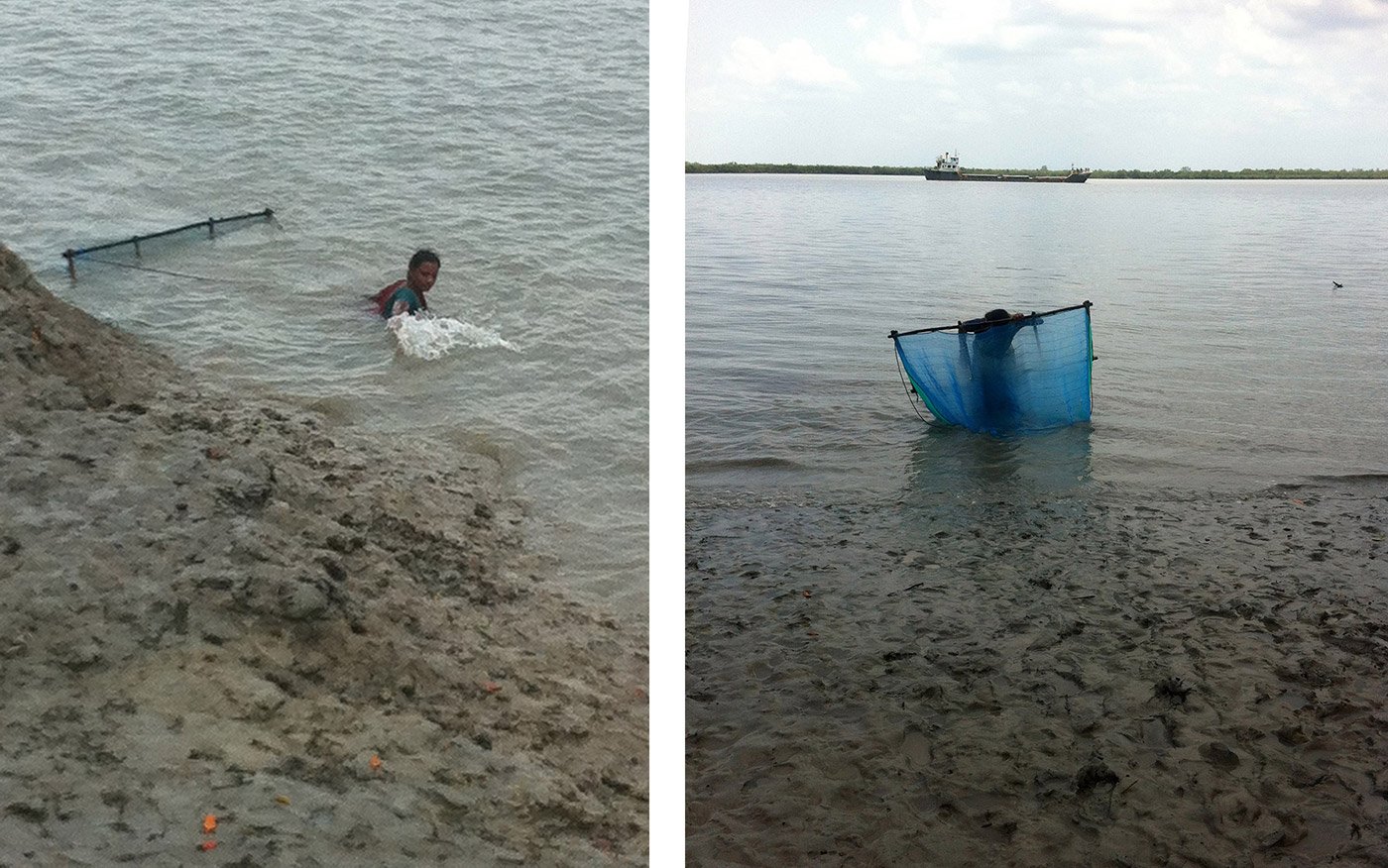
    Purnima Mistry walks out of the Raimangal river with her fishing net, water swirling around her waist. She has been swimming near the riverbank for half-an-hour, dragging the net behind her in search of tiger prawn seedlings.

    On the riverbank, she sorts the contents of the net, separating the seedlings from weeds, twigs and other fish. Her saree and plait are beginning to dry under the hot sun. But Purnima has to get back to the river again. “I have to collect enough tiger prawn seedlings so that I can sell them. It will take another 2-3 hours,” she says.

    Squatting on the muddy bank to sort the catch, Purnima talks about the long hours she spends in saline waters and mud, which cause skin infections and itches.  “Look how difficult our jobs are,” she says. “This is how the people of Sundarbans live and eat.”

    Purnima started doing this work two years ago to support her family, which includes two daughters and a son. Her husband is afraid of water and cannot go fishing, which is the most common occupation here. So he grows vegetables for sale at home.

    Watch video: Purnima Mistry trawls through the Raimangal river to catch enough seedlings to sell

    Is she afraid of encountering crocodiles and tigers – both common in some parts of the Sundarbans?  “Sometimes, I am scared of crocodiles; they have attacked people in this village,” Purnima says. “The tigers do not come to here because a security net near the forest keeps them away.”

    Purnima lives in Jogesganj, a village of 7,000-plus people and houses scattered along the banks of the Raimangal river in Hingalganj block of West Bengal. Many of the women and children in Jogesganj, like in the rest of the Sundarbans, work as seedling collectors. This supplements their household incomes from the sale of fish and crabs, and of forest products such as honey and wood.

    State government data [from 2009] shows that poverty drives more than 2 lakh people – of the 44 lakhs who live in the Sundarbans – to collect tiger prawn seedlings.

    Shoma Mondal of Hemnagar village says this work is mostly done by women. “Men go after bigger catch like crabs, which fetch better returns [and for which they hire boats in groups]. Gathering seedlings becomes the women’s task, and in very poor houses, even children [do this work]. The returns are poor but there are no other options. At least one woman from every household in the village does this work.  We cannot do much agriculture, because for much of the year the soil and water are saline, except in the monsoons, when we cultivate rice.”

    Left: The people who collect tiger prawn seedlings spend close to five hours in the water to get a sufficient catch. Right: A woman drags her net into the river at low tide, which is the best time to gather the seedlings
    Left: The people who collect tiger prawn seedlings spend close to five hours in the water to get a sufficient catch. Right: A woman drags her net into the river at low tide, which is the best time to gather the seedlings

    Shoma goes to the river almost every day at low tide in search of seedlings. Low tides are the best for a good catch – but they occur at different times. So Shoma sometimes goes to the river at midnight or at 4 a.m. “When it is pitch dark, we are unable to see if there are crocodiles or other wild animals nearby. In the daylight, at least we can see them and move away.”

    The earnings of seedling collectors like Purnima and Shoma vary according to the season. “During winter, which is peak season, we get Rs. 300 per 1,000 seedlings,” she says. “At other times, the prices can drop to Rs. 100 and even sink as low as Rs. 60.”

    On good days, the catch reaches 2,000 seedlings, but this is only a few times a year. Most other times, Shoma only manages to net 200-500 seedlings. “It’s enough money to go to the market [in Hemnagar] and buy essentials [like rice and pulses], but nothing more,” she says.

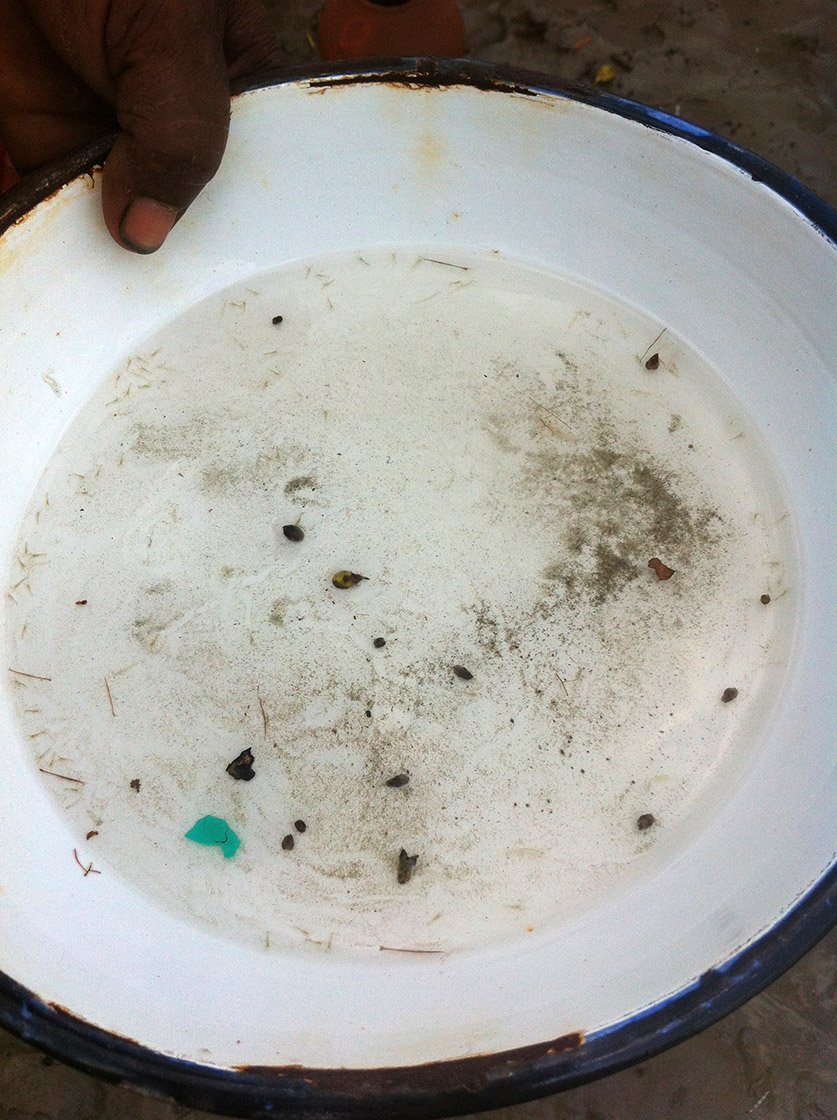
    Tiger prawn seedlings are tiny, almost like strands of hair. Their price is fixed per 1,000 seedlings
    After cultivation in brackish water enclosures in South 24 Parganas district, the seedlings grow in size

    During the winter months, from December to February, Shoma goes to Erode district in Tamil Nadu to work in a garments factory, where she stitches curtains and pillow covers. Although winter can bring the highest rates for the seedlings, many women try to not work in the biting cold river waters. Shoma’s husband Soumen Mondol works full-time in the same factory in Erode. She earns between Rs. 200-500 daily, he earns a little more.  Their five-year-old daughter stays back in the village with her grandmother.

    The methods of collecting prawn seedlings have been criticised by environmentalists as well as the state’s Forest Department. The nets trap many other fish species besides the seedlings. But the women usually discard the other fish, which can deplete those species.  The dragging of nets causes soil erosion and weakens embankments meant to prevent rivers from overflowing.

    Purnima however does not throw away the other fish. She has a pond near her home, where she harvests these species. “Those who do not have ponds have to throw away the remaining fish,” she explains, as she continues to sort the seedlings on the Raimangal riverbank.

    Although the tiger prawn trade rests on the labour of the women in these villages, they are paid the least along the chain. After the seedlings are collected, men take over the profitable part of the trade.

    Typically, middlemen visit the villages to purchase the seedlings from the women and sell it for cultivation in bheries. These are large artificial enclosures for brackish water aquaculture in Canning, Jibantala, Sarberia and other locations in the South 24 Parganas district. Here, the seedlings are cultivated for at least three months during which they grow in size.  Then they are sold in the wholesale markets of Canning, Barasat and Dhamakhali , and sent onward for export – often by men on motorbikes who carry the seedlings in plastic bags full of water.

    After cultivation in brackish water enclosures in South 24 Parganas district, the seedlings grow in size
    After cultivation in brackish water enclosures in South 24 Parganas district, the seedlings grow in size

    Full-grown tiger prawns fetch attractive prices in the wholesale markets. Tarun Mondal, a wholesaler in the Canning fish market, says his main income comes from tiger prawns.  “It is good business. We buy them at a rate of Rs. 380-880 per kilo from the bheries, and we sell them for Rs. 400-900 [per kilo, depending on size]. Our profit margin is Rs. 10- 20 [per kilo]. Most of our supply is from the Sunderbans, from blocks such as Basanti and Gosaba. We sell them to agents who work for bigger companies that ultimately export them.”

    India’s seafood exports were valued at $4.68 billion in 2015-16 ; shrimps constitute almost 70 per cent of these exports and are mostly exported to Japan, China and the United States. Tiger prawns, also known as black tiger shrimps, are an important part of shrimp exports. West Bengal is one of India’s largest shrimp producers and exporters of seafood.

    Seedling collectors like Shoma and Purnima though see only a fraction of this money. The women are unable to demand higher prices because the agents determine their rates and control the trade. “In addition to the price of seedlings, the middleman gives us an annual deposit [of Rs. 200-500 per person], which we don’t have to return, ” Shoma says. “The deposit forces us to sell only to him, and nobody else. We women are unable to gather in large numbers and bargain.” But it is the labour of workers like Shoma and Purnima that sustains the wholesale and export markets in tiger prawns, and brings these expensive delicacies to upscale plates in India and around the world.

    Photos: Urvashi Sarkar

    Read the original article: https://ruralindiaonline.org/articles/from-river-to-plate-the-journey-of-the-sundarbans-tiger-prawn/

  • Kashmir: A look at the Kunan Poshpora rapes

    Writers Ifrah Butt and Natasha Rather

    Published in Al Jazeera. 24 December 2016

    Twenty-five years have passed since the 1991 incident in which Indian army soldiers allegedly raped between 23 and 100 women in Kashmir’s Kunan and Poshpora villages during a search operation.

    The Indian army has denied the accusations and a delayed investigation of the incident concluded that the allegations were “worthless” and no one was prosecuted for the alleged crimes.

    But, in 2013, a group of 50 women, including the authors Ifrah Butt and Natasha Rather, petitioned the Supreme Court of India to re-open the investigations. Since then, a reinvestigation was ordered and the Kashmir High Court ordered that victims be paid compensation. The state government and army have mounted efforts to stop these orders.

    Al Jazeera spoke to Ifrah Butt and Natasha Rather who, along with three others, co-wrote a book, Do You Remember Kunan Poshpora?, published earlier this year.

    Butt and Rather, both young women in their twenties, spoke about the impact of militarisation on Kashmiri Muslim women and men, political solidarities, about Kashmiri women who inspire, and the issue of self-determination in Kashmir.

    Al Jazeera: How and when did you learn about the Kunan Poshpora rapes?

    Ifrah Butt: I had a faint idea of the events of Kunan Poshpora, but it was not something which we talked about, because it is taboo to discuss rape in Kashmiri society. We were documenting cases of sexual violence at Jammu Kashmir Coalition of Civil Society, when we learned about the full details.

    At that time, people were on the streets in India, demanding immediate justice for a young woman who was raped in Delhi in December 2012. We wondered why nobody had sought justice for the Kashmiri women who were raped more than 20 years ago.

    Al Jazeera: How has the conflict in Kashmir affected women and their participation in the public sphere?

    Natasha Rather: Before the conflict escalated in the late 1980s, girls were encouraged to attend college, work and occupy high positions. But they were forced to drop out due to the conflict.

    During the conflict, women helped [fighters] with meals and shelter, and acted as their couriers.

    Increasing instances of rape were recorded after the armed uprising began in 1990s and incidents like Kunan Poshpora made women more aware of their vulnerability.

    Rapes were humiliating for the entire Kashmiri community and demoralising. As a result, women were made to cover their faces and wear burqas. Their movements were restricted.

    But after a point they had to go out and work because the men were being killed, or were in jail. There are hundreds of half-widows in Kashmir – women whose husbands disappeared.

    Since the year 2000, more women started working. Now, many own big businesses, boutiques and beauty parlours, and are in the bureaucracy.

    But the result of militarisation is that [Kashmiri women] dread men in uniform. We won’t enter a park, if we see them sitting even far away, or walk down streets where there is an army bunker.

    Butt: Kashmiri women have been abused both by militants and Indian security forces. Militants also used rape, especially if women were caught as informers. For example, in the 1990s, a Kashmiri Pandit [Hindu] nurse was raped and shot for being a suspected police informer.

    Similarly, there are instances of Indian security forces raping female members of a militant’s family as a way of punishing the fighter.

    Women were raped on both sides.

    Al Jazeera: Men have been tortured and brutalised during the conflict as well. What were the consequences?

    Rather: Incidents of sexual torture and assault against men and boys have been recorded. But many such incidents go unreported because the victims fear shame and dishonour.

    Butt: Also, I think, men started thinking that they could not take care of the women after incidents of rape and sexual assault against women by military and paramilitary forces increased.

    Al Jazeera: What is the situation of Kashmiri women with regard to employment, marriage and sexual freedom?

    Rather: Government jobs or education and banking jobs are considered the best for Kashmiri girls. Some families express discomfort about women working with men. Caste and class considerations can be important in selection of partners, but such ideas are slowly changing, especially among the middle class.

    There is complete silence around premarital sex since Kashmiri society considers this to be a disgrace and dishonour.

    Butt: We have the liberty to choose our partners, that is, husbands, but we cannot cohabitate with a partner if unmarried. Premarital sex is a big no. Sexuality and related issues like rape or even harassment are not discussed.

    Al Jazeera: During the exodus of Kashmiri Pandits during early 1990s, women from the Pandit community were reportedly raped. Has the violence against them been forgotten?

    Rather: Rape of a Kashmiri Pandit woman is as condemnable as of a Kashmiri Muslim woman.

    Butt: There were some incidents of rapes committed by militants in the 1990s. Such incidents, too, need documenting.Al Jazeera: The outrage around the 2012 Delhi rape prompted you to delve into Kunan Poshpora. Do these other incidents in India also affect you?

    Rather: The 2012 agitations demanded that the culture of silence [over rape] be broken. It seemed to be an apt time for talking about gendered violence in Kashmir.

    Events in India do impact us, especially movements led by the people. But while most other agitating groups do not want freedom from India, Kashmiris want self-determination.

    Butt: Events from all over the world impact us, be it Palestine, Syria or Yemen. We express our solidarity with every oppressed nation and groups like the Dalits or tribal groups. We do it by writing about it and expressing ourselves on social media.

    Al Jazeera: Are you indicating that Kashmir needs freedom first, and only then can social problems like patriarchy and caste be dealt with?

    Butt: We can solve our problems only if we are alive. We saw how young boys and girls were killed since 2008. There are massacres, and if this continues, there will soon be no one left to deal with the other social problems.

    Once we get freedom we will work for a perfect nation. But when our existence is in peril, we cannot think of anything else.

    Rather: The right to self-determination precedes everything else. When India was waging its struggle for freedom, did it wait to eliminate caste biases, religious intolerance or patriarchy?

    Read the original article: https://www.aljazeera.com/features/2016/12/24/kashmir-a-look-at-the-kunan-poshpora-rapes/

  • ‘Resisting codification of Muslim personal law is denial of Muslim women’s constitutional rights

    Photo: YouTube

    Published in The Wire. 29 March 2016

    Justice B. Kemal Pasha, a sitting judge of the Kerala high court, was recently in the spotlight for comments made at a seminar in Kozhikode organised by the Punarjani Charitable Trust, a women lawyers collective, and Nisa, a progressive Muslim women’s forum. He called for the reform of Muslim personal law, spoke against dowry and asked rhetorically why a Muslim woman could not have four husbands. The last remark in particular generated a controversy and was greeted with open hostility by a broad section of the Muslim clergy in Kerala.

    To understand the uproar over his comments, The Wire spoke to Zakia Soman, co-founder of the Bharatiya Mahila Muslim Andolan (BMMA), a rights-based mass movement led by Muslim women. Soman places the judge’s remarks in context, explains why they can be deemed historic and exposes the patriarchal mindset of those attacking the judge. She also explains how the resistance to codification of Muslim personal law is a denial of the constitutional rights of Muslim women.

    Justice Pasha’s comments, especially that a woman should be allowed to have four husbands, have come in for severe criticism. What is BMMA’s response?

    The statement attributed to him – that a woman should have four husbands – has been converted into a headline by the media. But that’s not the point. He said a lot of substantive things. For example, he said that despite Quranic rights, Muslim women have not got justice as far as personal law is concerned. He spoke a major truth and we welcome it. He also called for a reform of Muslim personal law. When a sitting judge says this, that too male, it is important. In fact, it is historic. Every democratic person who believes in the constitution, and anyone who is a Muslim, and has read the Quran should support this. Islam considers men and women equal. The misinterpretations of the text, owing to patriarchal mindsets in the last 1400 years, have resulted in women being treated as second class human beings. Although there have been scholars who have written about  men and women being equal in the Quran, few people, especially men, have publicly spoken for gender justice in Islam.

    What kind of organisations are attacking Justice Pasha? Some of his opponents have even claimed that his views on divorce and maintenance echo those of the RSS.

    They go after anyone who speaks of reform. They resort to personal attacks as in our case too, and anyone who talks about reform is an RSS stooge – there must be a limit to conspiracy theory!

    As far as I know, these organisations include Samastha Kerala Jamiyathul Ulama, a body of male clerics from Kerala holding extremely conservative and patriarchal worldviews, despite Quranic injunctions on gender justice. They have a limited perspective on these issues, which is solely their own, and does not draw legitimacy from the Quran.

    What gives them the power and legitimacy to spread their ideology?

    They are self-appointed male custodians of religion. The religion of Islam has no place for intermediaries, institutionalised clergy or leadership; the rapport between a Muslim and Allah is direct. They also draw their legitimacy from the overall patriarchy prevalent in all faith communities.

    These self-appointed custodians claim the sole right to speak on behalf of all Muslims and insist that they are the only arbiters of Islam; no change can happen without their will. The misinformation spread by them has led to a sense that men are superior to women in the Muslim community. This is absolutely untrue. Again, the Quran has to be read in the context of the time we are living in. For example, what was permission for polygamy at a given time in history cannot be stretched as a licence in modern day. Permission under certain circumstances with strict conditions is certainly not encouragement. Nowhere does the Quran encourage polygamy.

    The stranglehold of patriarchy is visible in all faiths. Take the Sabarimala temple, the Shani Shingnapur temple or any other temple. They are run by temple trusts, but the respective deity cannot belong only to the trust.  The god belongs to all devotees, who should have equal rights of access. But some people have appointed themselves trustees and administrators as in Sabarimala or the Haji Ali Shrine, and these orthodox men decide who will be included or barred, whether women and girls, those in the menstruating group, or Dalits.

    Conservative Muslim clergy frequently make statements that infringe on and curb the rights of Muslim women, whether with regard to divorce, education, work or inheritance. How important is it to codify Muslim personal law?

    The long term solution is the codification of Muslim personal law within the Quranic framework. This is in consonance with the Indian constitution, which upholds the right of religious freedom through Article 25, 28, 29 and others.  Different faiths, including religious minorities, have their respective family laws which are periodically amended. It is only Muslims whose family laws are from the British era, dating back to 1937 and 1939. They are highly incomplete and do not address questions on age of marriage, triple talaq, polygamy, inheritance, property rights and the custody of children.

    If Muslim personal law is codified, would it prevent the likes of Samastha Kerala Jamiyathul Ulam, All India Muslim Personal Law Board and others from making anti-women statements publicly?

    Yes, it will break the hegemony and stranglehold over the lives of ordinary women and men. Currently, Muslim personal law is open-ended and subjective since the British era legislation from which they stem is incomplete and silent on many issues. If a comprehensive law is written down and passed by parliament, their stranglehold will disappear. Muslim women will get justice since violators can be punished. Triple talaq and halalah, which are un-Islamic practices, would be banned. This is why orthodox forces are resisting the codification of Muslim personal law. In many Muslim countries where the personal law is codified, triple talaq is not a valid form of divorce.

    The clergy claims that the source of personal law is Sharia, which is also stated by the 1937 Act. The meaning of Sharia is Islamic law. But where is it written down? Every maulvi or qazi has his own interpretation of Sharia, and all malpractices are passed off as Islamic. Qazis validate oral divorce, polygamy or halalah instead of pointing out their invalidity as per the Quran, since these are barbaric practices. It is high time the Muslim personal law is codified. BMMA has even prepared a draft law following consultations over five years.

    Justice Pasha also said that it was unfair to oppose the Uniform Civil Code (UCC). BMMA has a different view on the UCC. Can you elaborate?

    Jawaharlal Nehru and Ambedkar initially proposed the UCC as they were concerned about gender justice. They feared that the religious orthodoxy would not permit justice and equality for women despite the Constitution. The idea of the UCC was rejected as an attack on ancient Indian tradition and heritage largely by sadhus and sants of the day. The idea was dropped and the Hindu marriage and succession Acts were passed in the 1950s. Even Parsis and Christians, whose family laws were already existing, amended their laws from time to time. The right to personal laws based on religion is a constitutional entitlement that all communities have. Muslims are the only community who have been denied their legal rights, thanks to the opposition of patriarchal forces who have stonewalled any change in the area of personal law, and the government’s informal alliance with them. The most affected have been Muslim women who have been discriminated against and denied justice.

    In the last decade, the UCC has been mired in so much politics. The Hindu right has revived the demand for a UCC, but have never brought a draft before the public. They are throwing it like a gauntlet. Do they mean to say that post-UCC, a Hindu marriage will take place without saptapadi, saat phera or kanyadan?

    The UCC debate concerns all communities and not just Muslims. Our concern is legal justice and equality for Muslim women as guaranteed by both the Quran and the constitution.

    Read the original article: https://thewire.in/gender/resisting-codification-of-muslim-personal-law-denies-muslim-women-their-constitutional-rights

Urvashi Sarkar – 2026 – All rights reserved.

web things by Studio Goncharov