Tag: Gender

  • Poll: Indian Muslim women want end to verbal divorce

    Published in Al Jazeera. 21 August 2015

    An overwhelming majority of Muslim women in India want reforms in religious laws involving matters of divorce, alimony, polygamy and custody of children, according to a survey conducted by a rights group.

    Titled “Seeking Justice Within Family: A National Study on Muslim Women’s Views on Reforms in Muslim Personal Law”, the survey released recently by Bharatiya Muslim Mahila Andolan (BMMA) focuses on religious laws perceived as discriminatory against Muslim women.

    More than 92 percent of the 4,710 Muslim women surveyed, mostly from disadvantaged communities, wanted a total ban on verbal or unilateral divorce, while 91.7 percent did not want their husbands to marry another woman while already married.

    India is one of the few countries that recognises verbal and triple talaq (divorce) – a practice under which a Muslim man can divorce his wife by simply uttering talaq thrice.

    Nearly 96 percent surveyed wanted their ex-husbands to pay for children’s maintenance, according to the survey conducted between July and December 2013 across 10 Indian states.

    Questions asked in the survey were related to the custody of children, domestic violence and under-age marriage as well as the status of the darul qazas (Sharia Courts) controlled by religious leaders.

    Numbering around 140 million or slightly less than 14 percent of the total population of 1.3 billion, Muslims are India’s largest religious minority group.

    They are governed by the Muslim Personal Law. The legislation is not codified, which means it is open to interpretation by local clergy.

    “Codification of Muslim personal law in India is a long-term struggle. The study is the first empirical and scientific articulation of what Muslim women have been aspiring for,” Dr Noorjehan Safia Niaz, BMMA co-founder and co-writer of the study, told Al Jazeera.

    ‘Excluded educationally, economically and socially’

    Using the 2006 Rajinder Sachar Committee report – which studied the socio-economic status of Indian Muslims – the BMMA study notes: “Muslim women are excluded educationally, economically and socially owing to government neglect and suffer from near absence of any legal framework in matters of family and marriage.

    “Owing to the way Muslim personal law is practised and understood in India, it is mired in ambiguity, obfuscation and apathy,” the report says.

    The study notes that even though Muslim women look to the state for codifying Muslim family law, “the state has taken more interest in codifying laws for other communities and neglected the needs of the Muslim women”.

    Zakia Soman, also a co-founder of BMMA and co-writer of the study, says: “Christians and Parsis, which are minorities in India, have codified personal laws. Muslim countries such as Tunisia, Morocco, Syria, Pakistan, Bangladesh and Malaysia have also enacted codification. As a result, in Morocco, for instance polygamy and triple talaq are banned.”

    Open for misinterpretation

    Muslim personal law in India

    • The Shariat Application Act, 1937 states that Muslims will be governed by Islamic law but does not list the contents of Muslim personal law, and thus allows people to apply their own interpretation.
    • Dissolution of the Muslim Marriage Act 1939, while granting women to seek the right to seek divorce through court, does not lay down a procedure or time-frame, neither compels men to approach the court to seek divorce.
    • The Muslim Women (Protection of Rights on Divorce) Act, 1986, was introduced and amended, following the landmark Shah Bano case related to alimony for a divorced woman with weak alimony provisions.

    In the realm of personal laws, Indian Muslims are governed by Islamic law (Sharia). The study documents the multiplicity of religious codes, which results in wide room for misinterpretation owing to the lack of codification.

    The Indian subcontinent has a wide diversity of Muslims, divided into Sunni and Shia with their sub sects, which have their own understanding and interpretation of Islamic law, especially concerning family matters.

    According to the study, the most prominent instance of multiple interpretations is triple talaq. Further, “women are denied their Quranic rights such as right to property and inheritance, right to divorce and right to matrimonial home in the name of Sharia”.

    “The British government had codified Muslim personal law to a large extent through the 1937 Act. This law continues to apply after independence to Sunni and Shia Muslims, but gives enormous powers to Muslim males, especially with regard to divorce,” Mumbai-based socio-political analyst AK Mukadam told Al Jazeera.

    “Even more than codification, amendments are needed to the law which currently discriminates between men and women with regard to marriage, divorce, alimony and inheritance.”

    Codified personal law

    Advocate and former member of the legislative assembly of Tamil Nadu state, Bader Sayeed, believes that All India Personal Muslim Law Board – the top religious body that overseas Islamic law – has resisted reforms.

    “Even as we hope for codification to occur, we need to ensure that all divorces happen in a court of law, within the Quran’s parameters. Men should have to go to court for divorce – currently, men can unilaterally divorce their wives just by saying the word talaq thrice, or even by SMS or through a letter. This causes grave injustice to women,” Sayeed said.

    She has appealed in court asking that Qazis (religious clerics) should be prohibited from approving triple talaq on the grounds that they did not have the authority to do so.

    The ruling Bharatiya Janata Party led by Prime Minister Narendra Modi, which came to power in 2014, had promised to draft a Uniform Civil Code (UCC) in its manifesto.

    The code is meant to introduce a common set of laws governing marriage, divorce, inheritance, adoption and maintenance for all citizens.

    “It is crucial that demand for codification of Muslim personal law should not be read as a demand for the UCC,” Soman of BMMA told Al Jazeera.

    “Communal forces have appropriated the demand and current proponents of UCC refuse to clarify if, for instance, Hindu laws on marriage will be repealed. Muslim women are far from convinced that the UCC will improve matters.”

    Read the original article: https://www.aljazeera.com/news/2015/08/21/poll-indian-muslim-women-want-end-to-verbal-divorce/

  • In Riot-Hit Muzaffarnagar, a Beacon for Female Victims of Violence

    Photo: Usman Mehndi

    Published in The Wire. 21 June 2015

    Rehana Adeeb’s phone won’t stop ringing.  After answering a few calls, she switches off her mobile. “The calls will continue. We won’t be able to talk properly,” she explains.  We are in a nondescript building in Muzaffarnagar district, Western Uttar Pradesh. It functions as an office from where Rehana manages the operations of her NGO Astitva,  one of the few local organisations that worked with people affected by the communal riots of 2013 that broke out in Muzaffarnagar and Shamli districts.

    Several files are stacked against a wall with labels like ‘honour killing’, ‘rape’ and ‘domestic violence’ scrawled on the covers. Under Rehana’s guidance, her co-workers Rani, Usman and Gaurav take print-outs, type out emails, and place newspaper clippings in the files.

    The recent framing of charges of 4 accused in the Muzaffarnagar gangrape case that happened during the 2013 violence has thrown her work into sharp focus. Astitva has been involved in helping women with legal support in several rape cases that have been registered in the aftermath of the riots.

    “I was not always a worldly woman or a person with politics,” says Rehana. She says she had been raped as a child and later forced to drop out of school and married off well before she turned 18. The birth of five daughters in succession and the continued stigma attached to rape meant Rehana’s early years were anything but idyllic. In her late twenties, she strayed into a meeting of Disha, a local women’s rights organisation in Saharanpur in the year 1989.  “Wearing a burqa, with a baby in tow, I attended the meeting where people said women could speak against oppression, lodge an FIR with the police and that it is important not to be ashamed. They were singing revolutionary songs. I felt such tumult that sleep eluded me that night.”

    Rehana started attending Disha meetings, embarking on a journey of women’s rights activism. It wasn’t easy. Her efforts were met with beatings in the family and ostracisation by neighbours. Undeterred, she started working with abused women and the government-run Mahila Samakhya programme, and finally established an NGO, Astitva in 2005.  She set up an Astitva office in Muzaffarnagar because she felt the lack of an organisation working on women’s rights in an area which was rife with honour killing and violence against women in the Jat and Muslim communities.

    A climate of violence

    Rehana’s philosophy of working with oppressed women in small towns and villages led her to undertake peace-building work in the run-up to, and following, the Muzaffarnagar riots. “I knew women and children would be crushed in the riots for which the atmosphere was building up.  There were reports of people with beards being roughed up and pushed out of trains, of gun firing outside mosques. We had 8-10 dialogues on communal harmony in Muzaffarnagar, reaching over 2000 people, but these did not have much impact, because we were up against powerful political forces. The local NGOs were reluctant to get involved. Fear was in the air; the police and the army had been deployed, and news about dead bodies was pouring in.”

    As a local NGO, Astitva moved swiftly to visit the makeshift camps which emerged to accommodate riot struck families in Muzaffanagar and Shamli. Rehana informed activists and journalists about the desperate situation of the camps and their inhabitants, becoming a point of contact for all those seeking information, such as fact-finding committees and organisations looking to channel relief.  Her team worked with the district administration and panchayats, helped file FIRs for the raped women, trying to fast track their cases, and encouraging women to testify. “In western UP, particularly Muzaffarnagar, there is a tradition of killing witnesses. Therefore witnesses tend to change their stand or they are killed,” says Rehana.

    Women’s rights work in western UP is not easy, especially if it means opposing the writ of the khap and caste panchayats. The khap panchayat leaders represent a moneyed and landed class with large-scale ownership of sugarcane fields.  With family members in political parties such as Samajwadi Party and Bharatiya Janata Party, the police force, and the Bharatiya Kisan Union, their authority is difficult to contest. This, combined with frequent violence against women, a preference for guns and abuse over dialogue, and the lack of cultural spaces, greatly limits the possibility of human rights work.

    The history of khap panchayats dates to a period well before the Mughal and British rule and is a system which has endured. “Khap panchayat leaders have warned that if anyone attempts to break their authority, they will not be spared.  Even if NGOs are operational, their work revolves around distribution of medicines, and working with children and older people.  Nobody can challenge the khap panchayats.”

    No help for vulnerable minorities

    Credit: Usman Mehandi
    Photo: Urvashi Sarkar. Folders in which cases relating to domestic violence, sexual violence and rape, and honour killings are kept.

    She says that when there is natural disaster, help is readily available, because people feel they are saving human beings.  “But if there is communal rioting and violence in which Muslims or Dalits are affected, people not even counted as human beings, little support can be found. The same sentiment prevails when women are affected – people avoid getting involved.” While Rehana and Astitva cannot afford to confront the khaps and have to skirt around them, they do speak up when women are wronged.

    Rehana’s work is subject to frequent threats and hounding.  “An anonymous caller threatened to disfigure my face. Earlier, our premises were in a Jat locality. One day, 15-20 Jats gathered outside and ordered me to vacate, claiming Muslims cannot live there. When I shifted to a Muslim neighbourhood, I was told that not wearing a burqa was unacceptable. ”

    She faced threats while working on a case in 2005, in which Imrana, a woman from Muzaffarnagar, was allegedly raped by her father-in-law. Rehana was also beaten up by the police for taking to the streets along with other women in support of former Deoband chairperson Zeenat Naz who battled a fatwa against Muslim women participating in elections.

    In addition to being pressed for funds, she finds little support for her work from the district administration and police: “You expect them to stand up against women’s oppression. But that rarely happens.” According to National Crime Records Bureau data of 2013, Uttar Pradesh registered 3050 cases of rape, ranking fourth in the category. It also recorded maximum instances of kidnapping and abduction, and dowry deaths. But many cases remain unreported.

    For Rehana, the Muzaffarnagar riots were a planned conspiracy. She says: “The Jat-Muslim alliance is broken, fear prevents many Muslim families from returning to their villages. The atmosphere continues to be communalised, and the newspapers are calling it a silent war on Muslims. People lost, and political parties won.”

    Read the original article: https://thewire.in/gender/in-riot-hit-muzaffarnagar-an-ngo-focuses-on-female-victims-of-violence

  • A right to fish, a fight to live

    Published in People’s Archive of Rural India. 12 March 2015

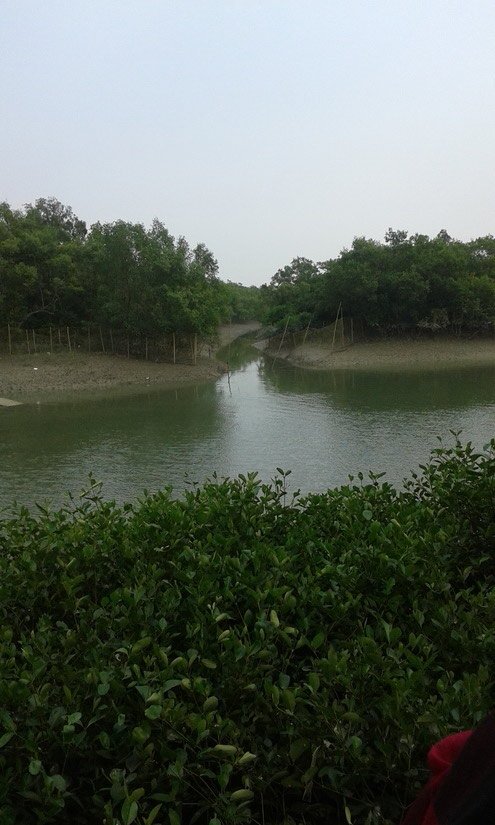
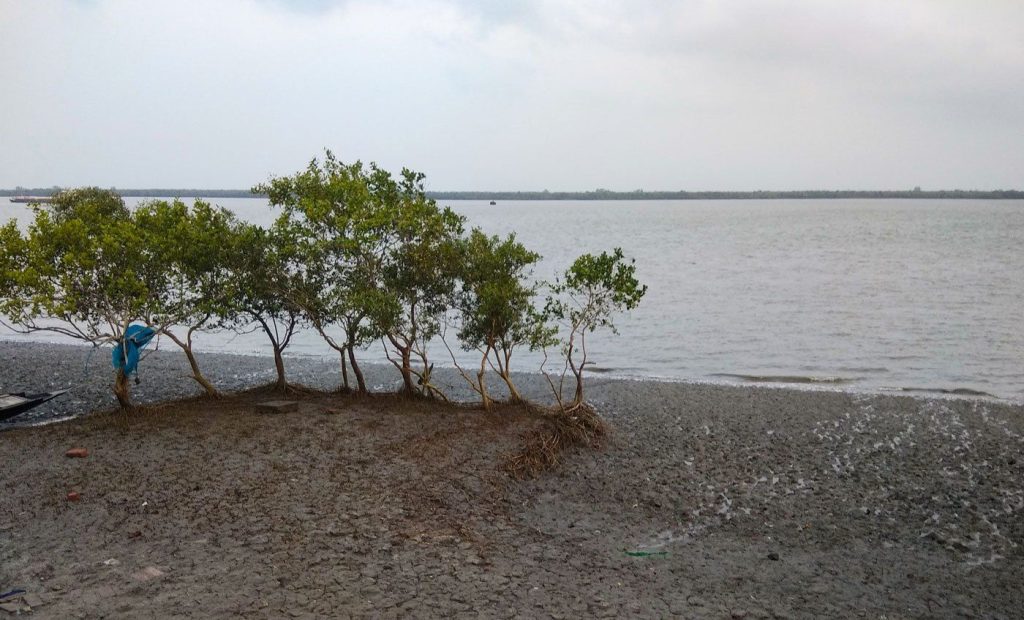
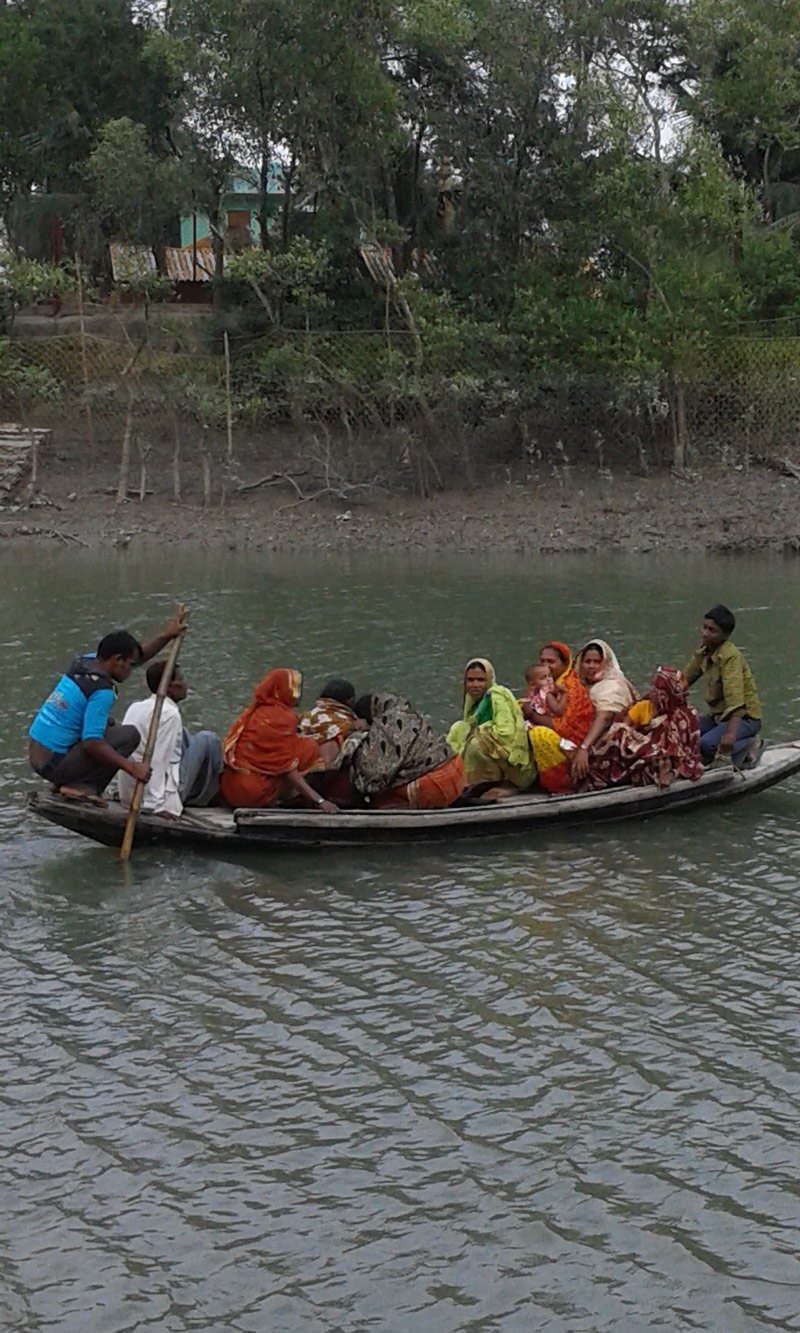
    A tall and lean fisherwoman with a strong face stares at the evening sun fading into the still waters running through Kultali, an island in the Sunderbans forest; Anima Mandal is angry. She hasn’t eaten since
    morning.

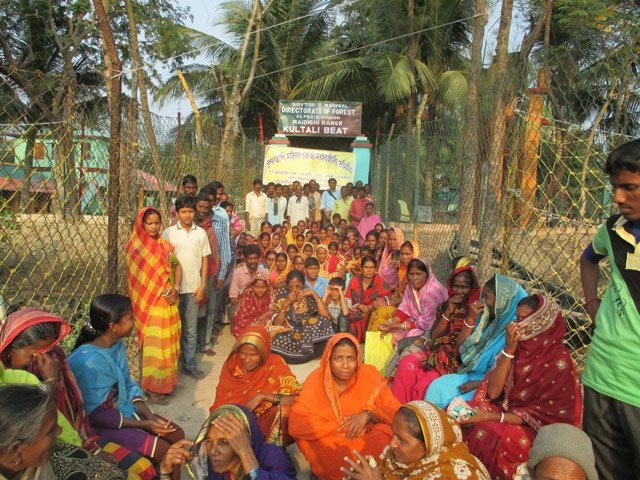
    She was there for a meeting that the Kultali Forest Range beat officer had fixed for 2 pm on February 14, 2015 at the forest range compound in a corner of Kultali, across a river. Nearly 50 women, and a few men, had turned up for this crucial meeting to make two pressing demands – the return of their confiscated fishing canoes (dongas) and for the women to be recognized as traditional small-scale fishworkers, with a right to fish for their livelihood.

    The women, organized under the Kultali Mahila Donga Matsyajibi Samity, had travelled a long way from Madhya Gurguria village – on foot, on cycles fitted with wooden planks and by boat – to make it to their appointment.

    It is already past 5 pm. A number of women begin tracing their steps back towards a dinghy headed homeward: some hurry back to feed and care for the children they’ve left at home and others return home for fear of husbands who could turn violent. Anima and a few others choose to stay back at Kultali and represent the group, determined to get a response from the Forest Department.

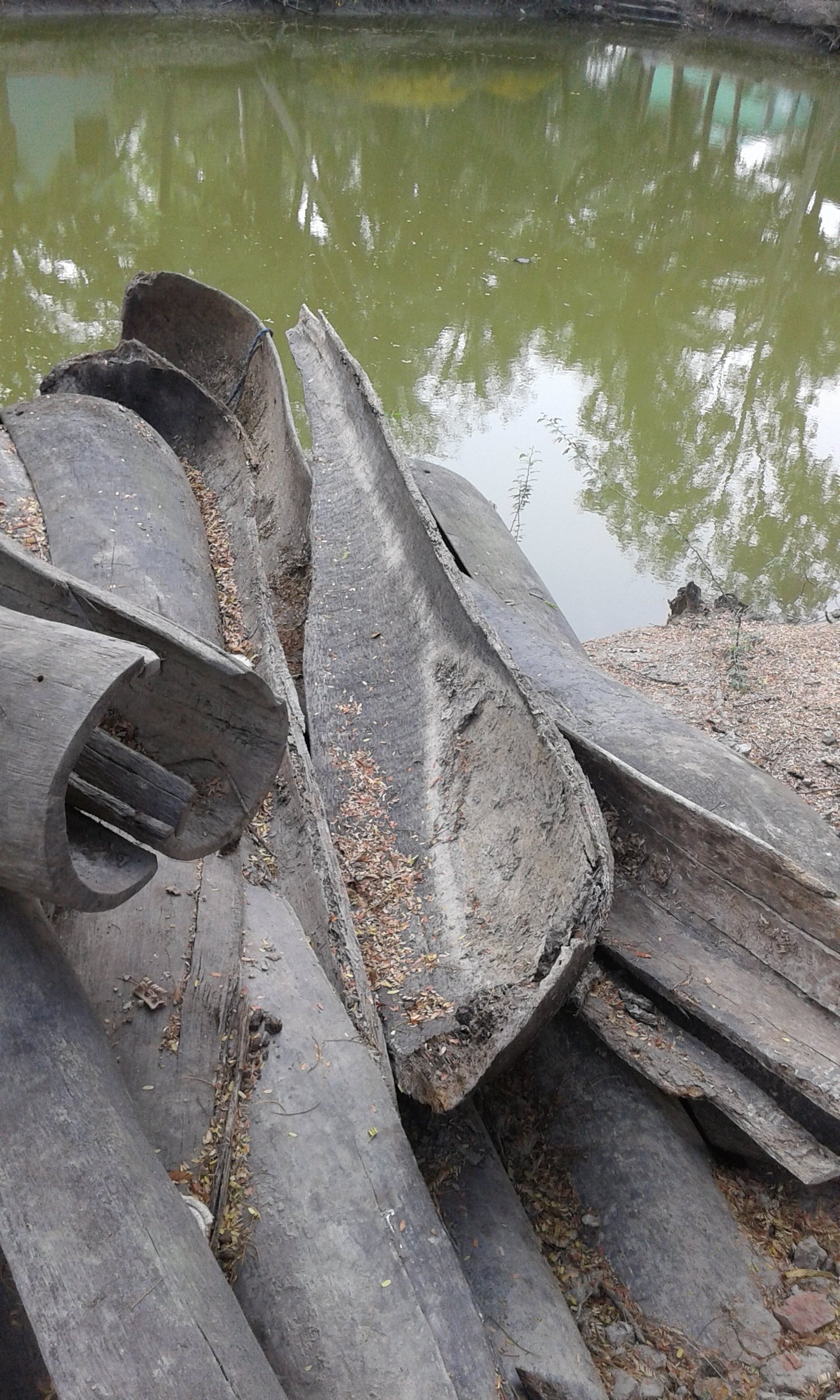
    They walk around the compound, to the edge of a murky green pond, where their confiscated canoes of palm trunk lie stacked. The women are appalled; debris and wood bits from the canoes have started to peel off and mingle with the water. “Our canoes have been broken into pieces and thrown into the water. There must be lakhs of rupees (floating) in this river, ” says Geeta Sahu, a fisherwoman speaking softly. Her indignation, however, is unmistakable, shared by the workers standing beside her, still waiting.

    Sole Means

    The conversation among the waiting crowd turns to input costs: the cost of palm trunks from which the canoes are dug out, the labour cost for chiseling, and the cost for coal-tar coating maintenance, all amounting to about Rs 5,000. Almost every confiscation necessitates this princely expenditure on their part, to build a canoe from scratch. “It can take at least two or three months to gather such a sum. Wooden boats, permitted by the Forest Department, are too expensive to afford,” explains Beena Bag, one of the fisherwomen.

    They walk down some distance and spot a couple of confiscated dinghies, still sturdy, poking out through a mass of trees. The canoes and dinghies are the fishworkers’ only means to catch crab and fish, their sole means to earn a living. By now Anima is fuming: “Why confiscate the canoes and hurt us in the stomach? We don’t earn salaries, you know. This is not Calcutta city, where each month people earn something to be deposited in the bank. Nobody is going to hand me a bag of vegetables to cook. Life is different here.”

    Slice of Life

    Indeed, life is starkly different in the Sunderbans. For Anima, and other fisherwomen like her, the day begins at 3 am. After housework, they take their canoes into the rivers. To make a catch, they wade into cold, chest-level water. Once they have caught the fish, they return home to cook and feed their children. Crab and fish depots are the next stop. The women come here to sell their catch with hope and no guarantees to make a little money. On days there are earnings, they are funneled into immediate household expenses, fishing input costs (if any), and savings for the less fortunate days in the week. Many of the communities here are landless second or third generation fishworkers, entirely dependent on fishing for their survival. And so, what they earn will determine what they buy at the market.

    No Avenues

    Anima was 10 or 12 when she got married. She recently lost her husband to a stroke. “There is no decent hospital here. Even pregnant women need to travel for two hours to Joynagar, where there are hospitals,” she exclaims, frustrated. The number of men in the Sunderbans has declined over time, mainly due to migration for better livelihoods; most move to cities as construction workers or get involved in tiger killings for the profit.

    The women are also bitter about having no stake in the proposed tourism projects in the Sunderbans. “Why won’t they involve us in the tourism projects? It will give us better jobs and a better quality of life. Nobody seems to wants to (positively) engage with us. For instance, the big boats catch fish and crab just like we do, but it is us that the Forest Department goes after.”

    Certified Catch

    If life is not hard enough, the Forest Department’s confiscation of their canoes has ensured that it becomes even harder. The reason cited is that since the canoes do not have a boat license certificate (BLC), granted by the Forest Department, they are therefore not authorised to ply in the Sunderbans; Kultali is part of Sunderbans reserve forest area, preventing the fishworkers from catching crab on their own land, unless they have a BLCs.

    The BLC regime has several problems including a non-transferable nature, the possession of BLCs by those who are no longer fishworkers, a thriving black market, and the non-issuance of fresh licenses. A study on the Sunderbans fishers by the International Collective in Support of Fishworkers (ICSF) outlines these problems in detail. To deter fishworkers, the Forest Department uses methods such as seizing fishing nets; the women complained of receiving threats that glass bits would be mixed into with the riverbank sand, to prevent them from going (as they walk barefoot) to fish.

    “The denial of the community rights of the forest dependent fisherwomen to fish in the forest waters is a violation of the FRA,” says Pradip Chatterjee, President of the Dakshinbanga Matsyajibi Forum. The Forest Rights Act (FRA) is meant to secure the access rights of forest-dwelling people, including sustainable use and conservation of the biodiversity of their home grounds.

    He notes that despite repeated calls, the West Bengal government is yet to notify the FRA in the North and South 24 Parganas Districts: “The failure to notify the Act has resulted in the denial of livelihood rights to forest-dependent people including fishers, wild honey collectors, drywood collectors, and shell collectors (among others), leading to consequent conflicts with the Forest Department.” Implementing the FRA would allow fishworkers to catch crab without BLCs.

    Hope and a victory

    The beat officer enters the scene a little past 6 pm. He speaks with the women of the Mahila Donga Samity
    and members of the Dakshin Matsyajibi Forum. The officer states that the canoes have been confiscated because of their alleged use for poaching. Episodes of poaching involving canoes have been sporadic, the
    women argue, the entire fishing community should not be penalised.

    They promise to act as informers for the Forest Department during instances of poaching, but insist on their right to continue using canoes for fishing. The beat officer agrees not to seize canoes for the next three months, during which time the movements of the canoes will be supervised. He also agrees to take up the issue of the rights of forest-dependent fisher communities with higher authorities.

    When he voices a grouse about the government having to pay compensation when there are deaths caused by fishworkers venturing into tiger territory, he is reminded that fishworkers do not voluntarily venture into tiger territory, but because it is a question of their livelihood.

    By the time discussions conclude, night has already set in. The women are happy to have this victory, even if temporary. They pile into a dinghy that takes them into the dark waters of the Sunderbans. Anima gazes at the still waters and towards home.

    Read the original article: https://ruralindiaonline.org/articles/a-right-to-fish-a-fight-to-live/

  • Wikipedia, Bhanwari Devi and the need for an alert feminist republic

    Photo: kafila.online

    Published in Kafila. 27 June 2014

    Until June 20th 2014, if you visited the Wikipedia entry on Bhanwari Devi — a women’s rights Dalit activist who was raped for taking on child marriage in an upper caste community in her Rajasthan village— you would have been in for a nasty surprise.

    The following lines from the biography section of the article would have stood out starkly:

    “Bhanwari, the young, illiterate potter woman…strutting about the village giving gratuitous, unctuous advice to her social superiors made attempts to persuade the family against carrying out their wedding plans. Standing unveiled in the street outside the house of the brides-to-be she loudly berated the elderly patriarch… flaunted her government appointment…and threatening them that she would stop at nothing to ensure their public disgrace by stopping the planned marriage.”

    The citation for this paragraph was provided as ‘Bhateri Rape Case: Backlash and Protest’ by Kanchan Mathur published in the Economic and Political Weekly (EPW).

    Not a single sentence from that paragraph features in the EPW article; but a preceding paragraph in the Wikipedia entry, which describes Bhanwari Devi’s work as a sathin or grassroots worker with the Women’s Development Project of the Rajasthan Government, is correctly attributed to the EPW piece.

    Another paragraph titled ‘The alleged gang rape’ stated that after the Deputy Superintendent of Police (DSP) who examined Bhanwari for signs of injury “found only two extremely minor bruises” and doubted her story — Bhanwari is alleged to have claimed that she was a minor, “and therefore any intercourse with her, even if she had been a willing participant…was a criminal offense..” It further notes that the DSP sent her to the Primary Health Centre  (PHC) for a test “confirming the age of the victim”. The citation for this is provided as a chapter titled ‘The Politics of Patriarchy and Sathin Bhanwari’s Rape’ by Taisha Abraham from the book Women and the Politics of Violence.

    While the chapter in question notes that the DSP, with whom Bhanwari tried to lodge an FIR, doubted her story – there is no reference to Bhanwari’s claims of being a minor. Instead, it questions how a medical examination confirming the age of the victim – standard procedure for determining child marriage– could be relevant for a woman over 40 years old.

    The entry also has parts highlighting Bhanwari’s trials and triumphs – such as her being forced to deposit her skirt at the police station as evidence; mentioning her national and international recognition and awards, as well as the Vishaka guidelines relating to sexual harassment at the work place, which were a direct outcome of her struggles

    Thus, the Wikipedia piece revealed a distinct pattern – of factually accurate information from sources such as The Indian Express, Tehelka, People’s Union of Civil Liberties, The Hindu and Rediff, interspersed with large chunks of anonymous points of view, often wrongly attributed to these sources.

    The ‘Summary of evidence’ section, which lacks citation,  is described as confirming the claim of Bhateri villagers that Bhanwari was a “village slut”, “a professional prostitute who felt cheated by life and exploited by men”, it being “easiest for her to claim that she was raped.”

    The entry included the claim that Bhanwari refused compensation offered by her rapists because she was “enjoying unprecedented fame and publicity from the media and money from various organizations…” Some of the court observations are mentioned, which state that Bhanwari’s husband couldn’t have passively watched his wife being gang-raped and that since the accused included an uncle-nephew pair, it was implausible that a middle-aged man from an Indian village would participate in a gang rape in the presence of his own nephew. These court observations, sourced from Shivam Vij’s ‘A Mighty Heart’, published by Tehelka, are twisted out of context and distort the intent of the attributed article which is to highlight Bhanwari’s struggles and tenacity. This information is instead used to justify how her upper caste Gurjar rapists won the court case “because of the sheer strength of Truth.”

    Interestingly, the article steered clear of the most crucial and infamous part of the verdict: “Since the offenders were upper-caste men and included a brahmin, the rape could not have taken place because Bhanwari was from a lower caste.” But the interpolating author’s leanings are evident in the sympathetic language used for the accused Gurjar men who are described as being poor; illiterate and knowing nothing about court procedures or media management. “Unlike Bhanwari, they received no help from any social organization, activist, agenda-pusher or busybody.” No citation is provided for this information.

    It was claimed that a speedy verdict was given despite media scrutiny and pressure from women’s groups, and that several judges felt coerced, “and unable to deliver the obvious, adverse judgment.”

    It appears that a standard piece with two citations originally, has been added to by several editors over the course of time. While some have made responsible additions, others have distorted the basic structure of the entry in misogynist and casteist ways.

    Violation of Wikipedia’s content policy

    The problems with the Wikipedia article as I read it before June 20th are several — wrongly citing information is only one of them. Even more troubling is that such insertions are deliberately aimed at discrediting Bhanwari Devi herself.

    Further, the article in the form in which I read it violated  Wikipedia’s ‘biographies of living people’ policy according to which contentious material which is  unsourced or poorly sourced must be immediately removed, especially if potentially libellous. Further such articles must adhere to a neutral point of view, verifiability, and contain no original research – comprising the website’s core content policy. Wikipedia clarifies on its website that it is not a tabloid, but an encyclopaedia, and its job is not to be sensationalist or titillating.  The article violated all these norms; in being poorly sourced, defamatory, lacking neutrality or verifiability, containing new unattributed information; and being both sensationalist and titillating.

    Editing Wikipedia – the perils of democracy on the internet

    The fact that anyone can edit Wikipedia entries is its biggest plus and also a drawback. For instance, changes made by one editor can be repeatedly reversed by others.   How easy is it to edit Wikipedia?

    Says Bishakha Datta, who is on the Wikimedia Foundation Board of Trustees:

    “Wikipedia can be relatively hard to understand because it is a certain model of open knowledge. Most users are not knowledge producers, rather they are knowledge seekers. But they can be both and there can be barriers that people experience such as the technical barrier. There are editing options such as ‘edit source’ and ‘editbeta’ and the latter is easier. But how does one know beforehand? Another barrier relates to policy and rules, wherein you are unsure of the rules and policies that govern editing and writing for Wikipedia.  The time barrier is also a deterrent – properly editing a Wikipedia is time consuming and requires high motivation.”

    Editing or writing a Wikipedia entry is akin to writing a research paper, complete with citations and references,  requiring a lot of work.

    In cases such as the Bhanwari Devi page, one can flag concerns by visiting the ‘Talk’ tab on page. There are also ways of protecting articles, so that they cannot be edited by one and all.

    Need for an alert feminist public

    “Wikipedia is the world’s fifth largest website and managed entirely by unpaid volunteers. There are 80,000 active editors who try to improve Wikipedia’s content which is always a work in progress,” says Bishakha.

    This is not an easy task given that most people have jobs, and work on Wikipedia on an unpaid volunteer basis.  Frequent Wikipedia workshops could be held for familiarisation with editing. More importantly, there is need for an ‘alert feminist public’, both online and offline, which can remain vigilant and combat misogynist tendencies in all kinds of spaces – whether cultural, lingual, political, economic, or academic.

    Finally, we must not forget that Bhanwari Devi who was raped in the line of duty in 1992 — and to whose struggle and courage we owe theSexual Harassment of Women at Workplace (Prevention, Prohibition and Redressal) Act, 2013— has still not received justice 22 years after she was raped.  After a sessions court verdict found the accused not guilty in 1995, the Rajasthan state government filed an appeal against the verdict in the Rajasthan High Court where it continues to languish.

    The Wikipedia page on Bhanwari Devi is currently undergoing extensive edits by concerned editors.

    Read the original article: https://kafila.online/2014/06/27/wikipedia-bhanwari-devi-and-the-need-for-an-alert-feminist-public-urvashi-sarkar/#more-23117

  • The displaced of Muzaffarnagar

    Article published in DNA. 21 January 2014

    Don’t mention the word cancer,” cautions Liaqat Sheikh as he leads the way to a small tent in Joula camp where his wife Bina is bedridden. It is pitch dark inside. There is electricity only at night. Bina lies tucked under blankets, and struggles to sit up, her face gaunt. Though her family has kept the tent clean, the surrounding squalor and dirt of the camp defeat the purpose.

    “The doctors suspect cancer. This can only be confirmed after tests are done in Delhi,” says Liaqat, who belongs to Hasanpur village. Liaqat fled with his family, including six children, during the Muzaffarnagar riots of September 2013 and found refuge at a camp in Joula in Muzaffarnagar.

    Bina requires proper medical care, but Liaqat is unable to proceed with treatment since he has lost his source of livelihood. The family sold their buffalo for her diagnosis which cost them Rs35,000-40,000. Doctors have asked them to shift Bina to a hospitals in Dehradun or Chandigarh, where the cost of treatment is beyond their reach. “My house was burnt down. I have incurred losses worth Rs4-5 lakh. The expenses for my wife’s treatment have so far come from my brothers, loans on interest and imdad (relief),” says Liaqat, his tone a mix of resignation and anger. Compensation is remote since the Uttar Pradesh government has not yet recognised Hasanpur village as riot-affected, though it is part of the Lisadhi gram panchayat, which was recognized as riot-hit.

    Liaqat’s plight is not a stray affair. There is misery all around in the camp. According to Ghulam Mohammed Joula of the Bharatiya Kisan Mazdoor Manch, 90,000 to 1 lakh people were rendered without livelihoods following the riots. “They have lost their homes and jobs and are surviving on aid. People were initially engaged as labourers, drivers and carpenters, but now they have no source of income.” Poverty has induced existing illnesses to fester and encouraged fresh ones to take root.

    Close to Bina’s tent, lives Afsana who suffers from tuberculosis and visits Mehrauli every fortnight to receive treatment. Neither she nor her husband have any source of income. There is also Mohammed Qasim, worried about his nine-year-old son Umar. While rolling up the boy’s sleeves, Qasim draws attention to a bone jutting out, which must be set. “His hand was plastered but it didn’t help.”

    Thirty five-year-old Sanjeeda, mother of four, has been suffering from a staggering range of illnesses, including tuberculosis, jaundice and typhoid. She has lost all but her voice and even then struggles to speak. Her husband earns Rs300 a day, which is spent for her treatment.

    Nasima, who lost her son in the wake of the riots has been experiencing fits, but her husband Raisuddin cannot afford her treatment. Mohammed Salim’s wife Husno suffers from nerve blockage after an operation. Akhleem’s daughter Najma has developed a septic condition after giving birth.

    Government doctors occasionally visit Joula on request. According to Askari Naqvi, a lawyer with  the Joint Citizen’s Initiative, though the state government has been involved in some relief work, when it comes to health care, its track record has been dismal. “There is little in terms of health infrastructure. The health sub-centre at Loi has a bunch of incompetent staff. The camps aren’t prepared to deal with pregnant and lactating women and newborns. It is mostly the NGOs who got doctors to the camp.” Askari has also written to UP Chief Secretary Jawed Usmani with the details of 140 ailing people, but, hasn’t received any response. Askari recalls instances when ambulance drivers had to be begged to carry the sick, and government doctors who visited camps in vehicles, chose to stay inside the vehicles and asked people to come to them instead.

    Muzaffarnagar District Magistrate Kaushal Raj Sharma said the state government funded Bina’s — the woman suspected with cancer — initial tests. “We also paid for another woman’s operation. At Loi, we have opened a permanent health sub-centre where people from Joula visit.

    The Samajwadi Party government is providing relief not only in camps, but also for those scattered in villages.” When asked about the dismantling of the camps, he claimed that no camp had been forcibly shut. “We merely want people to move out of the open to safer closed spaces.”

    According to the UP government, many individuals lodged in camps were not riot-affected but came seeking free land and doles. But talk to the people of villages like Hasanpur, and they recall the horrors of September, which forced them to flee.

    A pregnant Gulshana lost her twin babies in the riots. She is from Karonda Mahajan which lies between Lakh and Phugana villages — the last two were declared as riot-affected but Karonda Mahajan was not. Her father Mohammad Isaq says that though their property is intact, they are scared to return. “My daughter was hit and fell to the ground. We heard screams and gunshots.

    How can we return?”

    The state is yet to grant compensation to villagers from Karonda Mahajan, Hasanpur, Kuraba, Dulhaira, Kheri-Patti, Dhindhavli, Kinoni, Haroli, Bhajju, Bhaura-Kalan and several others who had suffered during the riots. Only nine villages from Muzaffarnagar and Shamli districts have been identified for compensation. In cases where the victim received compensation of Rs5 lakh, a substantial chunk has gone into buying land for building homes. The precious little that remained is being spent on survival. Additionally, they are required to forsake the right to return to their villages.

    A visit to Kandhla, Malakpur and Joula camps reveals that some relief had reached through civil society’s efforts. The victims, at least, had a single layer (though flimsy) of warm clothing. They are grateful for the clothes and food but mention the need for housing. At Malakpur camp, brick structures have emerged, though most people still continue to live in tents. One also sees goats and bullocks. This was not the case in September when, after the riots broke out, these camps witnessed poverty and starvation. Imran Mohammed of Malakpur camp has opened a small provisions store where he sells sweets. A few have started selling vegetables. At Kandhla camp, Nafedi Babu says that he has sent two sons to Haryana to work in the garments business. But men finding work are exceptions. The displaced of Muzaffarnagar are grappling with issues that determine their survival — health, livelihood and homes, even as the SP looks the other way.

    Read the original article: https://www.dnaindia.com/analysis/column-the-displaced-of-muzaffarnagar-1954459

  • Advocates of a secure life deplore my uncertain existence

    Illustrations: Rishabh Arora

    Published in Tehelka Magazine. 22 September 2012

    What happens when a journalist quits her respectable job of two years with a respectable newspaper and a barely respectable salary for higher studies? I originally assumed I would spend a quiet and uneventful two years pursuing Masters in international relations. The family acquiesced with my decision, thus making the initial transition possible. I expected no major troubles, given my decision to finance myself for the duration of study.

    A year into the course, and despite initial family approval, I find myself repeatedly justifying my transition, especially to the older generation (venerable elders), who can’t quite figure out why I want to study.“Kya karoge itna padhke?” a venerable family elder asks me with amusement and cynicism. My suggestion that I am studying because of interest in the subject is sceptically received. The other suggestion that I have returned to the classroom for newer ideas is met with dubious looks.

    The frequent debates about the direction my life is taking are usually summed up by the “what’s next?” question. “Maybe I’ll get a job or I’ll study further,” I answer. The venerable elders favour work. I counter that it isn’t easy to always effect a transition.

    One day, I casually announce plans for an MPhil. Shock and awe is followed by “You don’t want to live in educated poverty forever, do you?” I stay silent. “If you want to become a professor, then it’s not a problem. But they don’t earn very much, do they?” Sixth Pay Commission, I venture, but the elder continues: “You should be comfortable in life and settle down.”

    Nothing wrong with being comfortable, of course. But can’t I do it at my own pace and terms?

    As I harp on my intent to pursue MPhil, the venerable elders yield. Apply abroad, they suggest. ‘Abroad’ is pitched as a vague, rarefied space, a guarantor of rich rewards. “What if I don’t want to study abroad because it makes sense for me to study here?” I demand.

    Knowing the venerable elders, it will take a lot of convincing and impassioned arguments before I’m allowed to have my way. I dare say I have mostly had a largely free hand with regard to career and education choices. But then I turned 25, the age when sirens begin to wail in middleclass households. After bouts of stormy confrontations, I manage to fend off marriage, only temporarily though, till the next proposal generates another noisy bout.

    The prospect of MPhil makes the elders jittery. I am half jokingly told: “By the time you finish your MPhil, you will be an old hag and nobody will marry you.” Strangely, the return to academics is also dubbed as “running away from life!” On the contrary, I find student life tougher than work life. I haven’t broken my ties with journalism yet and continue to write and report. This juggling act can be fairly chaotic; I find myself pitching stories in the midst of examinations. Freelancing is not a reliable option in terms of pay or punctuality of pay.

    Life as a Masters student has been liberating. I have met like-minded women and men, been taught by inspiring teachers and gained critical insights into things that were otherwise accepted unquestioningly. Myths are being busted and new beliefs are being formed. I also get time to travel, courtesy weekend holidays, summer and winter vacations; albeit on shoestring budgets. Academics after work experience also means I can make several meaningful connections between theory and practice.

    Advocates of a “safe and secure” life might deplore my uncertain existence. But I’ve found it liberating to cast away the claustrophobic security net and explore, notwithstanding my critics.

    Read the original article: http://old.tehelka.com/advocates-of-a-secure-life-deplore-my-uncertain-existence/

  • Aligarh college girls make history of sorts

    Photo: Shiv Kumar Pushpakar

    Published in The Hindu. 20 January 2011

    The Aligarh Muslim University Women’s College, established way back in 1906, was forced to come into being 5 km away from the Mohammedan Anglo Oriental College (M.A.O.C.), later renamed AMU, as M.A.O.C. Principal William Archbold felt “female education was injurious to the health of the M.A.O. college”.

    Cut to 2011, students from the undergraduate women’s college took part in the AMU students’ union (AMUSU) elections here on Wednesday for the first time in the history of the university’s student union.

    The excitement in the air was palpable as scores of girls lined up in serpentine queues to cast their vote, eagerly brandishing their voting identification slips and identity cards.

    “Women too must have a say in the election process. It is heartening that girls from our college are contesting the elections for the first time,” said Sanae Rabbi, an arts student, as her friends nodded in agreement.

    Principal Bilquis Nasim Waris said: “Five girls are contesting the elections from the [women’s] college; two each for the posts of AMUSU vice-president and cabinet member, and one for student representative to the court.”

    The elections are taking place after more than four years.

    Voting took place for the posts of union president, vice-president, honorary secretary, 10 cabinet posts and 11 varsity court positions.

    The women’s college, usually out of bounds for men, barring university authorities, faculty and staff, opened its doors partially on Wednesday to admit male Press members with some hesitation. Male students were strictly barred from entering, and for about 15 minutes security personnel shut the entrance gates as some male students tried to enter the premises.

    “We are not allowed to interact with the students. How will they know about us as candidates? We would also like to see if proper voting is taking place inside the college, but we are not being allowed to enter,” complained a male presidential candidate.

    A total of 11 girls are contesting the elections — one each for the posts of president and honorary secretary, two for vice-president, four for cabinet and three for the AMU court. Of the total 18,500 voters, 6,500 are girls.

    However, the girls did not seem very optimistic about their prospects. “The girls are not voting in a united manner,” admitted a girl voter. “Still, we cannot vote blindly for someone just because it happens to be a girl. We will vote for meritorious candidates.”

    Honorary secretary candidate Naheed Mustafa said: “The votes are being split. Girls are not voting for female candidates owing to various reasons. The boys will not vote for us as they are unwilling to accept female post-holders. There will be no point in our having contested elections if we do not win.”

    Read the original article: https://www.thehindu.com/todays-paper/tp-national/Aligarh-college-girls-make-history-of-sorts/article15525245.ece

  • Gender audit gives thumbs down to Delhi University

    Photo: Wikimedia Commons

    Published in The Hindu. 16 September 2010.

    Curriculum and classroom teaching in Delhi University at the post-graduate level does not reflect adequate gender sensitivity, a gender audit conducted by the University’s Women’s Study and Development Centre has revealed.

    As per the post-graduate level gender audit report, though most of the Humanities and Social Sciences disciplines do have gender components in their syllabi, it is inadequate and teacher participation in workshops and seminars on gender issues is “rather low.”

    The data for the audit was gathered from December 2008 to February 2009. The audit was performed to “assess how far the policies and practices of the university are conducive to promoting gender equality”.

    According to the report, women in the university are not satisfied with university facilities. The most common complaint was about inadequate number of toilets for women which were also badly maintained. Demands for more common rooms for women and greater security in the campus were also cited.

    The report recommends introduction of full-fledged degree courses on gender issues, better security for girls on the campus, more and better toilets for women, hostels for girls, compulsory gender courses for students of all disciplines and workshops and seminars on gender issues. The study takes note of Delhi University’s Ordinance XV-D as an “important step”. The construction of two hostels for girls by the University, initiation of the construction of a new girls’ hostel, establishment of a crèche and the beginning of the process of registration of paying guest accommodation for girls also find mention in the report.

    Many of them

    A larger number of female students are enrolled for science, mathematics, commerce, environment biology, humanities and social sciences as per the report which says: “Male students outnumber female students only in law, management and technical courses. It may be that male students prefer joining professional and job-oriented courses after school. The study shows that there are more boys than girls in professional courses.”

    The study finds that male teachers outnumber female teachers at the level of Professors, Associate Professors and Assistant Professors at the post-graduate level. Though the number of female teachers has risen since 2003, in many departments there are no women teachers at the level of Associate Professors and Professors or their number is negligible.

    The report notes that “since the number of women lecturers is rising, it is probable that in the coming years the number of women at senior levels will also rise. Also since more girls than boys are joining Ph.D. programmes, it is likely that more girls than boys will come forward to teach”.The representation of women office staff in the University is also very poor.

    About teaching and research output the report states that “most of the respondents felt that there is no significant difference between male and female teachers. However, some said that men are able to get research fellowships and grants more easily than women.” Female students and teachers also indicated that they were comfortable with male teachers/colleagues.

    Read the original article: https://www.thehindu.com/todays-paper/tp-national/tp-newdelhi/Gender-audit-gives-thumbs-down-to-Delhi-University/article15949737.ece

Urvashi Sarkar – 2026 – All rights reserved.

web things by Studio Goncharov