Tag: westinghouse

  • Why nuclear industry’s comeback hopes rest on very thin ice

    Why nuclear industry’s comeback hopes rest on very thin ice

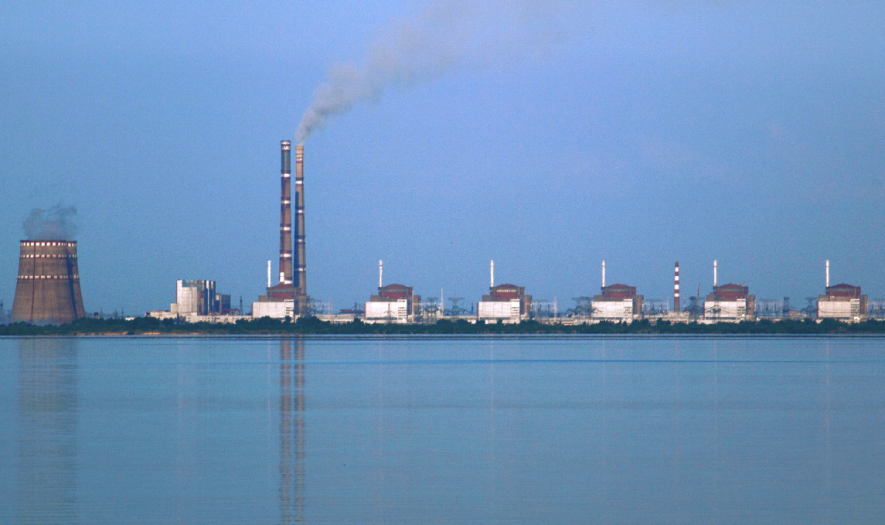
    Representational use only.Image Courtesy: Wikimedia Commons

    Originally published by Newsclick. 12 January 2023

    A little over ten years after an earthquake and tsunami caused the Fukushima nuclear meltdown, Japan has chosen to embrace atomic energy—again. Before the 2011 disaster, nuclear accounted for around 30% of the power generated in Japan. Subsequently, the country’s roughly fifty reactors were shut for maintenance, which meant Japan was deriving no electricity from nuclear energy.

    Currently, nuclear generates 6.4% of power in Japan. But last December, Prime Minister Kishida Fumio declared his intent to raise nuclear’s shares to 20 or 22% by 2030.

    What caused this dramatic shift?

    “Energy security has been a long-standing preoccupation in Japan, where electricity generation is overwhelmingly dependent on imported fossil fuels. Natural gas has become an increasingly important part of the mix, as the country sought to shut down polluting coal-fired plants and mothballed much of its nuclear power industry after the 2011 meltdown at the Fukushima Daiichi station,” the NYT reported last April.

    Japan, one of the largest importers of liquefied natural gas (LNG), relies extensively on Russia for supplies. With the war in Ukraine—one of the biggest LNG suppliers—upsetting global energy calculations, Japan was not left unscathed. Energy sanctions on Russia following its invasion of Ukraine have strained supplies and sent costs spiralling. As energy supplies were hit worldwide, the International Energy Agency described the situation as a “truly global energy crisis”.

    The war in Ukraine is, of course, not the lone factor. The climate change crisis has long required countries to clean up their act. With fossil fuels frowned upon, alternative renewable energy sources such as solar, wind, hydro and biomass are increasingly relied on. Nuclear energy, too, is being explored because of the perception it is clean and climate-friendly, primarily because of its supposed supposedly low carbon footprint.

    However, the fortunes of the nuclear industry plummeted after the 2011 Fukushima disaster as public faith in the safety of nuclear energy diminished. Countries began shuttering nuclear reactors and abandoned plans for new nuclear power plants. Prominent names like United States-based Westinghouse, France’s Areva and Germany’s Siemens entered choppy waters, and the nuclear industry took a significant beating.

    Westinghouse, Areva and Siemens

    In 2017, Westinghouse Electric Company, a subsidiary of Japan’s Toshiba, filed for bankruptcy in the United States. Massive cost escalations and time overruns at its Georgia and South Carolina projects put it on this path. Toshiba and Westinghouse had overestimated demand for nuclear power plants, and a string of confounding technical difficulties at their AP-1000 reactors exacerbated their time and cost overruns. Westinghouse is supposed to supply India with six AP-1000 nuclear reactors under the 2008 India-United States Civil Nuclear Agreement. It should set anyone thinking why India is keen on reactors which flunked in the United States.

    Not just Westinghouse, Areva’s financial debacle also added to the woes of nuclear power. In 2014, Areva posted a net loss of €4.8 billion after several preceding years of losses and technical, regulatory and legal problems. But the French government allowed Areva’s bailout in which it owned 90% of shares. The bailout occurred through French electricity utility EDF taking a majority stake in the company for €2.5 billion, and French taxpayers bore this cost. The French government owns about 84% of EDF. Nuclear energy has long been a symbol of French national pride though questions about sustainability and economics refuse to go away. Areva is a source of many jobs, which prompted France not to let the company sink.

    France relies on nuclear power for a significant chunk of its electricity. However, that is on the decline. Nuclear energy was 69% of total electricity consumption in 2021, down from 76.4% in 2000.

    All is not well with EDF, now France’s most prominent nuclear electric major. It is in debt for approximately $45 billion and has had recurring problems at its power plants, including outages. India is in talks with EDF to supply European Pressurised Reactors (EPRs), which have a very public troubling worldwide record of massive cost overruns and delays.

    Germany’s Siemens, a prominent nuclear power name, also withdrew from the nuclear industry as the country decided to close its nuclear power plants after Fukushima.

    When war struck Ukraine, the nuclear industry was staggering, its fortunes sinking. With heavy sanctions on Russian oil and gas exports, one outcome was an uptick in the preference for nuclear power. Some countries have started extending the life of existing reactors and planning new ones. This is despite well-known and mounting concerns that nuclear energy is neither clean nor environment-friendly because of long-term nuclear waste, nor even entirely safe—as Fukushima, Chernobyl, and the Three Mile Island disasters have proved.

    Nuclear energy advocates hope it will play a larger role in addressing power needs. But their hope is overstated. One glance at the numbers shows the underwhelming share of nuclear energy in global electricity production. According to the BP Statistical Review, non-hydro renewables– solar, wind and biomass; gas, and coal accounted for the most significant shares of electricity production in 2021, with nuclear and oil bringing up the bottom. Similarly, the World Nuclear Industry Status Report (WNISR) observed that the share of nuclear energy in gross global commercial electricity generation in 2021 was 9.8%—“the lowest value in four decades”.

    Against this backdrop, Japan hopes nuclear power will account for 20-22% of the electricity supply in 2030. In 2020, the figure was less than 5%. Japan’s decision to reinstate nuclear energy is not likely to get a groundswell of support since people have not forgotten the Fukushima disaster, and its aftermath continues to unfold. In the public memory, doubts persist regarding the efficacy of contingency and evacuation plans to address potential accidents. People anticipate colossal traffic jams, a lack of escape routes, and getting stuck for days without access to food, water or toilets in case of a mishap.

    Weak economic rationale

    It is not just continued public concern about the safety of nuclear power. The economics just does not cut it. Take the cost of under-development reactors, whose timelines and budgets are spiralling upward. For example, the Flamanville-3, a 1650 MWe reactor being built in France, was initially contracted to Areva and is now taken over by the electric utility EDF. Originally scheduled to start in 2012, the reactor is plagued with delays and snowballing costs. Its total cost is pegged at 13.2 billion Euros, more than four times the original estimate, and is likely to start in 2024.

    The Kakrapar project, where the 700 MWe, Unit 3 has been commissioned, is expected to cost Rs 19,220 crore, up from Rs 11,460 crore. Two upcoming reactors at Rawatbhata, Rajasthan, are expected to cost Rs 17,080 crore, not the earlier Rs 12,320 crore.

    The high capital and operating costs of nuclear power make it less attractive compared with renewable sources of energy, which are far more economical. In India, wind and solar each contributed more than 150% of nuclear to national power generation in India in 2021.

    In India, the price of solar energy is between Rs 2.2 and 2.5 per unit and prices are expected to dip. For solar power, though, storage costs and the rising prices of solar photovoltaic (PV) cells must be considered. A Global Wind Energy Council study has projected the levellised cost of energy (LCOE) or the net present generation cost for a generator over its lifetime at Rs 2.8-3.3/Kwh for 2022. The difference is stark compared with nuclear power tariffs. For example, NPCIL projects a tariff of 5.31/kWh for its upcoming Kakrapar units 3 and 4.

    The following numbers from WNISR 2022 shed more light on international developments:

    Unsubsidised average electricity generating costs declined between 2009 and 2021 in the case of solar PV from US $359 to US $36 per MWh, a 90% fall. For wind energy, the costs dipped 72% from US $135 to US $38 per MWh. For nuclear power, costs rose from US $123 to US $167 per MWh—a 36% jump.

    Nuclear Waste Management

    And then, the elephant in the room—long-term nuclear waste—which often (conveniently) escapes acknowledgement.

    “Despite decades of effort, the nuclear industry does not yet have a working solution for managing spent fuel and high-level waste, the most radioactive products generated by nuclear power plants,” writes physicist MV Ramana. The supposed answer is a long-term geological repository which will seal off nuclear waste for thousands of years. But there are significant uncertainties about the “long-term performance of repositories and behaviour of nuclear wastes” stored in such facilities and widespread public opposition at the prospect of nuclear waste repositories coming up near them. Therefore, Ramana writes, most countries have not yet been able to choose sites for nuclear repositories.

    Nuclear waste, most of which is spent fuel, comprises many elements that emit radiation over different periods. Over time, radioactive materials are no longer radioactive, but some have relatively short half-lives, which means they could decay in seconds to weeks. This is the most dangerous aspect of spent nuclear fuel. Once its radioactivity lapses, some can be reprocessed for fresh reactor fuel or find other uses in medicine, radiation therapy and power production. Most of the material in spent nuclear fuel is the relatively stable Uranium-238, which exists in nature. But it can take hundreds of years for spent fuel to reach this level of radioactivity. And even after decaying to relatively safe radioactivity levels, the material can carry a complex chemical profile, making it difficult and expensive to store or deal with permanently.

    Further, as reactors approach the end of their original lifecycles, they need to be decommissioned or permanently shut. This process, which requires a complete radioactivity clean-up and progressive dismantling, can run into decades and its costs mount to billions of dollars.

    So the actual costs of nuclear power are not that of power production alone but also the effect on future generations, a timespan that engineering projects do not typically consider. As it is difficult to estimate the accurate cost of nuclear waste management, studies can minimise and underestimate those costs.

    In a deep dive for The Guardian, journalist Samanth Subramanian writes about the timescales and costs of decommissioning the Sellafield nuclear power plant—the United Kingdom’s first atomic reactor, which started operations in 1950, manufacturing plutonium for nuclear weapons. Later, it generated electricity until 2003 and was also used to reprocess fuel or extract uranium and plutonium for used fuel rods. All of that has come to an end.

    “From an operational nuclear facility, Sellafield turned into a full-time storage depot—but an uncanny, precarious one, filled with toxic nuclear waste that has to be kept contained at any cost,” Subramanian writes. The challenge of dealing with nuclear waste includes waiting thousands of years as radioactivity tapers off, especially in high-level waste. The spent fuel rods, radioactive metals and liquids cannot simply lie around all this time. It must be stored in sealed buildings and artificial ponds, which are not permanent. Ultimately, the waste must be safely hauled to an “ultimate strongroom”, a geological disposal facility or repository carved from boring hundreds of metres into rock. Timelines estimate the process will take approximately 120 years (until 2120) and cost £121 billion.

    Sellafield presents the classic conundrum of the nuclear energy industry where countries embraced nuclear energy rapidly but are wrestling with nuclear waste, a by-product of that process.

    As it weans itself off nuclear power, Germany still does not have a nuclear waste repository, which is unlikely to go smoothly. It has announced 90 possible locations for the nuclear repository, but strong opposition is expected in each place. Previous attempts did prove utterly divisive.

    India’s nuclear waste

    India has 22 nuclear power plants and a slew of proposed reactors. Villagers near the Kudankulam Nuclear Power Plant, built with Russian cooperation, have been protesting the storage of spent nuclear fuel from KNPP 1 and 2 at the plant premises. The political leadership of Tamil Nadu has demanded the spent fuel be transported to Russia. The government has demurred that the spent fuel is a “valuable recyclable fuel” that can be reprocessed to produce more fuel for next-stage reactors.

    In December 2021, the government told the Lok Sabha that since a “very small quantity” of high-level waste is generated, there is no need for a deep underground geological disposal facility in the near future. SP Udayakumar of the People’s Movement Against Nuclear Energy warned in an editorial that the government cannot be haphazard or vague in nuclear waste management.

    “If the Union and state governments, scientists and technocrats, have not managed to clean up the dangerous Bhopal waste that has been lying there for the past 38 years, how are they going to convince us about nuclear waste management? Nuclear waste management has to be planned from the beginning and not as we go along,” Udayakumar wrote.

    There are tensions at KNPP over an Away from Reactor (AFR) store for spent nuclear fuel until a final repository is constructed. The uneasiness is because there seem to be no definite timelines for the final repository, without which the AFR may become permanent spent fuel storage. There are fears that other states may treat the Kudankulam AFR as a dumping ground for nuclear waste from their reactors.

    Spent nuclear fuel, a part of which forms nuclear waste, can be highly radioactive. What happens to it, where, how it is stored, for how long, and the safety of storage arrangements are crucial public health questions the nuclear establishment must answer.

    Kudankulam is not the only reactor generating spent nuclear fuel. At least 20 others in India generate spent fuel—what happens to that is a question.

    It is unclear what lessons India learned from the Fukushima disaster. India’s nuclear regulatory authority, the Atomic Energy Regulatory Board (AERB), remains weak despite warnings from the Comptroller and Auditor General and the IAEA. Even the Nuclear Safety Regulatory Authority Bill 2011 has been effectively shelved.

    Remarkably, countries have steered away from nuclear power after Fukushima, but Indian governments have pushed ahead. The adverse effects on energy supplies and prices of war in Ukraine made governments in Japan and Germany walk the nuclear power path again, but the economics and waste management problem of nuclear energy pose enormous hurdles for the sector.

    A Massachusetts Institute of Technology study sums it up succinctly: “The prospects for the expansion of nuclear energy remain decidedly dim in many parts of the world. The fundamental problem is cost. Other generation technologies have become cheaper in recent decades, while new nuclear plants have only become costlier.” The costs make it a less attractive option as far as decarbonising is concerned.

    Besides, the risk of geopolitical disasters at nuclear power plants can no longer be ignored, as when Ukraine’s Zaporizhzhia nuclear power plant was caught in the cross-hairs of the war in 2022. Hopes for a renewed nuclear industry stand on thin ice. Grand claims about its resurgence must be viewed with caution and scepticism.

    Read the original article: https://www.newsclick.in/Why-Nuclear-Industry-Comeback-Hopes-Rest-Very-Thin-Ice
  • French nuclear power reactors in India: Are they worth the wait (and cost)?

    French nuclear power reactors in India: Are they worth the wait (and cost)?

    Why is the Indian government insistent on purchasing French EPRs which have a record of being over budget and massively delayed?

    Published by Bulletin of the Atomic Scientists. 2 September 2022

    The world was still deep in the clutches of the global COVID-19 pandemic in April 2021 when Vakisasai Ramany, a senior vice-president of Electricité de France (EDF), a major French electric utility company, traveled to India. The purpose of this unusually timed business trip? The delivery of a technical and commercial offer for nuclear reactors—in person.

    During his visit, Ramany met with officials of the Indian Department of Atomic Energy (DAE) and the Nuclear Power Corporation of India Limited (NPCIL), the state-owned company that operates most of India’s nuclear power plants. The French executive submitted a long-delayed techno-commercial offer to supply engineering studies and equipment for the construction of six European Pressurised Reactors (EPRs) at the Jaitapur site in Maharashtra, India. The project, touted as “the most powerful in the world,” consists of a nuclear power plant with a total installed capacity of 9.6 gigawatts electric. That’s the offer on paper, anyway. But, EPRs so far have had a significantly troubling record of cost and time overruns. The proposed Jaitapur mega-project has faced strong protests from local residents and environmental activists. With the cost of these reactors likely to be in the tens of billions of dollars, stakes are high for the French nuclear company to conclude its deal in India.

    The history of the French connection. In 2008, India and France signed a bilateral agreement for civilian nuclear cooperation on developing nuclear energy. The agreement was one result of an agreement with the United States that allowed India to conduct nuclear trade with other countries—which it could not do since the country conducted nuclear weapons tests in 1974 and 1998 and was placed under US sanctions.

    India’s first nuclear test in 1974 provided the impetus for the creation of what was to become the Nuclear Suppliers Group, a trade consortium set up by countries involved in exporting nuclear energy technologies. The group set up the requirement that nuclear technology and materials should be exported only to countries that had signed the Nuclear Non-Proliferation Treaty (NPT), which entered into force in 1970. By 1974, however, India was not a signatory of the NPT—and still is not. As such, it was not allowed to purchase reactors or uranium. Following an agreement in 2008 between India’s Prime Minister Manmohan Singh and US President George W. Bush, the US government used its political power to force many reluctant members of the Nuclear Suppliers Group to execute a special waiver for India. Many countries, especially France and Russia, supported the waiver, sensing the business opportunities from India’s rapidly expanding energy market.

    Following the India-France bilateral agreement, India’s NPCIL and the French nuclear-maker Areva signed an agreement in 2009 for the supply of two to six EPRs. But soon after Areva became in major financial trouble and was taken over by EDF in 2016.

    EPRs are a type of pressurized water reactor built through French and German collaboration. The reactors are touted to have better safety features than earlier designs, including a double barrier to ensure the containment of radioactive materials in case of accidents. They are also supposed to resist extreme hazards like earthquakes, flooding, and extreme temperatures.

    With its submission of a new techno-commercial offer to India, EDF’s Ramany says the company is moving toward “the concretization of the largest nuclear power plant in the world [with the] fully proven EPR technology.”

    Despite EDF’s hope that the reactors would shortly become operational, negotiations with NPCIL have stalled over the last decade for several reasons, including cost, increasing doubts over their performance, disagreement over liability in the case of a reactor accident, and local protests.

    And that’s not to mention the problems EPR projects—both under construction and in operation—have encountered in different parts of the world.

    Delayed and over budget. The earliest EPR project (Olkiluoto-3) began in Finland in 2003 and was connected to the grid in March 2022—a full 13 years behind schedule. It has yet to begin operations. Two EPRs are under construction in the United Kingdom (Hinkley Point C-1 and C-2), and one in France (Flamanville-3) is also under construction. The proposed two-unit EPR plant at Hinkley Point, originally scheduled to start operations in 2025, has already been delayed to June 2027 and will cost £3 billion ($3.6 billion) more than initially proposed, taking the budget to an estimated cost of £25 billion ($29.6 billion). For its part, the Flamanville-3 reactor is over a decade behind schedule, and its budget has ballooned from €3.3 billion to €12.7 billion.

    The world’s first two EPRs—Taishan-1 and Taishan-2—became operational in China in 2018 and 2019, respectively. However, unit 1 had to be shut down in July 2021 because of damaged fuel rods, in what an EDF spokesperson told CNN at the time was a “serious situation.”

    A good fit for India? Physicists Suvrat Raju and MV Ramana have questioned the safety and economics of the EPR reactors proposed for the Jaitapur site. In 2013, they calculated that electricity from the proposed reactors at Jaitapur would cost 15 Indian rupees (18 US cents) per kilowatt-hour, based on the construction costs of EPRs in Finland and France. Since then the costs of EPR construction have escalated while the cost of alternatives, especially solar energy, has declined sharply.

    In an interview for this article, Ramana said: “The costs of the EPRs being built in Western Europe have gone up, while costs of renewable sources of energy, especially solar photovoltaics, have declined. In 2020, one solar project developer offered to sell electricity at the especially low rate of Rs. 2 [Indian rupees] per kWh, and it is routine to find projects proposed for around Rs. 2.50 per kWh.”

    Importantly, however, the total amount that the Indian government will spend on this project has still not been made public. In 2019, EDF said the cost is “confidential and may not be disclosed.” It also refused to release the cost per unit of electricity.

    EPRs’ problems are not restricted to massive cost overruns and significant delays. “In addition to the high costs, safety problems with the reactor design and construction have emerged in several EPRs,” Raju and Ramana wrote in 2019. Serious problems occurred during the manufacture of the reactor pressure vessel of the EPR at Flamanville in France, with parts of the vessel found to have too much carbon. (A too-high carbon concentration in the steel of the reactor vessel can lead to lower than expected mechanical properties, which can thereby compromise its safety. The reactor vessel acts as a key barrier against radioactive materials escaping from the core.)

    Moreover, the proposed site for the six EPRs in Jaitapur—a seismically active and fertile agricultural and fishing region—has left some 40,000 people in five villages concerned for their safety and impact on their livelihoods. Even though the villagers evicted from their land received monetary compensation, they regret losing access to their agricultural and fishing resources.

    Why is India so interested in buying French reactors? Despite the questions about the performance of EPRs, successive Indian governments have expressed their commitment to the deal. But why is India pressing ahead? Raju and Ramana point to the unusually candid explanation offered by Anil Kakodkar, a former secretary at the India Department of Atomic Energy, who said: “We also have to keep in mind the commercial interests of foreign countries … America, Russia, and France were the countries we made mediators in these efforts to lift sanctions, and hence, for the nurturing of their business interests, we made deals with them for nuclear projects.”

    Kakodkar was referring to the India-US nuclear deal of 2008. Three countries were supposed to particularly benefit from that deal: the United States, France, and Russia. The three countries signed agreements with India for the supply of foreign reactors. To date, Russia is the only foreign country to have operational reactors in India, which started even before the 2008 nuclear deal between India and the United States. US reactors, however, were not sold to India because of Westinghouse’s financial troubles. For its part, France was specifically allotted the Jaitapur site for building EPRs.

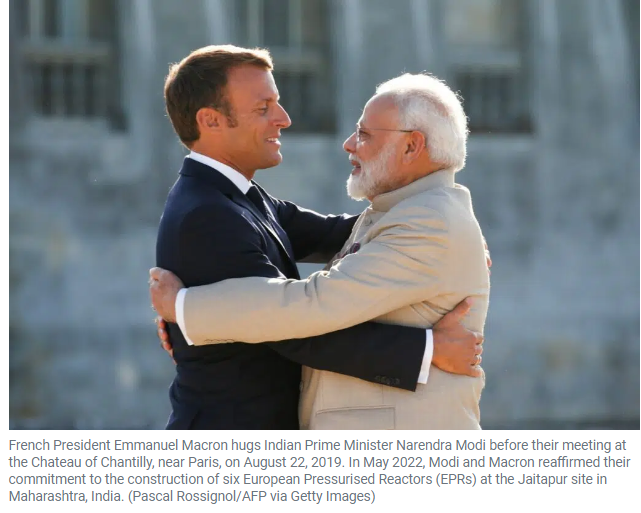
    According to a 2009 diplomatic cable made public by Wikileaks, a representative from NPCIL admitted India was paying a “high price” for the French reactors. Indeed, Indian diplomatic sources have reportedly expressed discontent about the high cost of the French EPRs compared to US and Russian reactors. Yet, when Indian and French political leaders meet, they almost always reiterated their joint commitment to the EPR deal as when, in May 2022, Indian Prime Minister Narendra Modi and French President Emmanuel Macron in France reaffirmed their commitment to “the success of the strategic Jaitapur EPR project.”

    A clear subtext of these statements is the high stakes in the Jaitapur project for the French nuclear industry, especially EDF in which the French government has 84 percent ownership. EDF faces several problems in addition to its EPR woes: It is in debt for approximately $45 billion, and faces outages at some older plants and also declining power output from some plants, a result of hot temperatures and lack of rain that result in insufficient river water to cool nuclear reactors. Some of EDF’s reactors are also offline for planned maintenance and repairs. This makes it all the more crucial for France to want to seal the deal with India.

    “If confirmed, it would be one of the biggest-ever export deals for the French energy giant,” Reuters reported in May.

    After submitting the techno-commercial offer to the NPCIL, EDF promised the project would produce local jobs in India, not forgetting to mention the benefits at home: “The project would also generate significant economic benefits for the French nuclear industry over the entire duration of the project (approximately 15 years), with tens of thousands of jobs in the hundred or so involved French companies.”

    As France stands to benefit greatly if the deal comes to fruition, it is no surprise an EDF vice-president traveled to India in the thick of a pandemic to submit an in-person binding techno-commercial offer. But if the purchase of six EPR reactors would be an obvious win for the French nuclear industry, it is less clear what benefits the people of India would obtain.

    Read the original article: https://thebulletin.org/2022/09/french-nuclear-power-reactors-in-india-are-they-worth-the-wait-and-cost/#post-heading

  • India has long suppressed antinuclear activism. Still, activists persist

    India has long suppressed antinuclear activism. Still, activists persist

    Published in Bulletin of the Atomic Scientists. 17 December 2021

    In Southeast India, in the dense interior of the Nallamala Hills, deciduous trees, shrubs, and brambles sprawl over the undulating land of the Amrabad Tiger sanctuary. Here, 14 tigers  prowl the jungle with boars, sloth bears, and panthers as company. Insects buzz, waterfalls gush, and wild animals grunt, but the heavy machines once scheduled to drill 4,000 boreholes into the earth in search of uranium are absent and silent—at least for now.

    In 2019, the Indian government approved prospecting for uranium mining in the tiger sanctuary as it considered the resource “a critical and immediately needed commodity to generate nuclear power.” Meanwhile, a site inspection report noted the environmental impact of the mining project would include “erosion, formation of sinkholes, loss of biodiversity, and contamination of soil, groundwater, and surface water by chemicals.” Also, the project would have displaced the Chenchu hunter gatherer community. Human rights activists, tribal communities, environmental groups, scientists, and film celebrities mounted strong resistance, prompting the government to withdraw the proposal in September 2021. Still, many worry that the success will be fleeting as the government still plans to build new nuclear reactors.

    “The opposition was so widespread that even political parties were forced to side with the protesters,” K. Babu Rao, a former senior scientist with the Indian Institute of Chemical Technology, said. Given the Indian government’s long history of antinuclear suppression, many citizens remain concerned about the uranium-mining plan—and other nuclear developments the government is pressing.

    Kudankulam: India’s longest antinuclear struggle. Two years after the 1986 Chernobyl nuclear disaster, India and the erstwhile Soviet Union entered into an agreement to build a nuclear power plant in Southern India, at Kudankulam in Tamil Nadu’s Tirunelveli district. Ever since, thousands of farmers, fish workers, environmental groups, students, and concerned citizens have periodically protested the reactors. In one mass rally in 1989, more than 10,000 people demonstrated against the project.

    Protesters opposed and still oppose the Kudankulam reactors for many reasons, including concerns about the release of radioactive contaminants into the environment, threats to marine life and human health, loss of fishing livelihoods, and fears that the reactors may serve as a conduit for building nuclear weapons. Also, the reactors are located in an earthquake zone. Finally, the devastating 2004 Indian ocean earthquake and tsunami affected parts of Tamil Nadu state, and the memory lives on in the area.

    Work on the first two Kudankulam reactors gained momentum between 2001 and 2002. Later, when the Fukushima nuclear reactor melted down in 2011, simmering Indian antinuclear opposition spiraled into full-blown opposition. Residents in the vicinity of the project and concerned citizens did not want a nuclear power plant. The Indian nuclear establishment, including the Department of Atomic Energy and the Nuclear Power Corporation of India Limited, responded with indifference, which added to discontent.

    When protests broke out, the police and paramilitary forces fired shots and tear gas. They also lathi charged into the protesters and beat them with sticks. At least two people were killed in 2012 and several others were injured. Kudankulam protesters have also faced false legal cases. A 2012 report commissioned by a coalition of anti-nuclear groups and individuals on suppression of democratic rights in Kudankulam found numerous instances of arbitrary implementation of tough laws:

    RELATED:Iran nuclear deal negotiators must act with urgency, given Iranian and Israeli nuclear brinkmanship

    By filing cases of sedition, waging war against the Government of India, and promoting disaffection between groups of persons, people are being unnecessarily harassed by the misuse of criminal law, and their constitutional rights are being violated… Persons who are protesting cannot be branded as anti-national and unpatriotic, and peaceful protests cannot be equated to sedition or waging war against the state.

    India’s sedition law dates back to 1870, when the British ruled. It was used against freedom fighters, including Mahatma Gandhi, in the struggle for Indian independence. Despite urgent calls to repeal the law, it is still used today to harass dissenting individuals. Nearly 9,000 people have been charged with sedition for protesting against the Kudankulam nuclear power plant. Some cases persist today, even though the Supreme Court ordered the dismissal of all criminal cases against the protesters.

    “The Kudankulam protests were unprecedented, both in terms of the scale of the movement and its repression. It brought to center-stage the question of inter-generational justice and the planet that future generations will inherit,” Sonali Huria, a 2020 research fellow with the Takagi Fund for Citizen Science, said. Farmers, fishermen, scientists, lawyers, NGO workers, professors, and religious preachers banded together in their opposition to the reactors. In 2011, the People’s Movement Against Nuclear Energy formed as part of the opposition to the Kudankulam reactors.

    “The threat of displacement, radiation, and the safety question brought these otherwise different groups together,” Patibandla Srikant, a researcher, wrote.

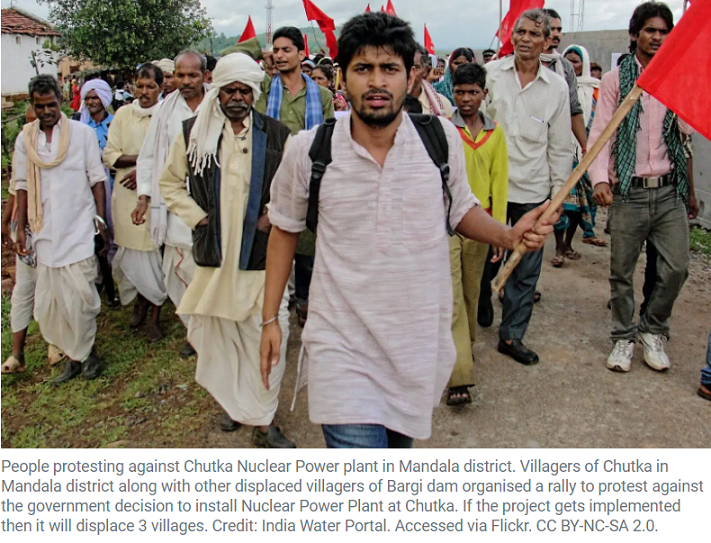
    Indian citizens mounted robust resistance against west coast reactors. Another antinuclear resistance movement emerged in 2006 near Jaitapur in the state of Maharashtra, on India’s West Coast south of Mumbai. Protesters organized against the proposed construction of six European pressurized reactors to be imported from France. The location was again in a seismically active, fertile, agricultural, and fishing region, which left some 40,000 people in five villages concerned for their livelihoods.

    Residents labeled the 2010 public hearing on the project a farce. The flawed environmental impact assessment report marked cropland and orchards as wasteland. Angry residents and their supporters demonstrated in large numbers. In at least one demonstration, the police opened fire, killing a local resident. Agitators, many of whom were poor farmers and fisherfolk, were arrested for arbitrary reasons. The police issued notices that barred activists from entering the district of the proposed reactors.

    Activists also challenged the Jaitapur plant on persistent safety and cost concerns about European pressurized reactors. Activists Vivek Monteiro and Mangesh Chavan filed public interest litigation in 2013, challenging the project on technical and environmental grounds. The petition has yet to be heard.

    Activists also filed petitions in the courts and with the National Green Tribunal—a governmental body responsible for dealing with and expediting environmental protection and forest conservation cases.

    RELATED:Wildfires break out in Chernobyl amid a non-functioning radiation-monitoring system

    For now, the protests at Jaitapur are dormant. The French company Areva, which had agreed to supply the nuclear reactors at Jaitapur, went bankrupt. The original five-year environmental clearance for the project has lapsed.

    Yet earlier this year, the French firm Electricite de France, which took over the bankrupt Areva, submitted an offer to India’s Nuclear Power Corporation for supplying engineering studies and equipment to construct six European pressurized reactors. The nuclear industry is hopeful that they will build—and earn billions of euros from—the reactors at Jaitapur.

    Monteiro is certain that if construction activities begin, protests will revive. But dissent has become dangerous in India. In recent years, the government has charged citizens with sedition and other laws.

    “The present Bharatiya Janata Party government is going after anyone who criticizes its policies,” SP Udayakumar, coordinator of the People’s Movement Against Nuclear Energy, said. Udayakumar, who was charged with sedition during the Kudankulam protests—a charge that persists—added, “but people continue to fight nuclear expansion in different parts of the country.”

    Udayakumar’s 2012 sedition charge took place when the Indian National Congress party was in power.  This party initiated many of the country’s nuclear energy programs, including the Kudankulam nuclear power plant. The Bharatiya Janata Party, which came to power in 2014 under Narendra Modi, has greatly expanded India’s nuclear energy ambitions—and the number of sedition cases has also significantly risen since then too.

    Government response to past antinuclear resistance may foretell the future. In 2017, the Indian government canceled a proposal from the American corporation Westinghouse to build AP1000 reactors in Mithivirdi village of the western state of Gujarat. But there was a catch. The project, which had been located in Prime Minister Narendra Modi’s home state of Gujarat, where there was public opposition, was shifted to Kovvada in the state of Andhra Pradesh. This state had become “a dumping ground for polluting industries and unsafe technologies,” according to former senior government bureaucrat EAS Sarma.

    The Modi government has since announced that it would build 21 new reactors by 2031—heedless of opposition, economics, and risks to health and safety.

    This is a “story of [a] sustained peoples’ movement,” journalist Damayantee Dhar wrote, adding that Indian antinuclear protesters have “braved psychological pressure, administrative intimidation, and various other tactics and continued to protest for their land.” The “tactics” have included offers of social responsibility projects and jobs sponsored by the Nuclear Power Corporation of India.

    “Even in Nalamalla hills where the government withdrew its proposal for uranium mining, residents cannot drop their vigilance,” Rao said. Since the 1980s, strong antinuclear movements have emerged whenever and wherever the Indian government proposes nuclear power plants and uranium mining.

    “The people … have increasingly questioned the need for nuclear power. They haven’t budged,” Krishnakant Chauhan, an antinuclear activist said. “[Indian] citizens will oppose nuclear power, whether in Mithivirdi or elsewhere.”

    Read the original article: https://thebulletin.org/2021/12/india-has-long-suppressed-antinuclear-activism-still-activists-persist/

Urvashi Sarkar – 2026 – All rights reserved.

web things by Studio Goncharov