rank: Archive

  • How to fight intolerance with culture: A Palestinian-Indian theatre production shows the way

    Photo: The Palestinian Embassy, New Delhi

    Published in Scroll.in. 22 November 2015

    In 1989, Safdar Hashmi – the Indian actor, playwright and theatre activist – was shot dead while performing a street play in Jhandapur village in Uttar Pradesh. More than two decades later, in 2011, the Palestinian-Israeli actor Juliano Mer-Khamis was struck by a hail of bullets outside The Freedom Theatre in West Bank’s Jenin refugee camp.

    Both Hashmi and Mer-Khamis were murdered for the ideas they espoused: in Mer-Khamis’s case, it was Palestinian freedom from Israeli occupation, and in Hashmi’s instance, it was concerns about the working classes and the divisive forces of communalism. Both Hashmi and Mer-Khamis were united by a concern for the oppressed. Both of them were agitating for freedoms.

    To push forward their ideals of countering oppression through culture, The Freedom Theatre and Jan Natya Manch, the theatre company co-founded by Hashmi, have come together this year. Both groups will participate in a joint production which will travel, over the next three months, to Lucknow, Bhopal, Mumbai, Bangalore, Hyderabad, Kolkata, Patna, Kozhikode and Mallapuram. There will also be a performance on January 1, 2016, at Jhandapur, where Hashmi was assassinated.

    The TFT website notes: “Janam and TFT have suffered the loss of friends as a consequence of intolerance; we are connected by experiences of resisting oppression in search of freedom.”

    This collaboration, announced by the Palestine embassy in Delhi last week, becomes important in the light of the killings of MM Kalburgi, Govind Pansare and Narendra Dabholkar. Prominent writers or activists, they were again murdered for their views.
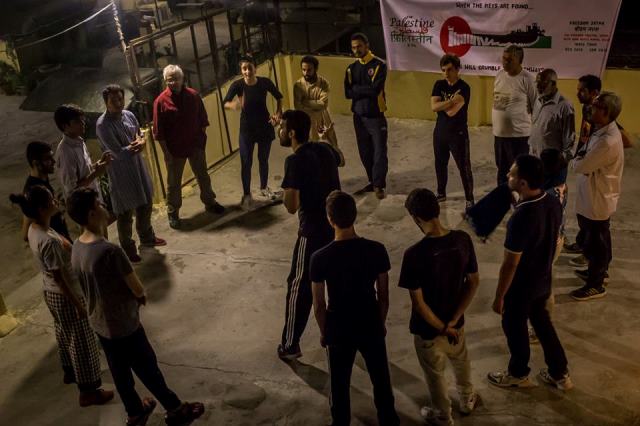
    ‌‌Courtesy: Jan Natya Manch

    For Faisal Abu Alhayjaa, director of The Freedom Theatre, art and culture have a strong ability to shake up the status quo.

    “Do you know what intifada means?” he asked. “It is an Arabic word meaning shaking up. The first Palestinian intifada of the 1980s saw demonstrations, a lot of street fighting and stone pelting. The second intifada, which began in 2000, was more aggressive – with soldiers, guns and F-16. The third intifada must be cultural.

    “The killing of Hashmi and Mer-Khamis showed that their art was effective. It proved that their art could be dangerous. They opened new ways of thinking, offering ways of saying no, and saying no is dangerous. But this is a responsibility of art.”

    In the same vein, he cites the works of writer Ghassan Kanafani and cartoonist Naji al-Ali, both Palestinian, who were also killed.

    Cultural resistance

    Faisal, who learnt from and was greatly inspired by Mer-Khamis, feels theatre is a powerful weapon against the Israeli occupation. “The Israelis want to us become shaheed, that we become stone pelters so that they can kill us. Even children are attracted by the idea of becoming a shaheed when they grow up. Palestine isn’t just a name, it has to grow and needs it people.”

    The Israeli occupation isn’t just a physical occupation, he says. “It is in the minds, thoughts and images. This needs to be countered.”

    “When we perform a play it stays for 100 years. Take Arna’s Children, a documentary which shows the history of TFT. It was made by Mer-Khamis and shows the history of a theatre which had its origins in the ’80s. But we still talk about it and ask people to see it.”

    Faisal feels that Palestinians have always been placed in situations where they could only react. “Even intifadas were a reaction. But we need to ask questions, create and initiate. This is possible through theatre.”

    Brijesh Sharma, actor and writer for Jan Natya Manch, says the Indian theatre company’s production with TFT will raise awareness of the occupation of Palestine and show the “parallels of experiences of anti-imperialism in India and Palestine”. Given the rise of intolerance in India, he adds, cultural resistance will be crucial.

    Read the original article: https://scroll.in/article/769703/how-to-fight-intolerance-with-culture-a-palestinian-indian-theatre-production-shows-the-way

  • Is India’s trade with Israel significant enough to justify jettisoning its support for Palestine?

    Photo: President of India/Facebook

    Published in Scroll.in. 17 October 2015

    A “historic political milestone” is how President Reuven Rivlin of Israel described Pranab Mukherjee’s just concluded visit, the first by an Indian President to Israel and Palestine.

    Prime Minister Narendra Modi is expected to visit Israel in 2016. India and Israel have never been closer, and the cooperation between them never quite as visible.

    Advocates of India-Israel partnership on economic grounds cite burgeoning trade, investment and business ties as reasons for this close relationship. Israel’s considerable defence supplies to India are also considered an important component in the relationship.

    However, the trade figures tell us another story, leading to the question: Does Israel need India more in this relationship?

    History of economic cooperation

    India recognised Israel in September 1950 and full diplomatic relations were established in 1992.  PR Kumaraswamy notes in India’s Israel Policy:

    “Indo-Arab trade was growing, but India’s bilateral trade with Israel was meagre and negligible. In 1960, the government informed the Lok Sabha that the size of the Israeli market was small and thus offered little incentive for Indian exports.”

    At the time of assassination of Prime Minister Indira Gandhi in 1984, Indo-Israel relations were at rock bottom, but under Rajiv Gandhi they started improving. Bilateral trade showed improvement, and was dominated by trade in diamonds, controlled by a group of Indian diamond merchants based in the Tel Aviv suburb of Ramat Gan, who had started operating in the late 1970s.  Though trade has diversified, diamonds continue to dominate.

    Kumaraswamy writes that from 1996-2006, the diamond trade ranged between 52%-71% of total trade.

    In 2014, diamonds still constituted 53.5% of bilateral trade. Bilateral trade which was $200 million in 1992 passed the billion mark before the end of the decade. By the end of the 1990s, Israel had emerged as India’s fourth-largest trading partner in the wider Middle East.

    In 2014, bilateral trade had reached $4.52 billion, excluding defence.

    Not a major trading partner

    Despite the expansion in trade, Israel does not figure among India’s top trading allies, not even among the top 10.  According to EXIM bank figures, India’s top bilateral trade partner is China with a trade partnership amounting to $72.4 billion for the financial year 2015, followed by the United States and United Arab Emirates. India’s trade partnership with Saudi Arabia is to the tune of $39.4 billion.  Even with Iran, a major Israeli rival, India has an annual bilateral trade of over $14 billion.

    In comparison, the India-Israel bilateral trade is under $5 billion. As for Israel, India is Israel’s tenth-largest trade partner and third-largest partner in Asia after China and Hong Kong.

    The defence partnership

    The real business between India and Israel is its defence partnership, and from which Israel has been earning nearly $1 billion annually and is currently valued at $10 billion over the past decade.

    Interestingly, according to the Stockholm International Peace Research Institute Israel was among the top 10 global exporters of arms between 2010-14. India emerged as the top arms importer in the same period.

    Exports are crucial for Israel’s defence economy. Ajai Shukla, Strategic Affairs Editor of the Business Standard, explains the economics:

    “The Israeli Defence Forces are largely equipped with American equipment which comes in the form of US aid. That means Israeli defence forces buy relatively small amounts of equipment from Israeli defence companies, which must, therefore, rely on sales to foreign markets. India, the world’s biggest arms importer, has become a major buyer of Israeli defence equipment.

    Israel is more willing than most other arms producers to transfer defence technology to India. India enjoys leverage with Israel, since a significant amount of Israeli defence research is funded through Indian purchases of Israeli arms. Much of the R&D of Elta Systems (an Israeli defence electronics company) for instance is supported by the proceeds of sales to India, not by Israeli tax payers.”

    Shukla points out that much of this support that India provides to Israeli firms could have been spent by the Ministry of Defence to support Indian defence research and development, but this has not been the practice.  However, he points out that both sides have benefited:

    “Active defence cooperation between India and Israel began during the Kargil war in 1999, when India urgently required defence equipment and ammunition, which Israel promptly supplied, no questions asked.”

    State of Israeli economy

    The recently released UNCTAD World Investment 2015 report showed that Foreign Direct Investment in Israel dropped by 46%. Inward FDI in Israel in the year 2014 was $6,432 million as against $11,804 million in 2013.  The decline, according to one of the authors of the report, was primarily because of the Israel Defence Forces Operation Edge of 2014 and international boycotts against the country for alleged violations of international law.

    Israel is facing tough trade negotiations with European Union, its largest trading partner, over the labelling of products made in Israeli settlements in the occupied territories. In order to reduce its dependence on the EU, it is actively tapping markets in Latin America and Asia. In fact, India, China, and Brazil are “focus” markets for increased trade.

    Even with regard to Israeli FDI in India, it is not a major source. During April 2000-October 2012, Israel ranked 43rd among foreign direct investors in India with with an investment of of $55.32 million in India.

    Though there is an India-Israel free trade agreement in the pipeline, which aims to significantly boost bilateral trade, and Israel is rendering assistance in a range of areas such as agriculture, irrigation, water, technology, education and Information Technology,   it appears that Israel has a much greater need for India as an ally, in a world where it faces isolation on account of its occupation and severely discriminatory policies towards Palestine.

    India under Modi is obliging, despite a history of active and vocal support for Palestine.

    Read the original article: https://scroll.in/article/762931/is-indias-trade-with-israel-significant-enough-to-justify-jettisoning-its-support-for-palestine

  • How the UN Cast out Caste, Leaving Dalits Behind

    Published in The Wire. 14 October 2015

    The United Nations recently announced the launch of its formal development paradigm, the Sustainable Development Goals (SDGs) encompassing 17 goals and 169 targets. The SDGs define the path of development that nations are to adopt in the next 15 years.

    The goals appear to be extensive by appearing to take into account various kinds of inequalities, with a separate goal (Goal 10) dedicated to reducing inequality within and among countries. Yet the SDGs have failed to account for inequality based on caste – a form of discrimination which affects more than 260 million people globally, according to the US- based Human Rights Watch.

    Though seen predominantly in India, where the Dalit population is 16.6 per cent, caste discrimination occurs in other South Asian countries. For instance, against India-origin Tamil minorities who work on plantations in Sri Lanka, in Nepal where estimates of Dalit population vary from the 13 per cent to 20 per cent and in Bangladesh where Dalit issues found a mention in election manifestoes in 2008. As per the National Campaign on Dalit Human Rights (NCDHR) analogous forms of discrimination are witnessed in countries such as Burkina Faso, Japan, Kenya, Mauritiana, Nigeria, Rwanda, Senegal and Somalia.

    To protest the injustice of caste exclusion from the SDGs, Dalit groups organized a rally of protest in New York on September 26, as the UN Sustainable Development Summit 2015 was in session.

    Paul Divakar of the NCDHR said at the rally: “The issue of caste is well recognised among UN human rights missions. It is well-researched especially in countries such as Indian and Pakistan. The UN itself recognizes discrimination based on work and descent. Why then have Dalits been excluded from the SDGs which aims to ‘leave no one behind’? The issues of Dalits have to be recognized the way issues of race, gender and ethnicity have gained recognition.”

    Global recognition of caste discrimination

    The United Nations recognizes discrimination based on work and descent (the UN terminology for caste discrimination), as does the UN Committee on Elimination of all Forms of Racial Discrimination (CERD) which recognizes discrimination based on forms of social stratification such as caste.

    Ruth Manorama, a Dalit activist and winner of the 2006 Alternative Nobel Prize, notes: “For Dalit women, exclusion is felt in many more ways, especially those who are devdasis, in bonded labour and manual scavenging. This was recognized by CEDAW (Convention on the Elimination of all Forms of Discrimination Against Women).”

    The struggle to place caste on the international global agenda has been a protracted one. Activists are advised by the Indian government and missions abroad, to ‘not wash dirty linen in public’, or ‘shame the nation’.

    Even as Dalit groups fought for the inclusion of caste on the agenda of the World Conference on Racism in 2001 at Durban, the Indian government fended off such efforts by stating that caste is not race, caste is an internal affair, and that the conference should not lose sight of the focus on racism.

    Writing about the politics of representation in the Durban conference in Seminar magazine, Gopal Guru notes: “The Indian state by and large has shown only a formal and rhetorical commitment to equality as far as Dalits are concerned…it showed extraordinary brazenness in asserting that there was no caste discrimination (juridically if not in practice) in India… The Indian government did not want to publicly blame or shame the Hindu community whose belligerent members are primarily responsible for the perpetuation of…caste atrocities against the Dalits. Second, it perhaps was worried about losing some material benefits from the international agencies who may haul the Indian state over the coals for its malignant social face.”

    Meanwhile domestically, the Dalit movement is witnessing additional challenges through a right wing turn in its political leadership. A Dalit studies scholar who did not wish to be named, said: “The philosophical creed of Ambedkar, Phule and Shahu Maharaj has lost its control on the sensibilities of the Dalit leadership, which is why a right wing turn is being witnessed. International paradigms cannot help eliminate caste; structural changes are needed.”

    Caste follows Indian Diaspora

    The UK Government’s Equality and Human Rights Commission said in a 2014 research report that caste discrimination exists in the UK, whether as bullying in schools, ostracism following inter-caste marriage, in worship, employment and business, and in the rental market. The report additionally said: “Dalit groups emphasised the pervasiveness of unequal treatment, harassment, verbal abuse or discrimination in the UK”. Section 9 of Britain’s Equality Act 2010 requires the government to introduce secondary legislation to make caste an aspect of race, thereby making caste discrimination a form of race discrimination. Caste discrimination is common in Canada as well.

    “Wherever Indians have gone and settled in large numbers, caste has followed,” says US-based Raju Kamble of the Ambedkar International Mission, an organization of Ambedkar supporters residing in the US, UK, and Canada.

    “Where strong anti-discrimination laws exist, outright discrimination is less common. But the mindset is on display in marriage practices, social relationships and in anti-reservation views,” he added.

    Cover photo: Urvashi Sarkar

    Read the original article: https://thewire.in/rights/how-the-un-cast-out-caste-leaving-dalits-behind

  • Scholars, activists decry ‘collective onslaught on reason’

    A collective assault on reason – that is how a gathering of academics and activists this weekend described the ongoing attack on individuals, institutions, history, ideas and education that has been gathering pace across the country “ever since the RSS-dominated BJP government” came to power at the Centre.

    Organised here by Sahmat on Saturday, the immediate context for the meeting was the killing of the Karnataka scholar M M Kalburgi – the third in a series of assassinations targeting individuals known for their opposition to orthodoxy and communalism. The first two victims were the well-known Maharashtra rationalists Govind Pansare and Narendra Dabholkar.

    Supreme Court lawyer Anil Nauriya noted that the police had said that there was nothing common in the three murders, barring the ‘morning walker’ aspect – referring to the fact that all were killed in the morning. “There was far more in common – they were rationalists and running campaigns on social justice and equity.” Nauriya also linked the murders of Pansare and Dhabolkar with their association to the Rashtra Seva Dal, an organization founded to combat communal organizations.

    “Pansare and Dhabolkar were close associates. Soon after Dhabolkar’s assassination, Pansare received messages that he would be next.”

    If the law enforcement machinery says it knows how to get to the bottom of every crime, why has it not solved the triple killings, asked activist Teesta Setalvad, also referring to threats on social media to Mysore professor KS Bhagwan.

    The attack on individuals and ideas was being felt in the field of education too. Tracing attempts to bring about a ‘value-based education policy’ by the NDA government since its first stint in 1999, Setalvad said: “The RSS, which represents an unconstitutional ideology, is governing both government and educational policy.”

    She referred to the need for an audit of the textbooks by Dinanath Batra of the Shiksha Bachao Andolan being taught in 40,000 schools in Gujarat – books with distorted content – and the urgency of revisiting the 2004 committee, which recommended the formation of an all-India textbook board to examine books in state and private schools, and schools run by religio-social political organisations.

    Referring to the renaming of Delhi’s Aurangzeb Road, and also to the appropriation of Maratha warrior Shivaji by the right-wing, Setalvad said: “Pansare’s book Shivaji Kon Hota has letters from Shivaji to Aurangzeb which shows that Shivaji’s battle with Aurangzeb was not religious.”

    Academic Prabhat Patnaik, noting the destruction of institutions, said: “Second rate mediocre people are being placed in charge of institutions, destroying any possibility of rational discourse.” In recent times, heads appointed to the the Indian Council of Historical Research (ICHR) and Film and Television Institute of India (FTII), are known to be close to the government, and have been accused of saffronising these institutes. Warning of the approaching ‘fascification of state’, Patnaik said: “A part of the process towards fascism of the state is the destruction of reason. A symptom of this destruction has been the obliteration of the distinction between history and mythology.” This process ran contrary to both the social emancipation movement of Ambedkar and others and anti-colonial struggles, Patnaik said.

    Historian Irfan Habib saw a historical parallel in the “replacement of history by mythology” that he said was currently underway in India. “Textbooks from the NDA regime portray Gandhi and Nehru as if they had nothing to contribute to the national movement, only Hindu rashtra people like Savarkar and others made worthwhile sacrifices. Nehru is censored and Gandhi’s murder is given a skip in these books. This is inventing of facts and history just like in Nazi Germany which tried to portray Germans as governing the world.”

    Noting prior efforts to rename Lucknow to ‘Lakshmanpuri’ and also attempts to rename Allahabad, Habib said any drive to rename places would result in continued communalisation.

    “The renaming of the Aurangzeb Road is an ominous augury for a campaign to change names on communal grounds,” a statement released by Sahmat said.

    Setalvad, whose organisation Citizens for Justice and Peace played an important role in securing 120 convictions related to the 2002 Gujarat riots, and who the government accuses of illegal financial activities, told The Wire: “This government does not want an opposing voice. We are against the ideology of the government. Being against the government and its ideology is different from being against the state.”

    Read the original article: https://thewire.in/politics/scholars-activists-decry-collective-onslaught-on-reason

  • India urged to use close Israeli ties for Palestine

    Published in Al Jazeera. 26 August 2015

    Once a champion of the Palestinian cause, India should now use its deepening diplomatic relations with Israel to press for an independent Palestinian state, critics say.

    Zikrur Rahman – a former Indian representative to Palestine – was one of 10 delegates at a Solidarity with Palestine convention last weekend, which was held to mark the first anniversary of Israel’s attack on Gaza.

    “India does not have to sever its ties with Israel, but why should it give up its stand of supporting the anti-colonial struggle in Palestine?” Rahman told Al Jazeera.

    “Palestine has never been detrimental to Indian national interest,” he said, adding India should use its position as the second-largest buyer of Israeli arms to pressure Israel to end its decades-old occupation of Palestine.

    “All Palestine demands is 22 percent of historic Palestine. India should play a proactive role in supporting the demand,” said Rahman.

    Patronage to neglect

    Though India recognised Israel in 1950, diplomatic relations were established only in 1992.

    “Prior to the 1990s, there was popular support, as well as official patronage for the Palestinian struggle. Members of the Congress and the left were vocal on solidarity platforms,” said journalist Sukumar Muralidharan, who has written extensively on India-Palestine relations.

    “But these platforms lost their political backbone in the 1990s. Now it is only the left and some individuals from other parts of the political spectrum that still support the [Palestinian] struggle.”

    Muralidharan traced the transition to the rightward political shift and rise of the Bharatiya Janata Party (BJP) in the 1990s.

    “The 1990s were a period of unrest in Kashmir, and the BJP and the mainstream media, which had no time for complexity, began increasingly to see both Palestine and Kashmir under the rubric of Islamic militancy. Following [India’s] 1998 nuclear tests, there was a big expansion in defence budgets, and India began buying increasingly from Israel,” Muralidharan said.

    Guns and butter

    Military ties with Israel continued under the Congress-led United Progressive Alliance as well. But the victory of the BJP in 2014 led to a decisive shift, with the government of Prime Minister Narendra Modi giving clear indications of its desire to be a close ally of Israel.

    India recently abstained from voting on a UN report that indicated the possibility of war crimes committed by both sides, especially Israel, during the 2014 Gaza assault – resulting in allegations of India having withdrawn its support for Palestine.

    The Palestinian ambassador in India expressed shock and said the abstention was a departure from India’s traditional position, and the move was affected by India’s growing military ties with Israel.

    The spokesman for the Ministry of External Affairs could not be reached for comment.

    The Indian government said in a statement, however: “There is no change in our policy of extending traditionally strong support for the Palestinian cause while maintaining good relations with Israel.”

    Currently ties between India and Israel are extensive – spanning defence, agriculture, trade, infrastructure, water, technology, and culture.

    Forgetting Palestine

    Popular mobilisation in India on the issue of Palestine has sharply declined over the years. While there were protests and solidarity events in 2014 over the attack on Gaza, they were not widespread.

    For members of the Palestine Solidarity Committee, organising the August 22-23 convention proved to be an uphill battle.

    Satyam Varma, a member of the organising committee, described “threats and psychological pressure” to not hold the event, which was attended by about 350 people.

    “We started receiving calls from law and enforcement agencies and right-wing organisations. Some callers wanted to know why we were supporting Palestine, others wanted to know if the organisers were Hindu or Muslim, and how many Muslims would attend,” Varma said.

    Shweta Kaul, another committee member, blamed the media for not detailing the plight of the Palestinian people.

    “Even educated people do not know about what is happening in Palestine,” Kaul said. “Much of the mainstream media has an ahistorical perspective of the Israel-Palestine conflict. Existing coverage tries to provide a ‘balanced’ picture, which misleads readers.

    “We are organising this convention to build awareness about the situation in Palestine and why it needs India’s support.”

    Flourishing ties

    Israeli embassy spokesman Ohad Orsandi told Al Jazeera he was not aware of what was said at the two-day gathering.

    “The Palestine solidarity convention was an Indian event, of which I do not have details. I do not see where Israel sits in this.”

    Orsandi added: “Relations among India, Israel and Palestine is far from a zero sum game. India’s support for Palestine is not affected by its flourishing ties with Israel. This used to be joined in the past, but not any more.”

    A Palestinian official in India, Yasser Dahlan, urged Indian officials to use their relations with Israel to promote the Palestinian cause.

    “India was the first non-Arab state to recognise Palestine [Palestine Liberation Organisation]. We want India to play a positive role in putting pressure on its friend, Israel – with whose leaders it has a personal relationship – for a sovereign state of Palestine based on 1967 borders and on international agreements.”

    Cover photo: Urvashi Sarkar

    Read the original article: https://www.aljazeera.com/features/2015/08/26/india-urged-to-use-close-israeli-ties-for-palestine/

  • Poll: Indian Muslim women want end to verbal divorce

    Published in Al Jazeera. 21 August 2015

    An overwhelming majority of Muslim women in India want reforms in religious laws involving matters of divorce, alimony, polygamy and custody of children, according to a survey conducted by a rights group.

    Titled “Seeking Justice Within Family: A National Study on Muslim Women’s Views on Reforms in Muslim Personal Law”, the survey released recently by Bharatiya Muslim Mahila Andolan (BMMA) focuses on religious laws perceived as discriminatory against Muslim women.

    More than 92 percent of the 4,710 Muslim women surveyed, mostly from disadvantaged communities, wanted a total ban on verbal or unilateral divorce, while 91.7 percent did not want their husbands to marry another woman while already married.

    India is one of the few countries that recognises verbal and triple talaq (divorce) – a practice under which a Muslim man can divorce his wife by simply uttering talaq thrice.

    Nearly 96 percent surveyed wanted their ex-husbands to pay for children’s maintenance, according to the survey conducted between July and December 2013 across 10 Indian states.

    Questions asked in the survey were related to the custody of children, domestic violence and under-age marriage as well as the status of the darul qazas (Sharia Courts) controlled by religious leaders.

    Numbering around 140 million or slightly less than 14 percent of the total population of 1.3 billion, Muslims are India’s largest religious minority group.

    They are governed by the Muslim Personal Law. The legislation is not codified, which means it is open to interpretation by local clergy.

    “Codification of Muslim personal law in India is a long-term struggle. The study is the first empirical and scientific articulation of what Muslim women have been aspiring for,” Dr Noorjehan Safia Niaz, BMMA co-founder and co-writer of the study, told Al Jazeera.

    ‘Excluded educationally, economically and socially’

    Using the 2006 Rajinder Sachar Committee report – which studied the socio-economic status of Indian Muslims – the BMMA study notes: “Muslim women are excluded educationally, economically and socially owing to government neglect and suffer from near absence of any legal framework in matters of family and marriage.

    “Owing to the way Muslim personal law is practised and understood in India, it is mired in ambiguity, obfuscation and apathy,” the report says.

    The study notes that even though Muslim women look to the state for codifying Muslim family law, “the state has taken more interest in codifying laws for other communities and neglected the needs of the Muslim women”.

    Zakia Soman, also a co-founder of BMMA and co-writer of the study, says: “Christians and Parsis, which are minorities in India, have codified personal laws. Muslim countries such as Tunisia, Morocco, Syria, Pakistan, Bangladesh and Malaysia have also enacted codification. As a result, in Morocco, for instance polygamy and triple talaq are banned.”

    Open for misinterpretation

    Muslim personal law in India

    • The Shariat Application Act, 1937 states that Muslims will be governed by Islamic law but does not list the contents of Muslim personal law, and thus allows people to apply their own interpretation.
    • Dissolution of the Muslim Marriage Act 1939, while granting women to seek the right to seek divorce through court, does not lay down a procedure or time-frame, neither compels men to approach the court to seek divorce.
    • The Muslim Women (Protection of Rights on Divorce) Act, 1986, was introduced and amended, following the landmark Shah Bano case related to alimony for a divorced woman with weak alimony provisions.

    In the realm of personal laws, Indian Muslims are governed by Islamic law (Sharia). The study documents the multiplicity of religious codes, which results in wide room for misinterpretation owing to the lack of codification.

    The Indian subcontinent has a wide diversity of Muslims, divided into Sunni and Shia with their sub sects, which have their own understanding and interpretation of Islamic law, especially concerning family matters.

    According to the study, the most prominent instance of multiple interpretations is triple talaq. Further, “women are denied their Quranic rights such as right to property and inheritance, right to divorce and right to matrimonial home in the name of Sharia”.

    “The British government had codified Muslim personal law to a large extent through the 1937 Act. This law continues to apply after independence to Sunni and Shia Muslims, but gives enormous powers to Muslim males, especially with regard to divorce,” Mumbai-based socio-political analyst AK Mukadam told Al Jazeera.

    “Even more than codification, amendments are needed to the law which currently discriminates between men and women with regard to marriage, divorce, alimony and inheritance.”

    Codified personal law

    Advocate and former member of the legislative assembly of Tamil Nadu state, Bader Sayeed, believes that All India Personal Muslim Law Board – the top religious body that overseas Islamic law – has resisted reforms.

    “Even as we hope for codification to occur, we need to ensure that all divorces happen in a court of law, within the Quran’s parameters. Men should have to go to court for divorce – currently, men can unilaterally divorce their wives just by saying the word talaq thrice, or even by SMS or through a letter. This causes grave injustice to women,” Sayeed said.

    She has appealed in court asking that Qazis (religious clerics) should be prohibited from approving triple talaq on the grounds that they did not have the authority to do so.

    The ruling Bharatiya Janata Party led by Prime Minister Narendra Modi, which came to power in 2014, had promised to draft a Uniform Civil Code (UCC) in its manifesto.

    The code is meant to introduce a common set of laws governing marriage, divorce, inheritance, adoption and maintenance for all citizens.

    “It is crucial that demand for codification of Muslim personal law should not be read as a demand for the UCC,” Soman of BMMA told Al Jazeera.

    “Communal forces have appropriated the demand and current proponents of UCC refuse to clarify if, for instance, Hindu laws on marriage will be repealed. Muslim women are far from convinced that the UCC will improve matters.”

    Read the original article: https://www.aljazeera.com/news/2015/08/21/poll-indian-muslim-women-want-end-to-verbal-divorce/

  • Informal workers organisations wary of new labour reforms

    Photo: Ryan/CC 2.0

    Article published in The Wire. 9 August 2015

    Abolition of the floor wage, revised minimum daily wage of Rs 500 and monthly wage of Rs. 15000, and pension and provident fund to informal sector workers were some of the key demands made at a convention on workers in the informal sector held here on August 6-7 in Delhi.

    Labour activists, trade unions, lawyers, parliamentarians, voluntary organisations and journalists participated in the convention, organised by the Working People’s Charter Process, a collective which works to articulate the demands of people dependent on the informal economy.

    Critique of the proposed reforms of labour laws by the Modi government, and the need to push forward long standing demands of the informal sector with regard to revised minimum wages and universal social security formed the context for discussions. Demands were also made in relation to strengthened labour administration, provision of a living wage with decent standard of living, workers’ rights to housing, and rights of migrant workers.

    Proposed labour law reforms

    According to the proposed reforms, 44 labour laws are to be replaced by four codes in the areas of wages, industrial relations, social security and working conditions. The government’s stated aim in the creation of these codes is to boost job creation and investment, but there are fears that the move will have an adverse effect on workers and working conditions.

    Advocate Ramapriya Gopalakrishnan explained how these codes would greatly limit the role of labour inspectors, enable self-certification for employers, impose hefty fines for participating in ‘illegal’ strikes, restrict the number of outsiders who can hold trade union office, allow the compounding of offences by employers and exempt small factories – units with less than 40 workers – from labour laws relating to payment of wages, bonus, maternity benefits, compensation and child labour. Senior Supreme Court lawyer Colin Gonsalves, legal expert Usha Ramanathan, social activist Swami Agnivesh, and former NCPCR chairperson Shantha Sinha also participated.

    Call for participation in national strike

    Discussions ranged from exploitative practices of bonded labour, issues of migrant workers, domestic workers, street vendors, rag pickers, brick kiln work to questions around employment generation, social protection, housing rights, labour administration and the media coverage of labour issues. The need to form solidarities of labour across formal and informal sectors was reiterated by speakers, and a call was made to participate in the strike of central trade unions on September 2.

    Trade unions represented included the Centre of Indian Trade Unions (CITU), New Trade Union Initiative (NTUI), Indian National Trade Union Congress (INTUC), Bharatiya Mazdoor Sangh (BMS), and Trade Union Coordination Committee (TUCC). The Delhi Employers Association was represented, while from the government, Minister of State for Labour and Employment Bandaru Dattatreya and Director General Labour Welfare Bipin Mallick were present.

    Read the original article: https://thewire.in/economy/informal-workers-organisations-wary-of-new-labour-reforms

  • In Riot-Hit Muzaffarnagar, a Beacon for Female Victims of Violence

    Photo: Usman Mehndi

    Published in The Wire. 21 June 2015

    Rehana Adeeb’s phone won’t stop ringing.  After answering a few calls, she switches off her mobile. “The calls will continue. We won’t be able to talk properly,” she explains.  We are in a nondescript building in Muzaffarnagar district, Western Uttar Pradesh. It functions as an office from where Rehana manages the operations of her NGO Astitva,  one of the few local organisations that worked with people affected by the communal riots of 2013 that broke out in Muzaffarnagar and Shamli districts.

    Several files are stacked against a wall with labels like ‘honour killing’, ‘rape’ and ‘domestic violence’ scrawled on the covers. Under Rehana’s guidance, her co-workers Rani, Usman and Gaurav take print-outs, type out emails, and place newspaper clippings in the files.

    The recent framing of charges of 4 accused in the Muzaffarnagar gangrape case that happened during the 2013 violence has thrown her work into sharp focus. Astitva has been involved in helping women with legal support in several rape cases that have been registered in the aftermath of the riots.

    “I was not always a worldly woman or a person with politics,” says Rehana. She says she had been raped as a child and later forced to drop out of school and married off well before she turned 18. The birth of five daughters in succession and the continued stigma attached to rape meant Rehana’s early years were anything but idyllic. In her late twenties, she strayed into a meeting of Disha, a local women’s rights organisation in Saharanpur in the year 1989.  “Wearing a burqa, with a baby in tow, I attended the meeting where people said women could speak against oppression, lodge an FIR with the police and that it is important not to be ashamed. They were singing revolutionary songs. I felt such tumult that sleep eluded me that night.”

    Rehana started attending Disha meetings, embarking on a journey of women’s rights activism. It wasn’t easy. Her efforts were met with beatings in the family and ostracisation by neighbours. Undeterred, she started working with abused women and the government-run Mahila Samakhya programme, and finally established an NGO, Astitva in 2005.  She set up an Astitva office in Muzaffarnagar because she felt the lack of an organisation working on women’s rights in an area which was rife with honour killing and violence against women in the Jat and Muslim communities.

    A climate of violence

    Rehana’s philosophy of working with oppressed women in small towns and villages led her to undertake peace-building work in the run-up to, and following, the Muzaffarnagar riots. “I knew women and children would be crushed in the riots for which the atmosphere was building up.  There were reports of people with beards being roughed up and pushed out of trains, of gun firing outside mosques. We had 8-10 dialogues on communal harmony in Muzaffarnagar, reaching over 2000 people, but these did not have much impact, because we were up against powerful political forces. The local NGOs were reluctant to get involved. Fear was in the air; the police and the army had been deployed, and news about dead bodies was pouring in.”

    As a local NGO, Astitva moved swiftly to visit the makeshift camps which emerged to accommodate riot struck families in Muzaffanagar and Shamli. Rehana informed activists and journalists about the desperate situation of the camps and their inhabitants, becoming a point of contact for all those seeking information, such as fact-finding committees and organisations looking to channel relief.  Her team worked with the district administration and panchayats, helped file FIRs for the raped women, trying to fast track their cases, and encouraging women to testify. “In western UP, particularly Muzaffarnagar, there is a tradition of killing witnesses. Therefore witnesses tend to change their stand or they are killed,” says Rehana.

    Women’s rights work in western UP is not easy, especially if it means opposing the writ of the khap and caste panchayats. The khap panchayat leaders represent a moneyed and landed class with large-scale ownership of sugarcane fields.  With family members in political parties such as Samajwadi Party and Bharatiya Janata Party, the police force, and the Bharatiya Kisan Union, their authority is difficult to contest. This, combined with frequent violence against women, a preference for guns and abuse over dialogue, and the lack of cultural spaces, greatly limits the possibility of human rights work.

    The history of khap panchayats dates to a period well before the Mughal and British rule and is a system which has endured. “Khap panchayat leaders have warned that if anyone attempts to break their authority, they will not be spared.  Even if NGOs are operational, their work revolves around distribution of medicines, and working with children and older people.  Nobody can challenge the khap panchayats.”

    No help for vulnerable minorities

    Credit: Usman Mehandi
    Photo: Urvashi Sarkar. Folders in which cases relating to domestic violence, sexual violence and rape, and honour killings are kept.

    She says that when there is natural disaster, help is readily available, because people feel they are saving human beings.  “But if there is communal rioting and violence in which Muslims or Dalits are affected, people not even counted as human beings, little support can be found. The same sentiment prevails when women are affected – people avoid getting involved.” While Rehana and Astitva cannot afford to confront the khaps and have to skirt around them, they do speak up when women are wronged.

    Rehana’s work is subject to frequent threats and hounding.  “An anonymous caller threatened to disfigure my face. Earlier, our premises were in a Jat locality. One day, 15-20 Jats gathered outside and ordered me to vacate, claiming Muslims cannot live there. When I shifted to a Muslim neighbourhood, I was told that not wearing a burqa was unacceptable. ”

    She faced threats while working on a case in 2005, in which Imrana, a woman from Muzaffarnagar, was allegedly raped by her father-in-law. Rehana was also beaten up by the police for taking to the streets along with other women in support of former Deoband chairperson Zeenat Naz who battled a fatwa against Muslim women participating in elections.

    In addition to being pressed for funds, she finds little support for her work from the district administration and police: “You expect them to stand up against women’s oppression. But that rarely happens.” According to National Crime Records Bureau data of 2013, Uttar Pradesh registered 3050 cases of rape, ranking fourth in the category. It also recorded maximum instances of kidnapping and abduction, and dowry deaths. But many cases remain unreported.

    For Rehana, the Muzaffarnagar riots were a planned conspiracy. She says: “The Jat-Muslim alliance is broken, fear prevents many Muslim families from returning to their villages. The atmosphere continues to be communalised, and the newspapers are calling it a silent war on Muslims. People lost, and political parties won.”

    Read the original article: https://thewire.in/gender/in-riot-hit-muzaffarnagar-an-ngo-focuses-on-female-victims-of-violence

  • A right to fish, a fight to live

    Published in People’s Archive of Rural India. 12 March 2015

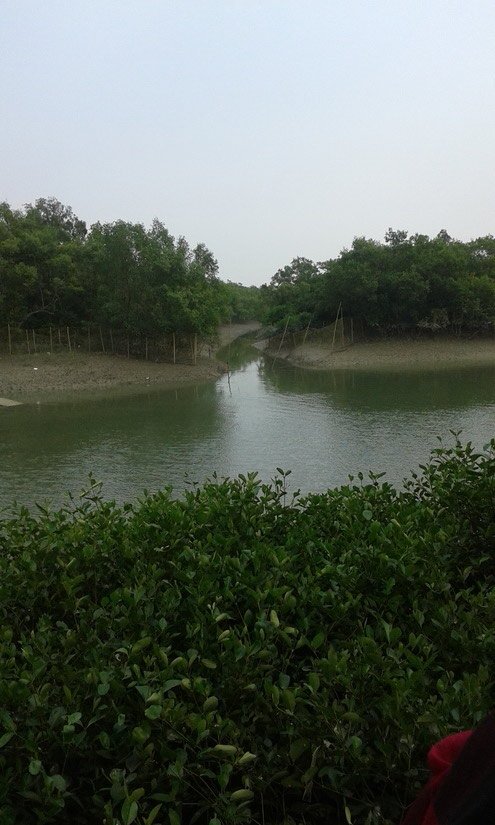
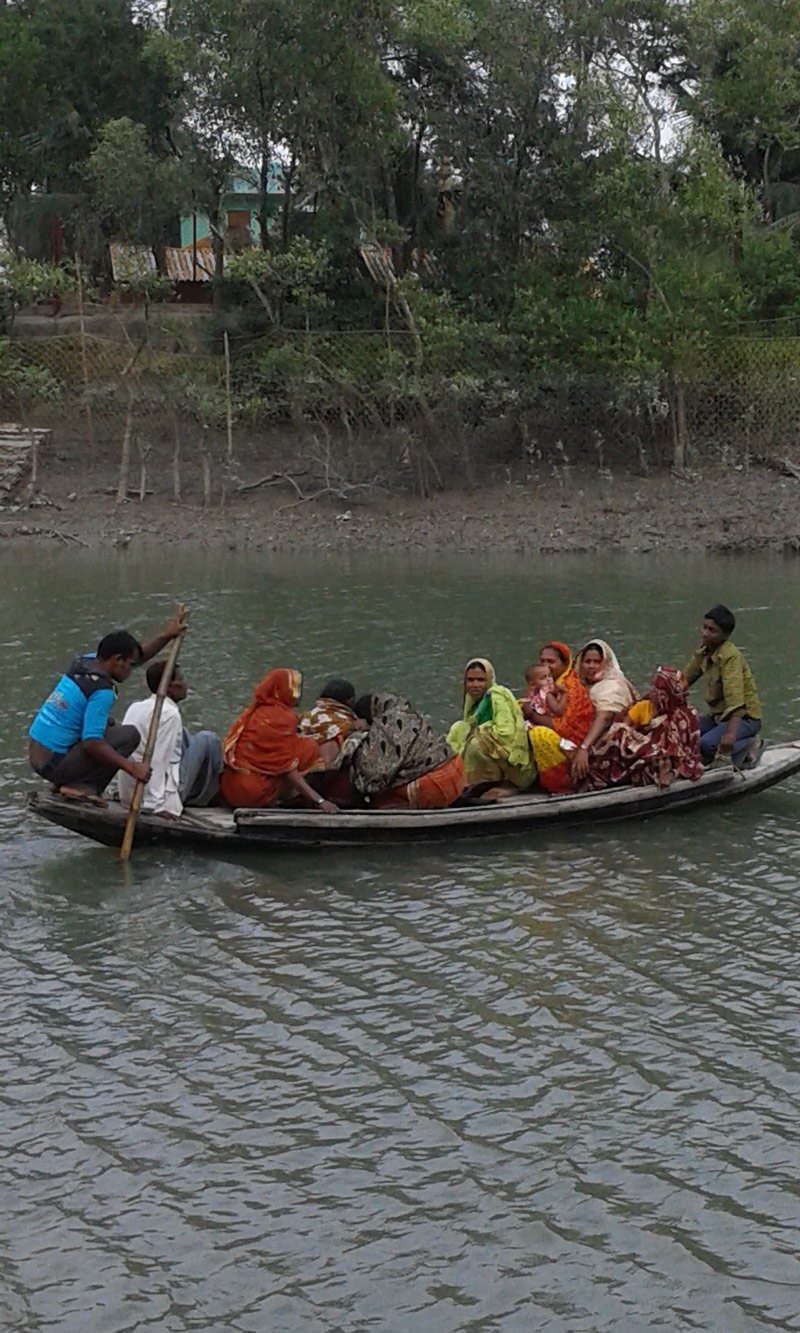
    A tall and lean fisherwoman with a strong face stares at the evening sun fading into the still waters running through Kultali, an island in the Sunderbans forest; Anima Mandal is angry. She hasn’t eaten since
    morning.

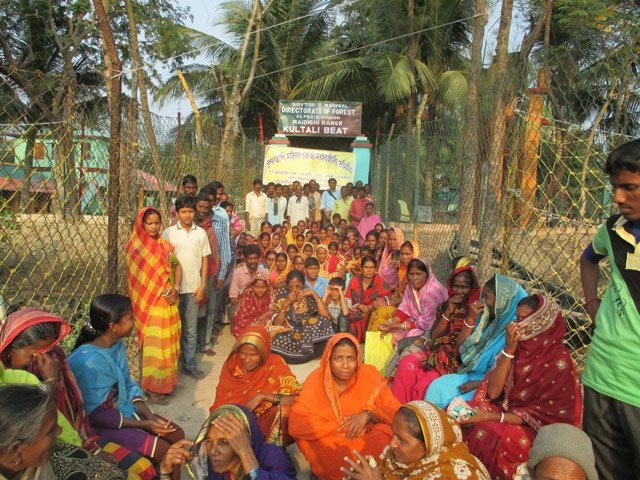
    She was there for a meeting that the Kultali Forest Range beat officer had fixed for 2 pm on February 14, 2015 at the forest range compound in a corner of Kultali, across a river. Nearly 50 women, and a few men, had turned up for this crucial meeting to make two pressing demands – the return of their confiscated fishing canoes (dongas) and for the women to be recognized as traditional small-scale fishworkers, with a right to fish for their livelihood.

    The women, organized under the Kultali Mahila Donga Matsyajibi Samity, had travelled a long way from Madhya Gurguria village – on foot, on cycles fitted with wooden planks and by boat – to make it to their appointment.

    It is already past 5 pm. A number of women begin tracing their steps back towards a dinghy headed homeward: some hurry back to feed and care for the children they’ve left at home and others return home for fear of husbands who could turn violent. Anima and a few others choose to stay back at Kultali and represent the group, determined to get a response from the Forest Department.

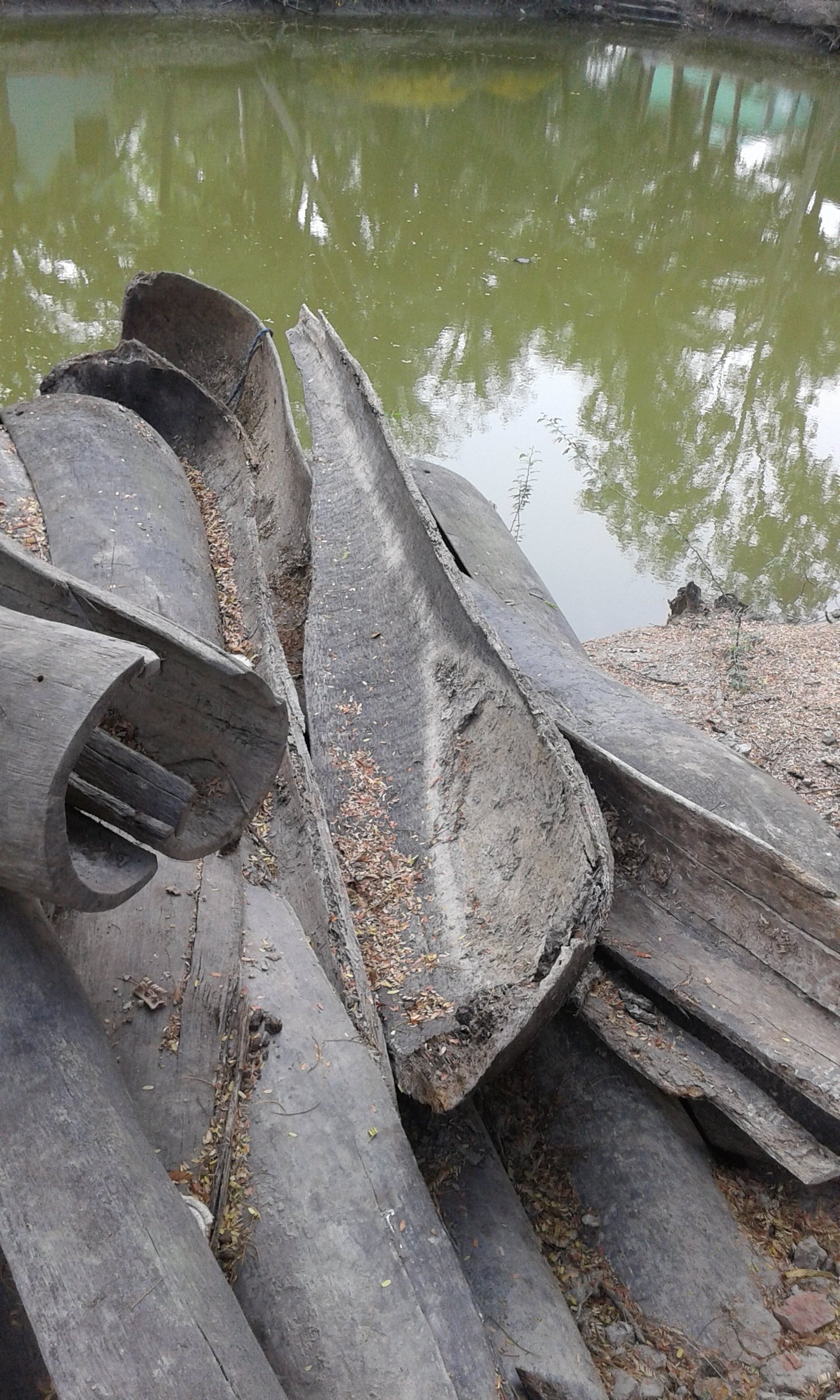
    They walk around the compound, to the edge of a murky green pond, where their confiscated canoes of palm trunk lie stacked. The women are appalled; debris and wood bits from the canoes have started to peel off and mingle with the water. “Our canoes have been broken into pieces and thrown into the water. There must be lakhs of rupees (floating) in this river, ” says Geeta Sahu, a fisherwoman speaking softly. Her indignation, however, is unmistakable, shared by the workers standing beside her, still waiting.

    Sole Means

    The conversation among the waiting crowd turns to input costs: the cost of palm trunks from which the canoes are dug out, the labour cost for chiseling, and the cost for coal-tar coating maintenance, all amounting to about Rs 5,000. Almost every confiscation necessitates this princely expenditure on their part, to build a canoe from scratch. “It can take at least two or three months to gather such a sum. Wooden boats, permitted by the Forest Department, are too expensive to afford,” explains Beena Bag, one of the fisherwomen.

    They walk down some distance and spot a couple of confiscated dinghies, still sturdy, poking out through a mass of trees. The canoes and dinghies are the fishworkers’ only means to catch crab and fish, their sole means to earn a living. By now Anima is fuming: “Why confiscate the canoes and hurt us in the stomach? We don’t earn salaries, you know. This is not Calcutta city, where each month people earn something to be deposited in the bank. Nobody is going to hand me a bag of vegetables to cook. Life is different here.”

    Slice of Life

    Indeed, life is starkly different in the Sunderbans. For Anima, and other fisherwomen like her, the day begins at 3 am. After housework, they take their canoes into the rivers. To make a catch, they wade into cold, chest-level water. Once they have caught the fish, they return home to cook and feed their children. Crab and fish depots are the next stop. The women come here to sell their catch with hope and no guarantees to make a little money. On days there are earnings, they are funneled into immediate household expenses, fishing input costs (if any), and savings for the less fortunate days in the week. Many of the communities here are landless second or third generation fishworkers, entirely dependent on fishing for their survival. And so, what they earn will determine what they buy at the market.

    No Avenues

    Anima was 10 or 12 when she got married. She recently lost her husband to a stroke. “There is no decent hospital here. Even pregnant women need to travel for two hours to Joynagar, where there are hospitals,” she exclaims, frustrated. The number of men in the Sunderbans has declined over time, mainly due to migration for better livelihoods; most move to cities as construction workers or get involved in tiger killings for the profit.

    The women are also bitter about having no stake in the proposed tourism projects in the Sunderbans. “Why won’t they involve us in the tourism projects? It will give us better jobs and a better quality of life. Nobody seems to wants to (positively) engage with us. For instance, the big boats catch fish and crab just like we do, but it is us that the Forest Department goes after.”

    Certified Catch

    If life is not hard enough, the Forest Department’s confiscation of their canoes has ensured that it becomes even harder. The reason cited is that since the canoes do not have a boat license certificate (BLC), granted by the Forest Department, they are therefore not authorised to ply in the Sunderbans; Kultali is part of Sunderbans reserve forest area, preventing the fishworkers from catching crab on their own land, unless they have a BLCs.

    The BLC regime has several problems including a non-transferable nature, the possession of BLCs by those who are no longer fishworkers, a thriving black market, and the non-issuance of fresh licenses. A study on the Sunderbans fishers by the International Collective in Support of Fishworkers (ICSF) outlines these problems in detail. To deter fishworkers, the Forest Department uses methods such as seizing fishing nets; the women complained of receiving threats that glass bits would be mixed into with the riverbank sand, to prevent them from going (as they walk barefoot) to fish.

    “The denial of the community rights of the forest dependent fisherwomen to fish in the forest waters is a violation of the FRA,” says Pradip Chatterjee, President of the Dakshinbanga Matsyajibi Forum. The Forest Rights Act (FRA) is meant to secure the access rights of forest-dwelling people, including sustainable use and conservation of the biodiversity of their home grounds.

    He notes that despite repeated calls, the West Bengal government is yet to notify the FRA in the North and South 24 Parganas Districts: “The failure to notify the Act has resulted in the denial of livelihood rights to forest-dependent people including fishers, wild honey collectors, drywood collectors, and shell collectors (among others), leading to consequent conflicts with the Forest Department.” Implementing the FRA would allow fishworkers to catch crab without BLCs.

    Hope and a victory

    The beat officer enters the scene a little past 6 pm. He speaks with the women of the Mahila Donga Samity
    and members of the Dakshin Matsyajibi Forum. The officer states that the canoes have been confiscated because of their alleged use for poaching. Episodes of poaching involving canoes have been sporadic, the
    women argue, the entire fishing community should not be penalised.

    They promise to act as informers for the Forest Department during instances of poaching, but insist on their right to continue using canoes for fishing. The beat officer agrees not to seize canoes for the next three months, during which time the movements of the canoes will be supervised. He also agrees to take up the issue of the rights of forest-dependent fisher communities with higher authorities.

    When he voices a grouse about the government having to pay compensation when there are deaths caused by fishworkers venturing into tiger territory, he is reminded that fishworkers do not voluntarily venture into tiger territory, but because it is a question of their livelihood.

    By the time discussions conclude, night has already set in. The women are happy to have this victory, even if temporary. They pile into a dinghy that takes them into the dark waters of the Sunderbans. Anima gazes at the still waters and towards home.

    Read the original article: https://ruralindiaonline.org/articles/a-right-to-fish-a-fight-to-live/

  • Hanging by a thread

    Published in People’s Archive of Rural India. 18 December 2014

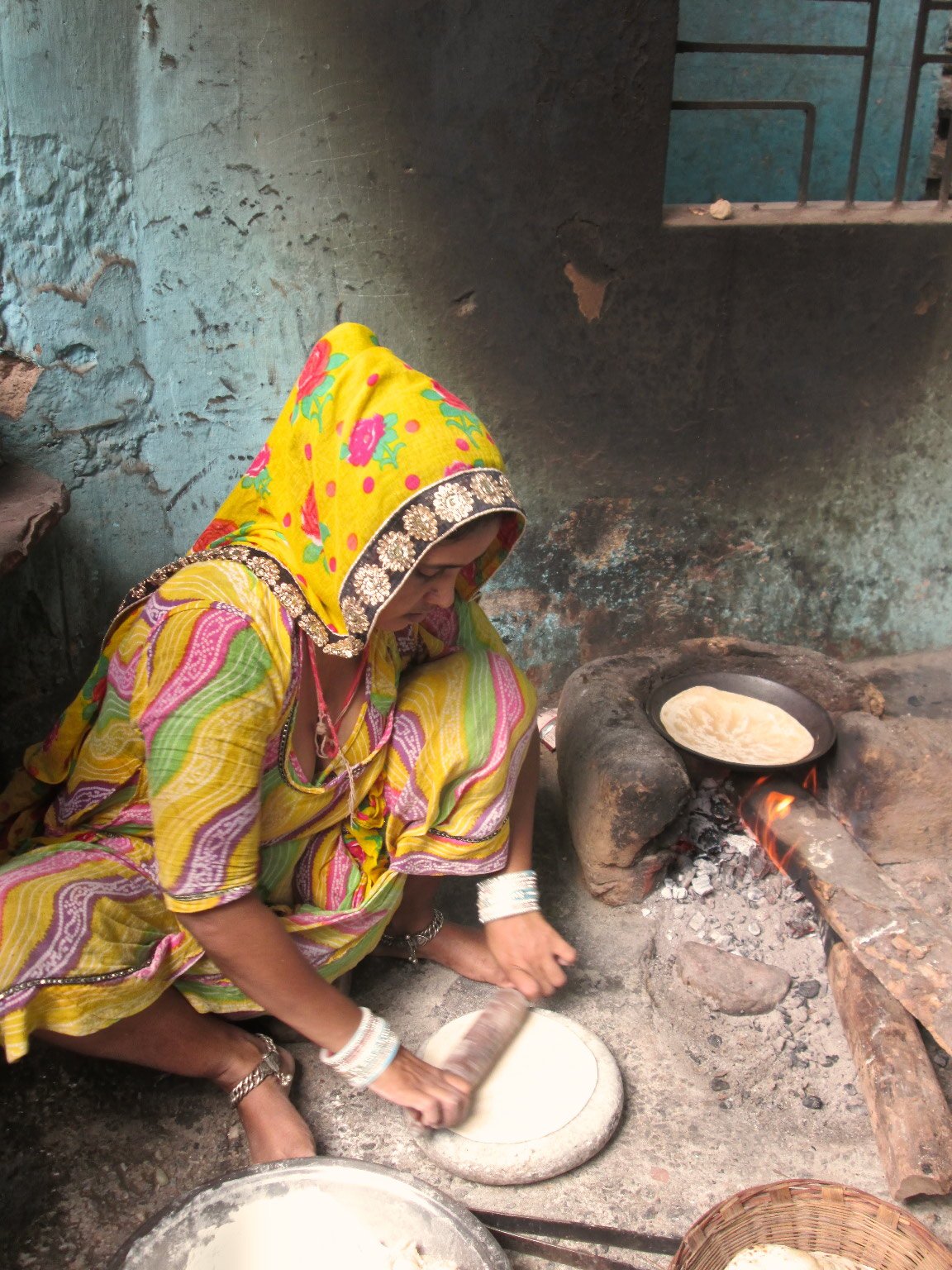
    Dressed in a bright yellow saree with a bunch of pretty white bangles on her wrists, Bimala Bhatt squats in a square area, baking rotis over a smoking chulha (traditional indoor stove).

    After kneading the dough into round moulds, she lightly tosses each circular disc on to a pan. Logs of wood are strewn around, some propped up against the walls – a dirty blue, with the plaster peeling off. Thick wisps of smoke curl over the fire.

    “Food tates better when cooked like this,” she says. Does the smoke not cause a headache or make her otherwise unwell? “ Matke ka paani, aur chulhe ka khana, sabse accha hota hai [Water from an earthen pot and food cooked on a chulha are the best].”

    Though she has access to a gas cylinder, Bimala prefers the chulha . She cooks five kilos of wheat daily, churning out nearly 20 rotis a day. The water is first purified using ‘Pureit’ and then cooled in a big earthen pot.

    Bimala Bhatt does not want to move out of the colony where she has lived for many years

    Away from the daily routine, there are fears about losing land and changing social interactions.“I moved here 30 years ago,” Bimala says. She looks young, her skin is flawless. “I don’t really know my age,” she remarks, smiling wryly.

    Bimala, originally from Rajasthan’s Sikar district, is married into the family of Puran Bhatt, a national award-winning puppeteer. Many families in this colony migrated here from villages in Rajasthan, Uttar Pradesh and Bihar in the 1970s.

    Preserving an art and trying to earn a livelihood

    Puran Bhatt’s house is one of the most well-known addresses in West Delhi’s Kathputli Colony – the Delhi Development Authority’s (DDA) first in-situ slum rehabilitation project. As per the plan, residents have been asked to move to transit camps where they will have to live for two years or more, after which they will be given flats in Kathputli Colony. The flats are to be built by Raheja Developers in a public-private partnership with DDA. Some families, which do not possess land in the colony, are in favour of moving to the transit camps. Those who have land, are wary of leaving – they are sceptical that the promised flats will not materialise and they may lose their land in the process.

    “We have always lived here. Why should we leave?” asks Bimala. She is joined by her 15-year-old daughter Dipali, who concurs: “Flats are closed spaces. We won’t be able to freely meet our friends and neighbours.”

    Dipali wants to have tea; we leave her mother to the cooking and sit in an adjacent room where a little girl with kohl-rimmed eyes and a bobbing ponytail laughs at us gleefully from her spot on the floor. She is the neighbour’s daughter. Children breeze in and out, stare at us indifferently, and leave. The houses in Kathputli Colony are packed together, small topsy-turvy constructions tucked into narrow lanes and meandering bylanes. The overflowing drains and sewage, frequent piles of litter and faeces, and a shortage of water indicate chronic neglect by government authorities. The home interiors are clean by contrast.

    The squalor of Kathputli Colony reflects the indifference of civic authorities

    Acutely aware of the crisis in her community, Dipali explains how plans for an upcoming apartment complex and mall in their neighbourhood will segregate the colony. The apartments, in the luxury segment, will be constructed for sale. “It is as if they want to corner us and hide us. The squalor and poverty should not be seen,” she says, bitterly.

    She takes pride in grandfather Puran Bhatt’s achievements and fame. Dipali has dreams of her own too – of becoming a fashion designer. But she is uncertain. “ Shaadi karne kay liyay bolengay [they will ask me to marry],” she says in a low tone. All her friends are married. She adds more confidently: “We have a lot of freedom in this house. I’m encouraged to study and work.”

    Then, on a happier note, she rambles off about a wedding in her mother’s village, which she frequently visits. “A village wedding is worth watching. You should see the way people dress and dance,” she says. In the blink of an eye, she adds, “You should come too!” Doubts and excuses are not entertained, Dipali stands firm on her invitation.

    Kathputli Colony is known for its prominent artiste community, which has greater visibility and power, compared to other communities involved in tailoring, carpentry, utensil-making, and other occupations. Music and magic, dance and art, all thrive in this slum – performing arts are given serious attention since it is bread and butter.

    Magic is Mohammed Majid’s skill and livelihood. Majid practices in a one-room house precariously perched on an elevation, accessible by a narrow, rickety staircase. His props to engross and enthrall are many – books, ropes, buckets, mugs. Majid is from Alwar district of Rajasthan and has lived in Kathputli Colony most of his life. He recounts the history of his trade: “The magicians from Alwar were initially Banjaras, wandering in search of work. Our trade was picked up in the villages, but there was little scope for a livelihood. Here, in the city, more money is available. We perform at hotels, birthday parties, and other events.”

    Rajesh Bhatt, an enterprising 19-year-old from the neighbourhood, who is in the ‘artiste management’ business, claims that Majid earns Rs. 3,000 for a 30-minute performance.

    If Rajesh, at 19 years, is a budding artiste manager, he has his match in two-year-old Munni, who can already clap in sync to any music. She effortlessly joins a group of older children clapping to the beats of Rajasthani folk songs. A harmonium and tabla, along with an electric guitar, complement the singing. The lyrics are familiar – ‘Padharo Mhare Des’ and ‘Ararara’. Rajesh does not know how old the tunes are: “These songs existed when our grandparents were young, maybe before that too. They probably originated in the villages.”

    Though many of the families migrated to Kathputli Colony more than three decades ago, and much of the current generation is city-bred, their daily practices are a mix of rural-urban characteristics – the cooking, social interaction, marital customs, art forms, attire and ties to the village are all rural in origin, but urban in aspiration and improvisation.

    The churning that the communities in Kathputli Colony are now experiencing is the result of the Delhi government’s attempts to push a model of urbanisation – and the residents of the colony are not convinced about this new template.

    Photos: Urvashi Sarkar

    Read the original article: https://ruralindiaonline.org/articles/hung-by-a-thread/

Urvashi Sarkar – 2026 – All rights reserved.

web things by Studio Goncharov